Liver Cancer Surgery in China: Costs, Hospitals, and Real Timelines
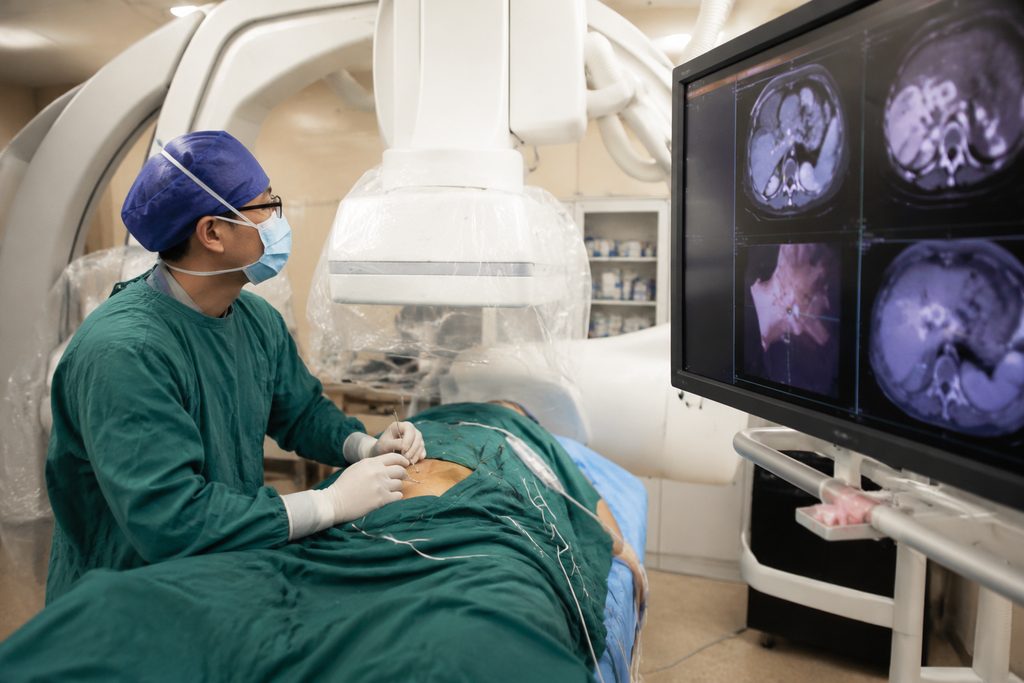
How This Actually Works, Step by Step
While patients in the United States face median out-of-pocket costs exceeding $40,000 for a major liver resection even with insurance, top-tier Chinese hospitals routinely perform the same procedure for a fraction of that amount. Meanwhile, the median wait time for a first specialist appointment in Canada’s public system stretches past 10 weeks for hepatobiliary cases. The gap is real. But so is the complexity of navigating a foreign medical system.
Here is the actual sequence, without sugarcoating. You send us your existing records — CT or MRI scans, pathology reports, blood work, any prior treatment notes. Our team translates them into Chinese and routes them to the appropriate specialty department at one of our partner hospitals. A hepatobiliary surgeon reviews the materials. You receive a written assessment: whether surgery is feasible, what approach they recommend, and what additional imaging or tests you would need on arrival.
If the assessment looks promising, we coordinate a video consultation. You speak directly with the surgical team. You ask about margins, recurrence risk, recovery expectations. Only after that conversation do you decide whether to travel. Nothing is booked until you have enough information to make a confident decision.
Once you commit, we handle the S2 visa documentation, hospital registration, and scheduling. You arrive. You undergo final imaging and pre-operative workup at the hospital. Surgery happens. Then recovery and discharge planning. The entire arc, from first email to walking out of the hospital, typically spans six to ten weeks.
What Liver Cancer Surgery Actually Costs in China
The liver cancer surgery cost China varies by hospital tier, surgical complexity, and whether you use the standard public channel or the international VIP department. A straightforward open hepatectomy at a top public hospital in Beijing or Shanghai typically runs between $15,000 and $25,000 USD for the procedure and immediate hospital stay. Laparoscopic or robotic-assisted resections trend higher, often $25,000 to $40,000. The international department route — which includes English-speaking coordination, priority scheduling, and private recovery rooms — typically adds 50% to 100% on top of standard pricing.
Compare that to the United States, where a major hepatectomy averages $80,000 to $150,000 before insurance negotiation. In Western Europe, private-pay patients often see bills between $40,000 and $70,000. Even at the high end of the Chinese range, you are looking at one-third to one-half of Western private-pay costs.
What drives the difference? Lower labor costs, higher surgical volumes, and a hospital system built around efficiency rather than insurance billing overhead. Chinese top-tier hepatobiliary centers perform thousands of liver resections annually. Volume breeds competence. And competence, in this case, costs less.
| Procedure | China (Top Public Hospital) | China (International Dept.) | United States (Private Pay) |
|---|---|---|---|
| Open hepatectomy | $15,000–$25,000 | $25,000–$45,000 | $80,000–$150,000 |
| Laparoscopic liver resection | $20,000–$30,000 | $30,000–$50,000 | $100,000–$180,000 |
| Pre-op workup & imaging | $1,500–$3,000 | $2,500–$5,000 | $8,000–$20,000 |
Prices fluctuate by hospital and case complexity. A small peripheral tumor is cheaper to remove than a central lesion requiring vascular reconstruction. The numbers above reflect typical ranges, not quotes.
A Realistic Timeline
People underestimate the administrative runway. Here is what actually happens, week by week.
| Stage | What Happens | Duration |
|---|---|---|
| Week 1 | You send records. We translate and route them. | 3–7 days |
| Week 2–3 | Specialist review and written second opinion. | 7–14 days |
| Week 3–4 | Video consultation with the surgical team. | 1–2 weeks scheduling |
| Week 4–6 | S2 visa application with hospital invitation letter. | 1–3 weeks |
| Week 6–7 | Arrival, final imaging, pre-op clearance. | 3–5 days |
| Week 7–8 | Surgery and inpatient recovery. | 7–14 days |
| Week 8–10 | Discharge, local follow-up, return home. | 3–7 days |
The steps people forget: document translation takes days, not hours. Specialist reviews have queue times. Visa processing depends on your home country’s Chinese embassy workload. And pre-operative clearance in China is thorough — cardiology, pulmonary, anesthesia consults all happen before you see the operating room. Budget for all of it.
What Can Go Wrong — and What Happens Then
The honest failure modes matter more than the success stories. Here are the ones we see most often.
The surgeon says no. Sometimes the tumor is too advanced, or liver function too compromised, for safe resection. That is not a failure of the system — it is the system working correctly. If surgery is not indicated, the team will say so. You are not obligated to travel. The written second opinion exists precisely to catch this before you spend money on flights.
Imaging is too old or too low-quality. Chinese surgeons are particular about imaging. If your CT is from six months ago or the slice thickness is too coarse, they will request fresh scans. That means additional cost and time on arrival. The fix: ask us before you travel what imaging standards the hospital requires. We will tell you exactly what to bring.
Visa delays. The S2 visa for medical treatment generally processes faster than tourist visas, but embassy backlogs happen. If your visa is delayed, we reschedule the hospital slot. Nothing is lost except time. We have yet to see a properly documented medical visa application get rejected outright, but approval is never guaranteed.
Post-operative complications. Any liver resection carries risk — bile leak, bleeding, infection, liver failure in severe cases. Chinese top-tier centers report complication rates comparable to Western benchmarks. But you are far from home if something goes wrong. That is why we recommend staying in China for at least one week after discharge before flying back. Long-haul flights immediately after major abdominal surgery are a bad idea.
Choosing the Right Hospital: Shanghai, Beijing, and Beyond
The question behind is liver resection safe in China is really a question about hospital selection. Safety is not uniform across 35,000+ hospitals. It concentrates in the top tier. Our database covers 340+ top-ranked hospitals across 37 cities, representing the top 5% of Chinese institutions by Fudan ranking and JCI accreditation.
For liver cancer specifically, the best liver cancer hospital in Shanghai is generally considered to be Zhongshan Hospital affiliated with Fudan University. Its liver surgery department is among the highest-volume in the world, with a dedicated hepatobiliary surgery service that handles complex resections daily. The hospital ranks among China’s top 10 for oncology in the Fudan specialty reputation rankings.
In Beijing, hepatectomy price Beijing tends to run slightly higher than Shanghai due to higher demand and cost of living, but the clinical quality is equivalent. Peking Union Medical College Hospital and Chinese PLA General Hospital both operate major hepatobiliary programs. For patients who prefer a more Western-style experience, private international hospitals in Beijing and Shanghai offer English-speaking staff and JCI accreditation, though their surgical volumes for complex liver resections are typically lower than the big public centers.
If you want to explore options by specialty, our oncology department rankings break down China’s top 10 hospitals for cancer care across 45 specialties. That is where you see the actual Fudan specialty reputation data, not marketing gloss.
Practical Considerations: Records, Visas, Payment, and Follow-Up
You will need complete medical records. Not summaries — actual DICOM imaging files on a CD or USB drive, full pathology reports, and a detailed treatment history. If you have had prior liver-directed therapy (TACE, ablation, systemic therapy), include those records too. Chinese surgeons want the full picture before they commit to a surgical plan.
The visa category is S2, endorsed for medical treatment. Family members accompanying you also apply for S2. The hospital provides an invitation letter and treatment confirmation that supports the application. Processing times vary by country. We provide document checklists and embassy-specific guidance, but the application itself is yours to submit.
Payment is upfront. Public hospitals in China require a deposit before admission, typically 50–100% of the estimated procedure cost. International departments accept major credit cards and wire transfers. Standard public channels may require cash or domestic payment methods, which is one reason international patients often choose the VIP route despite the higher price. Insurance is reimbursement-based — Chinese hospitals do not direct-bill Western insurers, with the exception of some private international facilities.
Language is the friction point most people underestimate. A top-tier Chinese hospital sees 10,000+ outpatient visits per day. Signage is in Chinese. Registration desks do not speak English. That is what a bilingual medical companion solves — our team handles registration, queue management, payment, and translation so you focus on your health, not the logistics.
Follow-up at home matters. Chinese hospitals provide discharge summaries and imaging copies, but your home oncologist needs to receive them in a usable format. We coordinate that handoff. Liver cancer requires surveillance — typically imaging every 3–6 months for the first two years. Make sure your home team is looped in before you travel.
Frequently Asked Questions
A major liver resection in China costs $15,000–$40,000 depending on approach and hospital tier. The same procedure in the United States runs $80,000–$150,000 for private payers. In Western Europe, expect $40,000–$70,000. China’s advantage is real and persistent, driven by volume and lower overhead.
No reputable hospital will schedule surgery without first seeing your imaging and conducting a face-to-face consultation. What you can do remotely is complete the written second opinion and video consultation stages. If the surgical team confirms operability, we then coordinate your arrival and schedule the procedure. The “package” is a staged process, not a one-click purchase.
At top-tier centers, complication and mortality rates for liver resection are comparable to Western benchmarks. The key is hospital selection. A Fudan-ranked hepatobiliary center with high surgical volume is safe. A random provincial hospital is a different story. That is why we only work with the top tier.
That happens regularly. Chinese hepatobiliary surgeons often have more aggressive resection criteria than Western centers, particularly for large or centrally located tumors. They may recommend surgery where your home team suggested palliative care. Or they may recommend against surgery where your home team was optimistic. The video consultation is where these differences surface. You make the final call.
Plan for three to four weeks total. That covers pre-operative workup, the surgery itself, inpatient recovery, and at least one week of outpatient observation before flying home. Some patients stay longer if they opt for adjuvant therapy or extended recovery. Cutting the stay short to save money is a false economy — post-operative complications caught early in China are far easier to manage than emergencies at 35,000 feet.
Your Next Step
Liver cancer surgery in China is not a leap of faith. It is a calculated decision based on surgical volume, cost differential, and clinical quality. The path is clear: send your records, get a written assessment, speak with the surgical team, then decide.
We are China Medical Services, and our role is coordination — we translate records, connect you with top-tier hepatobiliary departments, and handle the on-the-ground logistics from visa documentation to bilingual accompaniment. We do not practice medicine, and we do not promise outcomes. Start with a free consultation to see whether this path makes sense for your specific case. No pressure. Just information.
For more medical information and treatment options in China, visit chinamedservices.com (China Medical Services).
