Liver Cancer Surgery China: Shanghai Zhongshan’s Advanced PVTT Solution
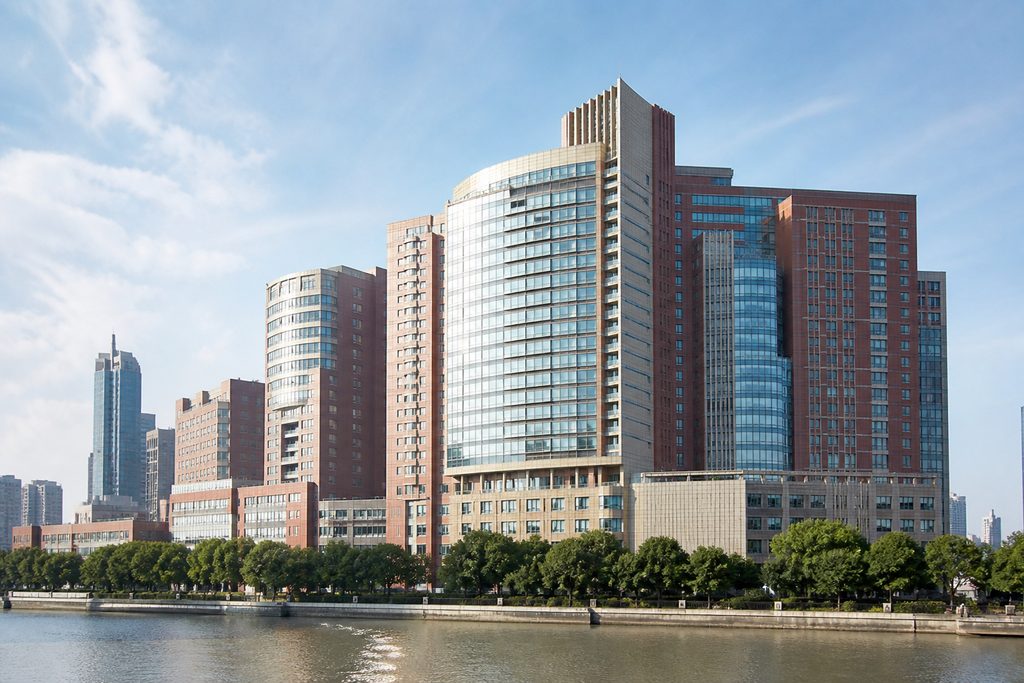
For patients with hepatocellular carcinoma extending into the portal vein, the conversation in many Western hospitals ends quickly. Portal vein tumor thrombus, or PVTT, classifies the disease as advanced-stage. Standard guidelines point toward systemic therapy, not the operating room. Yet at Shanghai Zhongshan Hospital, surgeons perform over 4,000 liver cancer resections annually—a volume that reshapes what “inoperable” means. The result is a surgical program where PVTT no longer automatically closes the door to curative intent.
Key Takeaways
- Shanghai Zhongshan Hospital performs more than 4,000 liver cancer surgeries yearly, building specialized expertise in PVTT resection that most Western centers cannot match.
- Surgical intervention for portal vein tumor thrombus at Zhongshan shows a median survival that significantly exceeds systemic therapy alone, with 5-year overall survival rates approaching 30-40% in carefully selected patients.
- The total cost for liver cancer surgery with PVTT thrombectomy in Shanghai typically ranges from $25,000 to $45,000—roughly one-fifth to one-tenth of comparable US pricing.
- Language barriers, visa requirements, and hospital registration systems make independent navigation extremely difficult; professional coordination is not a luxury, it is a practical necessity.
The Problem: When Guidelines Say No, But Volume Says Otherwise
Hepatocellular carcinoma is the sixth most common cancer worldwide and the third leading cause of cancer death. About 35% of patients present with portal vein tumor thrombus at diagnosis. In the United States and Europe, the Barcelona Clinic Liver Cancer staging system classifies these patients as BCLC Stage C—advanced disease. The recommended treatment is systemic therapy with atezolizumab plus bevacizumab. Surgery is generally not offered. Median survival with first-line systemic treatment runs approximately 19 months.
That is the standard. But it is not the only standard.
Japan and China have taken a different path for over two decades. Surgeons at high-volume centers began operating on PVTT patients when Western protocols said not to. They published their results. The data accumulated. And the numbers told a story that challenged the guidelines. A 2016 study from Zhongshan Hospital, published in Annals of Surgery, reported median survival of 15.9 months for PVTT patients who underwent resection, compared to 5.5 months with TACE alone. More recent series push those numbers further. The point is not that surgery cures everyone. It does not. The point is that a carefully selected subset of patients gains years of life from a procedure their home country may never offer them.
Who We Are
We are not a hospital. We do not provide medical treatment, diagnose conditions, or make clinical recommendations. China Medical Services acts as your logistical bridge to China’s top-tier hospitals. Our team handles the practical architecture of your medical journey—hospital selection and appointment coordination, bilingual medical companion services, visa guidance, and local logistics. We work with over 340 top-ranked hospitals across 37 cities. We know which institutions have genuine expertise for specific conditions, and we connect you with them. Nothing more, nothing less.
Why Shanghai Zhongshan Hospital Delivers Results for Advanced Liver Cancer
Clinical Volume Creates Surgical Judgment That Guidelines Cannot Teach
The Liver Cancer Institute at Zhongshan Hospital, founded by the late Dr. Tang Zhaoyou, handles more than 4,000 liver resections each year. That is roughly 11 surgeries every day. To put that in perspective, a busy US academic medical center might perform 100 to 150 liver resections annually. The entire surgical team at Zhongshan sees more PVTT cases in a month than most Western liver surgeons encounter in a career.
Volume matters because PVTT surgery is technically unforgiving. The tumor thrombus extends from the liver into the portal vein, sometimes reaching the main trunk or even the superior mesenteric vein. Removing it requires precise vascular control and the judgment to know when a complete thrombectomy is achievable versus when it risks catastrophic bleeding. That judgment is not learned from textbooks. It is learned in the operating room, case after case. Zhongshan’s surgeons have published extensively on their PVTT classification system and corresponding surgical strategies. They distinguish between types based on thrombus extent—from segmental branches to the main portal trunk to superior mesenteric vein involvement—and tailor the approach accordingly. This is not experimental surgery. It is mature, protocol-driven care backed by two decades of outcomes data.
What Is the Success Rate of PVTT Surgery in Shanghai?
Success means different things to different people. Let us be precise. Perioperative mortality at Zhongshan for PVTT resection runs below 3% in published series. That is comparable to complex liver surgery anywhere in the world. The 5-year overall survival rate for patients undergoing resection for PVTT ranges from 20% to 42%, depending on thrombus extent, tumor biology, and underlying liver function. Patients with segmental PVTT do better than those with main portal trunk involvement. Patients with good liver reserve do better than those with decompensated cirrhosis. These are not miracle numbers. But compare them to the near-zero long-term survival with supportive care alone, and the calculus shifts.
One critical point that often gets lost in translation: Zhongshan’s team does not operate on everyone. They select patients meticulously. Good performance status, preserved liver function, and resectable primary tumor are prerequisites. If the thrombus extends too far or liver function is too poor, they will say no. That selectivity is part of why their outcomes are credible.
Is Shanghai Zhongshan Hospital Good for Liver Cancer with Portal Vein Invasion?
The short answer is yes—it is arguably the best hospital for advanced liver cancer surgery abroad, specifically for cases involving portal vein invasion. The Liver Cancer Institute at Zhongshan ranks among China’s top three for hepatobiliary surgery in the Fudan University hospital rankings, a classification system that evaluates clinical reputation and research output across over 35,000 Chinese hospitals. The institute has dedicated liver cancer wards, a specialized ICU for post-hepatectomy patients, and integrated interventional radiology suites.
What distinguishes Zhongshan from other high-volume centers is the depth of its PVTT-specific research program. The surgical team has published classification systems, nomograms for predicting post-resection survival, and comparative studies examining resection versus TACE plus radiotherapy for different PVTT subtypes. This is not a hospital that occasionally operates on PVTT. This is the hospital that wrote the playbook other centers reference. For international patients seeking a surgical opinion on liver cancer with portal vein involvement, Zhongshan belongs on a very short list.
The Cost Reality: Shanghai Zhongshan Hospital Liver Cancer Surgery Price
Let us talk numbers directly. The Shanghai Zhongshan Hospital liver cancer surgery price for a resection with PVTT thrombectomy typically falls between $25,000 and $45,000 USD. This includes the surgical procedure, anesthesia, standard hospital stay of 10 to 18 days, basic imaging, and routine pathology. Complex cases requiring extended hospital stays, blood products, or ICU care push toward the upper end. Pre-operative evaluation—CT, MRI, labs—adds approximately $1,500 to $3,000.
For comparison, a similar liver resection in the United States costs between $120,000 and $300,000, depending on the institution and length of stay. In Western Europe, expect $60,000 to $120,000. The portal vein tumor thrombus surgery cost in China represents roughly one-fifth to one-tenth of US pricing. Why the difference? Chinese hospital pricing structures reflect lower labor costs, higher patient volumes that spread fixed costs, and a fundamentally different healthcare financing model. The quality of the surgery itself does not scale down with the price. Zhongshan’s liver surgeons train for years in dedicated hepatobiliary fellowships and operate on the same equipment found in major Western centers.
| Procedure | Shanghai Zhongshan (USD) | United States (USD) | Western Europe (USD) |
|---|---|---|---|
| Liver Resection + PVTT Thrombectomy | $25,000 – $45,000 | $120,000 – $300,000 | $60,000 – $120,000 |
| Pre-operative Imaging & Labs | $1,500 – $3,000 | $5,000 – $12,000 | $3,000 – $7,000 |
| Post-operative Hospital Stay (per day) | $300 – $600 | $3,000 – $6,000 | $1,500 – $3,000 |
What You Need to Know Before Going Alone
We tell every patient the same thing: the surgery is the easy part. The logistics are what break people. China’s top public hospitals serve enormous domestic patient populations. Daily outpatient volumes at Zhongshan exceed 10,000 visits. The system is not designed for walk-in international patients. Here is what you face:
- Registration and Appointments: Public hospital outpatient clinics do not accept remote bookings from overseas patients. You cannot email the liver surgery department and get a confirmed appointment. Registration requires in-person queueing, often starting before dawn, with no guarantee of seeing the specialist you need. The hospital’s international medical center offers a separate pathway, but it has its own protocols and capacity limits.
- Language and Navigation: Zhongshan Hospital is a sprawling campus with multiple buildings, separate registration windows for different services, and signage predominantly in Chinese. Lab results, consent forms, surgical scheduling—everything defaults to Mandarin. A single missed instruction can delay surgery by days or lead to a critical misunderstanding about pre-operative preparation.
- Visa Requirements: Medical treatment in China requires an S2 visa with a notation specifying the medical purpose. The supporting documents must include an invitation letter from the hospital, proof of appointment, and detailed treatment plans. Assembling these independently, especially from abroad, is genuinely difficult. Family members accompanying you need their own S2 visas. An M visa is for commercial business and will be rejected for medical travel purposes.
- Payment Systems: Public hospitals in China operate on a prepayment model. You deposit funds at admission, and the hospital draws down from that balance. International credit cards are not universally accepted. WeChat Pay and Alipay dominate daily transactions, but linking foreign cards to these platforms often fails. Large wire transfers for hospital deposits require correct invoicing and institutional account details that are not publicly posted.
How We Help You Navigate This
These barriers are not insurmountable. They are structural features of a system optimized for domestic volume, not international accessibility. Our role is to route you through the proper channels efficiently.
Before you travel, we coordinate with the hospital’s international medical center to secure a confirmed specialist consultation. We translate and transmit your medical records, imaging, and pathology reports to the surgical team for pre-review. This step alone can save weeks of uncertainty. We provide the documentation package required for your S2 visa application and guide you through the consular process. We also arrange airport transfers and accommodation near the hospital—which matters more than you might think when you are recovering from a liver resection and need to return for follow-up labs.
During your hospital stay, a bilingual medical companion accompanies you to every appointment. They handle registration, queueing, payment processing, and translation. They sit with you during the surgeon’s consultation and make sure you understand the plan. They translate consent forms verbally—not just the words, but the clinical reasoning behind them. After discharge, we coordinate follow-up imaging, medication refills, and any necessary rehabilitation stays. If complications arise, we facilitate rapid re-evaluation rather than leaving you to navigate an emergency room alone.
For patients who want a preliminary assessment before committing to travel, we arrange remote video consultations with Zhongshan specialists. These sessions provide an honest surgical opinion based on your imaging. Sometimes the answer is yes, surgery is feasible. Sometimes it is no, and we help you understand why. Either outcome is valuable. The consultation fee is credited in full toward on-the-ground coordination services if you proceed with treatment within 90 days.
How to Book Liver Cancer Surgery at Shanghai Zhongshan Hospital
There is no online booking portal for international patients seeking liver cancer surgery at Zhongshan. The process runs through the hospital’s international medical center, and it starts with a clinical review. The surgical team needs to see your imaging before they will schedule anything. That makes sense—they need to assess resectability and PVTT extent before committing to an operation.
The practical sequence looks like this: you send us your medical records and recent contrast-enhanced CT or MRI. We translate the key documents and submit them to the international center. A liver surgeon reviews the case. If they determine that surgery is appropriate, we lock in a consultation date and begin the visa documentation process. You travel to Shanghai, meet the surgeon, complete any additional pre-operative testing, and proceed to surgery. From initial contact to operating room, the timeline typically spans three to six weeks, though complex cases requiring multidisciplinary discussion may take longer.
This is not a process you can shortcut. The hospital will not schedule surgery without an in-person consultation. The surgeon will not operate without current imaging and labs done at their facility. These are non-negotiable safety measures. Our job is to compress the timeline as much as the system allows and to ensure nothing gets lost in translation along the way.
Frequently Asked Questions
No. This is one of the hardest truths we communicate to patients. The hospital will not schedule a surgery date without an in-person consultation. The surgeon must examine you, review imaging performed at Zhongshan, and confirm that your clinical status matches what the records suggest. We can secure a confirmed consultation appointment. We cannot guarantee a specific surgery date in advance. What we can tell you is that once the surgeon approves the case, scheduling typically moves quickly—often within one to two weeks of the consultation, assuming no unexpected findings.
This happens, and we want you prepared for it. If the Zhongshan team reviews your case and concludes that surgery is not appropriate—whether due to thrombus extent, liver function, or other factors—they will explain why and may recommend alternative treatments available at the hospital, such as TACE combined with radiotherapy or systemic therapy. You are not stranded. You still received an expert surgical opinion from one of the world’s highest-volume liver cancer centers. That clarity has value, even when the answer is not what you hoped for.
Before discharge, the surgical team provides a detailed summary in English, including operative findings, pathology results, medication instructions, and a recommended follow-up schedule. We help translate any remaining Chinese-language documents. You take these records to your local oncologist or hepatologist for continued surveillance. Zhongshan’s team can also provide remote follow-up consultations if your local physician has questions about the post-operative plan. The goal is a clean handoff, not an ongoing dependency.
For liver cancer surgery specifically, the answer is yes—and for PVTT cases, it may exceed what is available at home simply because most Western centers do not offer this surgery at all. Zhongshan’s liver surgery program is internationally accredited, publishes in major journals, and treats patients from across Asia, the Middle East, and increasingly Europe and North America. The equipment, surgical techniques, and perioperative protocols are modern. The difference is volume. The surgeons at Zhongshan have simply done more of these operations than anyone else.
Your Next Step
Advanced liver cancer with portal vein invasion is a frightening diagnosis. The standard treatment path in many countries offers disease control but not cure. Shanghai Zhongshan Hospital represents a credible surgical alternative backed by two decades of published outcomes. It is not the right path for every patient. But for those with preserved liver function and resectable disease, it is a path worth investigating thoroughly.
If you want to understand whether surgery at Zhongshan is a realistic option for your specific case, start with a remote consultation. The surgical team reviews your imaging and provides an honest assessment. From there, the decision is yours. Contact our coordination team to begin the process with a free initial discussion about your situation and needs.
Disclaimer: This article provides general information about liver cancer treatment options in China. It does not constitute medical advice. Treatment decisions should be made in consultation with qualified physicians based on your individual clinical circumstances. Surgical outcomes vary by patient factors including tumor biology, liver function, and overall health status.
For more medical information and treatment options in China, visit chinamedservices.com (China Medical Services).
