Lymphoma Second Opinion in China: Ruijin Hospital Costs and Process
Have you ever been handed a lymphoma diagnosis and felt the ground shift beneath you? The words are heavy enough. The uncertainty that follows—whether the pathology is right, whether the treatment plan is optimal, whether you have explored every option—can be just as crushing. For many patients, a second opinion is not a luxury. It is a lifeline. And increasingly, international patients are asking a very specific question: is Ruijin Hospital in Shanghai the right place to get one, and what does a lymphoma second opinion at Ruijin Hospital cost?
The short answer is that Ruijin Hospital houses one of China’s most respected hematology programs, and a written second opinion from a top specialist there typically starts in the $300–500 range. A video consultation with a senior expert runs $500–800. But the real answer is more nuanced than a price tag. It involves understanding what makes this hospital worth considering, how the process actually works for a foreigner, and where the hidden friction points lie.
Key Takeaways
- Ruijin Hospital’s hematology department is consistently ranked among China’s top 10 for hematology in the Fudan University hospital rankings, and it treats a massive volume of lymphoma cases annually.
- A written second opinion from a Ruijin specialist typically costs between $300 and $500, while a top-specialist video consultation ranges from $500 to $800 — a fraction of comparable US fees.
- Foreign patients cannot simply book a public outpatient appointment online from overseas. You need a structured pathway through the hospital’s international department or a coordination service.
- Any consultation fee paid through a coordination service is typically credited in full toward on-the-ground coordination if you later decide to travel to Shanghai for treatment.
The Problem: A Lymphoma Diagnosis Demands Certainty You Don’t Have Yet
Lymphoma is not one disease. It is dozens of distinct entities—diffuse large B-cell lymphoma, follicular lymphoma, mantle cell lymphoma, Hodgkin lymphoma, and rarer subtypes—each with different biology, different treatment algorithms, and different prognoses. The World Health Organization classification now recognizes more than 80 distinct lymphoma subtypes. That complexity is exactly why a second opinion matters so much.
The stakes are concrete. Misclassification of lymphoma subtype occurs in a meaningful percentage of cases even at excellent Western centers, and subtype misclassification directly changes the treatment plan. A 2021 study published in Blood found that expert hematopathology review altered the diagnosis in approximately 17% of referred lymphoma cases. Another review from the US National Cancer Institute’s lymphoma pathology working group reported diagnostic discordance rates between 10% and 25% depending on subtype. When the difference between “watch and wait” and aggressive chemoimmunotherapy hinges on a pathologist’s read of CD10, BCL6, and MUM1 staining patterns, a second set of eyes is not optional.
But here is the problem for many patients. Getting that second opinion in the United States or Western Europe can take weeks or months. Scheduling a consultation with a top lymphoma specialist at a major US academic center often means waiting 4 to 8 weeks for a new patient appointment. Then the pathology review itself takes additional time. Meanwhile, the patient sits with anxiety, and in aggressive subtypes, time is not neutral. Diffuse large B-cell lymphoma can double in bulk within weeks.
Cost compounds the problem. A comprehensive second opinion at a leading US cancer center—including pathology re-review, molecular profiling, and a specialist consultation—can run $10,000 to $25,000 when paid out of pocket. For uninsured or underinsured patients, that figure is prohibitive. For insured patients, international second opinions are frequently excluded from coverage.
So patients start looking elsewhere. And many are landing on a question they never expected to ask: what about China?
Why Ruijin Hospital for a Lymphoma Second Opinion
Ruijin Hospital, affiliated with Shanghai Jiao Tong University School of Medicine, is not a name most Western patients know. That is a gap in awareness, not a reflection of the hospital’s standing. Ask any hematologist in Asia about China’s top lymphoma centers, and Ruijin comes up immediately.
Clinical Volume That Creates Pattern Recognition
Ruijin’s hematology department is one of the largest in China. The hospital sees thousands of new lymphoma cases each year across its inpatient wards and outpatient clinics. For context, a large US academic center might see 500 to 800 new lymphoma patients annually. Ruijin’s volume is several multiples of that. Volume matters in lymphoma because rare subtypes—angioimmunoblastic T-cell lymphoma, hepatosplenic T-cell lymphoma, primary mediastinal B-cell lymphoma—are genuinely rare. A specialist who has treated 200 cases of a rare subtype has pattern recognition that a specialist who has treated 20 simply cannot match.
Ruijin’s hematology program has been consistently ranked among the top hematology departments in China in the Fudan University hospital rankings, which evaluate clinical reputation and research output across all Chinese hospitals. The department is also a designated national clinical research center for hematological diseases. That designation is not honorary—it comes with significant government research funding and a mandate to set national treatment standards.
Research Depth That Informs Clinical Decisions
Ruijin is not just a high-volume clinical center. It is a research powerhouse in hematology. The hospital’s Shanghai Institute of Hematology has produced landmark work in acute promyelocytic leukemia, and the translational research culture extends into lymphoma. For a second opinion, that matters in a specific way: the specialists reviewing your case are likely to be aware of emerging data—including Chinese clinical trial results that may not yet be widely known in Western practice—that could inform your treatment options.
China has also become a major site for CAR T-cell therapy clinical trials. As of 2024, China had the largest number of CAR T-cell clinical trials registered globally, with a particularly strong focus on B-cell malignancies including lymphoma. Ruijin is one of the centers involved in this work. For a patient with relapsed or refractory lymphoma, a second opinion from a center actively involved in CAR T trials could surface options that a purely Western second opinion might not.
Cost Structure That Makes a Second Opinion Accessible
Let’s address the obvious question directly: why is a lymphoma second opinion at Ruijin Hospital so much less expensive than one at a US center? The answer is structural, not a reflection of quality.
Chinese physician salaries are lower than US physician salaries, but the physicians are the same caliber—many trained at top international centers, publishing in Blood, Leukemia, and The Lancet Haematology. Hospital overhead is lower. Administrative costs are lower. Malpractice insurance is a fraction of US levels. None of these factors reduce the quality of the medical opinion. They simply reduce the price the patient pays.
A written second opinion from a Ruijin specialist—which includes review of your pathology slides, imaging, prior treatment records, and a written assessment with treatment recommendations—typically starts around $300 to $500. A video consultation with a senior hematologist runs $500 to $800. For comparison, a written second opinion from a comparable US academic center often starts at $1,500 to $3,000, and a video consultation with a top US lymphoma specialist can exceed $5,000.
| Service | Ruijin Hospital (Shanghai) | US Academic Center (Typical Range) |
|---|---|---|
| Written second opinion (pathology + treatment review) | $300–500 | $1,500–3,000+ |
| Video consultation with specialist | $500–800 | $2,500–5,000+ |
| Multidisciplinary team (MDT) consultation | $1,500–2,000 | $5,000–10,000+ |
| Turnaround time (written opinion) | 1–2 weeks typical | 2–6 weeks typical |
Prices vary by hospital and case complexity. But the direction of the difference is consistent.
How to Get a Second Opinion from Ruijin Hospital: The Actual Process
This is where most international patients hit a wall. You cannot simply go to Ruijin’s website, click “book appointment,” and upload your records. The Chinese public hospital system does not work that way for anyone, Chinese or foreign. Public outpatient appointments are booked through hospital apps that require a Chinese phone number and national ID, and they are released in batches that sell out within minutes. For a foreigner without Chinese language skills or local infrastructure, navigating this alone is nearly impossible.
So how do international patients actually get a second opinion from Ruijin? There are three realistic pathways.
The first is through the hospital’s international medical department, if you can reach it directly. Most top-tier Chinese hospitals—including Ruijin—have an international or VIP department that handles foreign patients. These departments have English-speaking staff and can coordinate specialist consultations. But reaching them from overseas is not always straightforward. Phone lines may not be answered in English during all hours, email response times vary, and the process still requires sending physical pathology slides to Shanghai.
The second pathway is through a medical coordination service—an organization like China Medical Services that handles the logistics for you. This is not a shortcut around the hospital’s rules; it is a structured way to follow them correctly. The service translates your medical records into Chinese, arranges the pathology slide review with the appropriate hematopathology team, coordinates the specialist consultation, and provides interpretation during video consultations. For a written second opinion, the service packages everything into one price that includes the hospital’s internal fees and the coordination labor.
The third pathway is to travel to Shanghai directly and present at the international department in person. This works, but it is the most expensive and least efficient option if you are only seeking an opinion before deciding on treatment. You would spend $1,500–3,000 on flights and hotels, navigate a foreign city, and potentially wait days for an appointment slot. For most patients, a remote written second opinion or video consultation is the smarter first step.
Practical tip: If you are considering treatment at Ruijin after the second opinion, do the remote consultation first. It costs a few hundred dollars and gives you a clear picture of whether the hospital’s specialists agree with your current plan, propose changes, or recommend a different approach entirely. You can then decide whether traveling to Shanghai is worth it with far more information in hand.
Is Ruijin Hospital Good for Lymphoma Treatment? What the Rankings and Data Say
Every patient asking about a lymphoma second opinion at Ruijin Hospital is implicitly asking a deeper question: is this hospital actually good, or is it just cheap and accessible? The answer matters more than the price.
Ruijin’s hematology department has been ranked in the top tier of Chinese hospitals for hematology in every edition of the Fudan University hospital rankings—the most authoritative hospital ranking system in China. The Fudan rankings evaluate clinical reputation among peer specialists and research output, not patient satisfaction surveys or marketing budgets. A top-10 hematology ranking in China means the department is being assessed against the best hematology programs in a country of 1.4 billion people.
But rankings alone don’t answer the question. Let’s look at what Ruijin actually does in lymphoma specifically. The department operates dedicated lymphoma wards. It has a specialized lymphoma pathology team that reviews every case with immunohistochemistry and molecular profiling. It runs active clinical trials in DLBCL, follicular lymphoma, mantle cell lymphoma, and T-cell lymphomas. And it has been an early adopter of CAR T-cell therapy for relapsed and refractory B-cell lymphomas, participating in multiple pivotal trials that led to regulatory approvals in China.
Is it the best lymphoma hospital in China? That depends on who you ask and what subtype you have. Peking Union Medical College Hospital in Beijing and the Cancer Hospital of the Chinese Academy of Medical Sciences also have outstanding lymphoma programs. So does Sun Yat-sen University Cancer Center in Guangzhou. Ruijin’s particular strengths are in hematological malignancies broadly—it is one of the few hospitals in China with a truly integrated hematology program that spans leukemia, lymphoma, and myeloma—and in translational research. For a foreign patient, Shanghai also offers practical advantages: it is China’s most international city, with better English penetration in medical settings than almost anywhere else in the country.
For a deeper look at how Chinese hospitals compare across oncology and other specialties, see our department rankings by specialty, which break down the Fudan specialty reputation rankings in detail.
What a Lymphoma Second Opinion from Ruijin Actually Includes
A second opinion is only as good as the materials it is based on. This is the most common point of failure for international patients, and it is worth understanding before you commit to any consultation.
A meaningful lymphoma second opinion requires four things. First, the original pathology report—ideally the full report with all immunohistochemistry markers, not just the summary line. Second, the actual pathology slides or tissue blocks. A specialist cannot independently verify a diagnosis without looking at the tissue. If your original biopsy was done at a hospital that will release slides, arrange for them to be sent. If slides are not available, the second opinion will be based on the written report alone, which limits its value. Third, all imaging—PET/CT scans, CT scans, and the actual DICOM files, not just the written radiology reports. Fourth, your treatment history if you have already started therapy: which regimens, how many cycles, what response was observed.
At Ruijin, a written second opinion typically follows this sequence. Your records are translated into Chinese and submitted to the hematology department. A lymphoma specialist reviews the materials. If pathology review is requested, the hospital’s hematopathology team examines the slides independently. The specialist then issues a written opinion that addresses the diagnosis, the staging, the appropriateness of the current treatment plan, and alternative approaches if relevant. This document is translated back into English and delivered to you.
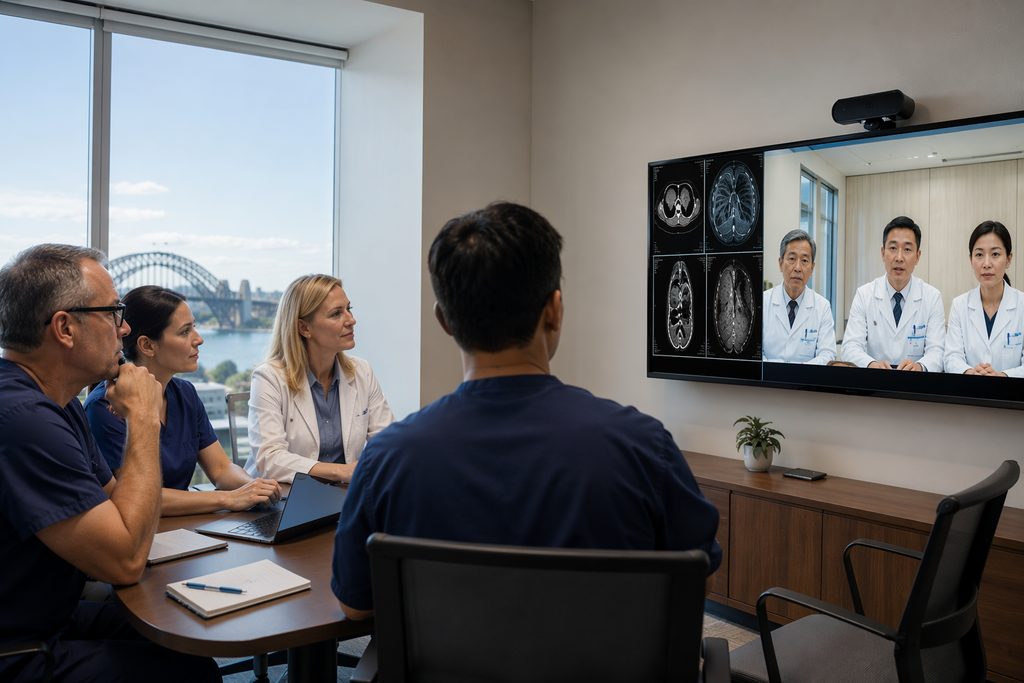
A video consultation adds a live conversation. You speak directly with the specialist, with a medical interpreter on the line. You can ask questions about the reasoning behind recommendations, discuss your concerns about specific side effects, and get a sense of whether this is a physician you would trust with your care if you decided to travel for treatment.
Important caveat: A written second opinion is for reference only. It is not a prescription, and it does not establish a doctor-patient relationship. The Ruijin specialist cannot write you a prescription that you can fill in your home country. The opinion is meant to inform your discussions with your treating physician. If you later travel to Shanghai for treatment at Ruijin, that is a separate process that begins with an in-person consultation.
Lymphoma Treatment Cost in Shanghai for International Patients
Technically yes, through the hospital’s international department. In practice, it is difficult from overseas. The international department’s English-language responsiveness varies, and you will still need to handle translation, slide shipping, and appointment scheduling yourself. A coordination service does not give you access you could not get on your own—it saves you the time, language friction, and uncertainty of navigating a foreign hospital system remotely. Whether that is worth the service fee depends on your bandwidth and how urgently you need the opinion.
Ruijin is unquestionably one of the best, and for foreign patients specifically, Shanghai’s international infrastructure makes it a strong choice. But “best” depends on your subtype and your goals. Peking Union Medical College Hospital in Beijing and Sun Yat-sen University Cancer Center in Guangzhou also have outstanding lymphoma programs. If you are unsure which hospital fits your case, a consultation with a service that maintains a database of Shanghai’s top hospitals and their specialties can help you compare options before committing.
Most US and European insurers do not cover international second opinions obtained outside their own networks, but many will reimburse for out-of-network consultations if you submit itemized receipts. Some international health insurance plans—especially those popular with expatriates—do cover consultations at Chinese hospitals. Check your policy’s out-of-network and international coverage provisions before paying. The hospital will provide documentation for your claim; whether your insurer accepts it is between you and your insurer.
What if the Ruijin specialist
Frequently Asked Questions
Is it safe to have surgery in China?
Yes. The hospitals used for international patients are JCI-accredited and follow the same international safety standards as top hospitals in the US and Europe. Surgical teams perform high volumes of procedures — often more than their Western counterparts — which studies show leads to better outcomes.
How much does medical treatment cost in China?
Costs vary by procedure and hospital, but international patients typically save 40-80% compared to US prices — even when factoring in travel and accommodation. A consultation with our team will give you an exact, all-inclusive quote with no hidden fees.
How do I start the process?
Send us your existing medical reports to get started. We handle everything from hospital selection and appointment scheduling to visa assistance and post-operative recovery planning. Your medical records are reviewed by the specialist before you even book a flight.
Frequently Asked Questions
Yes. The hospitals used for international patients are JCI-accredited and follow the same international safety standards as top hospitals in the US and Europe. Surgical teams perform high volumes of procedures — often more than their Western counterparts — which studies show leads to better outcomes.
Costs vary by procedure and hospital, but international patients typically save 40-80% compared to US prices — even when factoring in travel and accommodation. A consultation with our team will give you an exact, all-inclusive quote with no hidden fees.
Send us your existing medical reports to get started. We handle everything from hospital selection and appointment scheduling to visa assistance and post-operative recovery planning. Your medical records are reviewed by the specialist before you even book a flight.
For more medical information and treatment options in China, visit chinamedservices.com (China Medical Services).
