Mammogram in China: How We Coordinate Your Breast Screening
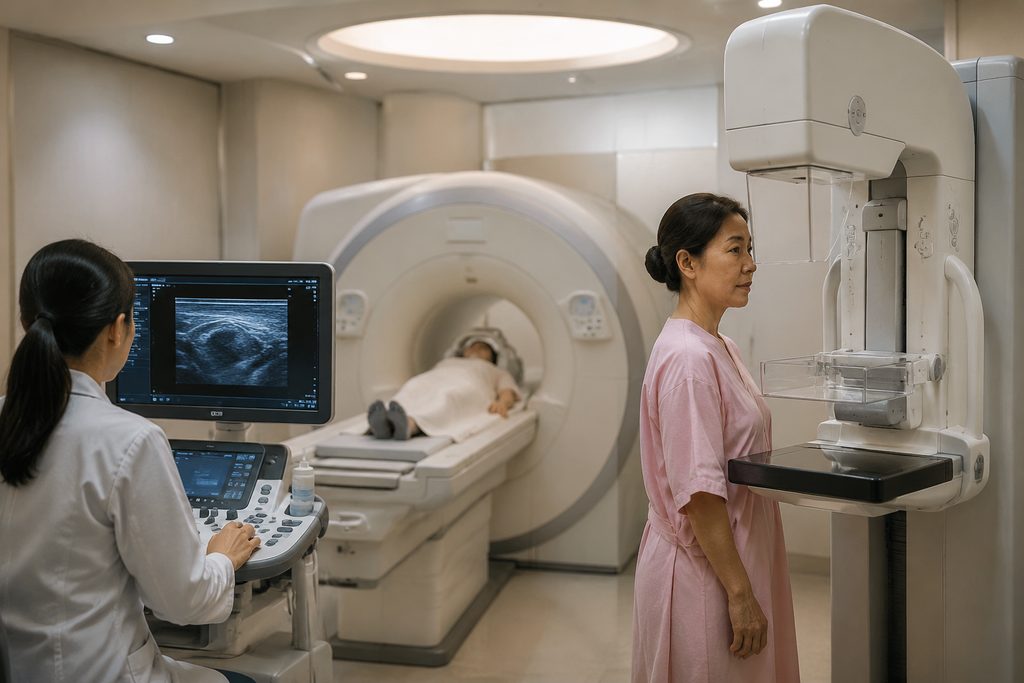
When 54-year-old Sarah from Manchester found a small lump during a self-exam, her GP referred her for a mammogram. The NHS wait time was six weeks. Six weeks of sleepless nights. She started searching alternatives and landed on a phrase that changed her options: “Mammogram in China: How We Coordinate Your Breast Screening.” She discovered that a full breast screening package in Shanghai — including mammogram, ultrasound, and a specialist read — was available within days, not weeks, at a fraction of UK private costs. That was the beginning of her journey.
For international patients, navigating breast screening in China without local language skills or hospital connections is genuinely difficult. Our team exists to remove those barriers. We coordinate appointments, arrange bilingual companions, and connect you with accredited radiology departments in China’s top-tier hospitals. The mammogram cost China patients typically pay ranges from $80 to $250 at public hospital international departments, and $200 to $500 at private international hospitals. That’s the short answer. The longer answer involves accuracy standards, hospital selection, and the logistics of getting it done as a foreigner.
Mammogram in China: The Short Answer
You can get a high-quality mammogram in China within 3 to 7 days of contacting us. The mammogram cost China hospitals charge is roughly one-fifth to one-tenth of what you would pay out-of-pocket in the United States. Accuracy is comparable to Western standards at top-tier facilities — many use the same Siemens, GE, and Hologic machines you would find in a London or New York breast clinic.
But there’s a catch. The Chinese public hospital system does not operate on a “call and book” model for overseas patients. Outpatient departments require in-person registration, same-day queueing, and Chinese-language navigation. That is precisely where coordination matters. Without it, a simple mammogram can become a full-day ordeal. With it, the process is streamlined and surprisingly efficient.
Who This Is Right For — and Who It Isn’t
Breast screening in China makes sense for a specific profile of patient. You are likely a good candidate if you fall into one of these groups:
- You have a breast lump, nipple discharge, or skin changes and face a wait longer than 3 weeks at home.
- You want a private screening package without paying US or UK private rates.
- You are already traveling to China for business or family and want to add a breast check up to your itinerary.
- You need a second opinion on a suspicious mammogram or ultrasound from your home country.
- You are uninsured or underinsured and need affordable imaging.
This path is not right for everyone. If you are actively pregnant, a mammogram is generally not recommended — ultrasound is the preferred first-line imaging. If you have breast implants, you need a facility experienced with implant displacement views; not every Chinese hospital radiology department handles this routinely. And if you have a confirmed malignancy requiring immediate surgical intervention, flying to China for screening alone makes little sense — you would need a full treatment coordination plan, which is a different conversation.
And one more honest note: if you expect Western-style appointment scheduling at a public hospital, you will be disappointed. The public system is high-volume and fast-moving. That is not a quality issue. It is a workflow difference you need to understand before you arrive.
The Options, Compared
Not all breast screening in China is the same. The hospital tier you choose changes the price, the language support, the wait time, and the overall experience. Here is a straight comparison:
| Factor | Public Hospital International Dept | Private International Hospital | Public Hospital Standard Dept |
|---|---|---|---|
| Typical mammogram cost China | $80–$150 | $200–$500 | $40–$80 |
| English-speaking staff | Yes, in international dept | Yes, throughout | Rarely |
| Appointment lead time | 3–7 days via coordinator | 1–3 days | Same-day queue, unpredictable |
| Insurance direct billing | Usually no | Often yes (JCI hospitals) | No |
| Machine quality | High (Siemens, GE, Hologic) | High | High at top-tier hospitals |
| Radiologist read included | Yes, same-day | Yes, same-day | Yes, but Chinese-language report |
| Best for | Cost-conscious patients wanting expert read | Patients wanting full English experience | Chinese-speaking residents |
Which column fits you? If you are a foreigner without Chinese language ability, the standard public department is effectively off the table — the report will be in Chinese, and navigating registration alone is exhausting. The international department of a top public hospital gives you the best balance of price and clinical expertise. Private international hospitals like United Family or Jiahui offer the smoothest experience with direct insurance billing, but you pay for that convenience.
Is Mammogram Accurate in China? What You Need to Know About Imaging Standards
The question we hear most often: is mammogram accurate in China? The honest answer is that accuracy depends entirely on where you go. At the 340+ top-ranked hospitals in our database — the top 5% of China’s 35,000+ hospitals, ranked by Fudan University and JCI — the imaging standards are genuinely world-class.
Here is what that means in practice. A mammogram at a top-tier Chinese hospital uses the same digital breast tomosynthesis (3D mammography) equipment found in leading US and European centers. The radiologists reading breast imaging at major cancer centers in Beijing, Shanghai, and Guangzhou read thousands of cases annually — far higher volume than a typical Western community radiologist. High case volume correlates with diagnostic accuracy, particularly for subtle findings like architectural distortion or microcalcifications.
But there is a caveat. Not every hospital in China reaches this standard. A mammogram at a small county-level hospital will not match the quality of a Fudan-ranked teaching hospital. That is why hospital selection matters more than the country itself. When we coordinate a breast screening, we direct patients to departments with documented breast imaging expertise — often the same departments that feed into China’s national breast cancer screening programs. You can explore breast imaging and oncology departments across our 45 specialty rankings to see which hospitals lead in breast care.
And one more thing about accuracy: a mammogram alone is rarely the full picture for women with dense breast tissue, which includes most women under 50. The standard breast screening package in China typically includes both mammogram and ultrasound precisely for this reason. If you book only a mammogram, you may miss what an ultrasound would catch. We always recommend the combined package.
What It Costs: Mammogram Cost China and Breast Screening Price Shanghai
Let’s talk numbers. The mammogram cost China patients actually pay varies by city, hospital tier, and whether you book through a public hospital international department or a private facility. Here are the realistic ranges as of 2026:
- Mammogram only, public hospital international department: $80–$150
- Mammogram + breast ultrasound, public international department: $150–$250
- Mammogram + ultrasound, private international hospital: $300–$550
- Full breast screening package (mammogram, ultrasound, specialist consultation, written report in English): $400–$800
The breast screening price Shanghai patients encounter tends to sit at the higher end of these ranges. Shanghai has more private international hospitals than most Chinese cities, and premium facilities like Jiahui and Parkway charge accordingly. Beijing public hospital international departments, by contrast, often come in lower.
What drives the variance? Three things. First, hospital tier — a Fudan Top 100 hospital charges more than a mid-tier facility. Second, the radiologist read — if you want a senior breast radiologist to personally review your images rather than the on-duty radiologist, that adds cost. Third, English report translation — public hospitals may charge an extra $20–$50 for an official English-language report, while private hospitals include it.
For context, the same mammogram in the United States costs $250–$500 without insurance, and a breast ultrasound adds another $200–$400. In the UK, private mammograms run £150–£300. So even at the high end of the Chinese range, you are paying less than half of US self-pay rates.
Our coordination fee is separate from hospital charges. A bilingual medical companion starts from $300 per day, and hospital appointment coordination starts from $300. If you book a remote consultation first and later upgrade to in-person coordination within 90 days, that consultation fee is credited in full toward the coordination service. One-time credit, applies to coordination only, never to hospital treatment charges.
How to Get a Mammogram in Beijing as a Foreigner: The Step-by-Step Reality
So you want to know how to get a mammogram in Beijing as a foreigner. The process is not complicated once you understand the rules of the system. Here is what actually happens:
Step 1: Choose your hospital. Beijing has 21 hospitals on the Fudan Top 100 list — more than any other city. For breast screening, you want a hospital with a strong oncology or breast surgery department. Peking Union Medical College Hospital (PUMCH) and Cancer Hospital Chinese Academy of Medical Sciences are the two most commonly requested for breast imaging. You can browse Beijing hospitals to see the full list.
Step 2: Prepare your documents. You need your passport, any prior mammogram or ultrasound images (on CD or film), and any pathology reports if you have had a biopsy. If you have a referral letter from a home-country doctor, bring it — it helps the Chinese radiologist understand the clinical context.
Step 3: Book through the international department. This is the critical step. Standard outpatient departments in Chinese public hospitals do not accept advance bookings from overseas. The international department does. We handle this booking for you, including confirming the specific imaging you need and the radiologist availability.
Step 4: On the day, use a bilingual companion. Even in the international department, you will navigate registration, payment, the radiology queue, and the report pickup. A bilingual medical companion handles queueing, translation, and payment logistics. Without one, expect to spend 3–5 hours on a process that takes 90 minutes with support.
Step 5: Get your results. Same-day results are standard. The radiologist will give you a verbal summary in Chinese, which your companion translates. You receive the official English report within 24–48 hours, depending on the hospital.
What about medical tourism breast check up China packages? Several private international hospitals in Shanghai and Beijing market combined health screening packages that include breast imaging, blood work, and a general physical. These are convenient if you want a full-body check alongside your breast screening. But they cost more than booking a standalone mammogram. For most patients concerned specifically about breast health, a targeted mammogram + ultrasound at a public hospital international department is the better value.
Practical Considerations: Visa, Payment, Records, and Follow-Up
If you are coming to China specifically for breast screening, you need the right visa category. Medical travelers use the S2 visa — it covers short-term private affairs including medical treatment. You will need supporting documents from the hospital, which we help arrange. The S2 visa is not the M visa; M is for commercial and trade activities only. Your accompanying family member also applies for an S2.
Payment is straightforward but requires planning. Chinese public hospitals, including international departments, generally require upfront payment. Credit cards are accepted at international departments and private hospitals, but not always at standard public hospital counters. WeChat Pay and Alipay dominate, but they require a Chinese bank account for foreign users in most cases. Bring a Visa or Mastercard and confirm acceptance before your appointment. Private international hospitals with JCI accreditation often bill international insurers directly — if you have expat health insurance, check whether your insurer has direct billing agreements with specific Chinese private hospitals.
Records are yours to keep. Chinese hospitals issue imaging reports and, on request, provide a CD or USB with your DICOM images. Take those home. Your home-country radiologist can read them. If you need a second opinion from a Chinese specialist on images you already have, a written second opinion costs $300–$500 and gives you a formal written analysis without traveling.
After you return home, follow-up is on you. If the Chinese screening finds something suspicious, you will need to decide whether to pursue biopsy or further imaging in China or at home. We can coordinate either path. What we cannot do is give you a medical opinion — we are not doctors, and no article or consultation replaces a qualified radiologist’s read.
Frequently Asked Questions
Yes, but only through the international department of a hospital, not the standard outpatient clinic. Standard public hospital departments in China do not accept advance bookings from overseas patients. We coordinate with international departments to secure your appointment slot before you fly. Lead time is typically 3 to 7 days.
At top-tier hospitals, yes. The equipment is the same — Siemens, GE, Hologic digital tomosynthesis machines — and radiologists at major Chinese cancer centers read very high case volumes. But accuracy varies by hospital. A Fudan-ranked teaching hospital will outperform a small local facility. That is why hospital selection is the single most important decision you make.
Then you need a biopsy, not just another scan. We can coordinate a core needle biopsy or vacuum-assisted biopsy at the same hospital, usually within days. The pathology report takes 3 to 7 days. If cancer is confirmed, you face a bigger decision: treat in China or return home. We can coordinate either path, but the decision is yours with your medical team.
Yes. You cannot enter China for medical purposes without a visa. The S2 visa is the correct category for short-term medical treatment. You need supporting documents from the hospital, which we help arrange. Approval is never guaranteed — it depends on your nationality and the consulate’s current requirements.
It depends on your policy. Many international expat health insurance plans cover outpatient imaging in China, but most US domestic plans do not. Private international hospitals in China with JCI accreditation are more likely to have direct billing agreements with insurers like Cigna, Aetna International, and Allianz. Public hospital international departments usually require you to pay upfront and claim reimbursement yourself.
Your Next Step
Breast screening in China is fast, affordable, and clinically credible — if you choose the right hospital and have the right support on the ground. That is the core message. We are China Medical Services, a coordination team connecting international patients with 340+ top-ranked Chinese hospitals across 37 cities. We are not a hospital, and we do not diagnose or treat anything. What we do is handle the logistics — hospital matching, appointment booking, bilingual companions, visa document support — so you can focus on getting answers.
If you are weighing a mammogram in China and want to know which hospital fits your situation, start with a free consultation. Tell us your history, your timeline, and your budget. We will tell you honestly what is feasible and what is not. No pressure, no obligation — just a clear-eyed assessment from people who know this system inside out.
Get a free consultation at our patient services page.
For more medical information and treatment options in China, visit chinamedservices.com (China Medical Services).
