Medical Concierge in Chengdu: Your Options Explained
Medical Concierge in Chengdu: Your Options
A medical concierge service in Chengdu typically costs from $300 per day for a bilingual companion, with written second opinions at $300–500 and hospital appointment coordination from $300. That is the short answer. The longer answer involves understanding what a concierge actually does, what they cannot do, and why Chengdu — a city most Western patients have never considered for healthcare — has quietly become one of China’s most capable medical destinations.
Let’s strip away the jargon first. A “medical concierge” is not a doctor. It is a coordinator: someone who translates your medical records, navigates a hospital system that operates almost entirely in Mandarin, books appointments through official international departments, and sits beside you through registration, payment, and consultation. Think of it as the difference between landing at an unfamiliar airport alone and having someone meet you at the gate.
Why Chengdu, and Is Chengdu Good for Medical Tourism?
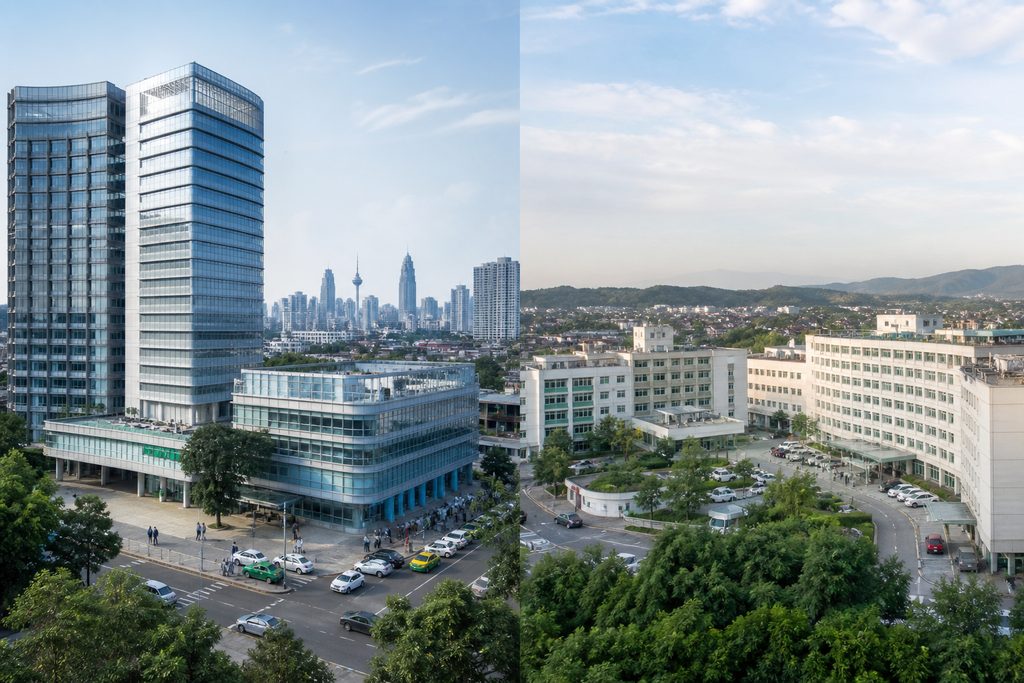
Chengdu is the capital of Sichuan Province, home to roughly 21 million people, and the medical hub for all of western China. The city’s flagship institution, West China Hospital of Sichuan University, ranks in the A++++ tier of the Fudan Hospital Ranking — the highest possible grade in China’s most authoritative hospital assessment. It is not ranked “number one” nationally; the Fudan general list uses five tiers rather than numerical positions. But A++++ places it among the country’s most elite institutions.
What does that mean practically? West China Hospital handles patient volumes that would overwhelm most Western facilities. Its specialists see complex cases from across a region of 250 million people. For international patients, that translates into deep clinical experience — particularly in oncology, cardiac surgery, orthopedics, and gastroenterology.
Is Chengdu good for medical tourism? For the right patient, yes. It offers top-tier clinical capability at a fraction of Western prices, without the crowding and wait times of Beijing or Shanghai. What it does not offer is a large English-speaking private hospital sector. That gap is exactly why concierge support matters here more than in Shanghai.
Who This Is Right For — and Who It Isn’t
Typically a good fit:
- Patients with a confirmed or suspected diagnosis seeking a second opinion from a high-volume Chinese specialist
- Those facing surgery quoted at $80,000–150,000 at home who want to explore comparable care at $12,000–25,000
- Patients with chronic conditions — hepatitis B, diabetes complications, certain cancers — where Chinese hospitals have exceptional case volume
- Travelers already in Asia who need reliable specialist access without flying to Europe
- Families seeking Traditional Chinese Medicine for rehabilitation or chronic pain management alongside conventional care
Probably not the right fit:
- Anyone with an acute emergency. Chengdu is a 12-hour flight from most of North America. Stabilize first.
- Patients who need a specific named surgeon on a specific date. Public hospitals cannot guarantee this in advance.
- Those unwilling to accept that public-hospital care requires an in-person consultation before any surgery is scheduled. No exceptions.
- Patients whose condition is well-managed at home. If your local specialist is competent and your insurance covers it, the disruption rarely justifies the savings.
The Options, Compared
Foreign patients in Chengdu generally choose between three service tiers. Here is how they differ in practice.
| Option | Typical Cost | What You Get | Best For |
|---|---|---|---|
| Written Second Opinion | $300–500 | Chinese specialist reviews your existing reports; written analysis and treatment direction | Deciding whether China is worth pursuing at all |
| Video Consultation | $100–300 (standard) / $500–800 (top specialist) | Live discussion with the specialty team; symptoms, goals, recommendations | Needing dialogue before committing to travel |
| Bilingual Medical Companion | From $300/day | In-person support: registration, queueing, payment, wayfinding, interpretation | Patients already in Chengdu who cannot navigate in Mandarin |
| Appointment Coordination | From $300 | Hospital registration, medical card creation, scheduling through international departments | Booking a specific consultation or health check |
Which column suits you depends on one question: how certain are you that you want treatment in China? If you are still deciding, start with a written second opinion. If you have decided, coordination plus a companion is the practical combination. Patients who skip straight to booking a flight without a remote evaluation often waste the trip.
How Does Medical Concierge Work in China? The Staged Model
This is the part that surprises Western patients most. Chinese public hospitals do not function like a Western clinic where you call, pick a doctor, and book a date. Outpatient registration typically happens the same day, in person, by queue. Surgery follows an in-person consultation — never before.
So a concierge service works in stages. First, you send your existing examination reports. The relevant specialty reviews them and returns written analysis. Second, if useful, you speak with the team by video to explain your symptoms and goals. Third, if a plan looks feasible and you agree, we coordinate your arrival, hospital communication, and available green-channel logistics.
One clarification worth stating plainly. Our role is case management: medical record translation, appointment coordination through official hospital international or VIP departments, and bilingual accompaniment. It is not an access fee. We do not buy queue positions, and we cannot promise you a specific professor or a specific surgery date. What we promise is diligent coordination — and a full refund of the coordination fee if we cannot secure the appointment described in your order.
What It Costs: Medical Concierge Service Chengdu Cost Breakdown
Pricing depends on the service tier and case complexity. Here are current reference ranges.
- Written second opinion (top-tier hospital specialist): $300–500. For reference only, not a prescription.
- Video consultation, standard international department: $100–300
- Video consultation, top specialist: $500–800
- Multidisciplinary team (MDT) video consultation: $1,500–2,000
- In-person top-specialist consultation coordination: $800–1,200
- Hospital appointment coordination (health check, outpatient, or inpatient/surgical): from $300
- Bilingual medical companion: from $300/day (half day is 4 hours, full day is 8 hours)
- Airport transfer: $200 round-trip
- VIP end-to-end coordination: $5,000–8,000
Any consultation fee is credited in full toward on-the-ground coordination if you upgrade within 90 days. That is a one-time credit applied to the coordination fee only — never to hospital treatment charges.
What these figures do not include: hospital fees themselves, medications, accommodation, flights, or visa costs. A cardiac bypass at a top Chengdu public hospital might run $12,000–20,000, against $120,000 or more in the United States. But that range varies by hospital and case complexity, and it is a hospital charge, not a concierge charge. Keep the two separate in your budgeting.
Practical Considerations: Visas, Records, and Language
Visa. Foreign patients coming to China for treatment apply for the S2 visa, annotated for medical treatment purposes. Family members accompanying you apply for S2 as well. Stays exceeding 180 days require the S1 category instead. Note that the M visa is strictly for commercial and trade activities — it has nothing to do with medical travel, despite what some outdated online guides suggest. Requirements shift, so confirm current rules with the nearest Chinese embassy or consulate and prepare supporting hospital documents.
Records. Bring everything: imaging on disc, pathology reports, lab results, medication lists, operative notes if you have had prior surgery. Chinese specialists work from source documents. A one-paragraph summary from your local doctor is helpful but not sufficient.
Payment. Public hospitals require prepayment. International insurance is typically reimbursed after the fact rather than billed directly. Private international hospitals in larger cities often offer direct billing, but Chengdu’s private sector is smaller than Shanghai’s or Beijing’s. Plan your cash flow accordingly.
Language. This is the honest sticking point. Chengdu’s top public hospitals are enormous — daily outpatient volumes reach into the tens of thousands — and signage, forms, and staff communication are overwhelmingly in Mandarin. A Chengdu hospital interpreter service priced through our bilingual companion program runs from $300 per day and covers registration, queueing, payment, wayfinding, and live interpretation. Patients with no Mandarin ability should not attempt a major public hospital visit unaccompanied.
Follow-up. Ask before you leave how your Chinese specialist will communicate with your home physician. Written summaries can usually be provided. Ongoing remote follow-up depends on the department.
Frequently Asked Questions
Yes, and earlier is better. For a written second opinion, turnaround is usually days once records arrive. For in-person coordination, allow at least two to four weeks to prepare documents, confirm appointments, and arrange visas. Public hospital appointments cannot be locked in from overseas in the way Western patients expect — coordination works through official international departments, and final scheduling follows hospital rules.
Rarely as direct billing. Most international policies reimburse after treatment, and you will need itemized receipts and medical documentation. Some private international hospitals offer direct settlement with selected insurers, but options in Chengdu are more limited than in Shanghai. Check your policy’s overseas treatment clause before assuming coverage.
This deserves a direct answer. Chinese public hospitals handle enormous case volumes and complications are managed within their own protocols, but recourse mechanisms differ from what you may expect at home. Independent legal remedies for foreign patients are limited. That is a genuine risk, not a footnote. It is also why we recommend a written second opinion and video consultation before any commitment — the cheapest way to reduce the chance of a wasted journey is to understand the plan first.
Not necessarily. If you read Chinese comfortably and can navigate a hospital registration system, you may manage independently. The service exists for patients who cannot — and for those who prefer to spend their energy on recovery rather than logistics.
Your Next Step
The core message is simple: Chengdu offers world-class clinical capability at a fraction of Western prices, but the system is not built for foreign patients to navigate alone. A staged approach — records first, remote evaluation second, travel third — protects both your health and your wallet. We are China Medical Services, a coordination service, not a hospital and not a provider of diagnoses. We connect international patients with 340+ top-ranked hospitals across 37 cities, and we handle the logistics that make the journey workable. When you are ready, start with a no-pressure conversation about your case.
For more medical information and treatment options in China, visit chinamedservices.com (China Medical Services).
