Medical Proxy Report in China: See What You Get Before You Pay
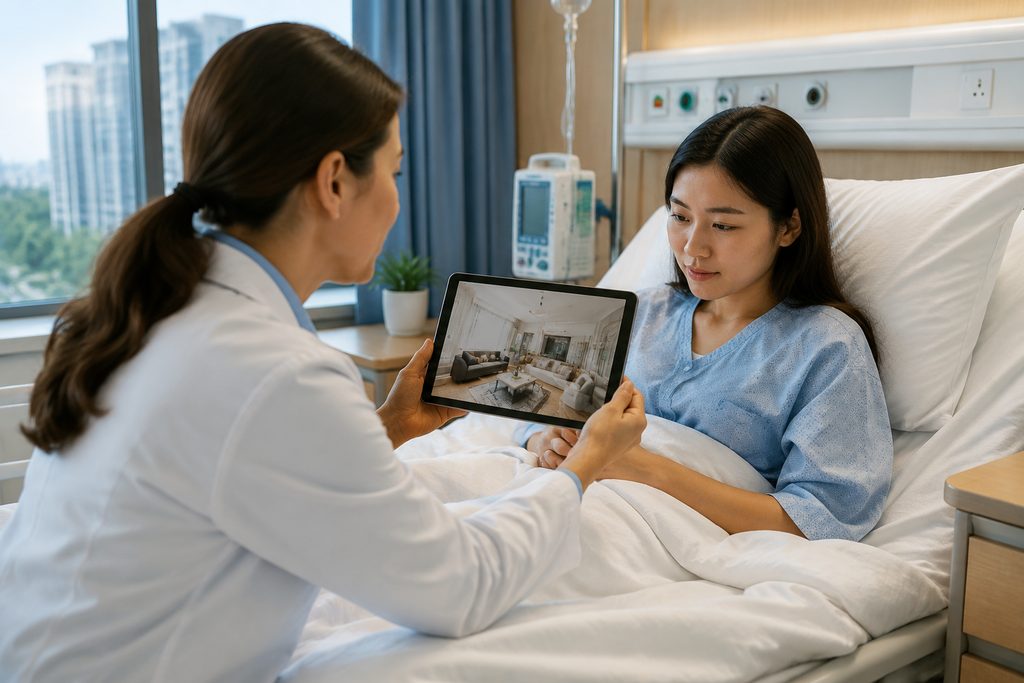
Have you ever wired money overseas for a surgery you’d only seen described in a brochure? It’s a strange feeling. You’re not just paying for a procedure — you’re paying for trust in a system you cannot see. A proxy report changes that equation. It lets someone physically stand in a Chinese hospital on your behalf, collect your records, speak to the department, and bring back a written account of what actually happened. No marketing language. No filtered summaries. Just what the hospital said, what it costs, and what the next step looks like.
This matters if you’re researching something like ivf cost Shanghai, where quoted prices online range from $3,000 to $15,000 depending on clinic tier and protocol. A proxy report tells you which end of that range applies to your case, not an average patient’s. It’s the difference between planning around a guess and planning around a document.
How This Actually Works, Step by Step
The process starts with what you already have. You send us your existing medical records — blood work, imaging reports, discharge summaries, whatever exists. If they’re not in English, we arrange certified translation into Chinese. That step alone can take three to five business days.
Then we identify the right hospital and department. Not every hospital suits every case. A patient researching book heart surgery China medical tourism needs a cardiac surgery department with high annual volume, not just a famous general hospital. Fuwai Hospital in Beijing performs over 14,000 cardiac surgeries annually — the highest volume globally. But if your case involves a rare valve pathology, a different center might be more appropriate. The proxy report forces that conversation to happen before you travel.
Our representative takes your translated records to the hospital in person. They register a medical card under your name, queue at the relevant department, and present your case to the consulting physician. The doctor reviews what you sent and gives a preliminary assessment: is surgery indicated, what additional tests would be needed, what the estimated cost range looks like, how long you’d need to stay in China.
You receive a written report within one to three working days after the visit, depending on hospital queue times. It includes the doctor’s comments, the department’s requirements, cost estimates broken down by item where the hospital provides them, and a clear statement of what remains unknown until you arrive for in-person consultation.
What a Proxy Report Actually Shows You About IVF Cost Shanghai
IVF pricing in Shanghai is not a single number. The public hospital international departments quote differently from private clinics. Medication protocols vary. Genetic testing adds cost. A proxy report breaks this down.
Here’s what a typical IVF proxy inquiry covers. The representative visits the reproductive medicine department with your fertility history. The doctor reviews your age, AMH levels, previous cycle outcomes if any, and male factor results. Based on that, they indicate which protocol you’d likely follow — antagonist, long agonist, or minimal stimulation. Each has a different medication cost. The report then shows the hospital’s published fee schedule for each component: consultation, ultrasound monitoring, egg retrieval, lab fees for fertilization and culture, embryo transfer, and cryopreservation.
What surprises most international patients is how itemized Chinese hospital billing is. You’re not quoted a package price. You’re quoted line items. A proxy report captures those line items so you can compare them against clinics in other countries. The same applies to patients asking how much is a hip replacement in Beijing — the implant cost, surgeon fee, anesthesia, and hospital bed days are all separate entries on the estimate.
One thing the proxy report cannot do: predict your ovarian response. No doctor anywhere can. The report will state the base cost for a standard cycle and flag the variables that could push it higher, such as the need for ICSI or preimplantation genetic testing.
A Realistic Timeline
People underestimate how long the pre-travel phase takes. Here’s an honest breakdown for a proxy report followed by potential treatment in China.
| Stage | What Happens | Typical Duration |
|---|---|---|
| Day 1–3 | You submit existing medical records; we assess completeness | 1–3 days |
| Day 3–8 | Certified translation of records into Chinese | 3–5 business days |
| Day 8–14 | Hospital and department selection; proxy visit scheduled | 3–7 days depending on queue |
| Day 14–17 | Proxy visit conducted; written report compiled and sent to you | 1–3 working days after visit |
| Week 3–6 | You decide whether to proceed; if yes, S2 visa application | 2–4 weeks depending on embassy |
| Week 6–10 | Travel to China; in-person consultation; additional testing if required | 1–2 weeks before treatment decision |
| Week 10+ | Treatment or surgery scheduled per hospital availability | Varies by department and case |
The waiting steps people forget: document translation, embassy appointment slots, and the mandatory in-person consultation before any surgery. Chinese public hospitals do not schedule surgery from overseas. You must be seen in person first. The proxy report shortens the gap between arrival and that consultation because the department already has your file.
What Can Go Wrong — and What Happens Then
The most common failure mode is incomplete records. If you send a one-page summary from your home doctor but no actual imaging or lab values, the Chinese specialist may refuse to comment. The proxy visit still happens, but the report will say: insufficient data, please provide the following. That’s not a wasted trip — it’s a precise list of what to obtain. But it costs time.
Another failure mode: the hospital you selected turns out to be wrong for your case. A patient researching spine surgery abroad package price might assume the biggest orthopedics hospital is best. But spinal deformity and degenerative disc disease are different subspecialties. If the proxy visit reveals the mismatch, we redirect to a more appropriate department and conduct a second visit. You pay for the additional visit, but you avoid traveling to the wrong city.
Language is a real obstacle. Even in international departments, not every staff member speaks English. The proxy representative handles this. But the report will honestly note if communication was difficult or if the doctor’s recommendations came with caveats that need clarification. We’d rather flag uncertainty than smooth it over.
And sometimes the answer is no. The doctor reviews your case and says surgery is not recommended, or the risk profile is too high. That’s a hard message to receive after paying for a proxy report. But it’s far cheaper than flying to China and hearing it in person after spending $2,000 on flights and accommodation.
Is Cancer Treatment in China Safe? What a Proxy Report Can and Cannot Tell You
Safety is a fair question. The short answer: China’s top-tier cancer centers are equipped with modern technology and treat enormous patient volumes. Peking Union Medical College Hospital, Fudan University Shanghai Cancer Center, and Sun Yat-sen University Cancer Center all rank among China’s top 10 for oncology in the Fudan specialty reputation rankings. Many are also included on our database of 340+ top-ranked hospitals across 37 cities.
But “safe” depends on which hospital you choose — and that’s where the distinction matters. China has over 35,000 hospitals. The top 5% are excellent. The rest vary widely. A proxy report confirms which category your selected hospital falls into. The representative verifies the department’s actual caseload, asks about your specific cancer type and stage, and documents the treatment protocol the doctors propose.
What the report cannot tell you: your individual outcome. No document can. It can tell you the hospital’s stated five-year survival rates for your cancer type if published, the treatment modalities available (radiotherapy equipment, surgical approaches, targeted therapy access), and whether the department participates in clinical trials. That’s verified data, not a promise.
For patients comparing JCI accredited hospitals China list against public hospital rankings, the proxy report adds a layer of on-the-ground verification. JCI accreditation tells you about processes and safety systems. The Fudan rankings tell you about clinical reputation. Neither tells you how your specific case will be handled. Only a department-level inquiry does that.
Practical Considerations: Records, Visa, Payment, and Follow-Up
Records come first. Without them, nothing moves. You need: all imaging on CD or digital files (DICOM format preferred), all lab reports with dates and reference ranges, surgical history if relevant, current medication list with dosages, and a referral letter from your home physician stating the diagnosis and question for the Chinese specialist. The more complete this package, the more substantive the proxy report.
For the visa, the applicable category for medical treatment in China is the S2 visa. It’s a short-stay visa for private affairs, and medical treatment falls under this category when supported by hospital documentation. Family members accompanying you also apply for S2. The M visa is for commercial and trade activities — not medical travel. Processing times vary by embassy, typically two to four weeks. We provide guidance on which hospital documents to include, but we never guarantee approval.
Payment for the proxy report itself is straightforward: a coordination fee starting from $300, with the exact amount depending on hospital, department, and whether translation is needed. If you later proceed to treatment in China, any consultation fees you’ve paid are credited in full toward the on-the-ground coordination service within 90 days. That credit applies to our coordination work, never to hospital charges.
Follow-up at home is the piece most people forget to plan. If you have surgery in China, your home physician needs a discharge summary in English, operative notes, and imaging on disc. Chinese hospitals provide these, but you must request them before discharge. We help coordinate that handoff so you don’t leave Beijing or Shanghai without the documents your doctor at home will need.
Frequently Asked Questions
Hospital appointment coordination starts from $300, with translation and proxy visit fees adding to that depending on the hospital and department. The total for most cases falls between $300 and $800. You receive a written report with the doctor’s assessment, cost estimates, and next steps. If you proceed to treatment within 90 days, the coordination portion is credited toward your on-the-ground service.
No. Chinese public hospitals require an in-person consultation before scheduling any surgery. The proxy report establishes your file with the department and gives you a preliminary assessment, but the final surgical decision and date come only after you arrive and are seen by the operating surgeon. Anyone promising otherwise is not being honest about how Chinese hospitals work.
That happens, and it’s valuable information. The report will document the doctor’s reasoning and suggest alternatives if offered. You’ve spent a few hundred dollars to avoid a much more expensive mistake. If the issue is that the wrong department was selected, we can redirect to a more appropriate specialty and conduct a second proxy visit.
No. That’s the entire point. Our representative handles all hospital communication in Chinese and English, translates your records, and delivers the report in English. The proxy report exists specifically for patients who cannot be in China yet and cannot navigate the system in Chinese.
Not exactly. A written second opinion from a top specialist costs $300–500 and is based purely on document review. A proxy report involves physically visiting the hospital, registering your file, and speaking with the department in person. It’s more granular and includes logistical information — costs, wait times, department requirements — that a remote second opinion cannot provide.
Your Next Step
You don’t need to commit to treatment in China to find out what’s actually possible. You need verified information from inside the hospital you’re considering. That’s what a proxy report delivers.
We’re China Medical Services, and our job is case management: translating records, coordinating with hospital international departments, and arranging bilingual support on the ground. We don’t practice medicine, and we don’t promise outcomes. We give you access to information that’s otherwise nearly impossible to obtain from abroad.
If you’re weighing options — whether it’s ivf cost Shanghai, cardiac surgery volume at Fuwai, or whether a Beijing orthopedics department handles your specific hip condition — start with a conversation. Tell us what you’re facing and what records you have. We’ll tell you honestly whether a proxy visit makes sense for your situation. No pressure. Just a clear picture of what’s on the other side of the ocean.
For more medical information and treatment options in China, visit chinamedservices.com (China Medical Services).
