Medical Tourism with Family to China: Your Complete Guide for Children and Elderly
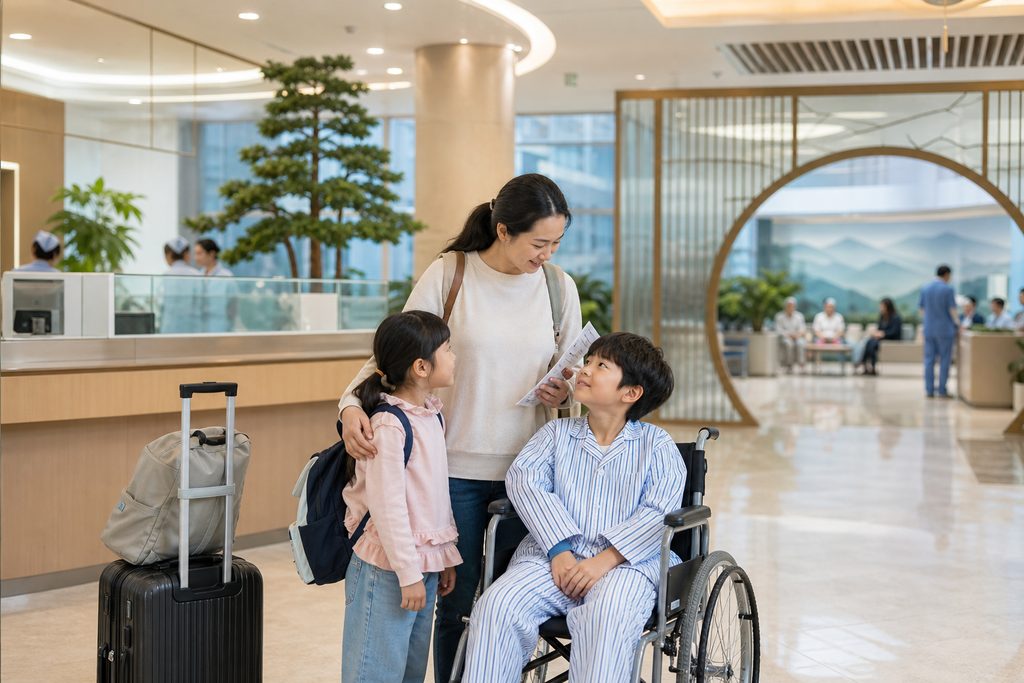
You have probably seen the images. Gleaming hospital towers in Shanghai. A waiting room in Beijing that looks more like a five-star hotel lobby. The immediate assumption is that bringing your whole family — especially young children or an aging parent — is a logistical fantasy. Too many moving parts. Too much risk. That assumption is wrong. It is not effortless. But it is far more achievable than most people realize, provided you understand the real constraints before you book anything.
Medical Tourism with Family to China: The Short Answer
Yes, you can bring children and elderly family members for your treatment. Thousands of international patients do this every year. The Chinese hospital system, particularly at the 340+ top-ranked institutions we work with, has adapted rapidly to the needs of accompanying families. But there is a catch. The success of the trip hinges almost entirely on your choice of hospital tier and the city you select. A public hospital’s general ward will feel impossible with a toddler in tow. The international VIP wing of that same hospital? Entirely different experience. This guide maps out exactly where the friction points are and how to navigate them.
Who This Is Right For — and Who It Isn’t
Let’s be direct. This path works brilliantly for some families and is a genuine mistake for others.
You are a strong candidate if:
- Your treatment is planned, not an emergency. You have weeks or months to prepare.
- You are targeting a specific procedure where Chinese hospitals have deep expertise — cardiac surgery, orthopedics, oncology, or a complex intervention with a long waiting list at home.
- You can budget for private international wards or VIP sections. This is non-negotiable with family.
- Your child is school-aged or you have a dedicated caregiver who can stay with an infant while you attend consultations.
- Your elderly relative is mobile enough to navigate large hospital campuses or you arrange wheelchair assistance from the start.
Rethink the plan if:
- Your condition requires multiple unpredictable emergency visits. Public ERs in China are crowded and fast-paced. Not a place for a child.
- You cannot afford the international department surcharge. Standard public wards have shared rooms, limited visiting hours, and zero family amenities.
- Your elderly parent has uncontrolled chronic conditions that could flare up during travel. Accessing routine geriatric care as a foreign visitor is complicated.
- You expect a Western hotel experience inside a public hospital. Even VIP wings have cultural differences in food, communication style, and nursing approach.
The Options, Compared
The single biggest decision you will make is not which hospital. It is which tier of service within that hospital. This choice determines whether your family feels supported or stranded. Here is how the real options stack up when you are traveling with dependents.
| Factor | Public Standard Ward | Public Hospital VIP/International Wing | Private International Hospital |
|---|---|---|---|
| Family presence | Strict visiting hours. No overnight stays for family. Children often prohibited entirely. | Private suite. One family member can usually stay overnight. Children allowed during daytime with supervision. | Private room designed like a hotel. Family stays freely. Pediatric play areas in some locations. |
| Language barrier | Near-total. Nurses and admin staff speak Mandarin. You need a translator for everything. | English-speaking coordinators. Doctors often speak functional medical English. Nursing staff may still be Chinese-only. | Full English-speaking staff. Medical records in English. Insurance direct billing available. |
| Cost (USD, major procedure) | $8,000–15,000 (surgery only, no family support) | $18,000–35,000 (includes private room, coordination, some translation) | $40,000–80,000+ (all-inclusive Western-standard care) |
| Elderly accessibility | Long walks between departments. Elevators crowded. Benches scarce. No wheelchair service unless you arrange privately. | Coordinator can arrange wheelchair. Shorter queues. Private waiting areas with seating. | Designed for accessibility. Wide corridors. Dedicated patient navigator. Minimal waiting. |
| Food for family | Hospital canteen. Chinese food only. No dietary customization. | Western menu options. Can discuss dietary needs. Cafeteria still limited for children. | Restaurant-quality food. International menus. Pediatric and geriatric dietary accommodations. |
For a family with children and an elderly relative, the public standard ward is not a viable option. The private international hospital is the most comfortable but erases much of the cost advantage of traveling to China. The VIP international wing of a top public hospital is the sweet spot. You get the clinical expertise of a Fudan-ranked institution at roughly one-third to one-half the US price, with enough family support to make the stay manageable. That is where most of our families land.
What “Safe” Actually Means When You Bring Children to China for Your Surgery
The question is it safe to bring children to China for surgery is the one every parent asks. Not safe for the patient. Safe for the child.
China’s major cities — Beijing, Shanghai, Guangzhou, Shenzhen — are statistically safer than most Western cities of comparable size. Violent street crime is rare. The risks are different. They are environmental and logistical.
Air quality is the first concern. Beijing winters can see particulate matter levels that would close schools in Europe. A child with asthma needs a management plan. Shanghai and southern cities like Guangzhou and Shenzhen have better air on average. Check the season before you book. Many international hospital wings have HEPA-filtered air systems, but the moment you step outside, you are in the real environment.
Food and water safety is the second layer. Tap water is not potable anywhere in China. You will rely on bottled water for drinking and toothbrushing. Street food is a gamble for a child’s stomach. Hospital international wards and nearby serviced apartments have kitchenettes. Cooking simple meals for a picky child is often the easiest solution.
The third concern is healthcare for the accompanying family member. If your child spikes a fever or your elderly father has a blood pressure crisis, the hospital treating you may refuse to treat them. It is a specialty hospital, not a family clinic. You need to know in advance where the nearest international clinic is. In Beijing, that might be United Family Hospital. In Shanghai, Jiahui or Parkway. These clinics treat foreigners as walk-ins, speak English, and accept international insurance. Map them before you travel. Our private hospital directory includes these facilities across 37 cities.
Finding the Right Hospital When an Elderly Relative Is the Patient
If the person traveling for treatment is the elderly family member, the search shifts. You are no longer asking “which hospital tolerates family members.” You are asking a harder question: best hospital in China for elderly surgery — where “best” means not just technical skill but geriatric surgical safety.
Elderly surgical patients face higher risks of postoperative delirium, polypharmacy interactions, and slower recovery. China’s top hospitals have responded to this. Peking Union Medical College Hospital (PUMCH) in Beijing runs a dedicated geriatrics department that coordinates with surgical teams. West China Hospital in Chengdu has a perioperative evaluation clinic specifically for patients over 70. These are not marketing claims. They are structural departments that exist because China’s population is aging rapidly and the hospital system has adapted.
For cardiac procedures in an elderly patient, Fuwai Hospital in Beijing performs over 14,000 cardiac surgeries annually — the highest volume in the world. Volume matters for elderly surgery. A team that does a procedure 500 times a year sees complications that a team doing it 50 times a year only reads about. The same logic applies to orthopedics at Peking University Third Hospital or oncology at Fudan University Shanghai Cancer Center. You can explore specific departments on our specialty rankings page.
Do not overlook the discharge plan. An elderly patient recovering from major surgery cannot fly home immediately. You need a serviced apartment near the hospital for at least one to two weeks of recovery before a long-haul flight is safe. Some hospitals have affiliated rehabilitation centers. Others will discharge you to a nearby hotel. Ask this question before you commit to a surgical date.
What Medical Tourism Packages for Families Actually Cost
The phrase medical tourism packages for families China suggests an all-inclusive price. The reality is more modular. You are assembling several cost layers, and the total varies dramatically by city, hospital tier, and family size.
Here is a realistic breakdown for a family of three — one patient, one spouse, one child — traveling to Shanghai for a major orthopedic procedure at a public hospital international wing:
| Cost Category | Estimated Range (USD) | Notes |
|---|---|---|
| Surgery and hospital stay (7 days, private suite) | $18,000–28,000 | Varies by procedure complexity and implant type |
| Pre-operative consultations and diagnostics | $1,500–3,000 | MRI, CT, blood work, specialist reviews |
| Bilingual medical companion (5 days) | $1,500–2,000 | From $300/day. Covers hospital navigation, translation, coordination. |
| Family accommodation (21 days, serviced apartment) | $2,500–5,000 | Proximity to hospital drives price. Includes kitchen for child’s meals. |
| Flights (3 round-trip, economy) | $3,000–6,000 | Depends on origin and season |
| S2 visas (3 persons) | $450–600 | Varies by nationality and processing speed |
| Food, local transport, incidentals (21 days) | $1,500–2,500 | Eating at mid-range restaurants and cooking in apartment |
| Total estimated range | $28,450–47,100 | Compare to $80,000–120,000+ in the US for equivalent procedure alone |
This is not a package price. It is what you will spend when you add up the pieces. The cost advantage over the US or UK remains significant even with family in tow, but only if you stay in the public hospital international wing tier. Move to a fully private international hospital, and the total can approach $70,000–90,000 — still less than the US, but no longer a dramatic savings.
For affordable cancer treatment abroad with family, the math shifts. Cancer care involves multiple cycles. You may be in China for months, not weeks. Longer stays mean serviced apartment costs dominate. Some families rent an apartment for three months and the patient attends chemotherapy sessions as an outpatient. This is far cheaper than an extended hospital admission. Shanghai and Guangzhou have large expat communities where short-term furnished rentals are easy to find. Beijing is more expensive but has the highest concentration of top-ranked oncology hospitals.
Practical Considerations: Visas, Housing, and the Paper Trail
The logistics are where families get overwhelmed. Break them down one layer at a time.
The visa question. Every family member needs their own visa. The correct category for medical treatment is the S2 visa, which covers short-term private affairs including medical visits. The patient applies for an S2 with a supporting letter from the Chinese hospital confirming the treatment arrangement. Accompanying family members — spouse, children, elderly parents — apply for their own S2 visas under the same private affairs category, citing accompaniment of the patient. An S1 visa is for stays exceeding 180 days and requires additional documentation. Our team provides guidance on the China medical visa for patient and family members process, including the exact wording the hospital invitation letter must contain. We do not guarantee visa approval — that is the embassy’s decision — but we ensure your application package matches what consular officers expect to see.
Housing near the hospital. The question of how to arrange family accommodation near Beijing hospital applies to any major Chinese city. The answer depends on the hospital’s location. PUMCH is in central Beijing near Wangfujing. Hotels there are expensive but walking distance to the hospital is possible. Fuwai Hospital is in Xicheng District, where serviced apartments are available but book up fast. In Shanghai, Ruijin Hospital is in the former French Concession — charming neighborhood, good food, short-term rentals plentiful. West China Hospital in Chengdu has a cluster of patient-family apartments directly across the street. We maintain a list of vetted accommodations near each major hospital. Some have kitchen facilities. Some have English-speaking front desks. None are luxury hotels, but they are clean, safe, and understand that guests are hospital visitors with irregular schedules.
Medical records. Every hospital will require your complete medical file translated into Chinese or English. For the elderly patient, this includes a full medication list with dosages, previous surgical history, and recent imaging on CD or USB. Chinese radiologists will re-read your scans — they often disagree with the original report. Bring the raw DICOM files, not just the written report. For a child accompanying you, bring vaccination records and a letter from your pediatrician summarizing any chronic conditions. International clinics in China will treat your child, but they want to know what they are dealing with.
Payment. Public hospital international wings require a deposit before admission. The deposit is typically 50-80% of the estimated total. Payment is by wire transfer, credit card, or WeChat Pay/Alipay if you have set up a Chinese bank account. International health insurance with direct billing is accepted at private international hospitals but rarely at public hospital VIP wings. You pay upfront and claim reimbursement from your insurer afterward. Get pre-authorization from your insurance company in writing before you travel.
Frequently Asked Questions
In a public hospital standard ward, no. Children are not permitted overnight and often not allowed on the ward at all. In a VIP international suite, one adult family member can stay. A young child may be permitted to stay with that adult, but this is at the hospital’s discretion and depends on the child’s behavior. A crying toddler in a surgical recovery ward is not workable. Most families arrange for one parent to stay with the patient while the other stays with the child at a nearby apartment. This is the pattern that works.
This is a real risk. The hospital treating you is not equipped to treat your parent’s unrelated condition. You need a plan. Before you travel, identify the nearest international clinic — United Family, Jiahui, Parkway, or Raffles depending on the city. Save their address and phone number. Confirm they accept walk-in patients. If your parent has a chronic condition, bring a month’s supply of their regular medications plus a prescription letter. Chinese pharmacies do not honor foreign prescriptions, but the letter helps an international clinic doctor write a local equivalent. Travel insurance with medical coverage for accompanying family members is not optional. Buy it.
Some agencies sell all-inclusive packages. We do not. The reason is that every case is different. A package that works for a 45-year-old knee replacement patient traveling alone is useless for a family of four with an elderly grandmother in tow. What we provide is modular coordination. You choose the pieces you need — hospital appointment coordination, bilingual companion, accommodation recommendations, visa guidance — and we assemble them around your specific situation. This costs more effort upfront but avoids the mismatch that happens when a package forces your complex reality into a standard box.
For a healthy child, a few weeks of moderate air pollution is unlikely to cause lasting harm. For a child with asthma or respiratory sensitivity, it requires management. Check the AQI forecast for your target city and season. Beijing is worst in winter (November–February). Shanghai is moderate year-round. Southern cities like Guangzhou and Shenzhen have the best air. If your child has a respiratory condition, schedule your treatment for spring or autumn in a southern city. Bring a supply of any inhalers or medications. Most international hospital wings and serviced apartments have good air filtration indoors. The exposure is mainly outdoors during transit.
Your Next Step
Bringing your family to China for medical treatment is not
For more medical information and treatment options in China, visit chinamedservices.com (China Medical Services).
