Medical Translation vs Interpretation: What’s Different for Foreign Patients in China
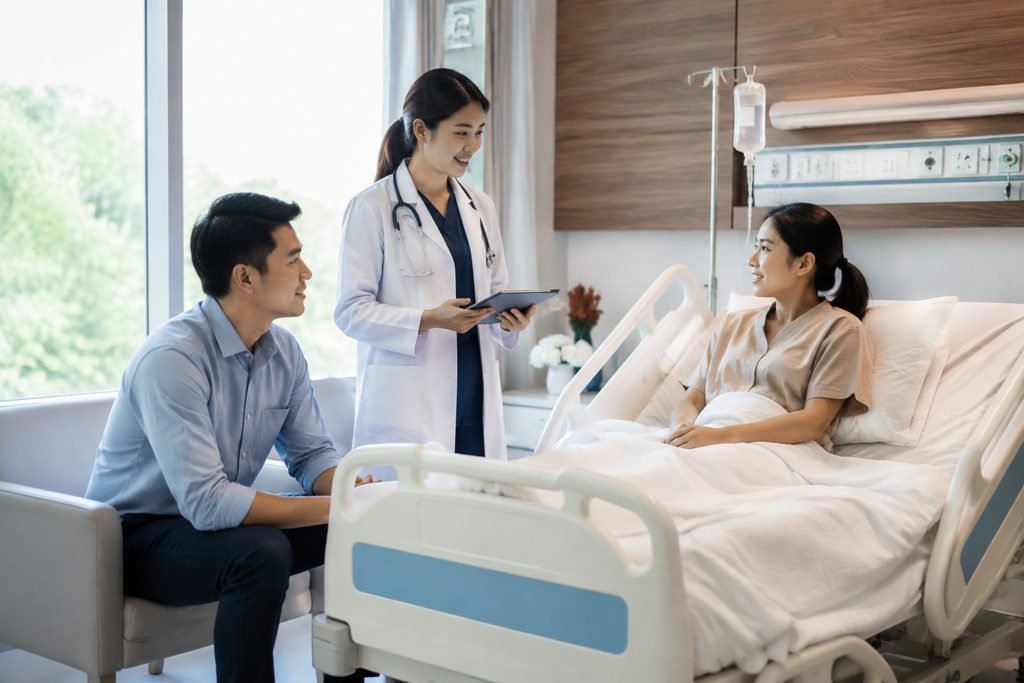
Medical Translation vs Interpretation: What’s Different for Foreign Patients in China
Medical translation and medical interpretation are not the same thing. One deals with written words. The other deals with spoken words. If you are a foreign patient planning treatment at one of China’s 340+ top-ranked hospitals, you will likely need both. And confusing the two can lead to serious problems — wrong dosage instructions, misunderstood surgical consent, or a missed diagnosis because a symptom was lost in translation. This guide explains the difference in plain terms, what each service actually costs, and how to access medical interpreter services for foreigners China hospitals without getting burned.
A written report in Chinese means nothing to you if you cannot read it. A doctor speaking rapid Mandarin while you nod politely is a recipe for disaster. Translation converts your medical records, discharge summaries, and lab results from Chinese to English (or your native language). Interpretation happens live — in the consultation room, at the pharmacy window, or on a video call — with a person converting speech in real time. Both require different skills. Both have different pricing structures. And in China’s massive public hospitals, neither is guaranteed unless you arrange it yourself.
How This Actually Works, Step by Step
Here is the real sequence when you come to China for treatment and need language support. No abstractions. This is what our team coordinates for patients every week.
First, you send us your existing medical records — MRI reports, blood work, pathology slides, whatever you have. We arrange medical translation services to convert these documents into Chinese for the hospital’s review. This is step one. Without it, the Chinese specialist cannot evaluate your case. The cost typically ranges from $30 to $80 per page depending on technical complexity and turnaround time.
Second, the hospital reviews your translated records and decides whether they can treat you. If yes, you receive a treatment plan and cost estimate. Now you need an S2 visa with a medical treatment notation. We guide you through that process, including the invitation letter from the hospital.
Third, you arrive in China. This is where interpretation kicks in. A bilingual medical companion meets you at the hospital, handles registration, translates your conversation with the doctor, explains the prescription, and walks you through every step. That service starts from $300 per day.
Fourth, after treatment, you receive discharge documents in Chinese. You need those translated back into English for your home doctor. Same translation service, reverse direction.
That is the full loop. Translation before, interpretation during, translation after. Most patients only think about the middle step. The first and last steps are where records get lost and home doctors get confused.
What Is the Difference Between Medical Translation and Interpretation?
The short answer: translation is written. Interpretation is spoken. But the practical difference runs deeper.
Medical translators work with documents. They have time to research terminology, consult medical dictionaries, and revise their output. A good medical translator knows that “心衰” means heart failure, not “heart weakness,” and that “化疗” is chemotherapy, not “chemical treatment.” They produce a written document you can review, share with doctors, and keep in your file. Accuracy matters more than speed.
Medical interpreters work in real time. They sit beside you in the consultation room or join via video. They cannot pause the conversation to look up a term. They must convert complex medical language instantly, in both directions, while managing tone and cultural nuance. A skilled interpreter knows when to ask the doctor to slow down, when to clarify a term, and when to simply translate verbatim. The skill set is completely different from translation.
Some people are certified in both. Most specialize in one. When you hire for your China trip, make sure you know which one you are getting.
Do Chinese Hospitals Provide English Translators for Patients?
The honest answer: not reliably. Some do. Most do not.
Private international hospitals in Beijing, Shanghai, and Guangzhou — such as United Family, Jiahui, and Parkway — employ English-speaking staff as a core part of their service model. You can walk in and expect to communicate. These hospitals are JCI-accredited and designed for international patients. You pay for that convenience.
Public hospitals are different. Even Fudan-ranked top-tier institutions like Fuwai Hospital or Peking Union Medical College Hospital may have an international department with some English-speaking coordinators. But that does not mean the cardiologist speaks English. It does not mean the nurse at the blood draw station speaks English. It does not mean the pharmacy window clerk speaks English. In a hospital with 10,000+ outpatient visits per day, language support is thin.
So the practical answer to “do Chinese hospitals provide English translators for patients” is: assume no, unless you have confirmed otherwise in writing. If you are going to a public hospital, bring your own interpreter. That is the only way to guarantee communication.
A Realistic Timeline
People underestimate how long the language piece takes. Here is a realistic breakdown for a typical treatment journey, from first contact to arriving home.
| Stage | What Happens | Realistic Duration |
|---|---|---|
| Day 1–7 | You send medical records; we arrange written translation into Chinese | 3–7 business days for standard documents |
| Week 2–3 | Hospital reviews translated records; issues treatment plan and cost estimate | 5–14 days depending on department |
| Week 3–6 | S2 visa application with hospital invitation letter | 1–4 weeks depending on your embassy |
| Week 4–8 | Arrival in China; in-person consultation with interpreter; admission or procedure scheduling | 1–2 weeks for consultation to treatment |
| Post-treatment | Discharge documents translated back to English; follow-up plan for home doctor | 3–5 business days |
The step people forget is document translation lead time. You cannot send Chinese records to a hospital and expect same-day review. And you cannot apply for an S2 visa without the hospital’s invitation letter, which requires the translated records first. Everything chains together.
What Can Go Wrong — and What Happens Then
Let us be direct about failure modes. They happen. Knowing them in advance is how you protect yourself.
Wrong translation of a critical term. A mistranslated pathology report can change the entire treatment plan. What happens then? A reputable translation provider will have a review process — a second translator checks the first one’s work. If an error is caught after the fact, the provider should correct it at no charge. But the real protection is using translators with actual medical training, not generalist linguists. Ask about their medical credentials before you send documents.
The interpreter does not show up. It happens. Hospitals change appointment times. Traffic in Beijing is brutal. If your interpreter is late or missing, you have three options: wait, reschedule, or proceed without them. Proceeding without an interpreter in a public Chinese hospital is a bad idea. The recourse is to book through a service that guarantees backup coverage. Our team always has a secondary interpreter on standby for critical appointments.
The interpreter speaks English but not medical English. This is the most common failure. A fluent bilingual person who does not know the difference between “angina” and “heart attack” in both languages is dangerous in a cardiology consult. The fix: ask specifically for a medical interpreter, not a general interpreter. Confirm they have experience in your specific specialty — oncology, orthopedics, cardiac surgery, whatever applies.
Visa delay due to document issues. If the hospital invitation letter has errors, or your translated records do not match your passport name exactly, the S2 visa can be delayed. The recourse is careful document review before submission. One wrong character in a Chinese name can cause a two-week delay.
How to Find a Medical Interpreter in Shanghai
Shanghai has the highest concentration of international medical resources in mainland China. But finding a qualified medical interpreter in Shanghai still takes effort if you do not know where to look.
Your options break down into three categories. First, private hospitals with in-house interpreters. United Family Shanghai, Jiahui, and Parkway all have English-speaking clinical staff. If you are treated there, interpretation is included. You pay higher treatment fees as a result.
Second, independent freelance interpreters. You can find them through expat networks, LinkedIn, or word of mouth. Rates in Shanghai typically run $50–100 per hour for medical interpretation. The risk: no quality guarantee, no backup if they cancel, and no accountability if they make an error.
Third, a coordination service like ours. We maintain a vetted network of medical interpreters in Shanghai who specialize in specific departments. You get backup coverage, accountability, and a single point of contact. The cost is from $300 per day, which includes hospital navigation — registration, queue management, payment, and translation of the doctor’s instructions.
The question “how to find a medical interpreter in Shanghai” really comes down to risk tolerance. If you are getting a routine checkup, a freelance interpreter might be fine. If you are having cardiac surgery at Zhongshan Hospital, you want someone with cardiology-specific experience and a backup plan.
Medical Translation Services Cost: What China Hospital Documents Actually Run
Translation pricing in China is lower than in the US or Europe, but the range is still wide. Here is what you should expect for common document types.
| Document Type | Typical Cost Range | Turnaround |
|---|---|---|
| Standard lab report (1–2 pages) | $30–60 | 1–3 business days |
| Imaging report (CT/MRI, 3–5 pages) | $80–150 | 2–4 business days |
| Pathology report (technical, 5–10 pages) | $150–300 | 3–5 business days |
| Full medical record bundle (20+ pages) | $400–800 | 5–10 business days |
| Discharge summary (post-treatment) | $50–100 | 2–3 business days |
These are reference ranges. Final quotes depend on technical density, source language (Chinese to English vs. English to Chinese), and urgency. Rush jobs cost 50–100% more. And yes, medical translation services cost China hospital documents less than equivalent services in the US, where the same pathology report might run $400–600.
One thing to understand: translation is not a commodity. A $30 translation from a generalist might be fine for a basic blood panel. A complex oncology report needs a translator with oncology experience. Paying for the right expertise is cheaper than paying for a mistranslation that leads to the wrong treatment.
Medical Tourism Packages China with Interpreter Included
Some agencies sell all-inclusive medical tourism packages China with interpreter included. These bundle flights, hotel, hospital coordination, and interpretation into one price. They can work well for straightforward procedures. They can also hide costs and lock you into specific hospitals.
What to look for in any package: Is the interpreter a medical specialist or a general bilingual person? Is interpretation included for every hospital visit or just the initial consultation? Is there a cap on hours per day? What happens if you need an extra day of interpretation due to complications?
Our model is different. We do not sell fixed packages. We start with a free consultation to understand your medical needs, then build a coordination plan around your specific case. You pay for translation and interpretation as separate line items, so you know exactly what you are getting. No bundled mystery pricing.
If a package looks too cheap, it probably is. Quality medical interpretation in China costs real money. Anyone offering it for free is either cutting corners or hiding the cost elsewhere in the package.
Practical Considerations: Records, Visa, Payment, and Follow-Up
Here is what actually matters when you are preparing for treatment in China as a foreign patient.
Records. Bring everything. Every scan, every report, every prescription. If it is not in English or Chinese, get it translated before you leave home. The hospital needs complete records to give you an accurate assessment. Incomplete records lead to repeated tests and delays.
Visa. You need an S2 visa with a medical treatment notation. Not an M visa — that is for commercial and trade activities. Your accompanying family member also applies for an S2. Processing time varies by embassy, so start early. The hospital’s international department will provide the invitation letter you need.
Payment. Public hospitals in China generally require prepayment. You deposit money upfront, and charges are deducted as services are rendered. Private international hospitals may bill your insurance directly. Bring a credit card that works internationally and confirm your payment method before you arrive.
Insurance. Most Western insurance plans do not directly cover treatment at Chinese public hospitals. You pay out of pocket, then submit for reimbursement. Private international hospitals with JCI accreditation are more likely to have direct billing arrangements with international insurers. Check with your insurer before you commit.
Follow-up at home. Before you leave China, get your discharge summary translated into English. Your home doctor needs it. Also ask the Chinese doctor for a written follow-up plan — medication schedule, activity restrictions, warning signs to watch for. Without translated documentation, your home doctor is flying blind.
Frequently Asked Questions
Translation deals with written documents — medical records, lab reports, discharge summaries. Interpretation deals with spoken communication — live conversation between you and a doctor. They require different skills, different training, and different pricing. You typically need both when seeking treatment in China.
Generally not. Some top-tier hospitals have international departments with English-speaking staff, but coverage is limited and cannot be guaranteed for every interaction. Most patients arrange their own interpreter through a service provider. Private international hospitals in major cities do include English-speaking staff as standard.
Expect to pay from $300 per day for a bilingual medical companion who handles interpretation plus hospital navigation. Freelance interpreters in Shanghai or Beijing charge $50–100 per hour. Private hospitals include interpretation in their higher treatment fees. The final cost depends on specialty, duration, and whether you need backup coverage.
You can, but you should not. Machine translation handles simple phrases fine. It fails on medical terminology, dosage instructions, and nuanced symptom descriptions. In a high-stakes medical conversation, the cost of a professional interpreter is trivial compared to the cost of a misunderstanding. Use machine translation for menus and street signs, not for medical decisions.
A reputable translation provider will have a quality review process and will correct errors at no charge. The bigger risk is an error that goes unnoticed and affects your treatment plan. That is why you should use translators with medical training and ask about their review process before sending documents. For critical records like pathology reports, request a second-review option.
Your Next Step
Language is not a minor detail in medical care. It is the difference between getting the right treatment and getting the wrong one. Translation and interpretation serve different purposes, cost different amounts, and require different expertise. Understanding that difference is your first layer of protection.
Our team at China Medical Services coordinates translation and interpretation for international patients at 340+ top-ranked hospitals across 37 Chinese cities. We do not provide medical advice — we connect you with the right specialists and make sure nothing is lost in language. If you are considering treatment in China, start with a free consultation. We will review your situation and tell you honestly what language support you need, what it costs, and how to proceed.
Get informed. Get prepared. And never nod through a medical conversation you do not fully understand.
For more medical information and treatment options in China, visit chinamedservices.com (China Medical Services).
