Medical Trip to China End to End: How the Process Works for Foreigners
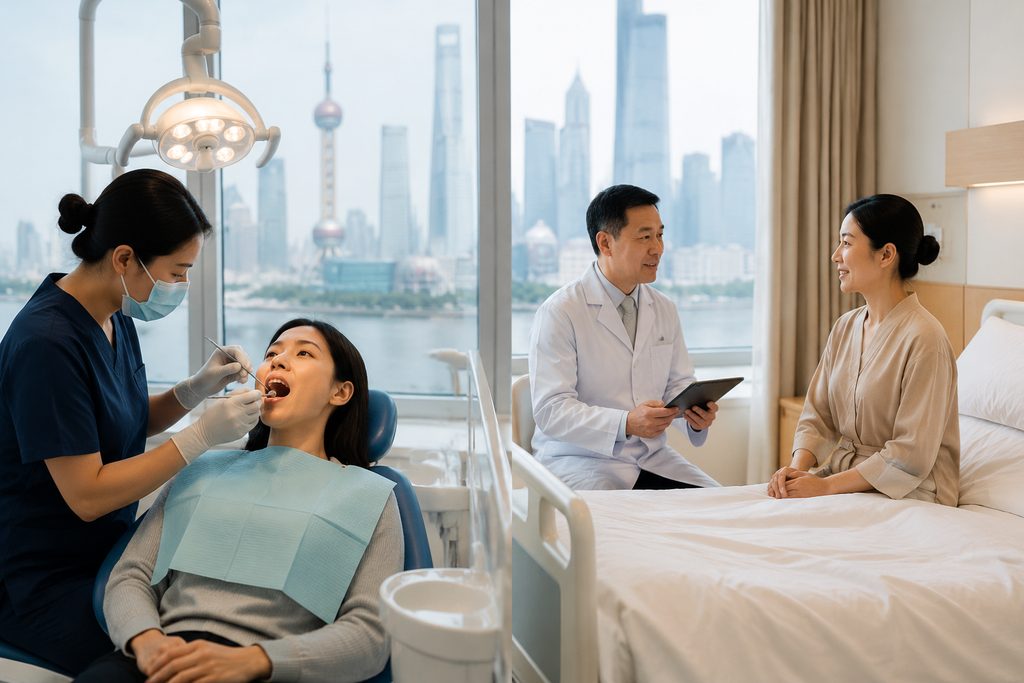
When 42-year-old Michael from Manchester heard the words “aortic valve replacement,” his first thought was the wait. His NHS cardiologist told him surgery might be scheduled within four to six months. His second thought was cost. A private hospital in London quoted him £38,000. Then a colleague mentioned something Michael had never considered: traveling to China for the operation. Not as a last resort. As a first choice. He started searching for the best hospitals in China for foreigners and found a landscape that confused him at first. Public, private, international wings, visa categories, appointment rules that seemed to contradict each other. This article walks through the process Michael followed, from initial contact to flying home. No sugarcoating. Just how it actually works.
How This Actually Works, Step by Step
The sequence matters. Patients who skip steps end up stranded in a Beijing hotel room with no appointment and no plan. Here is the real order.
First, you gather every existing medical record. Imaging files on CD or USB. Pathology reports. Discharge summaries. Medication lists. Anything written in a language other than English or Chinese needs certified translation. Chinese hospital review teams will not guess at a Swedish MRI report.
Second, you submit those records for a remote evaluation. This can be a written second opinion from a specialist at a top-tier public hospital, or a video consultation where you speak directly with the clinical team. The cost for a written second opinion from a senior specialist typically runs $300–500. A video consultation with a top specialist costs $500–800. These fees are not treatment costs. They are the price of knowing whether it makes sense to get on a plane.
Third, the medical team reviews your case and gives an honest assessment. Sometimes the answer is no. Sometimes the answer is yes, but with a different treatment plan than you expected. Sometimes the answer is yes, and the team provides a detailed treatment proposal, estimated length of stay, and cost range.
Fourth, you apply for the visa. Foreign nationals traveling to China for medical treatment use the S2 visa, which covers short-term private affairs including medical care. Accompanying family members also apply for S2. Stays longer than 180 days require S1. The visa application requires an invitation letter or supporting documents from the hospital. Processing typically takes one to three weeks depending on your home country’s Chinese embassy or consulate.
Fifth, you travel. A bilingual coordinator meets you at the airport, takes you to your accommodation, and accompanies you to the first appointment. From there, the hospital takes over clinically. Your coordinator handles registration, payment, navigation, and translation.
Sixth, you go home. Discharge summaries, imaging, and follow-up instructions are translated into English. Your home physician receives a complete record. Follow-up consultations with the Chinese team can happen by video.
Choosing Among the Best Hospitals in China for Foreigners
Not every hospital in China accepts international patients. Not every hospital that accepts international patients is worth traveling for. The selection process starts with understanding the three tiers.
The first tier is public tertiary hospitals. China has over 35,000 hospitals. The top 5% are ranked by the Fudan University hospital ranking system and JCI accreditation standards. Within that top tier, about 100 hospitals appear on the Fudan comprehensive list. These are the institutions with the highest surgical volumes, the most experienced specialists, and the deepest clinical infrastructure. Fuwai Hospital in Beijing performs more than 14,000 cardiac surgeries annually — the highest volume of any heart center globally. Zhongshan Hospital at Fudan University in Shanghai runs one of the largest liver cancer programs in the world. Peking Union Medical College Hospital handles complex multi-system diseases that stump other centers.
These hospitals are where Chinese citizens go when they are seriously ill. That means the outpatient halls are enormous. A single day can see 10,000 patients. Almost nothing is in English. Registration machines, pharmacy windows, lab slips, ward signs — all Chinese. Without a bilingual coordinator, a foreign patient cannot navigate this environment.
The second tier is private international hospitals. United Family, Jiahui, Parkway, Raffles. These facilities have English-speaking staff, JCI accreditation, direct insurance billing, and Western-style patient flow. They are comfortable. They are also more expensive than public hospitals, though still typically below US or European private rates.
The third tier is Traditional Chinese Medicine hospitals. For chronic pain, post-operative recovery, neurological rehabilitation, and certain dermatological or gastrointestinal conditions, TCM offers acupuncture, tuina massage, and herbal protocols that Western medicine does not. These are not substitutes for surgery. They are complements for recovery.
For serious surgical cases, the public top-tier hospitals are where the clinical strength lives. The trade-off is operational complexity. That trade-off is manageable with the right coordination.
A Realistic Timeline
People underestimate how long the pre-travel phase takes. Here is a realistic breakdown, not an optimistic one.
| Stage | What Happens | Typical Duration |
|---|---|---|
| Days 1–5 | Collect and translate medical records; submit for remote review | 3–7 days |
| Days 6–20 | Specialist review; written second opinion or video consultation | 5–14 days |
| Days 21–35 | Treatment plan confirmed; hospital issues invitation documents | 3–7 days after consultation |
| Days 36–56 | S2 visa application and processing | 1–3 weeks |
| Days 57–60 | Travel to China; initial in-person consultation and pre-op testing | 2–4 days |
| Days 61–75 | Surgery or primary treatment | Varies by procedure |
| Days 76–90 | In-hospital recovery; discharge planning | 1–2 weeks for major surgery |
| Month 3 | Return home; first video follow-up | 30 days after discharge |
The waiting steps people forget: document translation can take a week if your records are in a less common language. Appointment lead time at a top specialist’s international clinic can be two to three weeks. Visa processing varies by embassy. Budget for the full sequence, not just the flight.
What Can Go Wrong — and What Happens Then
Let’s be direct about the failure modes. They exist. Knowing them in advance is the difference between a setback and a disaster.
The specialist declines your case. This happens. A surgeon at a top-tier hospital reviews your records and concludes that surgery is too high-risk, or that your condition does not match their expertise, or that you would be better served by a different specialty. What happens then: the coordination team presents alternative specialists or alternative treatment approaches. If no path forward exists, you are told clearly. You do not fly to China hoping for a different answer in person.
The visa is delayed. Chinese embassies process S2 applications on their own schedules. A delay does not mean rejection. It means your travel dates shift. The hospital reschedules the appointment. Flights are rebooked. This is frustrating but workable.
The in-person consultation changes the plan. Remote review is based on your existing records. When the Chinese specialist examines you in person and runs additional tests, the treatment recommendation sometimes changes. A planned minimally invasive procedure becomes open surgery. A planned single surgery becomes staged procedures. The cost estimate changes. This is not bait-and-switch. It is medicine. The coordination team renegotiates the schedule and provides an updated cost breakdown before you consent to anything.
Complications during recovery. Every surgery carries risk. Chinese top-tier hospitals manage complications at high volume. But your recovery may take longer than planned. Your return flight may need to be moved. Your insurance may need additional documentation. The coordinator handles the logistics. You focus on recovery.
What Does Surgery in China Actually Cost for International Patients?
The cost of surgery in Shanghai for international patients depends on the hospital tier and the procedure. Public hospital international wings typically charge 1.5 to 2 times the standard public rate. Even at that multiplier, the numbers are dramatically lower than US or UK private rates.
A coronary artery bypass graft at a top Chinese public hospital runs $12,000–20,000 for international patients. The same surgery in the United States averages over $120,000. A hip replacement in Shanghai costs $15,000–25,000 through an international wing. In the US, the average is $40,000–60,000. A complex cancer resection with a multi-week hospital stay can run $30,000–50,000 in China. In the US, the same case routinely exceeds $200,000.
These are ranges. Final quotes depend on the specific hospital, the specific surgeon, the complexity of your case, and the length of stay. No reputable coordinator will give you a fixed price without a full case review.
Insurance complicates the picture. Chinese public hospitals require prepayment. You pay the estimated cost upfront, and the hospital refunds any unused balance at discharge. Your international insurance policy may reimburse you afterward. Private international hospitals like United Family or Jiahui often bill your insurer directly, which simplifies cash flow but costs more per procedure.
Some patients ask about China medical tourism packages all inclusive. These exist, mostly through private international hospitals and health checkup centers. A package might include airport pickup, hotel, interpreter, full-body screening, and a consultation. Prices range from $2,000 for a basic executive health checkup to $15,000+ for comprehensive screening with specialist consultations. For surgical cases, packages are less common because surgery pricing depends on clinical findings. What you get instead is a coordination service: records review, appointment scheduling, visa support, translation, and on-the-ground accompaniment. That service typically starts at $300 for appointment coordination and runs higher for full end-to-end support.
Practical Considerations: Records, Visa, Payment, Language
Four things determine whether your trip runs smoothly. All four are manageable. None are optional.
Medical records. Complete records are the foundation. Missing imaging, incomplete pathology, or untranslated documents stall the process. Send everything. Send more than you think is necessary. The review team will sort out what matters.
Visa. The medical visa for China treatment process starts with the hospital’s invitation documents. Without those, the embassy will not process an S2 application for medical purposes. The hospital issues the documents after accepting your case. Your coordinator handles this exchange. Do not book flights before the visa is in your passport.
Payment. Public hospitals take prepayment by bank transfer or card. Bring a card that works internationally. Notify your bank before you travel. Carry some cash in RMB for incidentals. Private international hospitals accept major credit cards and often direct-bill insurers.
Language. This is the one patients underestimate most. A top-tier public hospital in China is not an English-speaking environment. Signs are in Chinese. Nurses speak Chinese. Pharmacy instructions are in Chinese. You will not “figure it out.” You need a bilingual person with you at every step. That person handles registration, queues, payment windows, lab slips, ward communication, and discharge paperwork. Ask directly: can I get a translator for hospital in Beijing? The answer is yes. Bilingual medical companions in Beijing, Shanghai, Guangzhou, and other major cities typically cost from $300 per day for a full day of accompaniment. This is not a luxury. It is the difference between receiving treatment and being lost in a building with 10,000 other patients.
Frequently Asked Questions
You start remotely. Submit your records for specialist review. Get a written opinion or video consultation. If the specialist accepts your case, the hospital issues visa support documents, you apply for the S2 visa, and you travel for in-person treatment. A bilingual coordinator accompanies you through the entire in-country process. You do not show up unannounced and try to register at a public hospital front desk. That route does not work for foreigners.
Public hospitals require prepayment before admission. The amount is an estimate based on your treatment plan. If the actual cost comes in lower, the hospital refunds the difference. If it comes in higher, you pay the additional amount before discharge. Some patients negotiate staged payments for long hospitalizations, but this is not guaranteed. Private international hospitals with direct insurance billing reduce your out-of-pocket exposure if your policy covers treatment in China.
The top-tier public hospitals on the Fudan ranking perform surgical volumes that exceed most Western centers. Fuwai Hospital’s cardiac surgery volume is the highest globally. Zhongshan Hospital’s liver surgery program is among the largest anywhere. The clinical expertise is real. The operational environment is different from what Western patients expect — language, payment, navigation, and follow-up all require coordination. Safety depends on choosing a genuinely top-tier hospital and having competent on-the-ground support. Both are achievable.
Most will, especially if you involve them early. Share the Chinese treatment plan with your home physician before you travel. Ask what documentation they will need for follow-up. Chinese hospitals provide discharge summaries and imaging records that can be translated into English. Video follow-up with the Chinese team is standard. The gap is not medical records. The gap is communication between two systems that do not normally talk to each other. Your coordinator bridges that.
Three things. First, access: top-tier specialists in China do not take walk-in international patients. Appointments go through hospital international departments or official coordination channels. Second, language: every step inside a Chinese public hospital requires Mandarin. Registration, payment, lab work, ward communication, discharge. Third, logistics: visa documents, accommodation near the hospital, airport transfers, rescheduling when things change. You could attempt all of this alone. Most patients find the attempt consumes weeks and still fails at the first registration window.
Your Next Step
A medical trip to China is not a spontaneous decision. It is a staged process that starts with records and ends with recovery. The patients who do well are the ones who start early, send complete documentation, and accept that the timeline has buffer built in.
We are China Medical Services, a coordination team that connects international patients with top-tier Chinese hospitals. We do not practice medicine. We do not guarantee outcomes or promise access to specific surgeons. What we do is handle the operational layer — records review, specialist matching, appointment coordination, visa support, and bilingual accompaniment — so you can focus on treatment decisions. If you are considering treatment in China, start with a free consultation. Tell us your diagnosis, your records, and your goals. We will tell you honestly whether this path makes sense for your case.
For more medical information and treatment options in China, visit chinamedservices.com (China Medical Services).
