Medical Visa Service With Transport China: Airport to Hospital Logistics
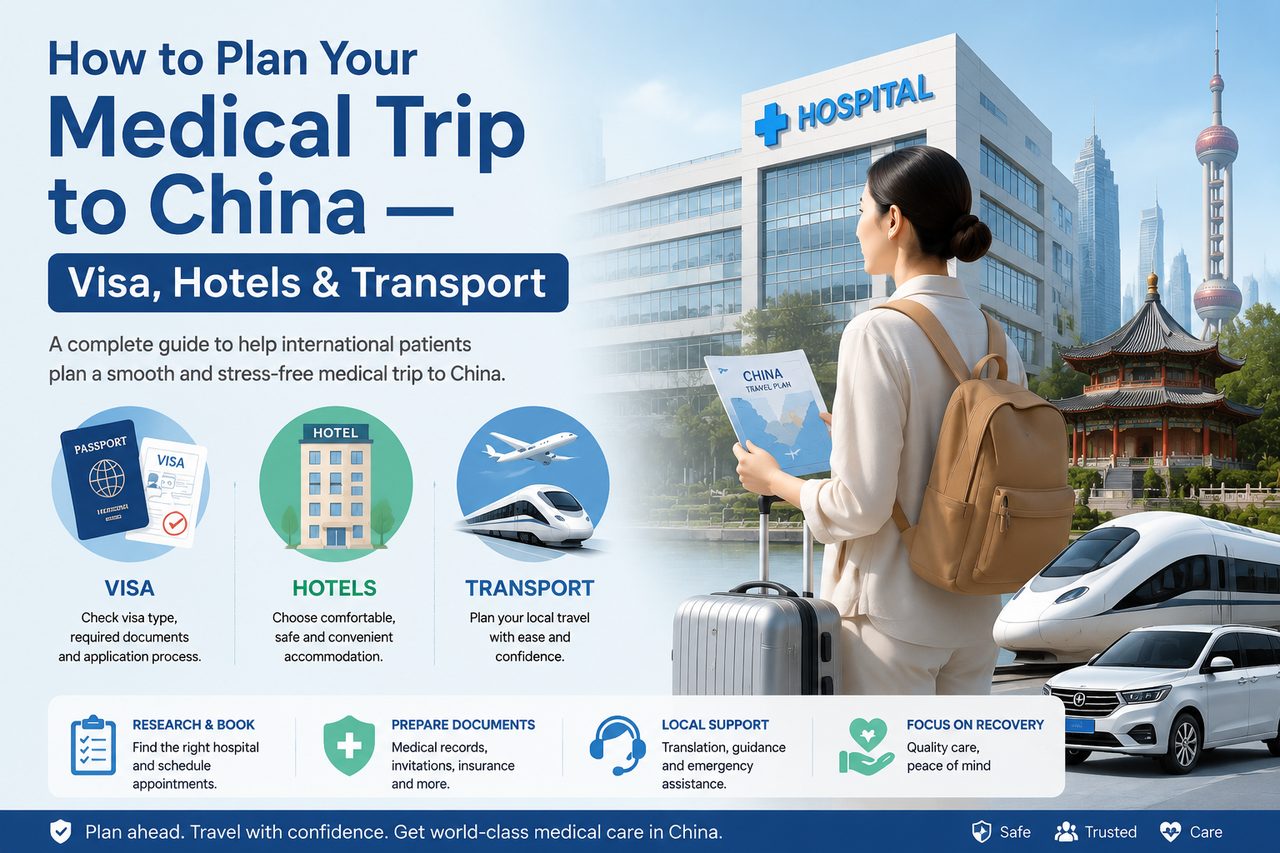
Medical Visa Service With Transport China: The Airport-to-Hospital Reality
According to data from China’s National Health Commission, the country’s top-tier hospitals now treat a significant and growing number of international patients each year, with cardiac surgery volumes at centers like Fuwai Hospital exceeding 14,000 procedures annually. Yet for every patient who lands in Beijing or Shanghai, the journey starts long before the operating room. It starts with a visa stamp and a ride from the airport. A medical visa service with transport China bundles these two logistical hurdles — the S2 visa paperwork and the ground transfer — into one coordinated step. This article explains what that actually looks like on the ground, what it costs, and where the process can break down.
Most international patients underestimate the gap between “I have a hospital acceptance letter” and “I am standing in the hospital lobby.” That gap includes document translation, consulate appointments, flight booking, and the often chaotic first hours after landing. Bundling transport with visa support closes part of that gap. But it is not a magic fix. Let’s walk through the real sequence.
How This Actually Works, Step by Step
The process begins with a remote evaluation, not a plane ticket. You send existing medical records — imaging, lab reports, discharge summaries — to the hospital’s international department or to a coordination team like ours. A specialist reviews them and issues a written treatment proposal or second opinion. Only after that proposal exists can the visa process meaningfully begin.
Step one: document preparation. The hospital provides an official invitation letter or medical treatment confirmation. Your passport must have at least six months of validity and blank visa pages. All foreign-language medical documents get translated into Chinese by a certified translator — this matters for both the visa application and the hospital’s internal review.
Step two: visa application. Foreign nationals traveling to China specifically for medical treatment apply for an S2 visa, which covers short-term private affairs including medical care. Accompanying family members apply for S2 visas as well. Stays exceeding 180 days require an S1 visa. The consulate typically processes S2 applications within 4 to 10 business days, depending on the country and whether expedited service is available.
Step three: transport coordination. Once the visa is approved and flights are booked, the transport piece activates. This means a driver meets you at the arrival gate with a name sign, handles luggage, and drives directly to the hospital or hotel. In cities like Shanghai, the drive from Pudong International Airport to Zhongshan Hospital can take 45 to 70 minutes depending on traffic. In Beijing, Capital Airport to Peking Union Medical College Hospital runs 40 to 60 minutes. A bundled service confirms the pickup time against your actual flight arrival, not your scheduled time — a small detail that prevents hours of waiting.
Step four: hospital check-in. The transport component often includes walking you to the correct building, helping with registration, and ensuring the international department has your file ready. This is where bilingual support becomes essential. Chinese public hospitals see tens of thousands of outpatients daily. Signage is primarily in Chinese. Without someone who speaks the language, the first day can be disorienting.
Does a Medical Visa Include Hospital Transfer in Shanghai?
The short answer is no — not automatically. A Chinese visa is a travel document. It grants permission to enter the country for a specific purpose. It does not include ground transportation, airport pickup, or hospital transfer. Those services are arranged separately, either through a hospital’s international department, a private medical concierge, or a hotel concierge.
So where does the confusion come from? Some patients assume that because the hospital issued an invitation letter, the hospital also handles arrival logistics. That assumption is incorrect for most public hospitals. Even major international departments at public hospitals typically focus on clinical care — appointments, admissions, billing — not airport transfers. Private international hospitals like United Family or Jiahui may offer transport as an add-on service, often at a premium. But the visa itself never includes transport.
What a medical visa service with transport China actually does is coordinate both pieces under one point of contact. You still apply for the visa through the consulate. You still pay for the transport separately. But one team handles the document flow, tracks visa status, and schedules the pickup — so you are not juggling three different providers from three time zones. This is the practical meaning of “bundled.” It is coordination, not inclusion.
How to Get From Airport to Hospital for Surgery in China
Arriving for surgery adds pressure. You are tired, possibly in pain, and carrying medical documents that must not get lost. The transfer from airport to hospital is not the moment to experiment with public transit. Here is what a reliable airport-to-hospital transfer looks like for surgical patients.
First, the vehicle. A standard sedan works for solo travelers with light luggage. Patients traveling with family, mobility aids, or bulky medical equipment need a van or SUV. Wheelchair-accessible vehicles are available in major cities but must be booked in advance — sometimes 48 to 72 hours ahead.
Second, the route. Drivers should know the hospital campus, not just the street address. Large Chinese hospitals often have multiple gates, separate buildings for international patients, and restricted vehicle access zones. A driver who drops you at the wrong gate can add 20 minutes of walking. That matters when you are pre-operative and fasting.
Third, the handoff. The driver should confirm arrival with the hospital’s international department or your coordinator. Some hospitals require a staff member to receive international patients at a specific entrance. Without that confirmation, you may wait in a lobby with no clear next step.
For patients who book medical tourism packages with airport pickup China, the transfer is typically included as a line item. Reputable packages itemize the cost: vehicle type, waiting time, tolls, and whether the driver assists with hospital check-in. Ask for that breakdown before booking. Vague “transport included” language often means a basic sedan and no hospital handoff.
A Realistic Timeline
Timelines for medical travel to China vary widely by specialty, hospital, and home country. The table below reflects a realistic sequence for a patient traveling from the United States or Europe for elective surgery at a top-tier public hospital. Ranges account for document delays, consulate backlogs, and hospital scheduling.
| Stage | What Happens | Typical Duration |
|---|---|---|
| Week 1–2 | Medical records collected, translated, submitted for remote review | 7–14 days |
| Week 2–4 | Specialist review, written second opinion or treatment proposal issued | 5–15 days |
| Week 3–5 | Hospital invitation letter issued; S2 visa application submitted | Visa processing: 4–10 business days |
| Week 4–6 | Flights booked; transport and accommodation confirmed | 3–7 days |
| Week 5–8 | Arrival, airport pickup, hospital check-in, pre-operative testing | 2–5 days before surgery |
| Week 6–10 | Surgery and initial recovery | Varies by procedure |
The steps people forget are document translation and appointment lead time. A certified translation of 50 pages of medical records can take three to five business days. Top specialists at hospitals like Fuwai or Peking Union Medical College Hospital may have consultation slots booked two to three weeks out. Visa processing cannot start until the hospital issues its invitation letter. So the total runway from first contact to arrival is rarely under five weeks, and often closer to eight.
What Can Go Wrong — and What Happens Then
Visa rejection happens. The most common reasons are incomplete documentation, passport validity issues, or a mismatch between the stated purpose and the visa category. If an S2 application is rejected, the consulate usually states the reason. The fix is typically resubmission with corrected documents — not an appeal. A coordination team should review your application before submission to catch these errors early.
Flight delays happen. A bundled transport service should monitor your flight in real time and adjust pickup accordingly. If your flight is delayed by six hours and the driver was booked for a fixed window, you may face a waiting fee or a no-show. Confirm the provider’s policy on delays before booking. Reputable services track flights and adjust without penalty within a reasonable window.
Hospital scheduling shifts. Even with a confirmed treatment proposal, the hospital may push your admission date by several days. This is common in busy public hospitals. When it happens, your transport and accommodation need to flex. Book refundable hotels and confirm that your transport provider allows date changes. A rigid package with non-refundable transfers creates stress you do not need before surgery.
And sometimes the driver simply does not show. This is rare with established providers but not unheard of with budget services. Your recourse is a 24-hour contact line and a backup plan — usually a taxi or ride-hailing app. Ask for the provider’s emergency contact number before you fly, and save it somewhere accessible offline.
Cost of Visa and Transport for Medical Treatment in China
Visa fees are set by Chinese embassies and consulates and vary by nationality. For most Western countries, an S2 visa fee ranges from $140 to $200, with expedited processing adding $30 to $60. Some consulates require applications through a visa service center, which adds a service fee of $40 to $80. These are government fees — no medical concierge can waive them.
Transport costs depend on city, distance, vehicle type, and service level. A standard airport pickup in Beijing or Shanghai runs $50 to $100 one-way for a sedan. A van with a bilingual driver-assistant runs $100 to $200. A full medical transfer with wheelchair assistance, hospital handoff, and waiting time can reach $250 to $400. Round-trip airport transfers booked through a coordination service typically cost around $200, as noted in our service pricing for airport transfers.
When you bundle visa support and transport through a coordination service, the service fee is separate from government visa fees and driver costs. Expect to pay $300 to $600 for document review, visa application support, and transport coordination, depending on complexity. The cost of visa and transport for medical treatment in China is therefore roughly $500 to $1,000 all-in for a single patient with one companion, excluding flights and accommodation. That is a small fraction of the total medical bill — and a small price for avoiding a missed appointment on day one.
Practical Considerations: Documentation, Timing, and Payment
Before you book anything, assemble a clean document package. Your passport, hospital invitation letter, translated medical records, and proof of accommodation should all be digitized and stored in two places — cloud and offline. Chinese consulates increasingly accept digital submissions, but you may need printed copies at the airport or hospital.
Payment for transport is typically upfront or on arrival. Visa fees are paid at the consulate or visa center. Coordination service fees are usually paid by bank transfer or credit card before the visa application is submitted. Keep receipts for everything — some insurance policies reimburse travel logistics costs when treatment is pre-approved.
Insurance is a separate question. Most international health insurance plans do not cover transport or visa fees. Some medical tourism policies include trip interruption coverage. Check your policy language before assuming anything is reimbursable.
Language support matters more than transport. A driver who speaks only Chinese cannot help you fill out hospital registration forms. If your transport provider does not include bilingual assistance, arrange a separate interpreter for the first hospital visit. Our bilingual medical companion service covers registration, queue management, translation, and wayfinding — the pieces a driver alone cannot handle.
One more consideration: if you are traveling with family, each companion needs their own S2 visa. Children and elderly relatives may need additional documentation. A coordination team should review every traveler’s paperwork, not just the patient’s.
Frequently Asked Questions
No. The S2 visa is a travel document only. It authorizes entry for medical treatment or private affairs. Airport pickup, hospital transfer, and ground transportation are separate services arranged through a hospital, concierge, or coordination company.
Yes. Several coordination services and private hospitals offer medical trip packages with transport included in Beijing. The key is to check what “included” means — vehicle type, waiting time, hospital handoff, and whether the driver speaks English. Ask for an itemized breakdown before paying.
Reputable transport providers track flight arrivals in real time and adjust pickup windows accordingly. Confirm the provider’s delay policy before booking. If the driver leaves without you, contact the 24-hour service line — most established providers will send a replacement vehicle or reimburse you for a taxi.
Book transport at least 7 to 10 days before your arrival date. For wheelchair-accessible vehicles or transfers during Chinese public holidays, book 2 to 3 weeks ahead. Last-minute bookings are possible in major cities but cost more and offer fewer vehicle options.
Sometimes, yes. A basic ride-hailing pickup from the airport costs less than a coordinated transfer. But you lose flight monitoring, hospital handoff, and bilingual support. For a first-time surgical patient, the bundled service is usually worth the premium. For a returning patient who knows the city, self-arranged transport can work fine.
Your Next Step
Getting from your home airport to a Chinese hospital bed involves more moving parts than most patients expect. The visa is one piece. The transport is another. Bundling them under a single coordination team removes the gaps where things fall through. Our team at China Medical Services helps international patients navigate hospital selection, S2 visa documentation, and arrival logistics across 37 cities and 340+ top-ranked hospitals. We do not perform medical procedures and we do not guarantee visa approval or treatment outcomes. What we do is handle the coordination — so you can focus on the medical decision. If you are considering treatment in China, a conversation about your specific situation costs nothing. Start with a free consultation at our patient services page. We will help you map the timeline, the documents, and the first ride from the airport.
For more medical information and treatment options in China, visit chinamedservices.com (China Medical Services).
