Menopause Clinics in China: How We Match You With the Right Care
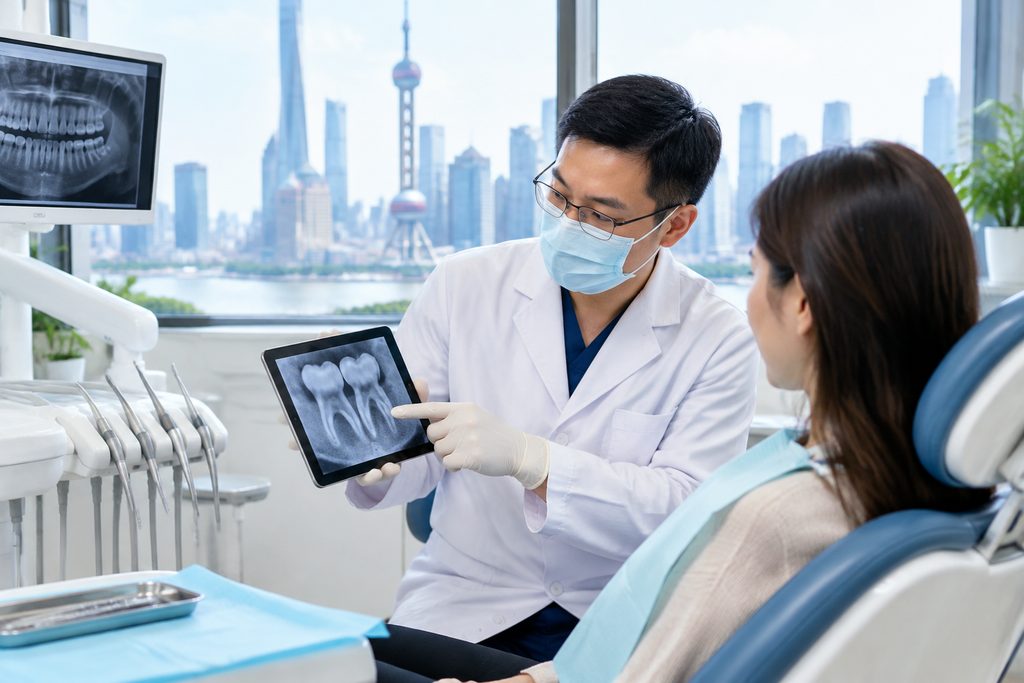
Menopause Clinics in China: How We Match International Patients With the Right Care
A menopause clinic is not a single specialty. It is a coordination point — gynecology, endocrinology, bone health, cardiovascular risk, sleep, and mood, all reviewed together rather than one symptom at a time. That distinction matters enormously when you are planning care abroad, because the clinic that suits a woman with surgical menopause and severe vasomotor symptoms is often not the clinic that suits someone five years post-menopause managing bone density. When patients ask us about menopause clinic China cost, the honest answer is that the price depends far less on the city than on which department ends up leading your case.
Our role is matching, not treating. We are not physicians. We connect international patients with the right Chinese hospital departments, coordinate appointments through official international or VIP channels, and provide bilingual support on the ground.
How This Actually Works, Step by Step
Here is the real sequence, from your first message to a completed consultation.
Step one — you send records. Not a summary. Actual documents: recent hormone panels (FSH, estradiol, LH, TSH, prolactin), a pelvic ultrasound report, bone density scan if you have one, mammogram results, and a list of current medications with dosages. If you have tried hormone therapy before and stopped, tell us why. That single detail changes which specialist we approach.
Step two — we translate and route. Records go to the relevant department at one or two hospitals. For straightforward perimenopause, that is usually gynecology. For complex presentations — thyroid involvement, prior breast cancer, unexplained bleeding — we route to a gynecological endocrinology or multidisciplinary setting instead.
Step three — a written second opinion comes back. Typically a 2–4 page document in English: assessment, whether hormone therapy is appropriate in their view, suggested investigations, and treatment direction. This is for reference only, not a prescription.
Step four — video consultation. You speak directly with the Chinese specialty team through an interpreter. You explain your symptoms and goals. They explain what they would do and why.
Step five — decide whether to travel. Many patients stop here. That is a legitimate outcome. Others proceed to an in-person visit, which in Chinese public hospitals means registering on the day or being scheduled through the international department.
Why China, and Which Hospitals Actually Fit
China’s top hospitals are large. That scale cuts both ways. A major tertiary center may see more menopause-related cases in a month than a Western private practice sees in a year, which builds genuine clinical depth in managing complex hormonal presentations. The tradeoff is that these hospitals are not designed around the international patient experience. Without language support, navigating one is genuinely difficult.
For menopause care specifically, the relevant hospitals fall into three groups.
- Top public tertiary hospitals with strong gynecology and endocrinology departments. These appear in the Fudan ranking’s specialist reputation lists — the gynecology and obstetrics list names a top 10 nationally, and we can tell you which hospitals sit on it. Our specialty department directory breaks this down by discipline.
- Private international hospitals in Beijing and Shanghai — English-speaking staff, JCI accreditation, direct insurance billing, and appointment-based scheduling that feels closer to what Western patients expect. Costs run higher, often 1.5–2x the public international department rate.
- Traditional Chinese Medicine hospitals, which some patients use alongside or instead of hormone therapy for sleep disturbance, mood, and musculoskeletal symptoms. We treat this as a separate track, not a substitute for endocrinological assessment.
If you are searching for the best menopause treatment Shanghai offers, the practical answer is that Shanghai’s top-tier public hospitals and its private international hospitals serve different patient profiles. Someone who wants a same-week appointment and English-language continuity of care will be happier at a private international facility. Someone with a complex endocrine history may get more from a public tertiary gynecology department — with a bilingual companion alongside.
A Realistic Timeline
Patients consistently underestimate two things: how long records take to gather, and how long visa processing takes. Here is a realistic picture.
| Stage | What Happens | Realistic Duration |
|---|---|---|
| Records gathering | You collect labs, imaging, medication history from your home providers | 1–3 weeks |
| Translation & routing | We translate, format, and submit to the target department | 3–7 business days |
| Written second opinion | Specialist reviews and returns written analysis | 5–10 business days |
| Video consultation scheduling | Coordinating time zones with the hospital team | 1–2 weeks |
| Visa application (S2) | Embassy or consulate processing, with hospital invitation documents | 1–3 weeks, varies by country |
| Appointment lead time | Public hospital registration or international department scheduling | Days to 3 weeks |
| Travel & in-person visit | Consultation, possible additional testing ordered on site | 3–7 days in country |
Total realistic window from first contact to an in-person consultation: roughly six to twelve weeks. Anyone promising faster is either skipping the record review or overstating what can be arranged.
What Can Go Wrong — and What Happens Then
We would rather you hear the failure modes now than discover them later.
Your case turns out not to need travel. This happens more often than you might expect. If the written second opinion says your symptoms are manageable with adjustments your home physician can supervise, we will tell you that. You have spent a few hundred dollars instead of several thousand.
The hospital cannot see you on your preferred dates. Public hospital scheduling is genuinely constrained. If we cannot secure the appointment you ordered, our appointment coordination fee is refunded in full. We do not promise a specific specialist or a specific date — we promise a genuine attempt and a refund if it fails.
Your visa is delayed. S2 processing times vary by consulate and season. We provide guidance and supporting documents, but approval is never guaranteed and never within our control. Build buffer time into your plans.
The first specialist isn’t the right fit. Sometimes a gynecologist reviews your file and refers you to endocrinology, or vice versa. That is a good sign, not a failure. It means the routing worked.
You arrive and additional testing is ordered. Chinese hospitals frequently want their own labs and imaging. Budget an extra day or two on the ground.
What the Numbers Mean When You Compare Options
When patients ask how much does hormone therapy cost in China, they usually mean two different things: the cost of the consultation and diagnostic process, and the ongoing cost of medication. These are separate.
Consultation and diagnostic costs at a public hospital international department are typically a fraction of Western private rates — a specialist consultation runs well below what a US specialist charges out of pocket. Private international hospitals sit higher, closer to but still below Western private pricing. Medication costs vary widely depending on the specific preparation and whether a compounded or branded product is used.
The comparison that matters most is not China versus your home country in isolation. It is the total package: consultation, diagnostics, medication, travel, accommodation, and your own time. For a straightforward perimenopause assessment, staying home is usually more economical. For complex cases where you want a second opinion from a high-volume center, or where your home waitlist is measured in months, the calculus shifts.
One structural note that surprises patients: at Chinese public hospitals, you pay upfront and seek reimbursement from your insurer afterward. Private international hospitals more often bill your insurance directly. If direct billing matters to you, that single factor may decide which category of hospital you choose. Our private international hospital directory lists which facilities offer direct settlement.
Practical Considerations: Records, Visas, Payment, and Follow-Up
Records. Bring originals and translations. Chinese specialists work from documents, not memory. If your home physician can provide a brief clinical summary letter, include it.
Visa category. Medical travel to China uses the S2 visa, annotated for medical treatment purposes. Stays exceeding 180 days fall under S1. Accompanying family members apply for S2 as well. Note carefully: the M visa is for commercial and trade activities and has nothing to do with medical treatment. Requirements shift, so confirm current specifics with your nearest Chinese embassy or consulate before applying.
Payment. Public hospitals require prepayment. Private international hospitals vary. Bring a payment method that works internationally, and confirm accepted cards with us before you travel.
Language. This is the single biggest practical barrier. A bilingual medical companion handles registration, queueing, payment, wayfinding, and interpretation — from $300 per day for a half or full day. We do not promise to secure a specific named specialist.
Follow-up at home. Ask the Chinese team to provide written recommendations your home physician can act on. Continuity matters more than any single consultation.
Frequently Asked Questions
The clinical standards at China’s top tertiary hospitals follow internationally recognized protocols for hormone therapy assessment, including contraindication screening and monitoring. The larger safety question for international patients is communication — if you cannot read your own test results or understand the discharge instructions, safety suffers. That is a language problem, not a clinical one, and it is solvable.
Yes. A written second opinion or video consultation lets a Chinese specialist review your records and give direction before you commit to flights and visas. Many patients use this stage to decide whether travel is worthwhile at all. If you later travel within 90 days, the consultation fee is credited toward coordination.
You will see packaged offers online, and we would encourage caution. Menopause care is not a standardized procedure with a fixed price. It is an assessment process whose scope depends entirely on your history. A fixed package price usually means a fixed scope, which may not match your needs. We quote after understanding your case, not before.
Written second opinions from top-tier specialists run $300–500. Video consultations range from $100–300 at standard international departments up to $500–800 with a top specialist, and $1,500–2,000 for a multidisciplinary team review. Final pricing depends on the hospital and the complexity of your case.
If you speak Mandarin or have a Mandarin-speaking family member, you may manage a private international hospital alone. At a large public hospital, realistically you cannot — registration, payment, and department navigation are almost entirely in Chinese, and these facilities handle tens of thousands of outpatient visits daily.
Your Next Step
Menopause care in China can be excellent and cost-effective, but it rewards preparation over spontaneity. The patients who do best are the ones who start with records, get a written opinion, and decide about travel afterward — not the ones who book flights first.
Our team coordinates access to more than 340 top-ranked hospitals across 37 cities, handles record translation, arranges appointments through official hospital channels, and provides bilingual accompaniment. We are not doctors and we do not provide medical advice or promise clinical outcomes. If you would like to understand what your options look like, start with a free consultation through our patient services page — no obligation, and no pressure to travel.
This article is for general information only and does not constitute medical advice. Treatment decisions should always be made with a qualified physician who has reviewed your individual history.
For more medical information and treatment options in China, visit chinamedservices.com (China Medical Services).
