Is My Mole Dangerous? A Practical Guide to Self-Checks and Dermatology in China
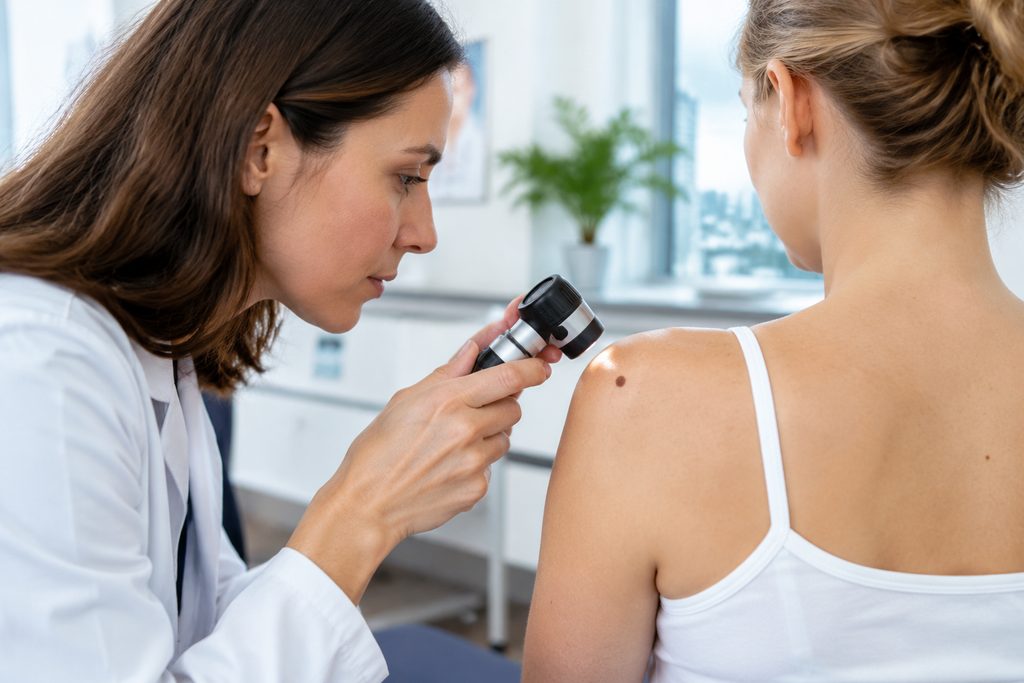
When 45-year-old Sarah from Manchester noticed a small, dark spot on her shoulder had started to itch, she did what most people do. She searched online. The results terrified her. Was it melanoma? Did she need surgery? Could she even afford to get it checked quickly back home? The anxiety of uncertainty is often worse than the diagnosis itself. If you’re asking “is my mole dangerous,” you’re already doing the right thing — paying attention. This guide walks through how to assess your own skin, when professional evaluation becomes non-negotiable, and what your options look like if you’re considering dermatology care in China. The mole removal cost China clinics quote often surprises Western patients, but cost should never be the first filter. Accuracy should.
How This Actually Works, Step by Step
The path from noticing a spot to knowing what it is follows a clear sequence. You don’t need to jump to the worst-case scenario on day one.
First, you document. Take a clear photo of the mole next to a ruler for scale. Note when you first remember seeing it, and any changes you’ve noticed in the last few weeks or months. Itching, bleeding, crusting, or a sudden change in color all matter.
Second, you do a structured self-check. The ABCDE rule is the standard starting point. Asymmetry, Border irregularity, Color variation, Diameter over 6 millimeters, and Evolution over time. One irregular feature doesn’t mean cancer. Multiple features, especially evolution, raise the urgency.
Third, you decide on professional evaluation. If the mole scores on two or more ABCDE criteria, or if it bleeds, itches persistently, or appeared after age 30 and looks unlike your other moles, you book a dermatology appointment. Not a spa. Not a beauty clinic. A dermatologist.
Fourth, the dermatologist examines. In most cases, they use a dermatoscope — a handheld polarized light magnifier. This takes 30 seconds. If the lesion looks benign, they may photograph it and schedule a follow-up in 3 to 6 months. If it looks suspicious, they recommend excision biopsy. That’s the only way to definitively know.
Fifth, the biopsy goes to pathology. Results typically return within 5 to 10 working days in Chinese hospitals. The report tells you whether it’s benign, atypical, or malignant, and if malignant, what type and depth.
Sixth, you act on the result. Benign moles need no further treatment unless they bother you cosmetically or mechanically. Atypical moles may warrant wider excision. Melanoma requires staging and a treatment plan coordinated with oncology.
We’ve seen too many patients delay step three because they feared the cost or the language barrier. The delay is the real risk. A melanoma caught at stage 0 has a 5-year survival rate above 99%. Caught at stage IV, that number drops below 30%.
How to Tell If a Mole Is Cancerous: The ABCDE Framework and Its Limits
Dermatologists in China and the West use the same initial screening tool. The ABCDE rule is not diagnostic. It’s a triage tool. Here’s what each letter actually means in practice.
A — Asymmetry. Draw an imaginary line through the mole. If the two halves don’t match, that’s a flag. Benign moles are usually symmetrical.
B — Border. Melanoma borders tend to be notched, scalloped, or poorly defined. A benign mole has a smooth, even edge.
C — Color. Multiple shades of brown, black, red, white, or blue within one lesion are suspicious. Benign moles are usually one uniform color.
D — Diameter. Larger than 6 millimeters — about the width of a pencil eraser — warrants attention. But melanoma can be smaller. Don’t rely on size alone.
E — Evolution. This is the most important letter. Any change in size, shape, color, elevation, or new symptoms like bleeding or itching. A mole that has looked the same for 20 years is far less concerning than one that changed in 3 months.
But here’s what the ABCDE rule misses. Nodular melanoma, an aggressive subtype, often presents as a new, raised, uniform-colored bump that doesn’t fit the classic ABCDE pattern. Amelanotic melanoma lacks pigment entirely — it looks pink or skin-colored. And in patients with darker skin, melanoma often appears on palms, soles, and under nails, where the ABCDE rule applies less cleanly.
So the real question isn’t “does my mole pass the ABCDE test.” It’s “is this mole different from my other moles, and is it changing?” Dermatologists call this the “ugly duckling” sign. If one spot stands out from the rest of your skin, get it looked at.
If you’re considering a professional skin check in China, the dermatology department rankings can help you identify hospitals with strong reputations in skin cancer diagnosis. But don’t overthink the hospital choice for a first screening. Any qualified dermatologist with a dermatoscope can perform the initial assessment.
A Realistic Timeline
People underestimate how long the full process takes, especially when international travel is involved. Here’s an honest breakdown.
| Stage | What Happens | Typical Duration |
|---|---|---|
| Day 1–3 | Self-assessment, photo documentation, decision to seek care | Immediate |
| Day 3–10 | Booking a dermatology appointment in your home country or China | 1–2 weeks lead time (varies widely) |
| Day 10–14 | In-person dermoscopy examination | 15–30 minutes |
| Day 14–21 | If biopsy needed: excision procedure | 20–40 minutes, local anesthesia |
| Day 21–31 | Pathology report returned | 5–10 working days |
| Day 31–45 | If melanoma: staging, imaging, oncology referral | 1–3 weeks |
| Day 45–60 | Visa processing (S2 for medical treatment) if traveling to China | 1–4 weeks depending on consulate |
The step people forget is document translation. If you bring pathology slides or reports from home to a Chinese hospital, they need certified translation. Budget 3 to 5 working days for that. And if you’re traveling specifically for treatment, the S2 visa requires supporting documents from the receiving hospital — a letter of invitation or treatment confirmation. Our team handles this coordination, but you should know it exists.
For most patients, the total time from “I’m worried about this mole” to “I have a definitive answer” is 2 to 6 weeks. That’s normal. Don’t panic at the timeline. Panic at the alternative — not getting an answer at all.
What Can Go Wrong — and What Happens Then
Let’s be direct about the failure modes. They exist. Knowing them in advance is better than discovering them mid-process.
First, a biopsy can come back inconclusive. Pathologists sometimes can’t determine whether a lesion is benign or malignant from a partial sample. The recourse is a complete excision with wider margins and a second pathology read. This happens in roughly 5 to 10 percent of skin biopsies. It’s not a mistake. It’s biology.
Second, you might get a benign result but still dislike the scar. Cosmetic concerns are valid. Dermatologic surgeons in China use layered closure techniques to minimize scarring, but any excision leaves a mark. Ask about scar management before the procedure, not after.
Third, the pathology report might show a different diagnosis than expected. A mole that looked like seborrheic keratosis might be basal cell carcinoma. A “cyst” might be a dermatofibrosarcoma protuberans, a rare low-grade malignancy. The report dictates the next step, not the initial impression.
Fourth, language. A pathology report written in Chinese is useless to a patient from London or Dubai unless translated accurately. This is where a bilingual medical companion earns their fee. They don’t just translate words. They translate clinical context — what “atypical melanocytic proliferation” actually means for your prognosis and next steps.
Fifth, cost surprises. Some Chinese hospitals quote a consultation fee, then add separate charges for dermoscopy, biopsy, pathology, and follow-up. None of these are hidden — they’re itemized. But if you don’t ask for a full breakdown upfront, you’ll feel blindsided. A written second opinion from a top-tier Chinese dermatologist typically runs $300 to $500. An in-person consultation at a top Shanghai hospital’s international department starts around $100 to $300. Biopsy and pathology add $200 to $600 depending on complexity. These are reference ranges, not quotes.
Do not rely on a visual diagnosis alone. Even experienced dermatologists cannot distinguish early melanoma from atypical nevi by eye with 100% accuracy. Any suspicious lesion deserves histopathology. “It looks fine” from a non-specialist is not a diagnosis.
Is Mole Removal Safe in China? Evaluating Hospitals and Dermatologists
Safety depends on two things: the facility and the clinician. China has both world-class dermatology departments and cosmetic-focused clinics that should never touch a suspicious lesion. Knowing the difference matters.
The best dermatologist Shanghai skin cancer patients seek is typically affiliated with a university teaching hospital. Hospitals like Huashan Hospital affiliated with Fudan University and Ruijin Hospital affiliated with Shanghai Jiao Tong University run dedicated dermatology and dermatologic surgery units. These are not beauty clinics. They handle melanoma, squamous cell carcinoma, basal cell carcinoma, and complex benign lesions daily.
What makes a hospital safe for mole evaluation and removal? Three markers. First, the dermatology department is ranked in the Fudan specialty reputation list — you can check this on our department rankings page. Second, the hospital has an in-house pathology department, not outsourced pathology. Third, the dermatologist performing the biopsy is a dermatologic surgeon, not a general practitioner.
If you want to book skin cancer screening Beijing offers multiple options. Peking Union Medical College Hospital (PUMCH) and Peking University First Hospital both run high-volume dermatology clinics with dermatoscopy and same-day biopsy capability. The international departments at these hospitals are structured for foreign patients, with English-speaking coordinators and expedited scheduling. You’ll pay more than a local patient — typically 1.5 to 2 times the standard rate — but you’ll get a smoother process.
Private international hospitals like United Family and Jiahui offer another route. English-speaking dermatologists, direct insurance billing, and Western-style appointment systems. The trade-off: fewer complex skin cancer cases annually. For a first screening or a straightforward excision, they’re excellent. For advanced melanoma requiring multidisciplinary oncology, the public teaching hospitals have more depth.
The dermatology clinic price list China facilities publish varies enormously. A basic consultation at a public hospital’s international department might run $50 to $150. The same at a private international clinic: $150 to $400. Dermoscopy adds $30 to $100. Excision biopsy of a small lesion: $200 to $800, depending on location, size, and closure complexity. Compare that to U.S. prices, where a dermatology visit without insurance often exceeds $200 and a biopsy can hit $1,500. The value proposition is real, but it’s not the only reason to choose China. The speed is often faster, and the volume of cases at top centers means the dermatologists have seen everything.
Practical tip: If you’re comparing hospitals for a suspicious mole, ask two questions. “How many melanoma excisions does this department perform annually?” and “Is pathology read in-house or sent out?” High volume plus in-house pathology is the combination you want.
Practical Considerations: Records, Visas, Payment, and Follow-Up
The mole removal cost China hospitals charge typically ranges from $200 to $800 for a small excision biopsy, including pathology. A consultation with dermoscopy runs $50 to $400 depending on the facility. In the U.S., the same services without insurance often run two to five times higher. Actual pricing varies by hospital tier, lesion size, and whether you use the international department or standard outpatient services.
Standard public hospital outpatient clinics generally do not accept advance bookings from overseas. You book on arrival, same-day or next-day. The international departments at major teaching hospitals, and private international clinics, do accept advance scheduling with a deposit. This is where our coordination service helps — we handle the booking, the hospital card creation, and the on-site navigation. But we cannot promise a specific specialist on a specific date. We can promise to coordinate and to refund the coordination fee if the appointment doesn’t happen.
At accredited teaching hospitals and JCI-certified private facilities, yes. The standard of dermatologic surgery at top Chinese centers is comparable to Western academic hospitals. The key is choosing the right facility — a hospital with an in-house pathology department and dermatologic surgeons, not a cosmetic clinic. Ask about pathology turnaround time and whether the surgeon reviews the pathology result personally.
You’ll be referred to a multidisciplinary oncology team, typically including dermatology, surgical oncology, and medical oncology. Staging requires imaging — usually ultrasound of regional lymph nodes and possibly CT or PET-CT. Treatment depends on stage and may include wide local excision, sentinel lymph node biopsy, immunotherapy, or targeted therapy. Chinese hospitals offer the full range of modern melanoma treatments, including PD-1 inhibitors and BRAF/MEK inhibitors. The process moves quickly once a diagnosis is confirmed.
Your Next Step
Most moles are harmless. But “most” is not a diagnosis. If a spot on your skin is changing, itching, bleeding, or simply looks wrong, the responsible move is a professional evaluation — not another week of anxious Googling. Our team at China Medical Services helps international patients navigate dermatology care in China: hospital selection, appointment coordination, bilingual accompaniment, and follow-up logistics. We don’t diagnose, and we don’t promise outcomes. We handle the friction so you can focus on getting answers. If you’re considering a skin check in China
Frequently Asked Questions
Yes. The hospitals used for international patients are JCI-accredited and follow the same international safety standards as top hospitals in the US and Europe. Surgical teams perform high volumes of procedures — often more than their Western counterparts — which studies show leads to better outcomes.
Costs vary by procedure and hospital, but international patients typically save 40-80% compared to US prices — even when factoring in travel and accommodation. A consultation with our team will give you an exact, all-inclusive quote with no hidden fees.
Send us your existing medical reports to get started. We handle everything from hospital selection and appointment scheduling to visa assistance and post-operative recovery planning. Your medical records are reviewed by the specialist before you even book a flight.
For more medical information and treatment options in China, visit chinamedservices.com (China Medical Services).
