Moyamoya Revascularization in China: Case Assessment Guide
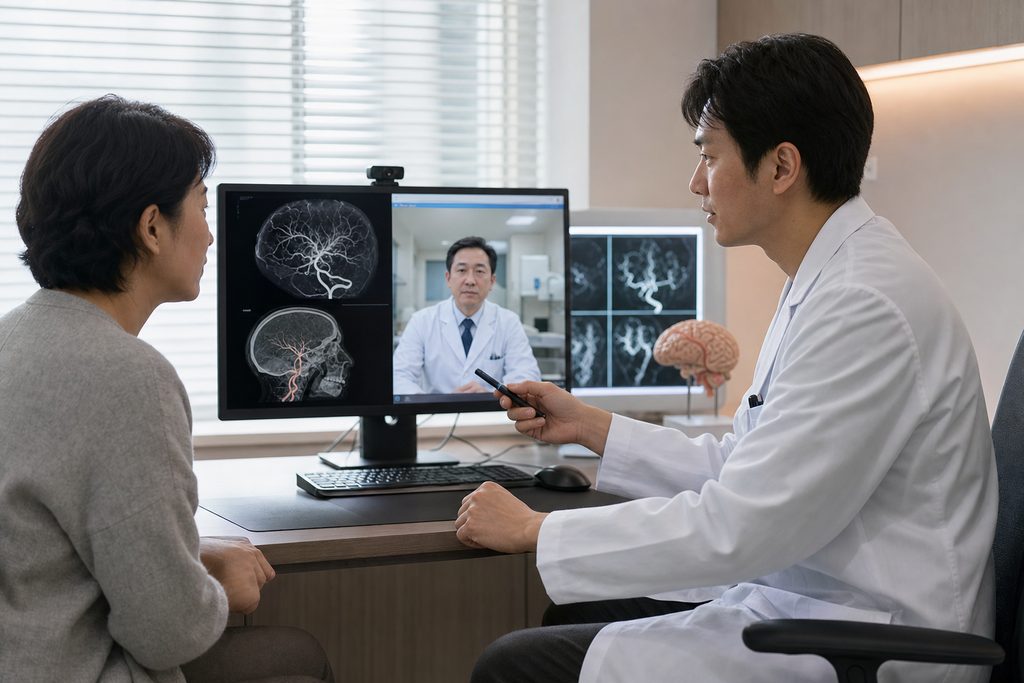
Moyamoya Revascularization in China: Case Assessment
What if the hardest part of treating moyamoya disease isn’t the surgery itself — but figuring out whether a hospital on the other side of the world will even take your case? For families weighing the moyamoya revascularization cost China hospitals quote against the price of care at home, that question sits at the center of everything. And the honest answer is this: no reputable Chinese hospital will schedule a bypass operation for a patient it has never evaluated.
That’s not a barrier. It’s a filter. The case assessment stage is what protects you from flying 7,000 miles for a surgery that a specialist would have declined after ten minutes with your angiogram. Understanding how that assessment works — what you send, who reads it, what comes back — is the single most useful thing you can learn before making any decision.
How This Actually Works, Step by Step
Here’s the real sequence, without the marketing gloss.
Step one: you gather your imaging and records. Moyamoya diagnosis rests on specific evidence — digital subtraction angiography (DSA), MRA or CTA studies, MRI with perfusion sequences, and often SPECT or PET scans measuring cerebrovascular reserve. A neurosurgeon reviewing your case needs the actual DICOM files, not screenshots. You’ll also need office notes, medication lists, and any prior stroke or TIA documentation with dates.
Step two: we coordinate translation and routing. Reports get translated into Chinese by medical translators, not generalists. The imaging goes to the relevant department’s international office — typically neurosurgery or a dedicated cerebrovascular team.
Step three: a Chinese specialty team reviews the file. This is a written second opinion. You receive analysis of your Suzuki stage, whether your disease is unilateral or bilateral, which territory is at risk, and whether revascularization is indicated at all. Some patients are told to continue medical management. That answer is worth having.
Step four: a video consultation, if you want one. You speak with the team directly — symptoms, progression, goals, questions. For a disease this variable, hearing the surgeon’s reasoning matters more than reading a summary of it.
Step five: planning and travel. If surgery is recommended and you agree, coordination begins — appointment scheduling through the hospital’s international or VIP channel, visa documentation, arrival logistics. Admission itself remains subject to the hospital’s own rules and the in-person examination.
Nothing about this process guarantees admission, a surgical date, or an outcome. What it does is replace guesswork with a specialist’s documented opinion — before you spend money on flights.
Why Case Assessment Matters More for Moyamoya Than for Most Conditions
Expect roughly 7 to 14 days in hospital, then 2 to 4 weeks before most patients are cleared to fly home. Full functional recovery takes longer — typically 3 to 12 months — especially after indirect procedures, where new blood vessel formation develops gradually. Your surgeon’s clearance, not a calendar, determines when you travel.
A written second opinion from a top-hospital specialist generally runs $300 to $500. Video consultations range from $100 to $300 at standard international departments, up to $500 to $800 with a top specialist, and $1,500 to $2,000 for a multidisciplinary team review. If you later proceed with treatment coordination in China, those consultation fees are credited in full toward the on-the-ground coordination service within 90 days.
It depends entirely on your policy. Some international health plans reimburse foreign treatment; many don’t. Public hospitals typically require upfront payment with reimbursement pursued afterward, while private international hospitals often bill insurers directly. Contact your insurer before committing to anything.
Look at neurosurgery specialty rankings rather than general hospital reputation, confirm the department performs both direct and indirect revascularization, and check whether it handles international patients routinely. A written second opinion will usually tell you more about fit than any ranking list. You can explore options through our directory of Fudan-ranked hospitals or browse city-specific pages like Beijing and Shanghai.
Your Next Step
Moyamoya is rare, progressive, and genuinely treatable in the right hands — but the path to treatment starts with an assessment, not a booking. Gather your imaging, get a specialist opinion in writing, and let that opinion shape your decisions about travel, cost, and timing. Nothing else should come first.
China Medical Services connects international patients with 340+ top-ranked Chinese hospitals across 37 cities. We handle record translation, appointment coordination through official hospital channels, and bilingual accompaniment on the ground. We are not physicians, we don’t provide medical advice, and we can’t promise admission or outcomes — we coordinate, and we’re honest about what that does and doesn’t cover. If you’d like to start with a case review, reach out for a free consultation and we’ll tell you plainly what’s possible.
This article is for general information only and does not constitute medical advice. Treatment decisions should be made with qualified physicians who have reviewed your individual case.
Frequently Asked Questions
Yes. The hospitals used for international patients are JCI-accredited and follow the same international safety standards as top hospitals in the US and Europe. Surgical teams perform high volumes of procedures — often more than their Western counterparts — which studies show leads to better outcomes.
Costs vary by procedure and hospital, but international patients typically save 40-80% compared to US prices — even when factoring in travel and accommodation. A consultation with our team will give you an exact, all-inclusive quote with no hidden fees.
Send us your existing medical reports to get started. We handle everything from hospital selection and appointment scheduling to visa assistance and post-operative recovery planning. Your medical records are reviewed by the specialist before you even book a flight.
For more medical information and treatment options in China, visit chinamedservices.com (China Medical Services).
