Myasthenia Gravis Second Opinion in Shanghai: Cost, Top Neurologists & Timelines
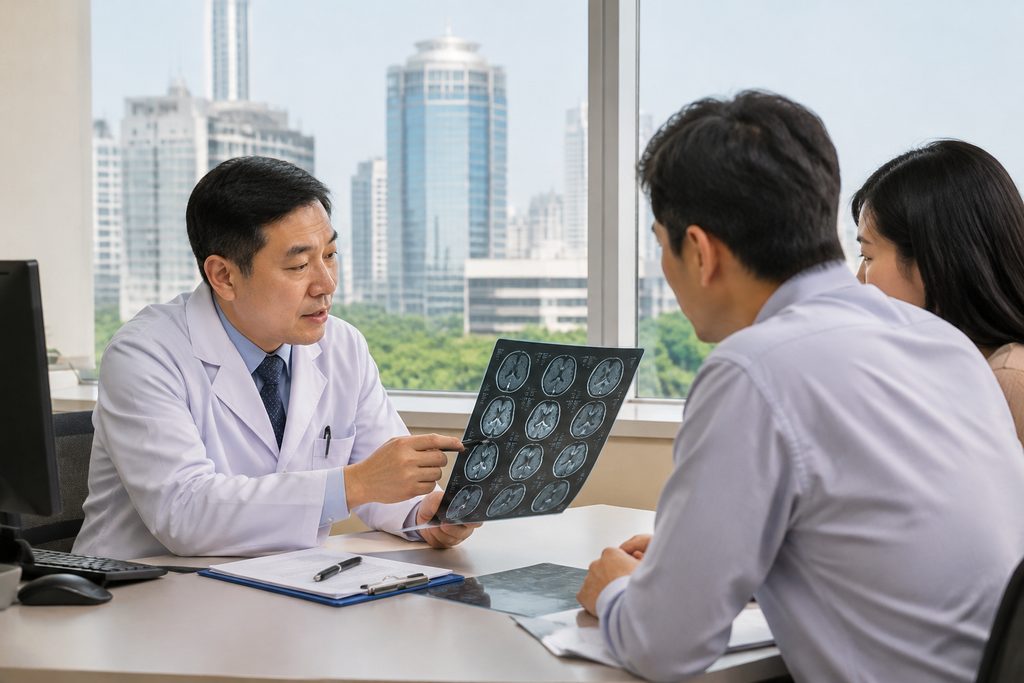
Myasthenia Gravis Second Opinion in Shanghai: What It Costs, Who Reviews It, and How Long It Takes
Roughly 1 in 5,000 people worldwide live with myasthenia gravis, and somewhere between 10% and 15% of them have disease that stays stubbornly active despite standard therapy. That second number is why people search for a myasthenia gravis second opinion in Shanghai. When pyridostigmine, steroids, and a thymectomy haven’t delivered the stability you were promised, the question stops being “do I have MG” and becomes “is my regimen actually the right one for my subtype.”
Shanghai matters here for a specific reason. The city holds 18 of the hospitals on the Fudan Hospital Ranking Top 100 — second only to Beijing — and its neurology departments see MG volumes that most Western centers simply don’t, because China carries a large share of the world’s MG population. High volume changes how confident a team is with acetylcholine receptor antibodies, MuSK-positive cases, and the tricky ocular-versus-generalized distinction.
Here is the honest part up front: you do not need to fly to Shanghai to get that opinion. Most second opinions begin as a records review, and that is exactly how we at China Medical Services structure them. This guide walks through the full sequence, the real price ranges, the timeline, and the places where things go sideways.
How This Actually Works, Step by Step
The path from “I want another set of eyes” to “I have a written plan” runs in a fixed order. Skipping steps is what causes wasted trips.
Step one: you gather records. Not a summary letter — the raw material. Antibody panels (AChR, MuSK, LRP4 if done), repetitive nerve stimulation and single-fiber EMG reports, chest CT or MRI for thymus evaluation, your medication history with dates and doses, and any prior thymectomy pathology. If you’ve had a myasthenic crisis, the ICU discharge summary matters.
Step two: translation and formatting. Chinese specialists read English fine in most top-tier international departments, but structured Chinese summaries speed review and reduce misreading of units and reference ranges. Our team handles this translation as part of case management — it is not a separate product.
Step three: routing to the right subspecialty. MG sits with neuromuscular neurology, not general neurology. Sending your file to the wrong desk adds two weeks and a useless reply.
Step four: the review itself. A written second opinion comes back as a document: diagnostic reassessment, whether your current regimen matches published guidance, alternative or add-on options, and what monitoring the team would want. It is for reference only, not a prescription.
Step five: you decide what happens next. Nothing. A video conversation with the same team. Or, if the plan requires in-person work, coordination of an actual visit. Each stage is optional.
What a Myasthenia Gravis Second Opinion in Shanghai Actually Costs
Cost is the first thing people ask about and the last thing anyone answers clearly. So here are the real ranges we work with, in USD.
| Service | Typical range | What you get |
|---|---|---|
| Written second opinion (top-hospital specialist) | $300–500 | Documented review of records, treatment direction |
| Video consultation (standard international dept.) | $100–300 | Live discussion with the specialty team |
| Top-specialist video consultation | $500–800 | Senior neuromuscular specialist, live |
| Multidisciplinary team (MDT) video review | $1,500–2,000 | Neurology plus thoracic surgery, radiology, ICU input |
| In-person top-specialist consultation coordination | $800–1,200 | Registration, medical card, appointment logistics |
| Bilingual medical companion | from $300/day | Queueing, payment, wayfinding, interpretation |
For context on the myasthenia gravis treatment cost in Shanghai beyond the opinion stage: IVIG courses, plasma exchange, and rituximab run meaningfully below US list prices at top public hospitals, though exact figures depend on dose, brand, and whether you use the standard or international channel. International-department pricing typically runs 1.5 to 2 times the standard channel. We don’t quote treatment totals in advance because they vary by hospital and case complexity, and any provider who does is guessing.
A Realistic Timeline
People underestimate the waiting steps. Here is what the calendar usually looks like, with the slow parts included.
| Stage | Realistic duration | What slows it down |
|---|---|---|
| Record collection by patient | 3–10 days | Chasing EMG reports from a hospital that closed the file |
| Translation and case summary | 2–4 days | Illegible scans, missing dates |
| Specialist review, written opinion | 5–10 business days | Requests for additional studies |
| Video consultation scheduling | 1–3 weeks | Time zone matching, specialist clinic days |
| S2 visa processing (if traveling) | 1–3 weeks | Consulate workload, incomplete hospital invitation documents |
| In-person appointment slot | 1–4 weeks | Public-hospital rules: registration happens on the day, specialists book out |
| Full in-person workup, if needed | 1–2 weeks in Shanghai | Sequencing of EMG, imaging, labs |
So the answer to “how long does myasthenia gravis treatment take in Shanghai” splits in two. The second opinion itself: two to four weeks end to end. A treatment course involving in-person evaluation and therapy initiation: add three to six weeks on the ground, and considerably longer if you’re planning serial IVIG or plasma exchange cycles.
What Can Go Wrong — and What Happens Then
This is where most guides go quiet. We won’t.
The specialist asks for a test you don’t have. Common with single-fiber EMG and repeat antibody panels. The opinion comes back conditional: “if X confirms Y, then Z.” That’s still useful, but it isn’t a finished answer. Recourse: get the test locally, then resubmit for a short addendum, usually at no extra charge.
The recommendation conflicts with your home neurologist. This happens more than people expect, and it is not a sign that someone is wrong. MG management varies legitimately between countries. Recourse: take the document to your home specialist and let two clinicians talk to each other. We can arrange a joint video call if both sides agree.
You can’t get the exact appointment date you wanted. Public hospitals in China generally don’t allow overseas pre-booking of ordinary clinic slots, and even international departments fill up. Recourse: we refund the appointment coordination fee in full if we can’t secure the booking shown in your order. What we never do is promise a specific named specialist on a specific date.
The visa timing collapses. S2 applications need supporting hospital documents and consulate processing time. Recourse: build three weeks of buffer, and never book flights before the visa is in hand.
Choosing a Neurologist — and Judging Whether Any of This Is Safe
The question “who is the best neurologist for myasthenia gravis in Shanghai” has no single answer, and anyone who gives you one name is selling something. What you can evaluate is the department.
Look for a neurology department with a dedicated neuromuscular clinic, published MG research, and thoracic surgery on the same campus — because thymoma and refractory generalized MG eventually involve a surgeon, and cross-campus coordination is where care fragments. Fudan’s specialist reputation rankings list top-10 hospitals by department rather than a single national order, so use those rankings as a shortlist tool, not a verdict. Our department-level rankings let you filter by neurology and compare cities directly.
On safety: “is myasthenia gravis treatment in China safe” is a fair question with a layered answer. Top-tier Chinese hospitals perform high volumes of neuromuscular care, and their ICUs handle myasthenic crisis routinely. The genuine risks are not clinical competence — they’re communication and process. Consent forms in Chinese, medication names that differ from what you take at home, and a hospital system where nobody queues for you. That is the gap bilingual coordination fills.
Red flags when evaluating any facilitator: guarantees of a specific doctor, quoted treatment totals before records are reviewed, and any framing of payment as buying priority access. Legitimate services are case management — translation, official international-department scheduling, and human accompaniment. Nothing more.
Practical Considerations: Records, Visas, Payment, and Follow-Up
Records. Bring originals plus copies. Chinese hospitals may want their own labs repeated regardless of what you arrive with, and that’s normal, not distrust.
Visa. Medical travel uses the S2 category with a treatment annotation for short stays; S1 applies beyond 180 days. Accompanying family members apply under S2 as well. Note that the M visa is for commercial and trade activity and has nothing to do with medical treatment — if anyone tells you otherwise, walk away. Requirements shift, so confirm current rules with the relevant embassy or consulate.
Payment. Public hospitals require prepayment, with insurance reimbursement handled afterward on your side. Private international hospitals often bill insurers directly. Budget a buffer either way.
Language. A top Shanghai hospital can see tens of thousands of outpatient visits in a single day. Signage, registration kiosks, and pharmacy counters assume Chinese. This is precisely where a bilingual medical companion earns their day rate.
Follow-up at home. Ask the reviewing team to write the plan in a form your home neurologist can act on — drug names in generic form, doses in milligrams, monitoring intervals spelled out. A second opinion that can’t be implemented locally is just an expensive PDF.
Frequently Asked Questions
Yes, and most people should start this way. A written second opinion requires only your existing reports, which we translate and route to a neuromuscular specialist. You receive a document in return. Travel only becomes necessary if the plan requires in-person testing or treatment initiation.
The core package is record translation, specialist review, and a written opinion, typically $300–500. Video consultation and MDT review are add-ons. There’s no standard “package” beyond that because MG cases differ too much — a stable ocular case and a MuSK-positive refractory case need entirely different review depth.
At top-tier hospitals, the clinical care is strong and crisis management is routine. The real risks are logistical: language barriers, unfamiliar medication naming, and a registration system with no English support. Those are manageable with preparation, but they are not trivial, and we won’t pretend otherwise.
Plan on one to two weeks for evaluation, then three to six weeks more if you’re starting or adjusting therapy on site. Serial IVIG or plasma exchange extends that further. Add visa processing time before any of it begins.
No, and it shouldn’t. The output is a reference document meant to inform decisions with your existing care team. MG is a long-term condition requiring continuity, and continuity lives where you live.
Your Next Step
A second opinion is a low-risk way to test whether your current regimen is genuinely optimal — and Shanghai’s neuromuscular centers see enough MG volume to offer a perspective your local clinic may not have. We are China Medical Services, a coordination team that translates records, books through official hospital international departments, and accompanies patients on the ground. We don’t diagnose, we don’t prescribe, and we don’t promise outcomes. If you’d like to know whether your records are complete enough for review, start with a free consultation — no obligation, and no pressure to travel.
This article is for general information only and does not constitute medical advice. Treatment decisions should always be made with a qualified physician who knows your case.
For more medical information and treatment options in China, visit chinamedservices.com (China Medical Services).
