Nanjing Jiangsu Cancer Hospital: A Fudan Top 10 Oncology Center for International Patients
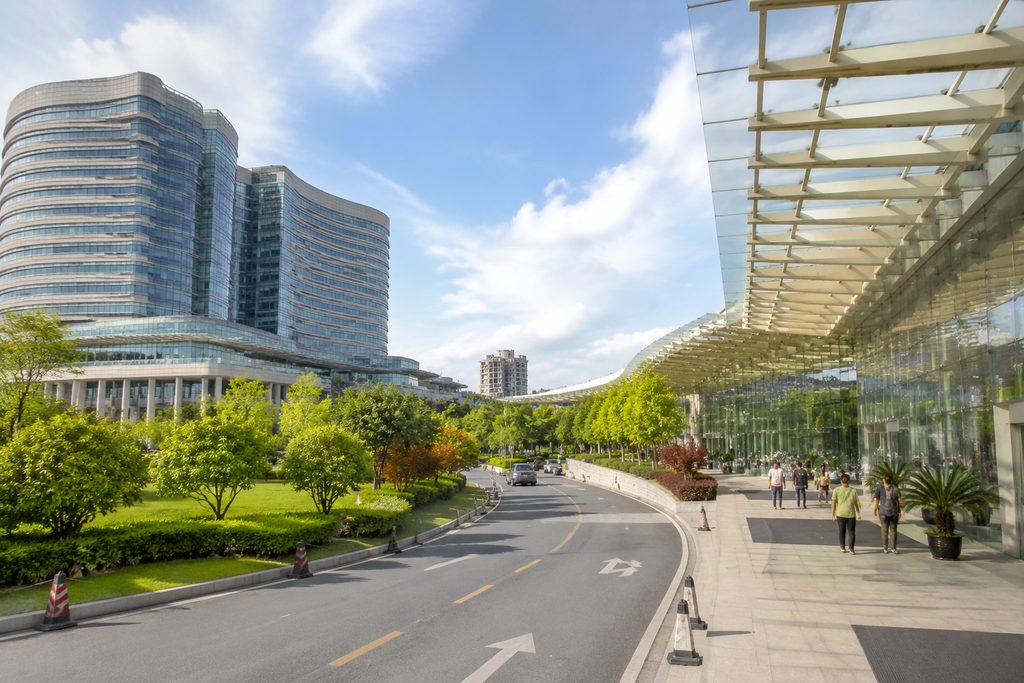
China’s National Cancer Center reports that over 4.8 million new cancer cases are diagnosed in the country each year. That staggering volume has driven a level of subspecialization few Western healthcare systems can match. For international patients, this creates a specific opportunity: access to clinicians who see more cases of a given cancer in a month than many Western oncologists see in a year. Jiangsu Cancer Hospital in Nanjing sits squarely in this category. It holds a Fudan top 10 oncology center ranking, a designation that places it among the most authoritative cancer institutions in China. The Nanjing Jiangsu Cancer Hospital treatment cost is a primary concern for overseas patients, and it’s one we’ll address directly—along with what that ranking actually means, how to navigate the system, and what to expect at each stage.
How This Actually Works, Step by Step
The process for an international patient is not the same as walking into a clinic at home. There is a sequence, and skipping steps almost always causes delays. Here is the real workflow.
You send us your existing medical records. These include pathology reports, imaging studies on disc, treatment summaries, and a brief timeline of your diagnosis and prior interventions. Our team translates these documents into clinical Chinese—not machine translation, but a medically precise rendering that Chinese oncologists can read without ambiguity. The translated file goes to the international patient coordination office at Jiangsu Cancer Hospital. A specialist reviews the materials. This review typically takes 3 to 5 business days.
What comes back is a preliminary assessment. The hospital will confirm whether your case falls within their clinical scope and, if so, which department and senior physician group is most appropriate. At this stage, we receive a recommended treatment direction—not a binding plan, but enough detail for you to make an informed decision about traveling. This is the point where many patients schedule a video consultation with the identified specialist. The cost for a written second opinion from a top specialist at this level runs from $300 to $500. A video consultation with the same specialist ranges from $500 to $800. Both are fully credited toward any future on-the-ground coordination service if you proceed within 90 days.
If you choose to move forward, we coordinate your hospital appointment, provide the documentation package for your S2 visa application, and arrange your arrival logistics. You land in Nanjing. A bilingual medical companion meets you at the hospital, handles registration, and stays with you through every consultation, scan, and billing interaction. The companion is not a doctor. They are your communication bridge—ensuring nothing gets lost between languages when it matters most.
What the Fudan Top 10 Oncology Ranking Actually Means
The Fudan University Hospital Ranking is China’s most authoritative hospital evaluation system. It is published annually by the Hospital Management Institute of Fudan University in Shanghai. Unlike general hospital rankings, the Fudan system separates institutions into two categories: a comprehensive reputation ranking and, more importantly for cancer patients, specialty-specific reputation rankings across 45 clinical disciplines.
The oncology specialty ranking evaluates hospitals on clinical capability, research output, and—critically—peer reputation among department chairs and senior clinicians nationwide. Only 10 hospitals make the oncology list. Jiangsu Cancer Hospital is on it. That is not a marketing claim. It is a peer-adjudicated designation that Chinese medical professionals themselves use when deciding where to refer complex cases.
Many patients searching for “is Jiangsu Cancer Hospital Fudan ranked for oncology” are trying to verify whether the institution carries genuine weight. The answer is yes—and the ranking reflects something specific. This is not a general hospital with a cancer department. It is a dedicated cancer hospital with over 1,500 beds, more than 20 clinical departments focused exclusively on oncology, and a surgical volume that exceeds 30,000 cancer operations annually. Its radiation oncology center treats over 8,000 patients per year. These are the numbers behind the ranking.
For international patients evaluating the “Fudan top 10 oncology center China price” proposition, the ranking matters because it correlates with clinical density. A hospital that performs high volumes of esophagectomies, liver resections, or precision radiotherapy for a specific tumor type develops institutional muscle memory. Protocols tighten. Complication rates drop. That is the clinical logic behind seeking a high-volume center—and it is the same logic that drives domestic Chinese patients to travel across provinces to reach Nanjing.
A Realistic Timeline
Timelines in cross-border medical care are never as compressed as patients hope. The table below reflects actual lead times we see when coordinating with Jiangsu Cancer Hospital’s international pathway. These are ranges, not guarantees.
| Stage | What Happens | Typical Duration |
|---|---|---|
| Week 1 | Records collected, translated, and submitted to the hospital | 5–7 business days |
| Week 2–3 | Hospital reviews materials; written second opinion or video consultation scheduled | 7–14 business days |
| Week 3–5 | Decision made; hospital appointment confirmed; visa support documents prepared | 5–10 business days |
| Week 5–7 | S2 visa application processed at local Chinese embassy or consulate | 5–15 business days (varies by country) |
| Week 7–8 | Travel to Nanjing; first in-person consultation and diagnostic workup | 2–5 days on the ground |
| Week 8 onward | Treatment begins—surgery, chemotherapy, radiotherapy, or combined protocol | Depends entirely on clinical plan |
Two things in this timeline surprise most patients. The first is document translation time. Clinical translation is not the same as conversational translation. A pathology report describing immunohistochemistry markers requires a translator who understands oncology terminology in both languages. Rushing this step produces errors that cascade through the entire process. The second surprise is the visa lead time. An S2 visa—the short-stay category used for private medical treatment—requires an invitation letter and supporting hospital documentation. Embassy processing times vary sharply by country, and peak seasons add delays. We recommend patients budget at least two weeks for this step and avoid booking non-refundable flights before the visa is in hand.
What Can Go Wrong — and What Happens Then
Cross-border medical care carries inherent friction points. Pretending otherwise serves no one. Here are the real failure modes for this specific pathway and the actual recourse for each.
Records are incomplete or unreadable. The hospital’s specialist reviews the material and responds with a request for specific missing items—a particular imaging sequence, a molecular pathology report, a treatment chronology with exact drug names and cycles. The process pauses until those arrive. This is not a rejection. It is a clinical necessity. Our team communicates the request precisely and helps you obtain the missing records from your home provider. Budget an extra week if this occurs.
The specialist recommends against traveling. This happens. If the reviewing oncologist determines that the treatment you need is equally available locally, that your condition makes long-haul travel unsafe, or that the clinical benefit of coming to Nanjing is marginal, they will say so. We have seen this outcome and respect it. In this scenario, the consultation fee is not refundable—the specialist’s time and analysis were real—but you avoid the far larger cost and risk of an unnecessary trip. A written second opinion alone can still provide valuable direction for your care at home.
Treatment costs exceed the initial estimate. The hospital provides a treatment cost range based on the preliminary review. Once you arrive and undergo a full diagnostic workup, the clinical picture may shift. Additional imaging, a change in surgical approach, or the need for neoadjuvant therapy before surgery can all affect the final cost. We advise patients to budget a 20–30% buffer above the initial estimate. The hospital’s international department provides updated cost breakdowns at each decision point, and no major treatment step proceeds without your financial consent.
Language friction persists despite the companion. A bilingual medical companion handles the operational layer—registration, directions, billing, consultation translation. But they are not oncologists. In complex clinical discussions, the specialist may use terms the companion translates literally, and nuance can still slip. If this happens, we can arrange for a hospital-based medical translator with deeper oncology-specific vocabulary for critical conversations. This is an additional cost, typically $200–300 per half-day session, arranged on request.
How Good Is Nanjing Jiangsu Cancer Hospital for International Patients
The question “how good is Nanjing Jiangsu Cancer Hospital for international patients” deserves a layered answer. Clinically, the hospital operates at a level comparable to major Western cancer centers. Its surgical teams handle complex cases—esophageal cancer resections, pancreaticoduodenectomies, and cytoreductive surgeries—at volumes that place them among the busiest oncology surgical centers in the world. Its radiation oncology department houses linear accelerators, a Gamma Knife unit, and brachytherapy suites running at full capacity daily.
But clinical quality and international patient experience are not the same thing. Jiangsu Cancer Hospital is a Chinese public hospital first. Its primary patient population is domestic. English signage exists but is not universal. The international patient coordination office is a dedicated team, but it is smaller than what you would find at a private international hospital in Shanghai or Beijing. The hospital does not offer Western-style private suites with hotel-like amenities. Inpatient rooms are functional and clean—not luxurious.
What the hospital does offer is depth. A patient with a rare thoracic tumor will find a team that has treated hundreds of similar cases. A patient needing a complex liver resection will find surgeons who perform the procedure multiple times per week. The international patient pathway, while not glossy, is well-established. The coordination office handles appointment scheduling, inpatient admission, and billing for overseas patients. They are accustomed to working with medical concierge teams like ours. The system works—but it works best when you have someone on the ground who speaks the language and knows the floor plan.
For patients considering a “best cancer hospital China medical tourism package” search, it is worth understanding that Jiangsu Cancer Hospital is not a medical tourism factory. It does not sell packages. You are not buying a product off a shelf. You are accessing a working public hospital with a top-10 oncology reputation. The value proposition is clinical, not hospitality-driven.
Practical Considerations: Records, Visa, Payment, and Follow-Up
Every international patient who comes to Nanjing navigates the same set of practical hurdles. Addressing them early prevents surprises.
Medical records. The hospital requires, at minimum: pathology slides or digital pathology images for re-review by their own pathologists, CT/MRI/PET-CT images on disc in DICOM format, a detailed treatment summary with dates and drug names, and a referral letter from your treating physician. Chinese oncologists routinely re-stage patients upon arrival. Do not be alarmed if imaging is repeated—this is standard practice and part of the hospital’s clinical protocol, not a sign that your records were insufficient.
Visa. The applicable category is S2, annotated for private medical treatment. The hospital’s international coordination office issues an official invitation letter and treatment confirmation document, which you submit with your visa application. Processing times vary; budget 10–15 business days in most countries. The S2 visa typically allows a stay of up to 180 days. For treatment protocols extending beyond that, an S1 visa may apply. We provide the specific document checklist for your local embassy or consulate.
Payment. Jiangsu Cancer Hospital, like virtually all Chinese public hospitals, operates on a prepayment system. You deposit funds upon admission, and treatment costs are deducted from the deposit as services are rendered. The international department provides itemized billing. Most international patients pay via wire transfer or international credit card through the hospital’s designated payment channel. Insurance reimbursement is a separate process—the hospital provides the documentation you need to submit a claim to your insurer, but it does not bill insurance directly. Private international hospitals in China do direct billing; public hospitals generally do not. This is a trade-off: you accept the payment friction in exchange for the clinical depth.
Follow-up at home. Before you leave Nanjing, the treating team provides a comprehensive discharge summary and treatment report in both Chinese and English. This includes imaging, pathology results, drug regimens, and surveillance recommendations. The document is designed to be handed directly to your oncologist at home for seamless continuity of care. If your home team has questions, the Chinese specialist is generally available for one follow-up written communication through our coordination channel at no additional cost.
Frequently Asked Questions
Costs vary sharply by cancer type and treatment modality. A course of precision radiotherapy may range from $8,000 to $15,000. Complex cancer surgery—such as an esophagectomy or liver resection—typically falls between $12,000 and $25,000, including the inpatient stay. Chemotherapy costs depend on the drug regimen. These figures are substantially lower than equivalent care in the United States, where similar procedures often exceed $100,000. All costs are confirmed after the hospital reviews your specific case. The international pathway pricing is transparent, and you receive a detailed estimate before committing to travel.
Technically, yes—the hospital’s international coordination office accepts direct inquiries. In practice, the process is difficult without Chinese language capability and familiarity with the hospital’s administrative systems. The coordination office handles a high volume of domestic patient traffic and has limited English-speaking staff bandwidth. A medical concierge team does not give you medical access you could not theoretically obtain yourself. It reduces the friction, translation burden, and administrative missteps that consume time and cause frustration. The question to ask is not whether direct booking is possible, but whether the time and stress saved are worth the coordination fee.
No cancer center can guarantee outcomes, and Jiangsu Cancer Hospital makes no such promises. Its surgical teams manage complications according to established clinical protocols, and the hospital has full intensive care capability. International patients are treated under the same clinical governance framework as domestic patients. If a treatment does not achieve the expected response, the oncology team reassesses and adjusts the plan—just as a Western cancer center would. The difference is that you are far from home. We strongly recommend that patients bring a family member or companion for emotional support, and that you maintain communication with your home oncologist throughout the treatment period.
Nanjing is a major Chinese city with a population of over 9 million, a modern metro system, and an international airport with direct flights to multiple Asian and European hubs. The area around the hospital has hotels ranging from budget to five-star, and the hospital’s international coordination office can recommend nearby accommodations. English is not widely spoken in the city, so having a bilingual companion for non-hospital activities—pharmacy visits, grocery runs, transportation—is practical. The city itself is safe, with low violent crime rates and a well-developed public infrastructure.
Your Next Step
Jiangsu Cancer Hospital’s Fudan top 10 oncology ranking reflects real clinical depth—high surgical volumes, subspecialized teams, and peer-recognized expertise that domestic Chinese patients have relied on for decades. Accessing that depth as an international patient requires navigating a system not originally designed for you. That is where we come in.
Our team at China Medical Services handles the practical layer: records translation, hospital coordination, visa documentation, and on-the-ground bilingual support. We do not practice medicine. We do not make clinical decisions or promise outcomes. What we do is remove the logistical barriers between you and a serious oncology evaluation at one of China’s top-ranked cancer centers. If you are considering this path, send us your records for a preliminary review. There is no cost for the initial assessment, and no obligation. Just a clear answer on whether this hospital is the right fit for your case—and what the next step would look like.
For more medical information and treatment options in China, visit chinamedservices.com (China Medical Services).
