Nanjing Dermatology Care: Full Service Support at CAMS Institute
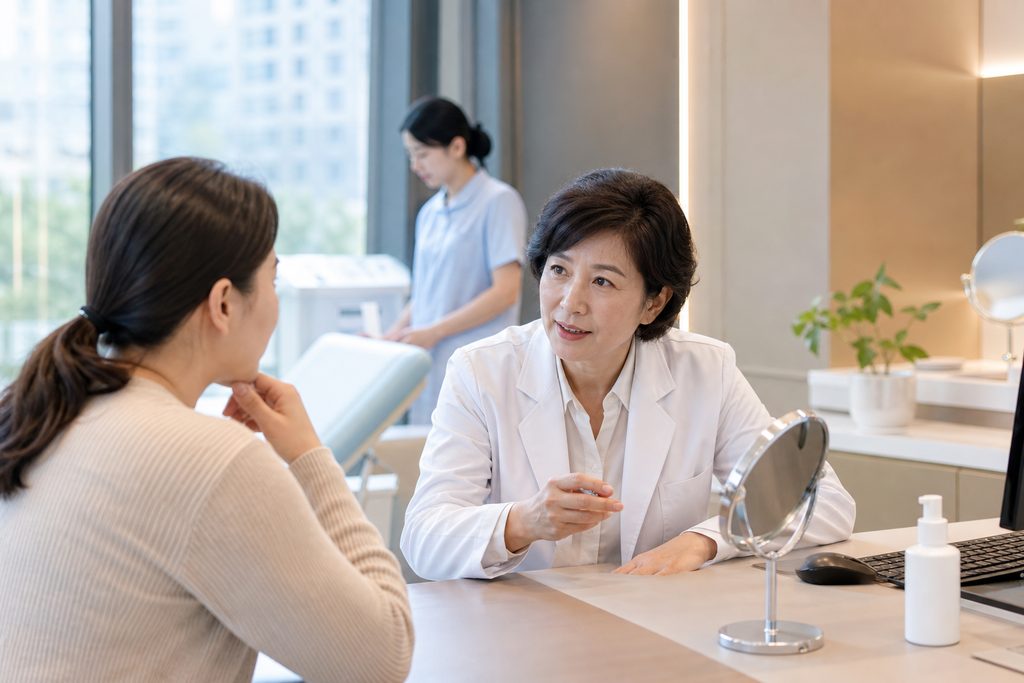
When 47-year-old Elena noticed the persistent rash on her hands wasn’t responding to the steroid creams her local dermatologist in Manchester had prescribed, her frustration turned into genuine worry. She had been dealing with what was eventually diagnosed as chronic atopic dermatitis for nearly a decade, cycling through treatments that would work for a few months before losing effectiveness. Her specialist mentioned biologic therapies as the next logical step, but the quoted cost made her pause. A friend who had traveled to Asia for a complex dental procedure suggested she look into options in China. That suggestion led her to the Institute of Dermatology at the Chinese Academy of Medical Sciences (CAMS) in Nanjing, a name that kept surfacing in her research.
The Institute of Dermatology CAMS isn’t a department tucked inside a larger general hospital. It’s a standalone institution dedicated entirely to skin disease, one of the few such centers in China with this level of focus. For someone like Elena, who had spent years bouncing between general dermatology clinics, the idea of a facility where every corridor, every lab, and every consultation room was built around dermatology meant something specific. It meant the pathology lab processing her skin biopsy runs hundreds of similar samples every week, not a handful. It meant the treatment protocols she’d encounter were refined through volume, not adapted from general medical guidelines. That distinction matters when you’re considering traveling thousands of miles for care.
What Actually Happens When You Reach Out
The process isn’t complicated, but it’s also not like booking a hotel. You don’t just pick a date and show up. Here’s the sequence that most of our patients follow.
First, you send us your existing medical records. These are the reports, biopsy results, photographs of the affected areas, and treatment history you’ve already accumulated. We need the full picture, not a summary. If your documents aren’t in English or Chinese, we arrange certified translation. This step alone can take three to five business days depending on volume and language pair.
Once your records are organized and translated, we forward them to the international patient coordination office at the Institute of Dermatology CAMS. A dermatologist there reviews your file. This is not a formal consultation yet. It’s a preliminary review to determine whether your case falls within their scope and whether an in-person visit makes sense. Sometimes the answer is yes. Sometimes the reviewing physician will request additional imaging or lab work before they can say. And sometimes they’ll recommend a different facility entirely if your condition—say, a rare genodermatosis requiring a specific geneticist—would be better served elsewhere. We’ve seen all three outcomes.
If the preliminary review is positive, the next step is scheduling. You’ll need a formal appointment. The Institute, like most top-tier Chinese public hospitals, does not allow overseas patients to book standard outpatient slots remotely. Those are same-day, queue-based affairs. For international patients, the route is through their international medical service channel, which functions more like a pre-arranged specialist consultation. This is where the coordination comes in. We lock in a date and time with a specific dermatologist, usually one whose subspecialty aligns with your diagnosis. The lead time for this ranges from one to three weeks, depending on the specialist’s schedule.
You travel to Nanjing. We meet you at the airport or your hotel. On the day of your appointment, a bilingual medical companion accompanies you to the Institute. They handle registration, payment, navigation between departments, and real-time translation during your consultation. The physician examines you, reviews your records in person, and may order additional tests. Some of these—blood work, patch testing, dermoscopy—can be completed the same day. Others, like a repeat skin biopsy with specialized immunohistochemistry staining, might take a few days for results.
After the consultation and any immediate testing, you’ll have a treatment plan. This could be a prescription, a recommendation for phototherapy sessions over several weeks, a biologic injection protocol, or a surgical procedure for a lesion excision. If the plan requires you to stay in Nanjing for ongoing treatment, we help coordinate extended accommodation and follow-up appointments. If you can return home and continue care there, the physician provides a detailed treatment letter in English for your local doctor.
Understanding the Real Dermatology Treatment Cost Nanjing
Let’s talk numbers. Not vague assurances, but actual ranges based on what we’ve seen patients pay at the Institute of Dermatology CAMS over the past two years. The dermatology treatment cost Nanjing varies significantly depending on what you need, but here’s a breakdown that reflects reality.
A specialist consultation through the international channel typically runs between $150 and $300. This is higher than the standard domestic outpatient fee, which can be as low as $10 to $30, because it includes the English-capable coordination and the extended appointment slot. Standard domestic consultations are often 5 to 10 minutes. International consultations are scheduled for 20 to 30 minutes, sometimes longer for complex initial visits.
Diagnostic procedures add to the total. A skin biopsy with histopathology costs between $100 and $250. Patch testing for allergic contact dermatitis, which can involve 40 or more allergens applied to the back and read over several days, runs $200 to $400. Dermoscopy, a non-invasive imaging technique used to evaluate pigmented lesions, is often included in the consultation fee but may be billed separately at $30 to $50 if done as a standalone procedure.
Treatment costs are where the numbers diverge sharply based on your condition. Narrowband UVB phototherapy, commonly used for psoriasis and eczema, costs $30 to $60 per session. A typical course involves two to three sessions per week over 8 to 12 weeks. That puts a full phototherapy course in the range of $1,000 to $2,500. Compare that to the $5,000 to $10,000 that similar courses can cost in the United States or Western Europe, and the math starts to make sense even after factoring in travel and accommodation.
Biologic therapies are a different category. Drugs like dupilumab for atopic dermatitis or secukinumab for psoriasis are expensive regardless of where you are in the world. In China, the per-dose cost is typically 30% to 50% lower than US list prices, but we’re still talking about $800 to $1,500 per injection depending on the drug and dosage. The Institute of Dermatology CAMS participates in China’s national drug procurement program, which has driven down prices on many biologics in recent years. Some patients who qualify for clinical trials—and the Institute runs many—can access these therapies at significantly reduced cost or even free of charge. Eligibility is strict, and there are no guarantees.
Surgical procedures occupy the middle ground. Excision of a benign but bothersome lesion might cost $300 to $800. Mohs micrographic surgery for certain skin cancers, a technique where the surgeon removes tissue layer by layer and examines each under a microscope until the margins are clear, ranges from $1,500 to $3,000. That same procedure in the United States frequently exceeds $10,000.
| Procedure | Institute of Dermatology CAMS (USD) | US Average (USD) | UK Average (USD) |
|---|---|---|---|
| Specialist Consultation (International Channel) | $150–300 | $250–500 | $200–400 |
| Skin Biopsy with Histopathology | $100–250 | $500–1,200 | $400–800 |
| Patch Testing (Full Series) | $200–400 | $800–1,500 | $600–1,000 |
| Narrowband UVB Phototherapy (per session) | $30–60 | $100–250 | $80–150 |
| Mohs Micrographic Surgery | $1,500–3,000 | $5,000–15,000 | $4,000–10,000 |
| Biologic Injection (per dose, drug-dependent) | $800–1,500 | $2,500–6,000 | $1,500–3,500 |
These are reference ranges, not fixed quotes. Your actual costs will depend on your specific diagnosis, the complexity of your case, and the treatment protocol your physician recommends. We always advise patients to budget for the upper end of the range and treat any savings as a welcome surprise.
How to Book Appointment at Institute of Dermatology Nanjing
The question of how to book appointment at Institute of Dermatology Nanjing comes up in nearly every initial inquiry we receive. The short answer is: you can’t do it alone as an overseas patient, at least not through the standard channels. The longer answer explains why and what the alternative looks like.
The Institute’s standard outpatient system is designed for domestic patients. Appointments for these slots are released online through a Chinese-language platform, typically at a set time each day, and they’re claimed within minutes. You need a Chinese ID number or a local mobile phone number registered to your name to even access the system. Even if you somehow secured a slot, you’d arrive to find a crowded waiting hall, a consultation conducted entirely in Mandarin, and a billing and pharmacy system that operates on domestic health insurance cards and local payment apps.
The international patient pathway is different. It’s not a hack or a workaround. It’s a parallel system that the Institute itself maintains for overseas visitors, usually managed through their international medical center or VIP clinic. This is the channel we use. When you work with us, the booking process looks like this:
We submit your translated medical records and a summary of your case to the Institute’s international coordination desk. They review your file and confirm that your condition falls within their clinical scope. They propose a specialist and a date. We confirm with you. You pay the consultation coordination fee, which covers the scheduling work, the bilingual companion on the day, and the logistical support. The appointment is set.
The whole process, from initial contact to confirmed appointment, typically takes 7 to 14 business days. The variables are how quickly you can provide your medical records, how long translation takes, and the reviewing physician’s availability. Rushing this is counterproductive. An incomplete file or a rushed translation leads to delays on the back end.
A Realistic Timeline
People want to know when they can be seen, when they’ll have answers, and when they can expect to start treatment. Here’s a timeline that reflects what actually happens, including the steps that tend to get overlooked in optimistic planning.
| Stage | What Happens | Typical Duration |
|---|---|---|
| Week 1 | You gather and send your medical records. We assess what’s needed and what’s missing. If translation is required, we begin. | 3–7 days |
| Week 2–3 | Translated records are submitted to the Institute. A dermatologist reviews your file. We wait for their response. | 5–10 business days |
| Week 4 | If accepted, we coordinate a date with the specialist. You apply for your S2 visa (medical treatment purpose). Visa processing time varies by country. | 5–15 business days for visa |
| Week 5–6 | You travel to Nanjing. Consultation takes place. Initial diagnostic tests are ordered and completed. | 1–3 days |
| Week 6–7 | Test results return. Treatment plan is finalized. If ongoing treatment is needed, you decide whether to stay or return home. | 3–7 days for results |
| Week 7 onward | Treatment begins. This could be a one-time procedure, a multi-week phototherapy course, or the first dose of a biologic with a schedule for subsequent doses. | Varies by protocol |
The visa step is the one that catches people off guard. The S2 visa is the correct category for short-term medical treatment in China. It’s not the M visa—that’s for commercial and trade activities, and using it for medical purposes can create problems at the border or during your hospital registration. The S2 requires an invitation letter from the hospital or a medical coordination entity, which we help prepare. Processing times depend on the Chinese embassy or consulate in your home country. Some issue within a week. Others take three weeks. Plan for the longer end.
What Can Go Wrong — and What Happens Then
Things don’t always go according to plan. Pretending otherwise doesn’t help anyone. Here are the most common complications we’ve encountered and how they’re handled.
The reviewing physician might decline your case. This happens. Sometimes the condition falls outside the Institute’s clinical focus. Sometimes the physician determines that the treatment you’re seeking isn’t appropriate for your diagnosis based on the records provided. When this occurs, you’re not left stranded. We receive a written explanation from the reviewing physician, and we work with you to identify an alternative facility. China has excellent dermatology departments at other hospitals—Huashan Hospital in Shanghai, for instance, has a renowned dermatology unit—and sometimes a different center is the better fit.
Your diagnosis might change. It’s not uncommon for a patient to arrive with one diagnosis and leave with another. The Institute’s dermatopathology lab is a reference center for complex skin cases in China, and their pathologists sometimes identify findings that were missed or misinterpreted elsewhere. This is generally a good outcome—you’re getting a more accurate diagnosis—but it can mean the treatment plan you expected is no longer relevant. You need to be mentally prepared for this possibility.
Treatment might take longer than anticipated. A phototherapy course that was supposed to be 8 weeks might extend to 12 if your skin responds slowly. A surgical wound might need extra time to heal before you can fly comfortably. You need flexibility in your schedule and your budget. We recommend having a buffer of at least two extra weeks beyond the expected treatment duration, and a financial reserve of 20% to 30% above the estimated costs.
The language barrier can still bite you, even with a companion. Our bilingual staff are with you during scheduled appointments, but you won’t have a translator with you at your hotel at 10 PM when you’re trying to figure out why the pharmacy instructions on your medication are only in Chinese. We provide translated summaries of all key instructions, but the reality of being in a country where you can’t read the signage or have a casual conversation is tiring. Most patients adapt quickly. Some find it genuinely stressful. Know yourself.
Is Dermatology Treatment in China Safe for Foreigners?
The question of safety—is dermatology treatment in China safe for foreigners—deserves a direct answer. The concern behind it is understandable. You’re considering medical care in a country with a different regulatory system, different language, and different cultural norms around healthcare. What assurances do you have?
Start with the institution itself. The Institute of Dermatology CAMS is not a private clinic of uncertain provenance. It’s a national-level research and clinical center under the Chinese Academy of Medical Sciences, which is China’s equivalent of the National Institutes of Health in the United States. It’s accredited by the National Health Commission of China and operates under the same regulatory framework that governs all public tertiary hospitals in the country. Its physicians are board-certified dermatologists, many with subspecialty training completed at centers in Europe, Japan, or the United States. Its pathology lab participates in international quality assurance programs.
The clinical volume is a safety factor in itself. The Institute sees over 1.2 million outpatient visits annually, according to its own published figures. A dermatologist there might see more cases of a particular condition in a month than a general dermatologist in a smaller country sees in a year. For rare or complex skin diseases, that volume translates into pattern recognition that’s hard to replicate elsewhere.
Infection control standards at Chinese tertiary hospitals have improved substantially over the past decade. The Institute follows protocols for sterilization, single-use instruments, and operating room hygiene that are comparable to international norms. We’ve accompanied dozens of patients through procedures at this facility, from minor excisions to extensive Mohs surgeries, and post-procedure infection rates have been low and consistent with what you’d expect at a high-quality Western center.
The main safety consideration isn’t clinical competence. It’s communication and continuity. If you return home after treatment and develop a complication or a question, you’re no longer a short taxi ride from the physician who treated you. You need a clear plan for follow-up care with a local dermatologist, and you need the treating physician in Nanjing to provide documentation that makes that handoff seamless. We ensure you leave with a comprehensive discharge summary in English, including diagnosis, treatment details, histopathology results, and recommendations for ongoing management. But the responsibility for establishing that local follow-up relationship rests with you.
Full Skin Treatment Package China Medical Tourism: What’s Included
The phrase full skin treatment package China medical tourism suggests something tidy and all-inclusive. The reality is more modular. No single package covers every patient’s needs, but there is a consistent structure to what comprehensive dermatology care at the Institute looks like for international patients.
The core components typically include the initial specialist consultation, any diagnostic procedures
Frequently Asked Questions
Yes. The hospitals used for international patients are JCI-accredited and follow the same international safety standards as top hospitals in the US and Europe. Surgical teams perform high volumes of procedures — often more than their Western counterparts — which studies show leads to better outcomes.
Costs vary by procedure and hospital, but international patients typically save 40-80% compared to US prices — even when factoring in travel and accommodation. A consultation with our team will give you an exact, all-inclusive quote with no hidden fees.
Send us your existing medical reports to get started. We handle everything from hospital selection and appointment scheduling to visa assistance and post-operative recovery planning. Your medical records are reviewed by the specialist before you even book a flight.
For more medical information and treatment options in China, visit chinamedservices.com (China Medical Services).
