Nanjing Drum Tower Gastroenterology: China’s 6th-Ranked Digestive Center for International Patients
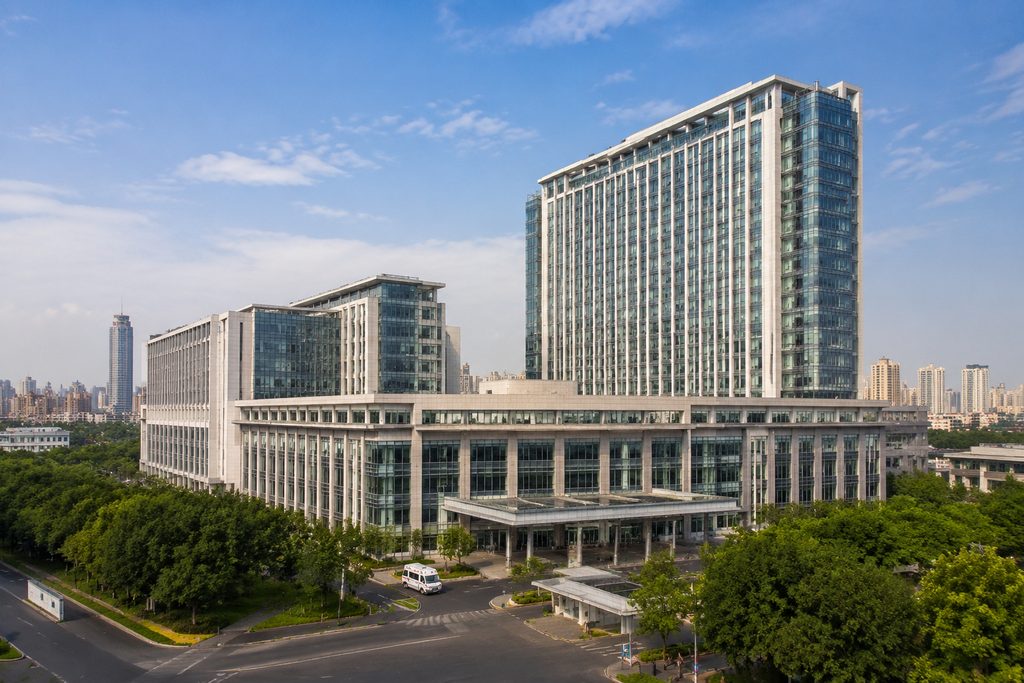
Nanjing Drum Tower Gastroenterology: The Short Answer
Patients searching for “Digestive Disease in Nanjing Drum Tower Hospital Gastroenterology Rank 6 in China” are usually asking two things: is this department genuinely elite, and what will treatment cost? The answer to the first question is yes — the department holds a top-10 national reputation ranking in the authoritative Fudan Hospital Rankings, specifically ranked 6th in China for gastroenterology. The answer to the second question depends entirely on what you need done. A diagnostic gastroscopy with sedation runs roughly $300 to $600. A complex procedure like an ESD for early gastric cancer can reach $6,000 to $10,000. These figures are a fraction of Western private-pay rates, but they don’t include travel, lodging, or the coordination needed to actually get in the door.
The real challenge for an international patient isn’t clinical quality. It’s navigating a system built for domestic volume. Drum Tower’s GI department handles thousands of procedures monthly. Without Chinese-language capability and an understanding of hospital registration rules, you’ll burn days just trying to get a specialist appointment. That’s the gap between seeing a ranking on a list and actually receiving care.
Who This Is Right For — and Who It Isn’t
Traveling to Nanjing for digestive care makes sense for a specific kind of patient. You have a confirmed or strongly suspected diagnosis — a complex biliary stricture, an early-stage GI tumor, refractory IBD — and you’ve been told the wait at home is long or the out-of-pocket cost is prohibitive. You’re medically stable enough to fly. You understand that this is not medical tourism at a resort. It’s a serious clinical journey to a high-volume academic center.
This path is not right for patients who need immediate emergency care, who are too frail for international travel, or who expect a concierge experience identical to a Western private hospital. Drum Tower is a bustling Chinese public hospital. The international patient pathway exists, but the hospital’s core identity is high-throughput public service. If you need hand-holding at every step, you’ll need to bring that support with you — or arrange it through a third party before you arrive.
The Options, Compared
Patients with serious digestive disease face a genuine set of choices. Staying in your home country, traveling to another Western center, or coming to a top Chinese GI department like Nanjing Drum Tower. The trade-offs are real and measurable.
| Factor | US Private Hospital | European Public Hospital (Non-Resident) | Nanjing Drum Tower (International Pathway) |
|---|---|---|---|
| Diagnostic Gastroscopy | $2,500–$5,000 | $800–$1,800 | $300–$600 |
| ESD for Early Gastric Cancer | $25,000–$45,000 | $15,000–$25,000 | $6,000–$10,000 |
| Wait for Specialist Appointment | 1–4 weeks | 4–12 weeks | 3–10 days (with coordination) |
| English-Speaking Staff | Standard | Common | Limited; interpreter needed |
| Post-Discharge Follow-Up | Local | Local | Requires telemedicine plan |
What this table doesn’t show is procedural volume. Drum Tower’s gastroenterologists perform a volume of complex endoscopic resections that few Western centers match. In procedures like ESD — where technical skill directly correlates with complete resection rates — annual case volume matters. A department doing hundreds of these per year has a depth of experience that changes outcomes. The cost advantage is real. But so is the logistical complexity. The right choice depends on whether your priority is minimizing expense or minimizing friction.
What “Ranked 6th in China” Actually Means for Your Care
The Fudan University Hospital Ranking is China’s most authoritative hospital evaluation system. For gastroenterology, the specialty reputation ranking is based on peer assessment by senior specialists across the country. A 6th-place ranking means the department is considered a national reference center by other GI doctors. It doesn’t mean “the 6th-best outcomes” — no ranking system can reliably measure that. It means that when a complex case appears in another Chinese province, senior gastroenterologists are likely to say “send the patient to Nanjing Drum Tower.”
This matters for an international patient considering the best gastroenterology hospital in China ranking because it signals where difficult cases get referred. Drum Tower’s GI department has particular depth in early gastrointestinal cancer diagnosis and endoscopic resection, inflammatory bowel disease management, and complex biliary-pancreatic interventions. These are areas where volume and specialized protocols create a genuine clinical advantage. The department is also a major research center, which means access to clinical trials and protocols that may not be available elsewhere.
A common question we hear is “is Nanjing Drum Tower Hospital good for stomach cancer?” The short answer: yes, particularly for early-stage disease where endoscopic resection is appropriate. China has one of the world’s highest incidences of gastric cancer, and centers like Drum Tower have developed extensive experience in endoscopic submucosal dissection. The technique allows removal of early-stage tumors without open surgery. But “good for stomach cancer” is too broad a question. For advanced disease requiring multi-modal therapy, you need to evaluate the full oncology team, not just gastroenterology. The department’s strength is in diagnosis and endoscopic treatment. For surgical oncology, you’d be evaluating a different department within the same hospital.
What Digestive Disease Treatment Costs in China
If you’re searching for “how much does digestive disease treatment cost in China,” you’re probably comparing against a quote from a hospital at home. The honest answer is that prices vary dramatically by hospital tier, procedure complexity, and whether you access the international or standard pathway.
At a top-ranked public hospital like Nanjing Drum Tower, the Nanjing Drum Tower Hospital gastroenterology price for common procedures falls into these ranges when accessed through the international department channel:
A standard upper endoscopy with sedation and biopsy: $300 to $600. A colonoscopy with polypectomy: $500 to $1,200. Endoscopic retrograde cholangiopancreatography for bile duct stones: $2,500 to $5,000. Endoscopic submucosal dissection for early gastric or esophageal lesions: $6,000 to $10,000. These are hospital charges only. They don’t include pre-procedure consultations, pathology, anesthesia, or any unexpected interventions. They also don’t include your flights, visa, accommodation, or the services of a bilingual coordinator.
What drives the variance? Three things. First, whether you go through the international VIP channel or attempt the standard public pathway. The international channel costs more but gives you English-capable coordination and faster access. Second, the complexity of your specific case — a straightforward polyp removal is one thing; a multi-hour ESD requiring advanced closure techniques is another. Third, length of stay. If your procedure requires inpatient observation, daily room charges add up. Budget for the high end of any range and treat the low end as a pleasant surprise.
How to Book Digestive Surgery in Nanjing as an International Patient
You cannot simply email the hospital and book digestive surgery Nanjing China the way you’d book a hotel. Chinese public hospitals operate on a system where you must be physically present for a face-to-face consultation before any procedure can be scheduled. There is no online booking portal for international surgical slots. The standard public pathway requires you to queue for registration on the day of the clinic, often starting at 6 AM, with no guarantee of seeing a specific specialist.
For international patients, the practical route is to engage the hospital’s international department or work with a coordination service that has an established relationship. The process typically works like this: you send your existing medical records, imaging, and pathology reports for a preliminary review. A specialist evaluates whether your case is appropriate for treatment at Drum Tower. If yes, a consultation is scheduled. You travel to Nanjing, meet the specialist, undergo any additional testing required, and then a procedure date is set. This is not a process you can compress into a 3-day trip.
The Nanjing Drum Tower Hospital GI department international patient pathway exists, but it requires documentation. You’ll need translated medical summaries, original pathology slides for certain cancer cases, and imaging on CD or via secure electronic transfer. The hospital will want to review everything before confirming a consultation. This pre-screening step is the single most important thing you can get right. Incomplete records mean delays. The wrong records mean you might travel to Nanjing only to discover the specialist needs a repeat biopsy before proceeding.
Practical Considerations: Records, Visa, and Recovery
The logistics of traveling to China for GI care are not trivial. You need a visa. For medical treatment, the appropriate category is an S2 visa, which covers short-term private affairs including medical visits. You’ll need an invitation letter from the hospital or a supporting document confirming your medical appointment. Your accompanying family member applies for the same S2 category. Do not apply for an M visa — that’s for commercial and trade activities and is not appropriate for medical travel.
Medical records are the foundation. Everything must be in English or translated into Chinese. This includes endoscopy reports, pathology slides and reports, CT and MRI images on CD, and a summary letter from your treating physician outlining your diagnosis, treatments to date, and the specific question you want answered. The more complete your file, the more productive your consultation will be. A specialist reviewing a case for the first time needs the full picture, not fragments.
Payment is another layer. Chinese public hospitals require payment before services are rendered. International credit cards are sometimes accepted, but not reliably. You should be prepared to pay via wire transfer, cash, or UnionPay. Most international insurance plans are reimbursement-based for treatment in China, meaning you pay upfront and claim later. Verify this with your insurer before you commit. Do not assume coverage.
After your procedure, recovery and follow-up planning matter. If you undergo an endoscopic resection, you’ll need to stay in Nanjing for at least several days to a week for observation. Your doctor will want to see you before you fly. Once home, you need a gastroenterologist who can receive a discharge summary and continue your surveillance. Drum Tower can provide detailed follow-up instructions, but they cannot manage your long-term care from across the world. Line up your local GI doctor before you leave.
Frequently Asked Questions
Technically yes, but practically it’s extremely difficult. The hospital’s international department exists and can facilitate appointments, but capacity is limited. Walk-in registration at the public clinic counters is conducted entirely in Chinese. If you arrive alone without language support and without prior coordination, you will struggle to register, find the right department, communicate your history, understand your doctor’s instructions, and pay your bill. Many international patients work with a bilingual medical coordinator who handles registration, translation, and navigation. This is not a luxury — for a non-Chinese speaker, it’s close to a necessity.
This happens frequently, and it doesn’t necessarily mean one doctor is wrong. Different medical systems have different treatment philosophies, different available technologies, and different levels of experience with specific diseases. A Chinese gastroenterologist seeing hundreds of early gastric cancers per year may recommend endoscopic resection for a lesion that a Western doctor — seeing far fewer cases — would refer for surgery. Neither is necessarily incorrect. You are seeking a second opinion, and sometimes a third. Take the Drum Tower recommendation back to your home physician and discuss it. If the recommendations conflict, ask both sides to explain their reasoning. The decision is ultimately yours.
Nanjing Drum Tower Hospital is a large, full-service academic medical center. It has intensive care units, interventional radiology, and surgical backup. If a complication occurs during an endoscopic procedure — bleeding, perforation — the hospital has the resources to manage it on-site. This is one reason to choose a major hospital rather than a standalone endoscopy center. That said, you are far from home, and a prolonged hospital stay in Nanjing is not what anyone plans for. Ensure you have travel insurance that covers medical complications and extended stays. Understand that the standard of nursing care and the physical environment of a Chinese hospital ward may differ from what you’re accustomed to at home. These are not reasons to avoid treatment, but they are realities to prepare for.
Your Next Step
Nanjing Drum Tower Hospital’s gastroenterology department is a genuinely elite center — ranked 6th nationally, with procedural volumes and clinical experience that match or exceed many Western academic centers, and at a cost that makes treatment accessible to patients facing prohibitive bills at home. The barrier is not quality. It’s access.
Our team at China Medical Services is not a hospital and we do not provide medical advice or diagnoses. What we do is bridge the gap between international patients and China’s top-ranked medical institutions. We can help you understand whether your case is appropriate for Drum Tower, assemble and translate your records for pre-review, coordinate a consultation through the hospital’s international pathway, and provide bilingual support on the ground in Nanjing. If you’re considering digestive care in China and want to understand the practical path forward — without committing to anything — you can request a free consultation with our patient coordination team. We’ll talk through your situation, explain what’s realistic, and help you decide if this makes sense for you.
For more medical information and treatment options in China, visit chinamedservices.com (China Medical Services).
