Nanjing Hospitals for Foreigners: Historic Capital, Modern Medical Excellence
While a patient in the United Kingdom waits a median of 15.6 weeks just to start specialist treatment after a GP referral, the outpatient clinic at Nanjing Drum Tower Hospital processes over 5,000 international consultations annually—often scheduling complex procedures within days of arrival. The gap is not about clinical quality. It is about system design.
Nanjing remains a blind spot for many Western patients researching medical care in China. Shanghai and Beijing dominate the conversation. That is a strategic error. The city houses several institutions ranked in the top tier of Chinese hospital evaluations, operates JCI-accredited facilities with English-speaking staff, and delivers procedures at a fraction of North American prices. You just need to know where to look. And how to navigate the entry points.
Key Takeaways
- Nanjing Drum Tower Hospital performs over 60,000 interventional cardiovascular procedures annually—clinical volume that directly correlates with better patient outcomes.
- International patients can access JCI-accredited care in Nanjing at approximately 20-30% of US prices, with transparent billing through hospital international departments.
- Public hospital outpatient clinics cannot be booked from overseas without a physical presence—this structural barrier makes bilingual coordination essential for foreigners.
- The S2 visa is the only legal pathway for medical treatment in China; using a business visa risks entry denial and disrupted care plans.
The Problem: Western Healthcare Wait Times Are Not an Inconvenience—They Are a Clinical Risk
Canada’s median wait time from general practitioner referral to orthopedic surgery hit 28.6 weeks in 2024, according to the Fraser Institute. The United Kingdom’s NHS reported 7.68 million patients on waiting lists as of mid-2024. These are not bureaucratic statistics. They represent people living with degenerative joint pain, progressing cardiac conditions, and malignancies that do not pause for administrative queues.
A 62-year-old patient with severe aortic stenosis does not have six months to wait for a valve replacement. The clinical literature is unambiguous on this point: delays in time-sensitive interventions correlate with irreversible myocardial damage and sharply elevated mortality risk. Yet in multiple Western systems, that six-month wait is the norm, not an exception.
This is where structural alternatives matter. Not medical tourism in the superficial sense—not discount surgery in unregulated facilities. But deliberate access to high-volume, high-expertise centers in systems built for throughput. China’s top-tier hospitals operate at a scale that fundamentally changes the wait-time equation. Nanjing’s leading institutions are a case in point.
Who We Are
We are not a hospital. We do not provide medical treatment, clinical diagnoses, or surgical procedures. Our team functions as your logistical architects—we bridge the structural gap between you and China’s top-tier medical expertise. We match your specific diagnosis with the right specialist in the right institution, handle the documentation that makes overseas treatment legally possible, and place a bilingual medical companion at your side from the moment you land until your recovery is complete. We do not practice medicine. We make it accessible.
Why Nanjing’s Medical Infrastructure Delivers Results for International Patients
Clinical Volume That Drives Surgical Precision
There is a well-documented relationship between procedural volume and patient outcomes. A 2023 analysis in The Lancet examined over 900,000 surgical cases across 12 countries and found that high-volume centers reduced 30-day mortality by 22-34% across major procedure categories. Nanjing Drum Tower Hospital—one of the best hospitals Nanjing for foreigners seeking complex care—performs more than 60,000 interventional cardiovascular procedures each year. Its orthopedic department handles over 8,000 joint replacements annually.
Compare that to a typical US community hospital, where an orthopedic surgeon might perform 50-70 joint replacements per year. The surgeon at Drum Tower does that many in a month. Repetition at that scale is not just about speed. It sharpens intraoperative judgment, refines complication management, and builds team coordination that cannot be replicated in lower-volume settings.
Technology Infrastructure Without the Legacy Constraints
Many Western hospitals operate with a mix of equipment generations—some cutting-edge, some a decade old, all constrained by capital budget cycles. Nanjing’s top hospitals have undergone massive infrastructure renewal in the past 15 years, often leapfrogging older systems entirely. The result is facilities where the imaging suite, the robotic surgery platform, and the electronic health record system are all current-generation, fully integrated, and designed for high throughput.
Nanjing First Hospital, for instance, operates a hybrid operating suite that integrates real-time 3D imaging with robotic-assisted cardiac surgery capabilities. This is not experimental technology. It is standard operating infrastructure, used daily, with teams that have accumulated thousands of cases on the platform. For international patients, this means access to procedural precision that may not be available at their local hospital—at least not without an additional wait.
The Cost Equation: Structural Reasons, Not Quality Compromises
Any discussion of medical care in China must address the obvious question: why does it cost less? The answer has nothing to do with lower clinical standards. It is structural. Labor costs for highly skilled nursing staff, surgical teams, and support personnel are lower in China’s economy. Hospital construction and equipment procurement benefit from manufacturing proximity. And the sheer volume of procedures spreads fixed costs across a much larger patient base.
A cardiac bypass procedure that costs $120,000-150,000 in the United States typically runs $12,000-20,000 at a top Nanjing hospital. A hip replacement quoted at $40,000-60,000 in the UK or US might cost $8,000-14,000 in Nanjing. These are not discount-tier prices from unregulated clinics. These are the rates at JCI-accredited, Fudan-ranked institutions with outcomes data that hold up to international scrutiny.
What does a Nanjing hospital international patient price list actually look like? It depends on the hospital and the procedure, but international departments generally provide transparent, itemized quotations before travel. The key is going through the right channel—the international medical center, not the standard public outpatient system.
What You Need to Know Before Going Alone
Nanjing’s medical infrastructure is formidable. Its administrative reality for foreigners is unforgiving. Anyone considering how to book surgery in Nanjing as a foreigner needs to understand three structural barriers that can derail a self-planned trip.
- Visa Requirements Are Non-Negotiable: Medical treatment in China requires an S2 visa with a specific annotation for therapeutic purposes. This is not a formality. Border officials check. The M visa is for commercial business only—showing up at immigration with an M visa and a hospital admission letter will get you refused entry. The S2 application requires an invitation letter from the treating hospital, which means you must have a confirmed hospital relationship before you can even apply for the visa. This creates a chicken-and-egg problem for independent travelers.
- Public Hospital Registration Is an In-Person System: China’s public hospitals—including the top-ranked ones—operate on a same-day registration model for outpatient clinics. You cannot book a specialist appointment from overseas through the hospital’s standard system. The online platforms that exist are in Chinese, require a national ID number, and release appointment slots that disappear within minutes. The international department channel bypasses this, but it is a separate system with separate access protocols.
- Payment Architecture Favors Local Systems: Chinese hospitals operate on a prepayment model. You deposit funds before treatment, and the hospital draws down against that balance. International credit cards are not universally accepted. Wire transfers can take days to clear. Without a local payment intermediary or an international department that handles foreign billing, a patient can find themselves unable to pay for the next stage of care at exactly the wrong moment.
How We Help You Navigate This
These barriers exist for structural reasons, not because anyone is trying to exclude foreign patients. China’s hospital system was built to serve a domestic population of 1.4 billion people. Adapting it for international use requires a deliberate translation layer—and that is what our team provides.
Before you travel, we secure the hospital invitation letter that makes your S2 visa application possible. We route your medical records through the international department of the right hospital—not the standard outpatient queue—and obtain a confirmed treatment plan with a transparent price quotation. We handle the deposit logistics so that your funds are in place before you arrive.
During your stay, a bilingual medical companion meets you at the airport and stays with you through every appointment, every test, every billing interaction. This is not a translator on a phone app. This is a trained professional who knows the hospital layout, understands medical terminology in both languages, and can spot when a process is going off-track before it becomes a problem. They handle registration queues, pharmacy pickups, and discharge paperwork while you focus on recovery.
After treatment, we coordinate follow-up appointments, manage medical record translation for your home physician, and ensure continuity of care across borders. The goal is not just to get you through surgery. It is to make the entire experience coherent.
JCI Accreditation and International Standards in Nanjing
Patients researching JCI accredited hospitals Nanjing China will find that the city’s international-standard infrastructure is concentrated but real. Joint Commission International accreditation is the most widely recognized global benchmark for hospital quality and patient safety. It requires hospitals to meet over 1,200 measurable standards covering everything from surgical infection control to medication management to patient communication protocols.
Nanjing’s JCI-accredited facilities include international departments within major public hospitals as well as private international clinics. These institutions maintain English-language medical records, employ bilingual clinical staff, and operate billing systems compatible with international insurance. They are the natural entry point for any foreign patient considering treatment in the city.
For patients exploring a medical tourism package Nanjing historic capital approach, the JCI-accredited hospitals offer something that unaccredited facilities cannot: verifiable compliance with standards your home-country physician will recognize. This matters for continuity of care. When you return home and hand your surgical records to your local doctor, the documentation from a JCI-accredited institution carries weight.
The Historic Capital Advantage: Recovery in a City Built for Contemplation
There is a dimension to medical travel that purely clinical discussions miss. Recovery is not just about surgical technique. It is about environment. Stress impedes healing. Cortisol levels affect wound recovery and immune function. Where you spend your postoperative weeks matters.
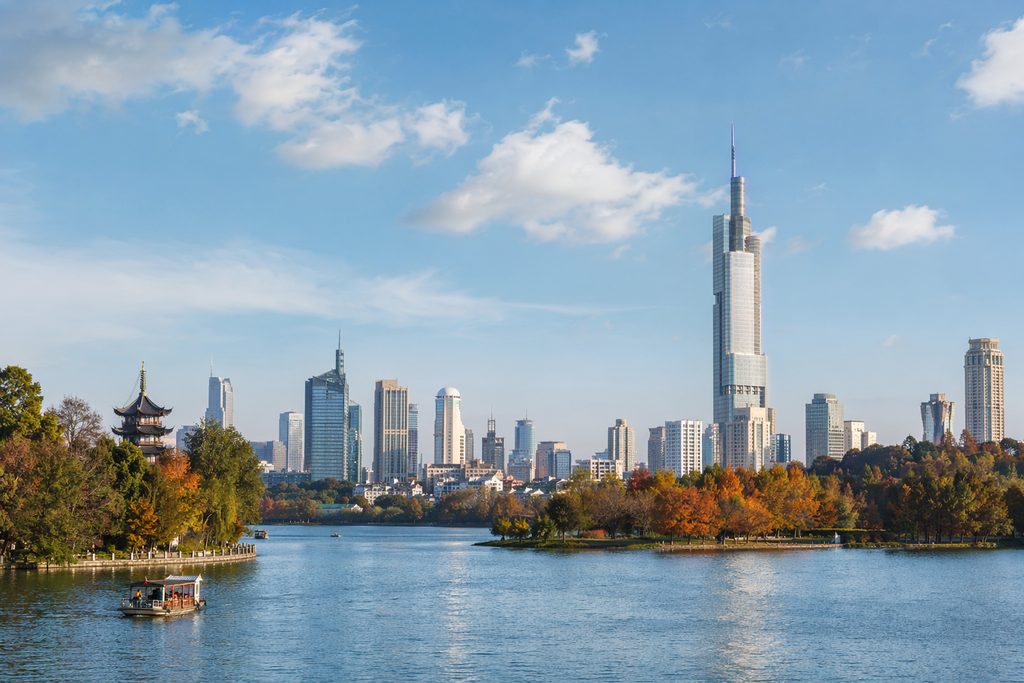
Nanjing offers something that Shanghai and Beijing cannot: a pace and texture conducive to recovery. The city’s tree-lined boulevards, its lakefront parks, its Ming Dynasty city wall—these are not tourist attractions. They are spaces designed for walking, for sitting, for letting the body heal at its own speed. A patient recovering from joint replacement can do their prescribed walking on a quiet path along Xuanwu Lake rather than in a crowded hotel gym. A cardiac patient can sit in the shade of ginkgo trees at the Sun Yat-sen Mausoleum and feel, perhaps for the first time in months, that their body is not a crisis to be managed.
This is not a soft consideration. It is a clinical one. And it is part of why Nanjing deserves serious consideration as a medical destination.
Frequently Asked Questions
Not through the public system. Public hospital outpatient clinics require in-person registration on the day of consultation. Surgery is scheduled only after a face-to-face specialist evaluation. The international department pathway, however, allows for pre-arranged consultations and coordinated surgical scheduling before you travel. This is the only reliable route for overseas patients, and it requires working through the hospital’s international patient office—something we handle as part of our coordination service.
This is a legitimate concern. The Nanjing hospitals we work with provide complete, translated medical records and imaging files that your home physician can use for follow-up care. For complex cases, we can arrange post-operative video consultations with your Nanjing surgeon. That said, you should assume that hands-on complication management will fall to your local medical team. This is why we recommend establishing a relationship with a local specialist before you travel—someone who agrees in advance to handle postoperative follow-up. Most physicians are willing to do this when they understand the clinical rationale for overseas treatment.
Look at the data, not the geography. The hospitals we work with in Nanjing publish their outcome statistics, participate in international registries, and hold JCI accreditation that requires audited compliance with global standards. Their surgeons train internationally, publish in peer-reviewed journals, and perform procedure volumes that exceed Western norms by multiples. The question is not whether a Chinese hospital can match Western quality. The question is whether your local hospital can match the procedural volume and subspecialized expertise of a high-throughput Chinese center. For many procedures, the answer is no.
A hospital’s international department quotation typically covers the procedure itself, inpatient stay, standard medications, and basic rehabilitation during admission. It does not cover international airfare, visa fees, accommodation outside the hospital, extended rehabilitation, or treatment for unrelated conditions discovered during preoperative screening. We provide a detailed cost breakdown before you commit to anything. The hospital’s quotation is binding on their side—if the quoted price changes, you will know why before any additional charges are incurred.
Nanjing is one of China’s safest major cities, with violent crime rates far below most Western urban centers. The city hosts a large international student population, multiple foreign consulates, and a well-established medical infrastructure for overseas patients. Political rhetoric between governments does not translate into hostility toward individual foreign patients. Hospitals that serve international patients do so as a matter of institutional commitment—their reputation depends on it. In practice, foreign patients in Nanjing report feeling welcomed, not scrutinized.
Your Next Step
Nanjing’s medical infrastructure offers a genuine alternative for patients facing long waits, prohibitive costs, or limited procedural options in their home countries. The clinical quality is real. The cost advantage is structural, not a discount. The barrier is not medicine—it is navigation. If you are considering treatment in China, understanding your options costs nothing. A conversation about your diagnosis, your timeline, and your concerns gives you the information you need to make a clear-eyed decision. No pressure. No pitch. Just the facts, from a team that has done this before.
Learn more about how we coordinate care at our patient services page, or explore our full database of top-ranked Chinese hospitals to see which institutions match your specific needs.
For more medical information and treatment options in China, visit chinamedservices.com (China Medical Services).
