Non-Surgical Skin Tightening Worth It: Costs, Results, and Realistic Expectations
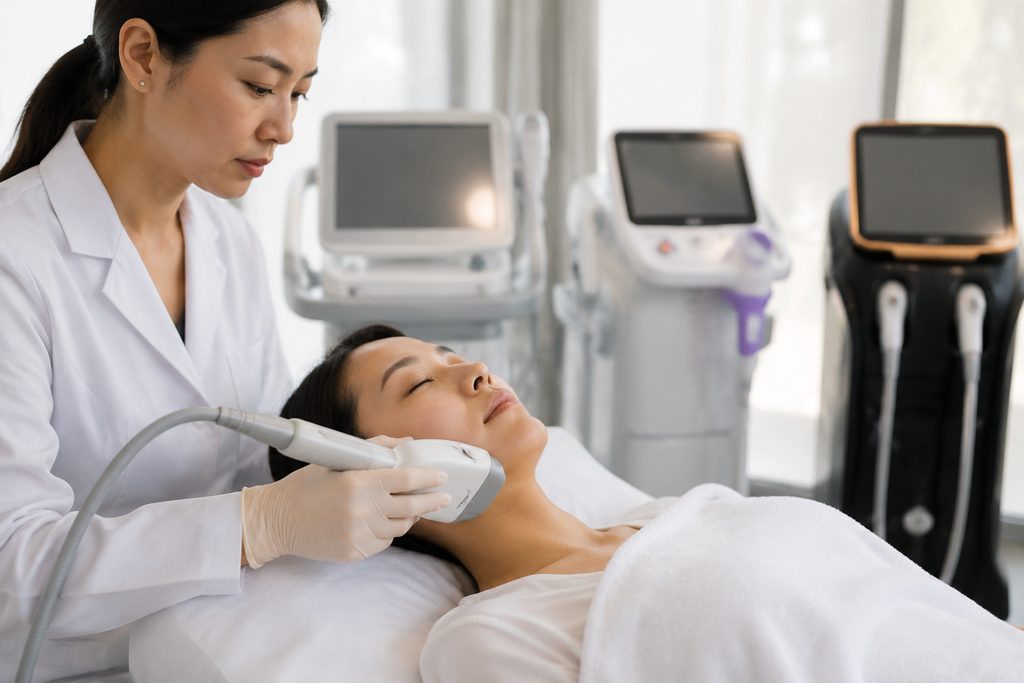
You’ve probably heard that non-surgical skin tightening is either a miracle or a scam—depending on who’s talking. The truth sits somewhere in the middle, and it’s more interesting than either extreme. A 2023 review in the Journal of Cosmetic Dermatology found that high-intensity focused ultrasound (HIFU) devices like Ultherapy produced measurable collagen remodeling in 80–90% of treated patients, yet the same review noted that results vary dramatically based on device quality, operator experience, and patient selection. So the question isn’t really “does it work?” The question is: what are you actually paying for, how long will it last, and is the non surgical skin tightening cost China offers a genuine advantage or a hidden compromise?
Our team at China Medical Services fields this question weekly from patients in the US, UK, Australia, and the Gulf states. They’ve seen TikTok clips of dramatic before-and-afters from Shanghai clinics. They’ve also read horror stories about counterfeit devices in Southeast Asia. What they rarely find is a clear, data-driven breakdown of what non-surgical skin tightening actually delivers—and what it doesn’t. That’s what this article provides.
How This Actually Works, Step by Step
Let’s walk through the real sequence if you’re considering treatment in China. Not the glossy version—the actual logistics.
You start by sending us your age, skin concerns, photos of the treatment area, and any prior cosmetic procedures. A dermatologist at a hospital we work with reviews these materials. They tell you honestly whether you’re a good candidate. Not everyone is. If you have significant skin laxity—think jowls that have dropped below the jawline or deep nasolabial folds—a dermatologist may tell you that non-surgical options will disappoint you. That’s not a sales tactic. That’s the reality of tissue mechanics.
If you are a good candidate, the next step is a video consultation. The doctor explains which technology fits your skin type and goals. HIFU targets the SMAS layer—the same layer surgeons pull during a facelift. Radiofrequency microneedling works more superficially. Thermage delivers bulk heating to the dermis. Each has different downtime, discomfort, and longevity profiles.
Only after you and the doctor agree on a plan do we discuss dates, visa paperwork, and pricing. You fly to China for treatment. Most non-surgical procedures take 60–90 minutes. You can fly home the next day. Follow-up happens via photos and video calls at 3, 6, and 12 months.
That’s the honest sequence. No mystery. No black box.
What the Evidence Actually Says About Non-Surgical Skin Tightening
Let’s be blunt: the marketing outpaces the science in this field. But the science isn’t absent. A 2021 meta-analysis in Lasers in Surgery and Medicine pooled data from 32 studies on microfocused ultrasound and found an average 18–22% improvement in skin laxity scores at 90 days post-treatment, with patient satisfaction rates between 70% and 85%. Those numbers are meaningful—but they’re not a facelift.
A surgical facelift repositions tissue. It can take 10–15 years off your appearance. Non-surgical tightening stimulates collagen contraction and new collagen synthesis. It tightens what’s already there. The distinction matters because it sets realistic expectations. A 45-year-old with early jowling and mild neck laxity will likely be thrilled with HIFU results. A 60-year-old with significant platysmal banding will not.
Device matters enormously. The FDA-cleared devices—Ultherapy, Thermage FLX, Sofwave—have published clinical data behind them. The flood of cheap “HIFU” machines in unregulated markets often deliver insufficient energy or, worse, uneven energy that can cause fat atrophy. You do not want fat atrophy in your face. It ages you overnight.
This is where the non surgical skin tightening cost China question gets complicated. A legitimate Ultherapy session at a top Shanghai hospital international clinic might run $800–$1,500 for the lower face and neck. The same treatment in New York or London is $3,000–$5,000. That’s a real saving. But a $200 “HIFU facial” at a strip-mall clinic in a third-tier Chinese city is not the same product. It might not even be the same technology. The cost difference exists because the equipment, training, and quality assurance differ.
A Realistic Timeline
People forget that non-surgical skin tightening is not instant. The collagen remodeling process takes months. Here’s what the actual timeline looks like for an international patient planning treatment in China.
| Stage | What Happens | Duration |
|---|---|---|
| Week 1–2 | Send records, photos, and medical history. Dermatologist reviews candidacy. | 3–7 business days |
| Week 3 | Video consultation with the treating physician. Treatment plan agreed. Quote finalized. | 1 day |
| Week 4–6 | S2 visa application with hospital invitation letter. Flight and accommodation booking. | 2–4 weeks (visa processing varies by consulate) |
| Day 1 in China | In-person assessment. Some clinics require a consent session and patch test. | Half day |
| Day 2 | Treatment session. HIFU or RF treatment takes 60–90 minutes. Topical anesthetic applied first. | 2–3 hours total |
| Day 3 | Post-treatment check. Fly home. | Half day |
| Month 1 | Initial tightening visible. Some swelling resolved. Collagen synthesis underway. | Ongoing |
| Month 3 | Peak visible improvement for most patients. Follow-up video call with doctor. | 1 session |
| Month 6–12 | Results plateau. Maintenance session may be discussed. | As needed |
The waiting step people forget is document translation. Your medical history, any prior cosmetic procedure notes, and medication list need to be translated into Chinese for the hospital record. This adds 2–3 days. Do not skip it. Chinese hospitals are rigorous about documentation.
What Can Go Wrong — and What Happens Then
Let’s talk about the failure modes honestly. They exist, and pretending otherwise helps no one.
First: you might be a poor candidate and not find out until after you’ve paid. This happens when clinics prioritize revenue over candor. The fix is to insist on a written candidacy assessment before you travel. A reputable physician will tell you “no” when the evidence says no. We’ve seen it happen. Good doctors do it routinely.
Second: the device might be counterfeit or poorly maintained. This is a real risk in any medical tourism market, including China. The fix is to verify the device serial number against the manufacturer’s registry. Ultherapy and Thermage both maintain online verification portals. A legitimate clinic will show you the machine, let you photograph the serial plate, and verify it on the spot. If they hesitate, walk away.
Third: you might experience an adverse event—prolonged redness, temporary nerve irritation, or uneven results. The fix is follow-up care. This is where choosing a hospital-affiliated clinic rather than a standalone beauty salon matters. Hospital dermatology departments have the resources to manage complications. A salon does not. If something goes wrong after you’ve flown home, you need a treating physician who will answer video calls and prescribe appropriate care. Ask about this before you book.
Fourth: the results might simply underwhelm you. Non-surgical tightening is subtle by design. Some patients expect surgical-level change and feel cheated when they don’t get it. The fix is expectation alignment before treatment—and honest post-treatment assessment. If you’re genuinely unhappy at month 6, a second session or a different modality might help. But no reputable clinic will promise a refund for “not dramatic enough.” That’s not how medicine works.
Is Ultherapy Worth It in Shanghai? Evaluating Providers Without the Hype
The question “is ultherapy worth it Shanghai” deserves a direct answer. Shanghai has some of China’s best dermatology departments. Huashan Hospital‘s dermatology unit is consistently ranked among the country’s top five. Ruijin Hospital and Shanghai Ninth People’s Hospital also have strong cosmetic dermatology programs. If you’re going to do this in China, Shanghai is a defensible choice.
But the hospital matters less than the specific clinic within it. Many top Chinese hospitals now operate separate international medical centers. These centers charge more—typically 1.5 to 2 times the standard rate—but they offer English-speaking staff, shorter queues, and physicians who regularly treat foreign patients. For a cosmetic procedure, that premium is worth it. You’re not just paying for the treatment. You’re paying for communication, documentation, and recourse.
When evaluating a best non invasive facelift clinic Beijing search result, apply the same filters. Beijing’s top options include the international departments at Peking Union Medical College Hospital and Sino-Japanese Friendship Hospital. Both have dermatology and plastic surgery departments that handle international patients. Ask these questions: Is the device FDA-cleared or NMPA-approved? How many procedures has this specific physician performed? What is the complication rate? What follow-up is included? A clinic that answers these questions with specifics—not vague reassurances—is one you can trust.
One more consideration: how long does thermage last results? The published data suggests 12–24 months for most patients, with some reporting up to 36 months after a single full-face treatment. But “last” is doing a lot of work there. Thermage doesn’t stop aging. It resets the clock partially. Your skin continues to age from the day of treatment. A 12-month result means you still look better at month 12 than you would have without treatment—not that you look identical to month 3. Maintenance sessions are typically recommended every 12–18 months. Factor that into your cost calculation.
Practical Considerations: Visa, Payment, and the Uncomfortable Questions
Not necessarily. The price gap reflects lower labor costs, lower facility overhead, and different market dynamics—not inherently worse care. But quality varies enormously within China. A hospital-affiliated clinic with verified devices and experienced physicians is a different product from a budget salon using unverified equipment. The price is only a bargain if the quality is equivalent.
The most common side effects are temporary redness, swelling, and mild tenderness—resolving within days. More serious risks include nerve irritation, uneven results, and, in rare cases, fat atrophy from improper energy delivery. Choosing a qualified physician using verified equipment reduces these risks substantially. They cannot be eliminated entirely.
Most patients see meaningful improvement after one session, with peak results at 3–6 months. Some choose a second session at 12–18 months for maintenance. A minority—those with more advanced laxity—may be advised upfront that two sessions spaced 6 months apart will deliver better results than one.
Yes, and many patients do. HIFU or Thermage pairs well with injectables like botulinum toxin or dermal fillers, and with laser resurfacing for texture improvement. But these combinations should be planned by a physician who understands the interaction between modalities—not assembled ad hoc. Discuss your full aesthetic goals during the video consultation.
Your Next Step
Non-surgical skin tightening can be worth it—if you’re the right candidate, treated with the right device, by a physician who tells you the truth. The cost advantage in China is real, but it only matters when the quality holds up. That’s where we come in. We help you evaluate candidacy, connect with verified dermatology teams at top Chinese hospitals, and navigate the logistics from visa to follow-up. We do not perform treatments, and we do not promise outcomes. We make the process legible.
If you’re considering this seriously, start with a written second opinion. Send your photos and history. Get an honest assessment before you spend a dollar on flights. That first step costs less than the airport transfer—and it could save you from a treatment that was never right for you in the first place.
For more medical information and treatment options in China, visit chinamedservices.com (China Medical Services).
