Oncology Imaging Second Opinion China: Accurate Staging Without the Wait
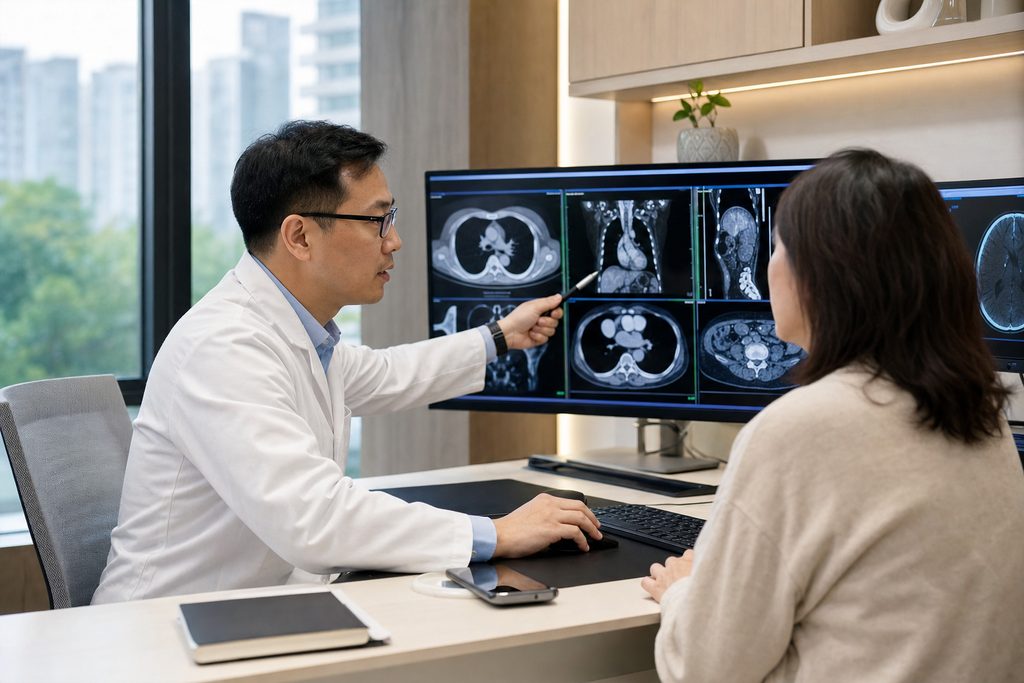
You have probably been told that getting a truly independent expert review of your scans means waiting months or paying a small fortune. That is not the full picture. Our team has spent years connecting patients with China’s most rigorous radiology departments. The speed is different here. So is the depth of analysis. And the second opinion cancer imaging cost China offers can shift the entire trajectory of a treatment plan without draining your savings.
Key Takeaways
- China’s top oncology centers review over 200,000 imaging studies annually, giving their radiologists a diagnostic volume that is difficult to match in most Western hospitals.
- A formal written second opinion on your existing PET-CT, MRI, or CT scans typically costs between $300 and $500, a fraction of what a repeat scan and consultation might cost elsewhere.
- You cannot simply email scans to a hospital and expect a report. Structured case management, DICOM file handling, and clinical translation are mandatory for a reliable review.
- The most valuable second opinions do not just confirm a diagnosis. They challenge the staging, re-evaluate resection margins, and quantify early treatment response using standardized criteria like RECIST 1.1.
The Problem: When a Single Radiologist’s Report Decides Everything
A 2023 study published in the Journal of Clinical Oncology found that second-opinion radiology reviews changed the tumor stage in approximately 19% of complex oncologic cases. Nearly one in five patients had a different disease extent than their initial report suggested. That is not a marginal error. It is the difference between surgery and palliation. Between a curative path and a chronic management plan. And yet, the system often treats the first read as final. You get one radiologist, one report, one shot. If they miss a small peritoneal deposit or mischaracterize a lymph node, your entire treatment plan is built on that foundation. The consequences compound fast. Wrong stage, wrong therapy, lost time.
For patients outside major academic centers, the problem is even sharper. Community radiologists may see only a handful of your specific cancer subtype each year. They work under time pressure. They lack access to the multidisciplinary tumor boards that exist at high-volume centers. So you are left with a report that feels uncertain. You sense something is off. But where do you go? Repeating a PET-CT is expensive. In the United States, a full-body PET-CT can cost anywhere from $3,000 to $6,000 out of pocket. And that does not include the expert interpretation you actually need. The search for a second opinion often stalls right there, at the intersection of cost and logistics.
Who We Are
We are not a hospital. We do not employ radiologists or issue medical reports. Our team functions as your logistical backbone for accessing expert imaging review in China. We identify the appropriate subspecialty radiologist for your tumor type, handle the secure transfer of your DICOM files, manage clinical translation of your history and prior reports, and coordinate the entire workflow from inquiry to final written opinion. Think of us as the architects of a process that would otherwise be fragmented and exhausting. We bridge the gap between your scans sitting on a CD and a detailed, actionable second report from a radiologist who reads thousands of cases just like yours every year.
Why Expert Imaging Review in China Delivers Results
Volume That Reshapes Diagnostic Accuracy
Radiology is a pattern-recognition specialty. The more cases you see, the better you get. It is that simple. In a top Chinese cancer center, a dedicated thoracic radiologist may review over 8,000 lung cancer CT scans in a single year. A specialized abdominal imager might interpret 5,000 liver MRI studies. These numbers dwarf the typical volumes in many Western community hospitals, where a general radiologist covers all body regions and modalities. This concentrated exposure matters most at the margins. The subtle peritoneal nodule. The early post-treatment change that could be inflammation or could be residual tumor. The atypical presentation of a common cancer. When a radiologist has seen 10,000 cases, the 50 ambiguous ones do not look so ambiguous anymore. They have internalized the patterns. The second opinion you receive reflects that depth. You are not just getting another read. You are getting a read informed by a volume of experience that is structurally hard to replicate in lower-throughput systems.
Structured Reporting and Treatment Response Assessment
Many initial radiology reports are narrative. They describe findings in prose. A second opinion from a high-volume Chinese oncology center often follows structured reporting templates aligned with international standards. Tumor staging is explicitly documented using the AJCC TNM system, 8th edition. Treatment response is assessed using RECIST 1.1 criteria, with target lesions measured, summed, and compared to prior studies. If you have had immunotherapy, irRECIST criteria may be applied. This structured approach transforms a second opinion from a vague confirmation into a precise, trackable document. Your oncologist can see exactly which lymph node measured 11mm last time and now measures 14mm. They can see whether that qualifies as progressive disease by standardized definitions. The report becomes a tool for decision-making, not just a piece of paper that says “agree with prior read.”
For patients asking “is online tumor staging second opinion reliable,” the answer hinges entirely on the process. A reliable second opinion requires full DICOM data, not compressed JPEG images. It requires a complete clinical history, including tumor markers, biopsy results, and prior treatment timelines. It requires a radiologist who subspecializes in your cancer type. When those conditions are met, the online second opinion is not only reliable. It is often more thorough than the original report. The radiologist has time. They are not rushing through a queue of 50 studies during an overnight shift. They are reviewing your case methodically, with your full history in front of them, and they are being paid specifically to produce a comprehensive consultative report.
Cost Structure That Enables Access
Let us address the obvious question. The second opinion cancer imaging cost China is low. Uncomfortably low, if you are used to Western pricing. A written second opinion from a top-tier hospital specialist typically ranges from $300 to $500. That includes full DICOM review, structured reporting, and a written opinion in English. If you need a video consultation to discuss the findings directly with the radiologist, the cost rises to the $500 to $800 range. These prices reflect structural economics, not quality shortcuts. Radiologist salaries in China, while competitive domestically, are lower than in the US or Western Europe. Hospital overhead is lower. The entire system operates at a scale that drives unit costs down. The same PET-CT that costs $4,000 in the US costs approximately $400 to $600 in China. The interpretation follows the same economic logic. Lower cost does not signal lower quality here. It signals a different cost base. The radiologists reading your scans trained at major academic centers. Many have international fellowships. They publish in the same journals. They just operate in a system where the financial barriers to expert review are far lower.
What You Need to Know Before Going Alone
Accessing an imaging second opinion in China is not as simple as finding an email address and sending attachments. Several structural barriers exist. They are not insurmountable, but they will frustrate anyone trying to go it alone.
- DICOM File Transfer: Radiology departments do not accept JPEGs or PDFs for diagnostic review. You need the original DICOM files, which contain the full resolution data and cross-sectional slices. These files are large. A single PET-CT study can exceed 1GB. Most hospital email systems reject attachments over 10MB. You need a secure upload portal or cloud transfer system. Most Chinese hospitals do not provide one directly to international patients.
- Clinical History Translation: The radiologist needs your full story. Prior biopsy reports, tumor marker trends, chemotherapy regimens, surgical notes, and previous imaging reports. If these documents are in English, they must be accurately translated into clinical Chinese. Machine translation fails on medical terminology. “Right upper lobe ground-glass opacity” becomes gibberish. A mistranslated pathology report can misdirect the entire review.
- Finding the Right Subspecialist: China’s hospital system is vast. Over 35,000 hospitals exist nationwide. Our database includes 340+ top-ranked institutions. But even among those, only a subset have dedicated subspecialty radiologists for your specific cancer. A general radiologist at a famous hospital is not what you want. You want the person who reads only pancreatic cancer cases, or only gynecologic oncology imaging. Identifying that person, confirming their availability, and coordinating the review requires insider knowledge of the system.
How We Help You Navigate This
These barriers exist for structural reasons, not because the system is designed to exclude you. Chinese hospitals simply do not have international patient offices built to handle ad-hoc imaging review requests. That is where we step in. Our process is straightforward. You contact us with your diagnosis and imaging details. We identify the appropriate subspecialty radiologist from our network of top-tier hospitals. We send you a secure link to upload your DICOM files. Our clinical team translates your relevant medical history into precise Chinese. The radiologist reviews your case. You receive a written report in English, structured for clinical use.
If the second opinion identifies a significant discrepancy, or if you decide to pursue treatment in China based on the review, the cost of the imaging consultation is fully credited toward our on-the-ground coordination service. That means the second opinion is essentially free if you move forward with treatment here. We handle the logistics. You focus on the clinical information. The report belongs to you. You take it to your oncologist, your surgeon, your tumor board. It becomes part of your medical record and your decision-making toolkit.
For patients specifically searching for the “oncology imaging review service Shanghai price,” the written second opinion typically falls at the lower end of our $300 to $500 range, reflecting the concentration of major cancer centers in Shanghai. Hospitals like Fudan University Shanghai Cancer Center and Renji Hospital have dedicated international imaging review workflows that keep costs efficient. For those wondering “how to send MRI scans for expert review abroad,” the answer always starts with locating your original DICOM data. Ask your imaging center for a CD or USB with the DICOM files. Do not settle for a printed film or a JPEG export. The data is the foundation. Without it, no expert review is possible.
Frequently Asked Questions
Yes. The entire process is remote. You provide your DICOM files and clinical history. The radiologist reviews your scans and issues a written report. No travel is required. If a video consultation is desired, that is also conducted remotely. The report is delivered electronically.
From the time we receive your complete DICOM files and translated clinical history, the written report is typically delivered within 5 to 7 business days. Expedited review can be arranged in some cases, though this depends on radiologist availability. Complex cases requiring multidisciplinary input may take longer, but we communicate timelines clearly before you commit.
Radiology is inherently an image-based specialty. The radiologist does not need to examine you physically to interpret your scans. What they need is high-quality DICOM data and a complete clinical history. In many respects, a dedicated second-opinion review is more reliable than an initial report because the radiologist has protected time, full history, and a focused mandate to re-evaluate every finding. The limitation is that they cannot compare findings to a physical exam. But for tumor staging and treatment response assessment, imaging is the definitive tool.
Discrepancies happen. When they do, the second opinion report will document the specific findings that led to a different conclusion. You take that report to your treating oncologist. They weigh the evidence. Sometimes a third tiebreaker review is warranted. Sometimes the second opinion clarifies an ambiguous finding and changes management. The goal is not to prove anyone wrong. The goal is to get the most accurate assessment possible before irreversible treatment decisions are made.
The best hospital is not a single institution. It depends on your cancer type. For lung cancer, you want a center with a dedicated thoracic radiology section. For liver cancer, a center with high-volume hepatobiliary imaging. Our specialty-specific hospital database organizes top institutions by subspecialty expertise. We match your case to the radiologist whose daily work focuses on your disease. That targeted approach yields far more value than simply picking the most famous hospital name.
Your Next Step
A radiology report is not a final verdict. It is an interpretation, and interpretations can be refined. If your treatment plan rests on a single imaging read, you owe it to yourself to seek clarity. The process is remote. The cost is manageable. The potential impact on your care is significant. When you are ready to move forward, we are here to handle the logistics. Your scans carry more information than any single report can capture. A second set of expert eyes can unlock it.
For more medical information and treatment options in China, visit chinamedservices.com (China Medical Services).
