Orthodontic Consultation in China: What to Expect and What It Costs
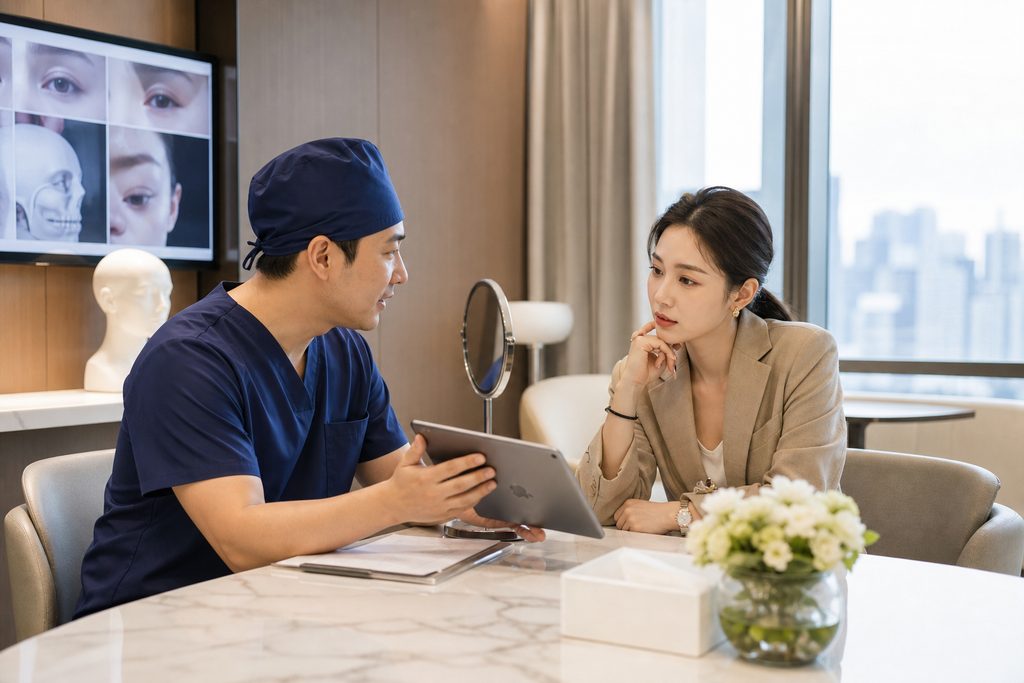
Orthodontic Consultation in China: What to Expect
An orthodontic consultation in China is a straightforward appointment where a licensed orthodontist examines your teeth and bite, takes imaging, and proposes a treatment plan. For foreign patients, the realistic all-in figure for the consultation itself runs roughly $50 to $150 at a public hospital‘s international department, or $150 to $400 at a private international clinic. Braces and aligners are quoted separately, and the total orthodontic treatment cost in China typically lands between $1,500 and $6,000 depending on the appliance and case complexity.
What complicates the picture is access. Most public hospital dental departments do not let you reserve a routine outpatient slot from overseas. You show up, you register on the day, and you wait. That single rule shapes everything about how foreigners should plan orthodontic care here.
Orthodontic Consultation in China: Who This Is Right For — and Who It Isn’t
Orthodontics is not emergency medicine. Nobody flies to Beijing for a toothache. So the question is not whether China can straighten teeth — it obviously can, at scale, with 340+ top-ranked hospitals in our network alone — but whether the trip makes sense for you.
Good candidates tend to share a few traits:
- Adults with mild to moderate crowding, spacing, or bite issues who want a clear cost comparison before committing
- Expats and long-term residents in China who need a local orthodontist for the full 18–24 month treatment arc
- Patients already traveling to China for another procedure and adding dental work to the same trip
- People quoted $6,000–$9,000 at home for clear aligners who want a second opinion and a written plan
Who should probably stay home? Anyone with active gum disease that hasn’t been treated — orthodontic force on inflamed tissue is a bad idea. Patients with severe skeletal discrepancies that need jaw surgery rather than braces. And anyone who simply cannot return for periodic adjustments. Orthodontics is a relationship, not a transaction.
The Options, Compared
Before you decide on a country, decide what you actually need. The table below compares the realistic paths for a foreign adult seeking orthodontic care.
| Path | Typical Total Cost | Consultation Wait | Language | Follow-Up Reality |
|---|---|---|---|---|
| US private orthodontist | $5,000–$9,000 | 1–3 weeks | English | Easy, local |
| UK private orthodontist | £3,000–£5,500 | 2–6 weeks | English | Easy, local |
| China public hospital, standard channel | $1,500–$3,500 | Same-day queue, no advance booking | Mostly Chinese | Requires return visits |
| China public hospital, international/VIP department | $3,000–$6,000 | Bookable in advance | English-speaking staff | Requires return visits |
| China private international clinic | $4,000–$8,000 | Bookable, often within days | English | Flexible scheduling, direct insurance billing |
The middle two rows are where most foreign patients land. If budget is the priority and you have some Mandarin or a bilingual companion, the standard public channel is the cheapest legitimate route. If you want to lock in an appointment before you fly, the international department is the only public option that reliably allows it — and it costs roughly 1.5 to 2 times the standard channel.
Is Orthodontic Treatment Safe in China, and Where Should You Go?
Safety here is less about the country and more about the specific clinic. China’s top dental schools and stomatology hospitals train to international standards, use the same bracket and aligner systems sold in Europe and North America, and follow comparable sterilization protocols. The variable is the individual provider.
Three practical checks before you commit:
- Confirm the orthodontist is a specialist, not a general dentist. In China, orthodontics is a recognized subspecialty with its own certification pathway.
- Ask which appliance system they use. If the answer is vague, that’s your answer.
- Request the treatment plan in writing, including estimated duration and retention protocol.
For city-specific searches, the question of finding the best orthodontist in Shanghai for foreigners usually resolves to two categories: the international departments of major university-affiliated stomatology hospitals, and JCI-accredited private clinics with English-speaking staff and direct insurance billing. Shanghai’s private international hospital sector is the deepest in the country, which makes it the easiest starting point for a patient who wants zero language friction. Beijing has comparable clinical depth but a thinner private-clinic layer.
You can browse hospital profiles by city on our ranked hospital directory, or filter by specialty through the department-level rankings.
How Much Do Braces Cost in Beijing — and What Drives the Number
This is the question that actually gets typed into search bars. So let’s answer it plainly. When patients ask how much do braces cost in Beijing, the honest range for metal brackets at a public hospital runs about $1,500 to $3,000 for the full treatment course. Ceramic brackets push that to $2,500–$4,000. Clear aligners sit higher, roughly $3,500 to $6,500, because the aligner material and digital planning carry their own cost.
What moves you up or down that range?
- Case complexity — a simple crowding case finishes faster and costs less than a skeletal correction
- Appliance type — metal, ceramic, lingual, or aligner
- Hospital tier — standard public channel versus international department versus private clinic
- Retention — retainers after treatment are usually billed separately, often $150–$400
- Extractions or auxiliary procedures, if the plan requires them
One structural note that surprises people: Chinese public hospitals generally require prepayment, and you claim reimbursement from your insurer afterward. Private international clinics more often bill your insurance directly. If you carry international coverage, that difference can matter more than the headline price.
Practical Considerations: Booking, Visas, and Records
Start with records. A useful orthodontic consultation needs recent panoramic X-rays, lateral cephalometric images if available, and intraoral photos. If you already have these from a dentist at home, bring them — it can shorten your trip by a day or more.
On the booking side, remember the structural rule: routine public outpatient slots cannot be reserved from overseas. Surgery and hospital admission require an in-person consultation first. Orthodontic consultations follow the same logic. Your realistic paths are the international department, a private clinic, or arriving and registering on the day.
Visa category matters too. Foreign patients coming to China for medical treatment use the S2 visa, annotated for medical purposes; stays beyond 180 days fall under S1. Accompanying family members apply for S2 as well. The M visa is for commercial and trade activity and has nothing to do with medical care — if a service tells you otherwise, that’s a red flag. Requirements change, so confirm current rules with the nearest Chinese embassy or consulate and bring supporting hospital documents.
Payment is the other friction point. International cards work at private clinics and at many hospital international departments, but not universally across public counters. Carry a backup method. And plan your return: if you choose fixed braces, you will need periodic adjustments, either in China or with a local orthodontist willing to take over an in-progress case. Not all will.
Frequently Asked Questions
Only through a hospital’s international or VIP department, or through a private international clinic. Standard public dental outpatient slots are same-day registration only. If someone promises you a specific public-hospital orthodontist on a specific date through the ordinary channel, treat that claim with skepticism.
For aligners and comprehensive braces, China’s top public hospitals commonly run one-third to one-half of US private prices. But add flights, accommodation, and repeated visits, and a simple case may not justify the trip. The math works best for complex cases, for patients already in Asia, or for expats living in China.
This is the real risk, and it deserves a straight answer. A broken bracket or a lost aligner mid-treatment is a genuine inconvenience when your orthodontist is 8,000 kilometers away. Before starting, ask the Chinese clinic what remote support they offer and identify a local dentist at home who will handle emergencies. Get the full treatment plan and records in English so any dentist can pick up the thread.
At a private international clinic, no — English is standard. At a public hospital’s standard channel, yes, realistically. Registration, payment, imaging, and pharmacy counters are almost entirely Chinese-language. A bilingual medical companion handles queuing, registration, payment, wayfinding, and translation, from $300 per day. For a single consultation, a half-day is usually enough.
Your Next Step
Orthodontic care in China is genuinely good and genuinely cheaper — but the access rules, not the clinical quality, are what trip most foreign patients up. Know the channel you’re using before you book a flight.
We are China Medical Services, a coordination service, not a hospital and not a provider of medical advice. We help international patients compare hospitals, arrange written second opinions and video consultations with Chinese specialty teams, and provide bilingual accompaniment on the ground. If you want a clear picture of what your case would cost and which hospitals can see you, start with a free consultation through our patient support page. No pressure, no obligation — just a straight answer about whether the trip is worth it for you.
This article is for general information only and does not constitute medical advice. Treatment decisions should be made with a qualified orthodontist who has examined you in person. Costs vary by hospital and case complexity.
For more medical information and treatment options in China, visit chinamedservices.com (China Medical Services).
