Teen Sports Injury & Scoliosis Care in China: A Full-Service Guide
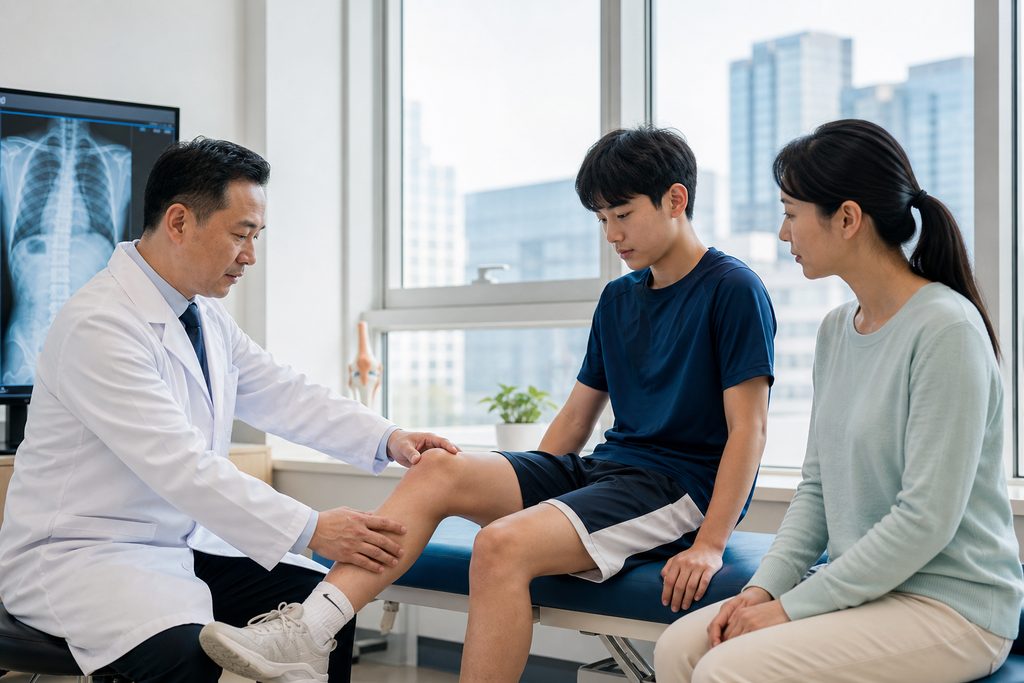
What if your teenager’s path to recovery from a sports injury or the anxiety of a scoliosis diagnosis didn’t have to come with a six-month wait and a six-figure bill? For many families, the standard options feel like a dead end. Long queues for a specialist, insurance battles, and the quiet dread of watching a child sit on the sidelines or wear a brace that isn’t doing enough. The search for a different route often leads families to look abroad. And a growing number are landing on a specific solution: comprehensive pediatric orthopedic surgery for teenagers in China, combining advanced spine and sports medicine programs with a structured support system designed for international patients.
Key Takeaways
- China’s top-tier pediatric orthopedic centers handle surgical volumes that dwarf Western hospitals, with some spine surgeons performing over 300 scoliosis corrections annually compared to a U.S. average of 20-30.
- A full-service medical travel plan addresses the three biggest parental fears: clinical quality, logistical chaos in a foreign country, and post-operative isolation far from home.
- The structural cost difference is stark—total surgical packages often land between $25,000 and $45,000, a fraction of the $150,000 to $250,000 common in the United States for comparable spinal fusion with instrumentation.
- Success hinges on selecting a hospital with a dedicated international ward, not just a great orthopedic department, because the recovery phase for a teenager requires bilingual psychosocial support that a standard translator cannot provide.
The Problem: A System Not Built for Young Bodies
Adolescent idiopathic scoliosis affects approximately 2-3% of the population, but the curve progression during a growth spurt can turn a “watch and wait” case into a surgical one within a single school year. In countries with public healthcare systems, the definition of “urgent” often excludes a 50-degree Cobb angle if the teen is not in acute pain. A family in the UK might wait 18 months for a spinal fusion consultation. A family in Canada could wait longer. In the U.S., the barrier isn’t time—it’s the bill. Even with solid insurance, the out-of-pocket maximum, deductibles, and out-of-network anesthesiologist charges can bankrupt a middle-class family.
Sports injuries tell a similar story. An ACL tear in a 16-year-old soccer player isn’t just a ligament rupture. It’s a race against biology. Delay the reconstruction by too many months, and the risk of a secondary meniscus tear shoots up. The knee becomes a ticking clock. But the pathway from MRI to operating room is clogged with prior authorization requests and facility scheduling conflicts. Parents are left negotiating with a faceless system while their teenager’s muscle atrophies. It’s a specific kind of helplessness.
Why Pediatric Orthopedics in China Delivers Results
The answer isn’t just “cheaper surgery.” It’s a structural difference in how high-volume hospitals organize care. When a surgical team focuses almost exclusively on one condition, the patterns become instinctive. The complications they’ve seen aren’t from a textbook—they’ve managed them personally, dozens of times over.
Volume That Reshapes Surgical Instinct
Consider the numbers. A busy U.S. scoliosis surgeon might perform 30 spinal fusions a year. At a top Chinese orthopedic hospital—the kind listed in the Fudan ranking’s national top 10 for orthopedics—a single dedicated spine team can complete over 300 pediatric deformity corrections annually. That’s a decade of Western experience compressed into twelve months. For a teenager with a stiff thoracic curve, the surgical plan isn’t theoretical. The team has likely navigated that exact pedicle screw placement challenge on a similar spine just the previous week. This volume translates into shorter operative times. Less anesthesia. Fewer unexpected events in the recovery room.
Sports medicine follows the same pattern. Arthroscopic ACL reconstruction using autograft is a routine procedure, but in adolescents, the surgeon must also decide whether to address an open growth plate. A surgeon who does 400 of these a year on young athletes has a tactile familiarity with the physis that a general orthopedist doing 50 a year cannot match. This isn’t about raw talent. It’s about repetition at a scale that few Western centers can replicate.
Technology Deployed at Scale
Chinese hospitals in the top tier have leapfrogged to advanced navigation and robotic-assisted systems. Intraoperative 3D O-arm imaging and real-time navigation are standard in deformity cases, not a special request. The surgeon sees a live 3D map of the spine as each screw goes in. The margin for error shrinks. For sports injuries, the same principle applies. High-definition arthroscopy towers and postoperative cryotherapy units are not scarce resources—they are integrated into the standard ward protocol. The efficiency comes from standardization. The entire floor is set up for orthopedic recovery, from the bed angles to the physiotherapy schedule, because that’s all that floor does.
The Real Reason Costs Are Lower
Let’s address the elephant in the room directly: how can the scoliosis surgery cost China teenager be so much lower without cutting corners? The answer lies in economic structure, not medical compromise. A hospital’s cost per square foot, nursing salaries, and administrative overhead in Shanghai or Beijing are fundamentally lower than in Boston or London. The implants—pedicle screws, rods, interference screws for ACLs—are often manufactured by the same multinational orthopedic companies. The hardware is identical. The cost difference isn’t in the metal. It’s in the system around the metal. A U.S. hospital bill includes layers of administrative billing, legal risk premiums, and negotiated insurance rates that inflate the final number. A direct-pay international patient at a Chinese public hospital’s international wing sees a transparent, unlayered price. You’re paying for the surgery, the implant, the room, and the care team’s time. Not the hospital’s legal defense fund.
What a Full-Service Pediatric Package Actually Covers
The phrase “full service” gets thrown around loosely. For a teenager traveling to China for spinal fusion or ACL reconstruction, it must mean something specific. Otherwise, a parent is just buying a plane ticket and a prayer. A properly structured full-service plan for pediatric orthopedic surgery for teenagers in China breaks down into distinct phases, and you should demand clarity on each one before committing.
| Service Phase | What It Must Include | Typical Duration |
|---|---|---|
| Pre-Arrival Assessment | Translation of all medical records and imaging into Chinese, a formal written second opinion from the operating surgeon, and a tentative surgical date before you book a flight. | 2-4 weeks |
| Arrival & Pre-Op | Airport pickup, direct transfer to the hospital’s international wing, in-person consultation with the surgeon, repeat standing X-rays or MRI if needed, pre-anesthesia clearance, and a dedicated bilingual coordinator present for every conversation. | 2-4 days |
| Surgery & Acute Stay | The procedure itself, all implants, operating room charges, anesthesia, postoperative recovery room, and transfer to a private room on the international ward. One parent should be able to stay in-room. | 5-10 days |
| Inpatient Rehabilitation | Daily physiotherapy sessions, wound care, pain management, and dietary support. The bilingual coordinator checks in daily to ensure the teenager is communicating discomfort accurately. | 5-14 days |
| Discharge & Follow-Up | A complete discharge summary in English, a set of post-op X-rays on a USB drive, a detailed rehab protocol for the home-country physiotherapist, and a direct line to the surgeon for follow-up questions. | 1-2 days |
This package structure is what transforms a daunting international medical trip into a controlled, predictable process. It also explains the price range. The scoliosis surgery cost China teenager families typically budget for is not just the operating room fee. It’s the entire arc of care, from the first translated document to the final discharge summary.
Is It Safe? Evaluating Scoliosis Surgery for Teenagers Abroad
Most teenagers are discharged from the hospital within 7-10 days after spinal fusion. They can fly home around day 14. Return to school, sitting for full days, typically happens at 4-6 weeks post-op. Return to non-contact sports is usually cleared at 6 months. Full-contact sports and unrestricted activity wait until 9-12 months, once the fusion mass is solid on X-ray. The surgeon will provide a milestone-based timeline, not a calendar-based one, because bone healing varies.
This is the hardest question, and it deserves a straight answer. The operating surgeon will provide a direct contact channel—usually email and a messaging app—for follow-up questions. You’ll have a complete set of post-operative imaging and an operative note in English. Any orthopedic surgeon in your home country can review these. If a late complication develops, such as a wound infection or implant prominence, you would see a local orthopedic surgeon first. The Chinese surgeon remains available for remote consultation. The relationship doesn’t end at discharge, but the practical reality is that emergency care happens at home. This is why selecting a surgeon who provides a thorough discharge protocol and remains accessible is non-negotiable.
Yes, and Shanghai is one of the most common entry points for this exact reason. Several hospitals in Shanghai have dedicated pediatric orthopedic units within their international wings. A typical package bundles the pre-arrival second opinion, the visa invitation letter, airport transfer, the full surgical admission, and the bilingual coordination throughout the stay. The package is customized to the teenager’s specific condition—scoliosis, ACL reconstruction, or another sports injury—and the price is confirmed only after the surgeon reviews the case. You’re not buying a fixed-price product off a shelf. You’re commissioning a coordinated episode of care.
Your Next Step
The decision to take a teenager abroad for spine or sports surgery is heavy. It sits at the intersection of parental protection and medical necessity. The families we work with don’t make this choice lightly. They make it because the math—financial and biological—no longer adds up at home. Our team at China Medical Services exists to turn a chaotic, intimidating process into a structured pathway. We don’t provide medical advice or perform surgery. We connect you with the surgeons who do, in hospitals vetted for international standards, and we handle the ground logistics so you can focus on your child. If you’re ready to understand what a specific plan would look like for your teenager—the surgeon, the dates, the all-in cost—start with a free consultation. Let’s map it out together.
Learn more about how we coordinate every step at our patient services page.
Frequently Asked Questions
Yes. The hospitals used for international patients are JCI-accredited and follow the same international safety standards as top hospitals in the US and Europe. Surgical teams perform high volumes of procedures — often more than their Western counterparts — which studies show leads to better outcomes.
Costs vary by procedure and hospital, but international patients typically save 40-80% compared to US prices — even when factoring in travel and accommodation. A consultation with our team will give you an exact, all-inclusive quote with no hidden fees.
Send us your existing medical reports to get started. We handle everything from hospital selection and appointment scheduling to visa assistance and post-operative recovery planning. Your medical records are reviewed by the specialist before you even book a flight.
For more medical information and treatment options in China, visit chinamedservices.com (China Medical Services).
