Orthodontics in China: English Clinics for Braces & Aligners
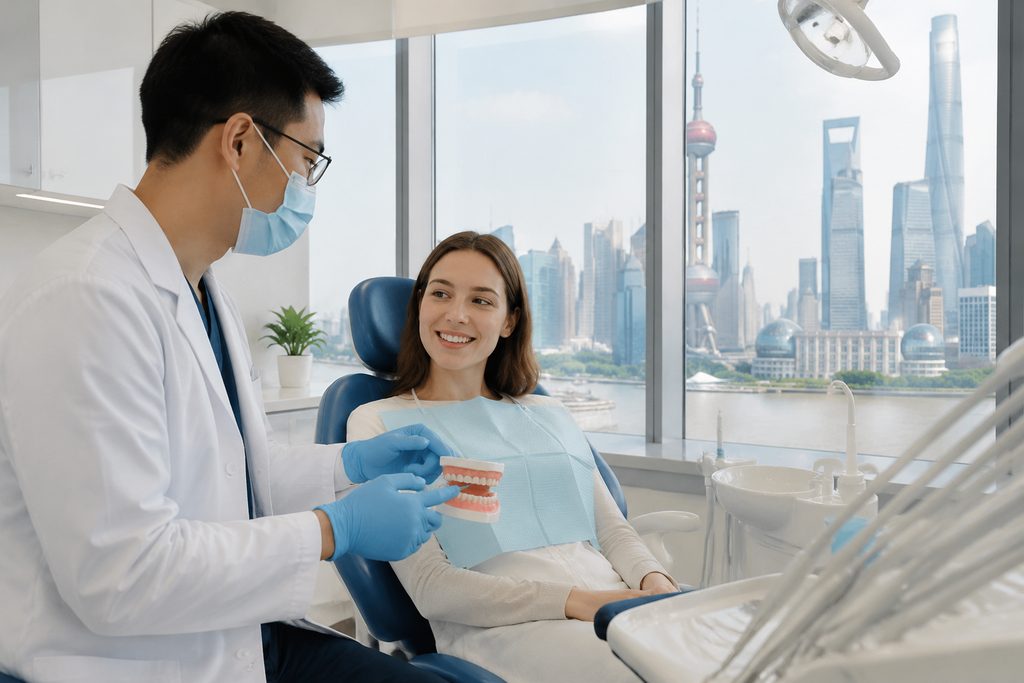
Orthodontics is the branch of dentistry that straightens teeth and corrects jaw alignment. Braces, clear aligners like Invisalign, and retainers all fall under this one umbrella. Now here is the part that surprises most people who write to us: China has become one of the most affordable and technically capable places in the world to get that work done — if you know which clinics serve international patients and how to book them. This guide covers orthodontics in China and the English clinics that treat foreigners, from real price ranges to the practical steps of getting started.
The interest is not hard to understand. A full course of braces in the United States runs $5,000 to $8,000. In the UK, private orthodontics often lands between £3,000 and £5,500. China’s top international dental clinics deliver comparable results for a fraction of that, usually $2,000 to $4,500 depending on the appliance and case complexity. That gap is why patients from Europe, Australia, and North America increasingly plan treatment around a trip here.
Key Takeaways
- Full orthodontic treatment at a quality English-speaking clinic in China typically costs $2,000–$4,500, versus $5,000–$8,000 in the US — a saving of 40–60% on the same appliance.
- Clear aligner treatment (Invisalign and Chinese equivalents) is widely available in Shanghai, Beijing, and Guangzhou, with digital scanning and 3D treatment planning as standard.
- The honest catch: orthodontics is a series of visits over 12–24 months. You need a realistic plan for the adjustment appointments, whether that means staying, commuting, or splitting care between China and home.
- Safety for foreigners comes down to clinic selection — internationally accredited facilities with English-speaking orthodontists, not the nearest walk-in dental shop.
The Problem: A Cost Gap That Keeps Growing
Orthodontic treatment in the US has outpaced inflation for two decades. The average comprehensive case now sits near $6,000, and that figure climbs past $8,000 in major metros. Dental insurance rarely covers adult orthodontics at all — most plans cap lifetime orthodontic benefits at $1,000 to $1,500, which barely dents the bill.
Wait times add insult. In parts of the UK, NHS orthodontic referrals for adults are effectively unavailable, and private waiting lists for popular central London practices can stretch weeks just for a consultation. In Canada and Australia, the same pattern: high fees, limited appointment slots, and a treatment plan that assumes you will not move cities for two years.
So patients start looking outward. And when they do the math on a $4,000 saving, a trip to Shanghai starts to look less like an adventure and more like common sense.
Why China Delivers Strong Orthodontic Results
The case rests on three structural advantages, not on marketing claims.
Clinical Volume and Orthodontic Specialization
China graduates more dentists than any other country, and its major cities concentrate specialists who treat hundreds of orthodontic cases a year. A senior orthodontist at a top Shanghai or Beijing international clinic may complete 150–300 active cases annually, compared with roughly 50–80 for a typical Western general dentist who does orthodontics part-time. Repetition builds judgment — especially in extraction decisions and complex bite corrections.
Digital Workflows as the Default
Walk into a modern Chinese international dental clinic and you will likely start with an intraoral scanner, not a tray of alginate putty. Digital impressions feed directly into 3D treatment simulation software, so you see a projected outcome before committing. Clear aligner manufacturing is domestic and fast — Invisalign has a major presence in China, and homegrown systems like Angelalign are produced here, which shortens turnaround and lowers cost. A new aligner set that takes two to three weeks to arrive in the US often takes days in China.
Cost Advantage Without a Quality Trade-Off
Lower prices do not come from cutting corners. They come from labor economics, high patient throughput, and local manufacturing. The materials — brackets, wires, aligner plastic — are the same international brands. The orthodontist’s training is comparable. What differs is the overhead structure and the fact that you are not paying a Western private-practice premium.
For context on how China’s broader medical system achieves this, our overview of top-ranked hospitals across 37 cities explains the volume-and-efficiency model that applies to dentistry as well.
What Orthodontics Actually Costs in China: A Real Comparison
Prices vary by hospital, clinic tier, and case complexity. The figures below are realistic 2026 ranges for international clinics in first-tier cities — not the cheapest possible quote, but the range you should expect when English service and international standards are included.
| Treatment Type | China (International Clinic) | United States | United Kingdom (Private) |
|---|---|---|---|
| Metal braces, full treatment | $1,800–$3,000 | $5,000–$7,000 | £2,800–£4,500 |
| Ceramic braces | $2,500–$3,800 | $6,000–$8,000 | £3,500–£5,500 |
| Clear aligners (Invisalign or equivalent) | $2,800–$4,500 | $5,500–$8,500 | £3,200–£5,800 |
| Initial consultation + X-rays + scan | $80–$250 | $200–$500 | £150–£350 |
| Retainer (per arch) | $100–$250 | $300–$600 | £150–£400 |
Two things worth flagging. First, the initial consultation in China is often a fraction of the Western price, which makes it low-risk to get a professional opinion before deciding anything. Second, the biggest variable is not the appliance — it is the complexity of your bite. A mild alignment case and a case requiring extractions and jaw coordination can differ by $1,500 or more.
Which English-Speaking Orthodontic Clinics Foreigners Actually Use
China’s dental landscape splits into three tiers, and only two of them make sense for international patients.
Private international dental clinics are the standard choice. These are standalone practices or dental departments within international hospitals, staffed by orthodontists who trained abroad or regularly treat expatriates. English is the working language. Appointments are booked online or by phone. Payment is card or mobile. Examples include international dental chains and hospital-affiliated dental centers in Shanghai, Beijing, Guangzhou, and Shenzhen. If you are searching for the best English speaking orthodontist in Shanghai, you are looking in this tier — and our guide to private international hospitals covers how these facilities handle insurance and direct billing.
Public hospital VIP and international departments are the second option. Top-tier stomatology hospitals — China has several world-ranked dental schools and affiliated hospitals — run special-needs and international clinics where senior orthodontists see patients. Prices sit between standard public rates and private clinics. English support varies; some departments have it, others need a translator. This is where you find the most senior academic orthodontists.
Standard public dental departments are the third tier, and we generally advise international patients against them for orthodontics. Not because the care is poor — it is often excellent — but because booking is same-day queue-based, English is rarely available, and the appointment system assumes a local resident who can return every four weeks for two years.
Is Orthodontic Treatment in China Safe for Foreigners?
Yes, with the right clinic. The safety question breaks into three parts: the clinic, the orthodontist, and the follow-up plan.
On the clinic side, look for international accreditation (JCI is the recognized standard for hospitals; dental-specific international certifications also exist), sterile instrument protocols, and digital records you can take home. On the orthodontist side, ask about case volume in your specific problem — crowding, overbite, crossbite, or surgical orthodontics are different skill sets. On follow-up, this is the honest limitation: orthodontics needs adjustment visits roughly every four to eight weeks. If you live in another country, you need a plan.
No clinic can safely deliver full orthodontic treatment in a single trip. Anyone promising to “finish your braces in two weeks” is selling something that does not exist. Be skeptical of any provider that skips this reality.
How to Book an English-Speaking Dental Clinic in China
The process is more straightforward than most patients expect.
Step 1 — Send your records. Photos of your teeth, any recent X-rays or panoramic images, and a note on what you want corrected. Most international clinics accept these by email or through a booking platform.
Step 2 — Get a remote assessment. Many clinics offer a video consultation before you travel. This is where you learn whether you are a braces case or an aligner case, roughly how long treatment will take, and what the cost range looks like. Expect to pay a modest fee for this — often $100 to $300 — or to have it credited toward treatment.
Step 3 — Book the in-person consultation and scan. This is a single visit, typically 60–90 minutes, covering X-rays, digital scanning, and a treatment plan. You can often start treatment the same day or within a few days.
Step 4 — Plan the adjustment schedule. This is the decision that matters most. Options include staying in China for the full treatment, flying back for quarterly visits, or starting treatment in China and transferring to an orthodontist at home for the middle phase. Each has trade-offs, and a good clinic will discuss them honestly.
If you would like help matching your case to a specific clinic and coordinating the appointment, our team at China Medical Services handles exactly this kind of logistics — hospital and clinic matching, appointment coordination, and bilingual support on the ground.
Practical Considerations Before You Commit
A few logistics that trip people up.
Visa. Short dental trips fall under the S2 visa category, which covers medical treatment and private affairs. The S2 is the correct category for medical travel — not the M visa, which is strictly for commercial and trade activities. Bring your clinic’s appointment confirmation and treatment plan as supporting documents. For stays over 180 days, S1 applies. Always confirm current requirements with your nearest Chinese embassy or consulate, since documentation rules are updated periodically.
Payment. International clinics accept major credit cards and often Alipay or WeChat Pay linked to a foreign card. Public hospitals generally require prepayment, with insurance reimbursement handled afterward. Private international clinics frequently offer direct billing with select international insurers — worth checking before you book. Note that many clinics expect payment in installments tied to treatment stages rather than one lump sum.
Language. In the private international tier, English is standard. In public hospital VIP departments, it varies. If your Mandarin is limited and you are heading to a public facility, arrange interpretation in advance. Our bilingual medical companion service exists precisely for this — from $300 per day for queueing, registration, payment, and translation support.
Follow-up after you return home. Ask your Chinese orthodontist for complete records: X-rays, scans, treatment notes, and the appliance specifications. A dentist at home can continue adjustments if needed, though some prefer to take over only at a clean stage. Get this conversation settled before you leave.
Frequently Asked Questions
Beijing international clinics typically charge $2,000–$4,000 for full metal or ceramic braces, similar to Shanghai and slightly above Guangzhou and Chengdu. The city matters less than the clinic tier and case complexity. A complex case needing extractions can push past $4,500 anywhere.
Yes. Invisalign operates in China, and domestic clear aligner systems like Angelalign are widely used and clinically comparable for most cases. Expect $2,800–$4,500 at an international clinic, including scans, aligner sets, and retainers. Confirm the brand and the number of aligner sets included in the quote before you commit.
This is common, and it is manageable with planning. Ask for a transfer-ready record package at your last Chinese appointment. Some patients fly back every three to four months for adjustments; others hand off to a local orthodontist. Discuss the handoff with both providers in advance so nobody is guessing.
The S2 visa category covers short-stay medical treatment. It is not the M visa, which is for business. Bring your appointment confirmation and treatment plan as supporting documents, and verify current requirements with your nearest Chinese embassy or consulate before applying.
Your Next Step
Orthodontics in China offers a genuine 40–60% saving over Western prices, delivered by clinics that treat international patients every day. The treatment itself is standard; the planning is what determines whether the experience works. Our team is not a clinic and does not provide diagnoses — we connect you with vetted English-speaking orthodontic providers, coordinate appointments, and support you on the ground in China. If you would like a free initial consultation to see whether treatment here fits your situation, start here.
This article is for general information only and does not constitute medical advice. Treatment decisions should be made with a qualified orthodontist who has examined your case.
For more medical information and treatment options in China, visit chinamedservices.com (China Medical Services).
