Orthodontics in China: How Many Visits Does Treatment Take?
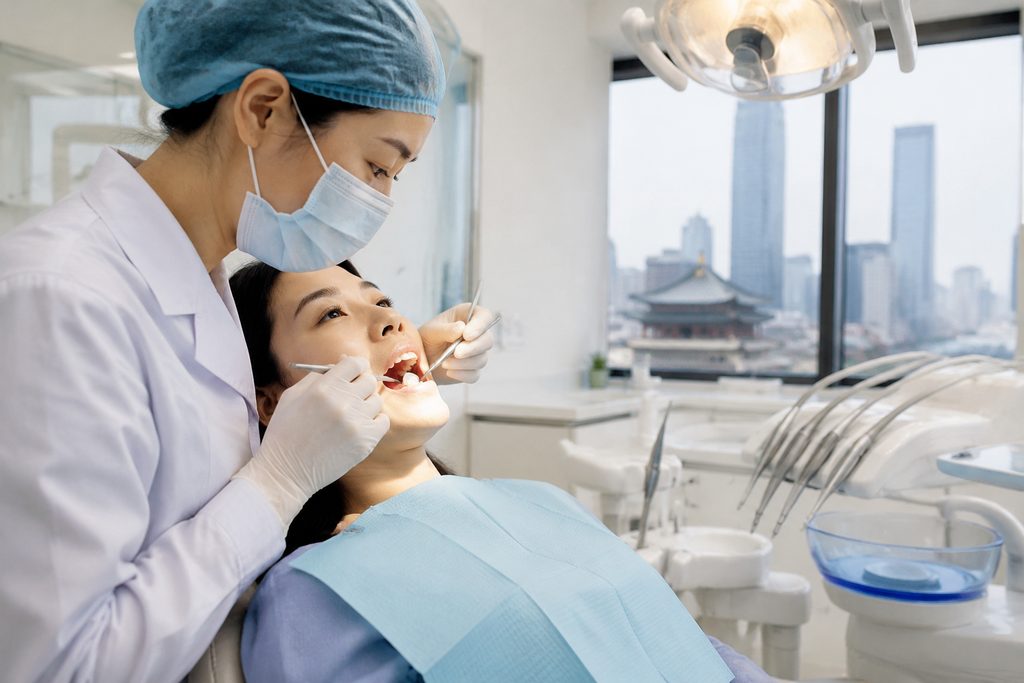
Orthodontics in China: How Many Visits Does It Actually Take?
If you are weighing orthodontics cost China against what you would pay at home, the visit count is usually the deal-breaker. A standard fixed-brace case in China runs about 12 to 24 in-person appointments spread over 18 to 30 months. Clear aligners can cut that to 6 to 12 visits. That is the short answer.
The complication is that Chinese public hospitals do not let you book a specialist from overseas in advance. You show up, you queue, you register on the day. For a treatment that spans two years, that single rule reshapes everything about how you plan.
Who This Is Right For — and Who It Isn’t
Orthodontic work is not an emergency procedure. It is a long, slow, appointment-heavy relationship with one clinician. That makes it a very different proposition from flying in for a single surgery.
Good candidates:
- Expats, students, and business travelers already living in China for 12 months or more
- Patients whose home quote exceeds $6,000 and who have flexibility to travel twice a year
- Families combining a parent’s treatment with a child’s, since pediatric and adult orthodontics are both widely available
- People who need a second opinion on a complex jaw or bite case and want a written assessment before committing
Poor candidates:
- Anyone who cannot return for adjustment appointments every 6 to 8 weeks
- Patients with active gum disease, uncontrolled diabetes, or significant bone loss — these need to be stabilized first
- People expecting a single trip to finish treatment. That is not how braces work anywhere
- Travelers on a 10-day tourist itinerary hoping to “get braces fitted” and fly home
The Options, Compared
Three realistic paths exist for a foreign patient. The table below compares them on the numbers that matter.
| Path | Typical Total Cost | In-Person Visits | Total Time | Best For |
|---|---|---|---|---|
| Public tertiary hospital, standard channel | $1,500–$3,500 | 14–24 | 18–30 months | Residents in China with time to queue |
| Public hospital international / VIP department | $3,000–$6,000 | 10–18 | 18–30 months | Patients who need English service and pre-booked slots |
| Private international clinic | $5,000–$9,000 | 8–14 | 12–24 months | Direct insurance billing, Western-style scheduling |
| Clear aligner, remote-monitored | $2,000–$5,000 | 6–12 | 12–24 months | Mild-to-moderate cases, frequent travelers |
| United States, comparable case | $5,000–$8,000 | 18–30 | 18–36 months | — |
Which column suits you depends almost entirely on where you live. If you are already in Shanghai or Beijing, the standard public channel is the value play. If you are flying in, the VIP or private route buys you scheduling certainty that the standard queue cannot.
Why Visit Counts Differ So Much Between Patients
Two patients with identical crowding can end up with visit counts that differ by ten appointments. The variables are not random.
Case complexity is the biggest driver. A simple anterior alignment might need 8 to 10 adjustments. A skeletal Class III case with extraction and elastics can need 24 or more, plus separate surgical consultations. Extraction decisions alone can add three or four visits before a bracket is even placed.
Appliance choice matters just as much. Fixed metal braces need wire changes roughly every 4 to 6 weeks. Ceramic and self-ligating systems stretch that slightly. Clear aligners, when the case suits them, can be monitored with scans every 8 to 12 weeks, and some providers now handle part of that remotely.
Age plays a role too. Adolescent treatment often moves faster because bone remodeling is more responsive. Adult treatment is not slower in a dramatic way, but it usually requires more careful anchorage control and more retention planning.
And then there is the part nobody advertises: retention. After the active phase, most patients wear a retainer for years. That is not a “visit” in the treatment sense, but it is a commitment you should factor in before you start.
What It Costs and What Drives the Variance
Orthodontics cost China figures sit far below Western benchmarks, but the range is wide. For affordable braces Beijing price points, expect roughly $1,500 to $3,500 in a public tertiary hospital using the standard registration channel. Shanghai runs similar. Private international clinics in either city land between $5,000 and $9,000.
What pushes you toward the top of a range:
- Extractions or impacted canine exposure, which involve oral surgery
- Lingual (behind-the-teeth) brackets, which cost noticeably more than labial
- Combined orthodontic-orthognathic planning
- Premium aligner brands versus domestic aligner systems
- Retainers, X-rays, and records, which are sometimes quoted separately
What is usually included: initial consultation, diagnostic records, brackets or aligners, adjustment visits, and removal. What is often not included: extractions, retainers, and any restorative work discovered along the way. Always ask for a written itemized quote before you commit.
Practical Considerations: Booking, Visas, and Safety
So is dental treatment in China safe? For orthodontics specifically, the major tertiary and international clinics follow standard sterilization protocols, and many private international hospitals in China hold JCI accreditation. The clinical techniques — brackets, wires, aligners, miniscrews — are the same systems used in Europe and North America. What differs is the service layer around them.
To book orthodontist appointment Shanghai or Beijing, understand the two-track reality. In a public hospital’s standard channel, you cannot reserve a specific specialist from abroad. You register on arrival, often the same morning, and you may not see the same doctor twice. In the international or VIP department, you can pre-arrange an appointment with an English-speaking clinician, typically at 1.5 to 2 times the standard fee.
On the visa side: medical treatment in China is covered under the S2 short-stay category, with supporting documents from the treating hospital. Stays beyond 180 days fall under S1. Accompanying family members apply under the same S2 category. Note that the M visa is for commercial and trade activity and has nothing to do with medical care — do not apply for it on that basis. Requirements change, so confirm current rules with the nearest Chinese embassy or consulate.
Payment is another practical wrinkle. Public hospitals generally require prepayment, and you claim reimbursement from your insurer afterward. Private international hospitals more often bill your insurance directly. If you are relying on reimbursement, get the diagnosis and procedure codes in writing before treatment starts.
Follow-up after you return home is the piece most patients underestimate. If you move back to your home country mid-treatment, you will need a local orthodontist willing to take over another clinician’s case. Some will, some won’t, and the ones who will often charge a new-patient fee. Finish what you start in one place if you possibly can.
For hospital selection, our specialty rankings by department cover the top-ranked institutions across 45 specialties, and the Fudan-ranked top hospitals directory groups them by city so you can see what is available where you will actually be living.
Frequently Asked Questions
Most fixed-brace cases need 12 to 24 in-person appointments over 18 to 30 months. Clear aligner cases for mild-to-moderate crowding typically need 6 to 12. The count depends on case complexity, appliance type, and whether extractions are involved.
You can have brackets placed, but you cannot complete treatment. Braces need adjustment every 4 to 8 weeks, so a single trip only starts the process. You would need a follow-up plan in your home country, and not every orthodontist will accept a transfer case mid-treatment.
Yes, substantially. Public tertiary hospitals in China typically charge $1,500 to $3,500 for a full fixed-brace case, against $5,000 to $8,000 in the US. Private international clinics in China run $5,000 to $9,000, which narrows the gap but adds English service and direct insurance billing.
Medical treatment falls under the S2 short-stay visa category, supported by hospital documentation. Stays over 180 days use S1. Family accompanying you apply under S2 as well. The M visa is strictly for commercial and trade activities and does not apply to medical care.
You can have braces removed at any point, but stopping mid-treatment usually means the teeth shift back without retention. You would need a retainer and a handover to another orthodontist. Plan the exit before you begin, not after.
Your Next Step
Orthodontics in China is genuinely affordable and clinically solid — the real challenge is the logistics of a two-year, appointment-heavy treatment across a language and system you do not know. Visit counts, not prices, are what trip most international patients up.
We are China Medical Services, a coordination service rather than a hospital. We do not diagnose or treat. What we do is connect you with the right department, help arrange appointments through official international channels, and provide bilingual support on the ground. Our consultation service starts with a conversation about your case, not a sales pitch.
If you are considering treatment in China, start by getting a clear picture of your options before you book a flight. A short conversation now can save you months of confusion later.
For more medical information and treatment options in China, visit chinamedservices.com (China Medical Services).
