Outpatient vs Inpatient in China: A Guide for Foreign Patients
Outpatient vs Inpatient in China: The Short Answer
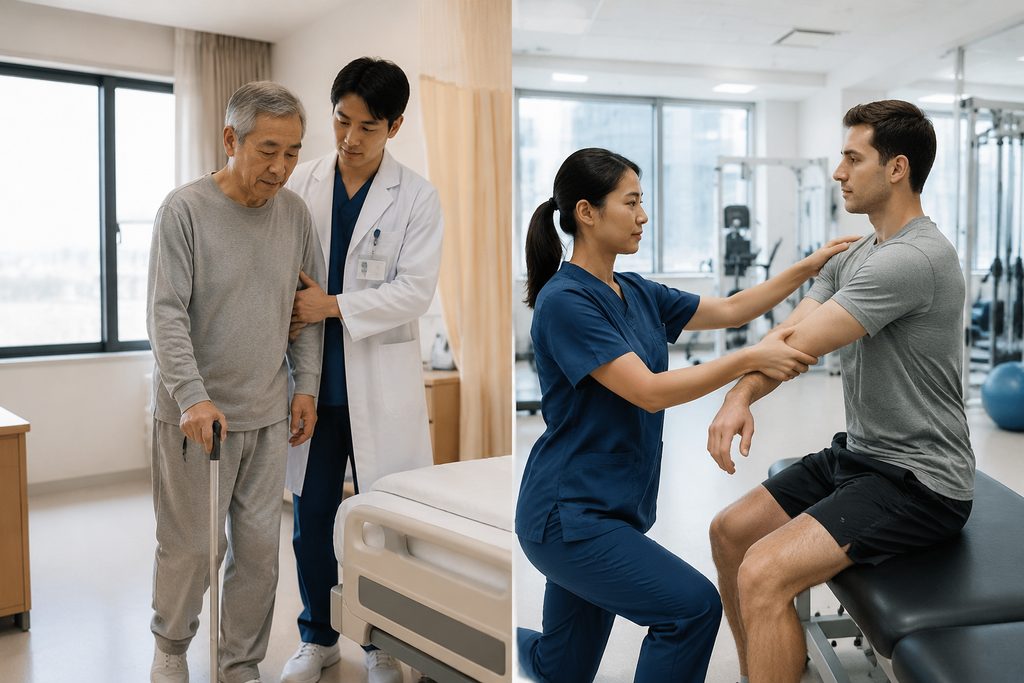
In China, outpatient care means you see a doctor, get tests or a minor procedure, and go home the same day — you pay per item, usually before each service. Inpatient care means you are formally admitted, occupy a bed, and receive a consolidated bill at discharge. The cost gap is large. A specialist outpatient visit at a top public hospital might run 50–500 RMB (roughly $7–70) before imaging or labs, while a single inpatient day in a VIP or international ward can start around $500–1,500 depending on the hospital and room class.
That sounds simple. It isn’t. The real complication is that China’s public hospital system was built for volume, not for overseas scheduling, and the pathway into each type of care is almost completely different.
Who This Is Right For — and Who It Isn’t
Not every international patient should fly to China for care. Some should. Being honest about the split saves everyone time and money.
- Reasonable candidates: patients facing a quoted price in the US or Europe that is 5–10x the Chinese equivalent for the same procedure; patients with a clear diagnosis seeking a second surgical opinion; people whose condition is stable enough to travel; patients wanting a specific procedure where a Chinese center has genuine volume and expertise.
- Poor candidates: anyone medically unstable for a long-haul flight; emergencies — you cannot plan an emergency abroad; patients who need care in their own language with their own insurance network intact; and anyone whose condition requires continuity of follow-up that cannot be maintained after returning home.
If you fall in the second group, staying home is genuinely the better call. We say that often.
The Options, Compared
Here is the honest breakdown of what each pathway actually involves for a foreign patient.
| Factor | Public Hospital — Standard Track | Public Hospital — International/VIP Track | Private International Hospital |
|---|---|---|---|
| Advance booking from abroad | Not possible for routine clinics | Yes, via international department | Yes, direct |
| English support | Limited to none | Usually available | Standard |
| Payment model | Prepay per item | Prepay, itemized | Often direct insurance billing |
| Relative cost | Lowest | Roughly 1.5–2x standard | Highest of the three |
| Waiting and crowding | High — same-day queues | Moderate | Low |
| Best suited to | Patients with Chinese language support | Most surgical and specialist cases | Patients prioritizing comfort and insurance |
If you have fluent Mandarin and time, the standard track is the cheapest. If you are flying in for surgery, the international track is usually the realistic one. Private hospitals suit patients whose insurer reimburses there and who value a Western-style experience over the lowest possible price.
Can Foreigners Get Outpatient Treatment in Beijing — and How Does Inpatient Billing Work in Chinese Hospitals?
Yes. Foreigners can absolutely receive outpatient treatment in Beijing, Shanghai, and most major cities. What you cannot do is book a routine public clinic slot from overseas weeks in advance. Standard outpatient registration in China happens on the day, in person, in a queue. This is a structural feature of the system, not a policy aimed at foreigners.
The workaround is the international or VIP department, which exists precisely to handle patients who need scheduling, English communication, and a predictable process. A related question is how does inpatient billing work in Chinese hospitals. Public hospitals require prepayment — you deposit funds against your account, and services are deducted as they occur. At discharge you settle the balance. International private hospitals frequently bill your insurer directly, which removes the cash-flow problem but not the cost.
One clarification worth stating plainly: the M visa is a commercial and trade visa and has nothing to do with medical treatment. For medical travel, the applicable short-stay category is the S2 visa, with supporting hospital documentation, subject to current embassy and consulate requirements. Accompanying family members typically apply under the same category.
What It Costs: China Hospital Stay Cost per Day for International Patients
Numbers here vary widely by city, hospital tier, and room class, so treat everything as a range, not a quote.
- Outpatient specialist consultation: roughly $7–70 at public hospitals; $80–300 at private international hospitals.
- Diagnostic imaging (MRI, CT): often $100–400 at public hospitals — frequently a fraction of US pricing.
- Inpatient day, standard public ward: commonly $100–300 including basic nursing.
- Inpatient day, international/VIP ward: commonly $500–1,500, sometimes higher for suites.
- Major surgery, all-in: a coronary bypass at a leading public center may fall in the $12,000–20,000 range, against $120,000+ in the US.
What drives the variance? Room class, city, whether the surgeon is a senior specialist, implant and consumable costs, length of stay, and whether complications extend the admission. None of these can be predicted precisely before a physician reviews your records.
Practical Considerations: Records, Payment, Language, and Follow-Up
Bring your records. Not a summary — the actual imaging files, pathology reports, lab results, and operative notes if you have had prior surgery. Chinese specialists work from source documents, and missing files stall the process more than anything else.
On payment: international cards work at private hospitals and international departments, but public hospital cashiers may have limits on foreign cards, so plan a buffer. Insurance is usually reimbursement-based outside the private network, meaning you pay first and claim later. Check your policy’s stance on overseas elective treatment before you book anything.
Language is the practical barrier that surprises people most. A top Chinese hospital can see tens of thousands of outpatients daily. Signage, registration kiosks, and pharmacy queues operate in Chinese. This is exactly why bilingual medical companion support exists — someone to handle registration, queuing, payment, wayfinding, and interpretation while you focus on the appointment.
And follow-up. Ask, before surgery, who manages your recovery once you are home. Get discharge documentation in English where possible, and confirm your local physician will accept the handover.
Frequently Asked Questions
For minor procedures at accredited hospitals, yes — the safety standards at major centers are high, and volumes are enormous. But “outpatient” in China can mean anything from a skin biopsy to a same-day arthroscopy. Ask specifically whether your procedure requires an overnight observation period, and confirm who handles complications if you are discharged and something goes wrong at your hotel.
Not through the standard public queue. Routine public clinic slots are allocated on the day. The realistic path is the hospital’s international department, which can coordinate scheduling in advance, or a private international hospital. Even then, most surgeons will want an in-person consultation before committing to a procedure date.
Plan for 20–40% above the surgical figure. Pre-operative testing, medications, extra inpatient days, companion costs, accommodation, airport transfers, and interpretation all add up. A companion service typically starts around $300 per day, and airport transfers run about $200 round-trip.
It happens. Senior specialists have packed schedules, and public hospital capacity shifts. Any coordination arrangement should be built with a refund mechanism if the promised appointment cannot be secured — that is the honest way to structure it.
Your Next Step
The core message is this: outpatient and inpatient care in China are two different systems with two different pathways, and the international or VIP track is usually how foreign patients access either one. Understanding that split before you book a flight prevents the most common and expensive mistakes.
We are China Medical Services, a coordination service — not a hospital, and we do not diagnose or treat. We help international patients match with appropriate hospitals across 340+ top-ranked centers in 37 cities, arrange written second opinions or video consultations before travel, and provide bilingual support on the ground. If you would like a clearer picture of your own case, you can start with a free consultation — no pressure, no obligation.
For more medical information and treatment options in China, visit chinamedservices.com (China Medical Services).
