Ovarian Cancer Specialist in Shanghai: Red House Hospital Guide
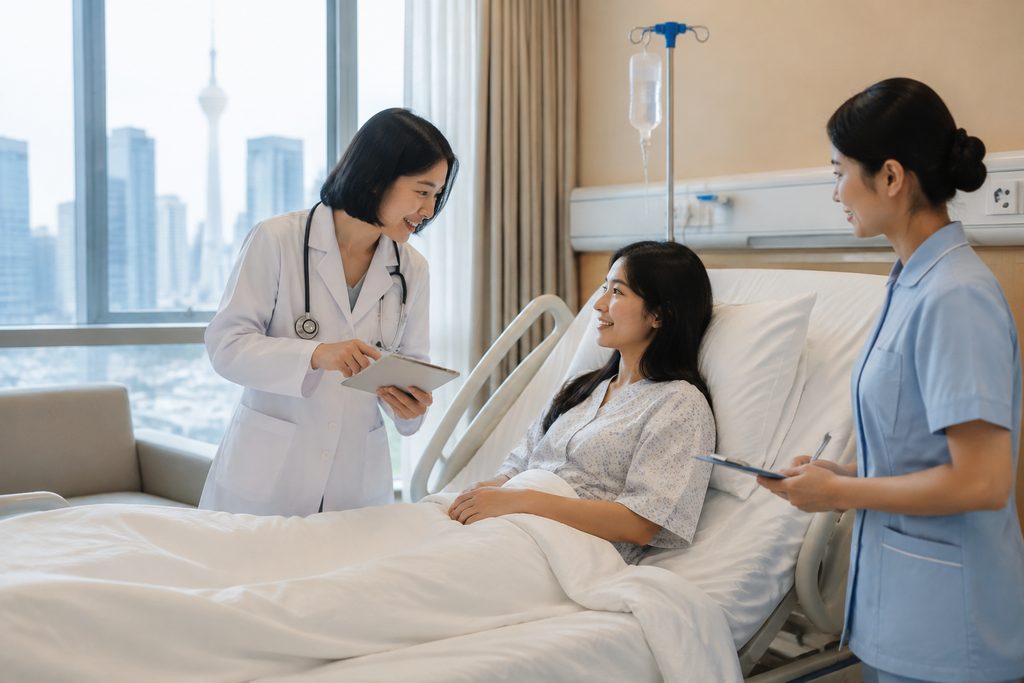
When 47-year-old Elena from Manchester received her ovarian cancer diagnosis, the first thing her oncologist mentioned was the waiting list. Six weeks for a surgical consult. Another four to six for a debulking procedure. For high-grade serous ovarian cancer, that timeline felt like a death sentence. She started searching for alternatives. That search led her to a phrase she had never typed before: ovarian cancer treatment cost Shanghai. What she found surprised her — a hospital with a century of gynecologic surgical history, a dedicated oncology ward, and a price structure that made treatment abroad not just possible, but practical.
This article explains what international patients need to know about Red House Hospital — officially the Obstetrics and Gynecology Hospital of Fudan University — and how to approach treatment there. We cover costs, clinical capabilities, how ovarian cancer is treated in China, and the practical realities of traveling to Shanghai for care.
Key Takeaways
- Red House Hospital performs over 10,000 gynecologic surgeries annually, with ovarian cancer cytoreduction among its highest-acuity procedures.
- Ovarian cancer treatment cost Shanghai typically ranges from $15,000 to $35,000 for surgery plus first-line chemotherapy — roughly one-fifth to one-third of US prices.
- The hospital is a Fudan University teaching affiliate, ranked among China’s top gynecology and obstetrics departments in the Fudan specialty reputation list.
- Foreign patients cannot simply book surgery online — treatment requires in-person evaluation or a formal remote second opinion first.
The Problem: Late Diagnosis, Long Waits, and Crushing Bills
Ovarian cancer kills approximately 13,000 women in the United States each year. The five-year survival rate for advanced-stage disease hovers around 30%, largely because 70% of cases are diagnosed at stage III or IV. Early symptoms — bloating, pelvic pain, early satiety — are vague and easily dismissed. By the time ascites builds or a mass is palpable, the cancer has usually spread beyond the ovary.
For women in the UK, Canada, and parts of Europe, the diagnosis brings a second problem: wait times. The NHS target for starting cancer treatment is 62 days from urgent referral, but ovarian cancer patients frequently wait longer for debulking surgery. A 2024 analysis of NHS data found that only 68% of ovarian cancer patients began treatment within that window. Some waited over 100 days.
In the United States, the barrier is financial. Even with insurance, out-of-pocket costs for ovarian cancer treatment — surgery, chemotherapy, imaging, hospital stays — routinely exceed $10,000. Uninsured patients face bills of $150,000 or more. That financial toxicity has real clinical consequences: a 2022 study in the Journal of Clinical Oncology found that cancer patients with high financial distress were 20% more likely to delay or skip treatment entirely.
So patients look elsewhere. And increasingly, they look to China.
Why Shanghai and Red House Hospital Deliver Results
China’s top-tier hospitals operate at a scale that is difficult to comprehend from outside. A single gynecologic oncology ward at a Fudan-affiliated hospital may manage more ovarian cancer cases in a month than a regional US cancer center sees in a year. Volume matters in ovarian cancer surgery. Studies consistently show that surgeons who perform more cytoreductive procedures achieve higher rates of optimal debulking — meaning no visible residual tumor — which is the single strongest predictor of survival.
Clinical Volume and Surgical Expertise
Red House Hospital, founded in 1884 by an American physician, is one of China’s oldest and most respected gynecologic institutions. It now operates as the Obstetrics and Gynecology Hospital of Fudan University, with over 600 beds and a dedicated gynecologic oncology division. The hospital reports more than 10,000 gynecologic surgeries annually. Ovarian cancer cytoreduction — the meticulous removal of all visible tumor deposits from the peritoneal cavity — is a core procedure, not an occasional one.
For comparison, a typical US gynecologic oncologist performs 20 to 40 ovarian cancer debulking surgeries per year. At high-volume centers like Red House, individual senior surgeons may perform several per week. That repetition builds an almost instinctual familiarity with the difficult anatomy of advanced ovarian cancer: the diaphragm stripping, the bowel resections, the retroperitoneal lymph node dissections. The hospital’s surgical teams have been doing this work for decades, across tens of thousands of cases.
How Is Ovarian Cancer Treated in China
Chinese treatment protocols for ovarian cancer closely follow international guidelines — primarily NCCN and ESMO — with some local refinements. The standard pathway is the same as in the West: primary debulking surgery followed by platinum-based chemotherapy, usually carboplatin plus paclitaxel. For patients with extensive disease, neoadjuvant chemotherapy (three to four cycles before surgery) is increasingly used, a strategy that has gained acceptance globally since the publication of the CHORUS and EORTC trials.
Where Chinese centers differ is in the integration of traditional Chinese medicine as supportive care. This is not a substitute for chemotherapy — no reputable Chinese oncologist would suggest that. But many patients receive adjunctive TCM treatments aimed at managing side effects: acupuncture for chemotherapy-induced nausea, herbal formulas for fatigue and appetite loss. The evidence base for these interventions is mixed, and patients should discuss any TCM use with their oncologist to avoid herb-drug interactions. Still, for many international patients, this integrative approach is a genuine differentiator. You can explore the broader landscape of TCM hospitals in China to understand what is offered.
Cost Advantage Without Quality Compromise
Now for the number that drives most searches. Ovarian cancer treatment cost Shanghai runs from $15,000 to $35,000 for a full course: debulking surgery, a 7- to 10-day hospital stay, and six cycles of first-line chemotherapy. The same treatment in the United States costs $100,000 to $200,000 before insurance. Even with good insurance, a US patient’s out-of-pocket share often exceeds the total cost of treatment in Shanghai.
Why is it cheaper? Not because of lower quality. The reasons are structural. Chinese hospital physicians are salaried, not fee-for-service, so there is no incentive to overtreat. Hospital construction and operating costs are lower. Drug prices, especially for generic chemotherapies like carboplatin and paclitaxel, are a fraction of US prices. And the sheer volume of patients spreads fixed costs across many more cases. The result is a system that delivers high-quality surgical care at a price point that is accessible to middle-class international patients — not just the wealthy.
What to Expect at Red House Hospital: The Patient Pathway
A patient searching for “Red House Hospital Shanghai oncology review” wants to know what actually happens when they arrive. Here is the realistic pathway, based on how the hospital’s international patient services work.
Step one is getting your records reviewed. You cannot simply email the hospital and book a surgery date. The gynecologic oncology team needs to see your pathology report, imaging (CT, PET-CT, or MRI), tumor markers (CA-125), and any prior treatment history. If you have had surgery elsewhere, the operative report and pathology slides are essential. This review can happen remotely through a formal second opinion service, or in person at the hospital’s international outpatient clinic.
Step two is the in-person consultation. If the remote review suggests you are a surgical candidate, you travel to Shanghai for a face-to-face evaluation. This typically includes repeat imaging, blood work, and a physical examination. The surgical team will discuss the plan: primary debulking versus neoadjuvant chemotherapy, expected extent of surgery, and potential need for bowel resection or stoma creation. This is a serious conversation. No reputable surgeon will promise a specific outcome.
Step three is surgery and recovery. Ovarian cancer debulking is a major operation, often lasting four to eight hours. Expect a hospital stay of seven to ten days. The first two to three days are typically in a monitored unit, followed by transfer to a regular ward. Nursing care in Chinese public hospitals is different from Western hospitals — family members or hired caregivers are traditionally expected to assist with basic care. As an international patient, you should budget for a bilingual medical companion or private caregiver during your stay.
Step four is chemotherapy. Depending on your surgical outcome and pathology, you will begin adjuvant chemotherapy either before discharge or within a few weeks. Chemotherapy can be administered at Red House Hospital or at a partner facility. Some international patients choose to complete their first one or two cycles in Shanghai, then return home with a treatment protocol for their local oncologist to continue. This hybrid approach reduces time abroad while ensuring the Chinese team’s plan is properly communicated.
Is Shanghai Red House Hospital Good for Cancer? Evaluating the Evidence
The honest answer is that Red House Hospital is an excellent gynecologic oncology center — but it is not the only option in Shanghai, and it is not the right choice for every patient. Here is how to think about it.
Red House’s strengths are specific. It is a gynecology-only hospital, which means every radiologist, pathologist, and anesthesiologist on staff works exclusively with female reproductive cancers. That specialization is rare. The hospital is also a Fudan University teaching affiliate, which means it participates in clinical trials and has access to newer therapies, including PARP inhibitors like olaparib and niraparib for BRCA-mutated ovarian cancer. For patients with recurrent or platinum-resistant disease, access to these agents and to clinical trials is a major consideration.
But Red House is not a comprehensive cancer center. If your ovarian cancer has metastasized to the liver, lungs, or brain, you may need coordination with other specialties — hepatobiliary surgery, thoracic surgery, neurosurgery — that are housed at different hospitals. In that case, a comprehensive center like Fudan University Shanghai Cancer Center or Zhongshan Hospital may be more appropriate. Our oncology hospital directory breaks down China’s top cancer centers by specialty, which is worth reviewing before you commit to any single institution.
What about the reviews? International patients who have been treated at Red House consistently note the surgical skill of the senior gynecologic oncologists and the efficiency of the hospital’s processes. Common complaints include language barriers outside the international clinic, the physical environment of the wards (functional rather than luxurious), and the expectation that family or hired companions assist with bedside care. None of these are dealbreakers, but they are real. You should know about them before you go.
| Cost Component | Shanghai (Red House Hospital) | United States | United Kingdom (Private) |
|---|---|---|---|
| Debulking surgery (including hospital stay) | $10,000 – $20,000 | $60,000 – $120,000 | $40,000 – $70,000 |
| First-line chemotherapy (6 cycles) | $5,000 – $12,000 | $30,000 – $60,000 | $25,000 – $45,000 |
| Diagnostic imaging (CT, PET-CT, MRI) | $500 – $1,500 | $3,000 – $8,000 | $2,000 – $5,000 |
| International patient coordination | $1,500 – $3,000 | N/A | N/A |
| Estimated total | $15,000 – $35,000 | $100,000 – $200,000 | $70,000 – $120,000 |
These figures are ranges based on published hospital price lists and patient-reported costs. Actual costs vary by hospital and case complexity. A patient with extensive disease requiring bowel resection, multiple organ procedures, or an extended ICU stay will pay more. A patient with early-stage disease may pay less.
Practical Considerations: Visa, Payment, and Records for Treatment in Shanghai
Getting to Shanghai for cancer treatment requires more than a plane ticket. Here is what you need to handle before you go.
Visa. Foreign nationals traveling to China for medical treatment apply for an S2 visa, which covers short-term private affairs including medical care. You will need an invitation letter from the hospital, your medical records, and proof of sufficient funds. The S2 visa typically allows stays of up to 180 days. If your treatment plan requires longer — for example, surgery plus six months of chemotherapy — you may need an S1 visa for extended stays. Family members accompanying you apply for their own S2 visas. Processing times vary by consulate, so start this process as soon as you have a treatment plan. We have written more about the full process in our guide to medical treatment in China.
Payment. Chinese public hospitals require prepayment for major procedures. You will typically deposit an estimated treatment amount before surgery, with additional payments requested as costs accrue. The hospital’s international department can provide a detailed cost estimate before you travel. Most international patients pay by bank transfer or international credit card, though card acceptance can be inconsistent — confirm payment methods with the hospital before you arrive. After treatment, you receive itemized receipts that can be submitted to your home-country insurer for reimbursement. Chinese hospitals do not bill international insurers directly; you pay first and claim later.
Medical records. Bring everything. Original pathology slides and blocks are particularly important — the hospital’s pathologists will want to review them independently. Bring all imaging on CD or via a secure online portal, not just printed reports. Bring a list of every medication you take, including supplements and TCM products. And bring a summary of any prior chemotherapy, radiation, or surgery, with dates and drug names. The more complete your records, the faster the Chinese team can make a treatment decision.
Language. Red House Hospital has an international outpatient clinic with English-speaking staff, but the inpatient wards are predominantly Chinese-speaking. Nursing staff may have limited English. For most international patients, hiring a bilingual medical companion for at least the first few days of hospitalization is a practical necessity. This person helps with communication, coordinates with nursing staff, and navigates the hospital’s administrative processes. It is not a luxury — it is how you get things done.
Frequently Asked Questions
No. Chinese public hospitals require in-person evaluation before surgery can be scheduled. You can, however, submit your records for a remote written second opinion or video consultation first. This allows the surgical team to assess whether you are a candidate and give you a preliminary treatment plan before you commit to travel. A positive remote review does not guarantee surgery — the final decision happens in person — but it significantly de-risks the trip.
At top-tier centers like Red House Hospital, yes. The surgical techniques, chemotherapy protocols, and supportive care standards align with NCCN and ESMO guidelines. The key variable is volume: Chinese gynecologic oncologists at major centers perform far more ovarian cancer surgeries per year than most Western counterparts, and that volume correlates with better debulking rates. The main differences are in the hospital environment and nursing model, not in clinical quality.
This is a fair question, and the answer requires honesty. Chinese hospitals have strong surgical safety records at top-tier institutions, but complications happen everywhere. The difference is in how they are managed. Chinese hospitals are less litigious and more physician-driven — if a complication arises, the surgical team manages it directly, often without the layers of administrative review common in Western hospitals. For international patients, the practical safeguard is to ensure you have adequate insurance coverage for extended hospitalization and medical evacuation if needed. Most international patients who choose China for cancer treatment do so after weighing this risk against the cost and wait-time advantages.
For surgery alone, plan on three to four weeks: one week for pre-operative evaluation, one to two weeks for surgery and initial recovery, and one week for post-operative follow-up before flying home. If you will receive chemotherapy in Shanghai, add three to six months. Many patients choose a hybrid approach: surgery and the first one or two chemo cycles in Shanghai, with the remaining cycles administered by their home oncologist using a written protocol from the Chinese team.
Your Next Step
Ovarian cancer forces hard decisions under time pressure. The information here should help you understand what Red House Hospital offers, what it costs, and what the process actually looks like. We are China Medical Services, a patient coordination team that helps international patients navigate Chinese hospitals — we are not a hospital and we do not provide diagnoses or treatment recommendations. If you are considering Shanghai for ovarian cancer treatment, the next step is a conversation: tell us about your diagnosis, send your records, and we will help you understand whether Red House Hospital or another Chinese center is a realistic option for your case. Request a free consultation and we will respond within one business day.
For more medical information and treatment options in China, visit chinamedservices.com (China Medical Services).
