Pain Management Chinese vs Western Hospitals: Differences That Actually Matter
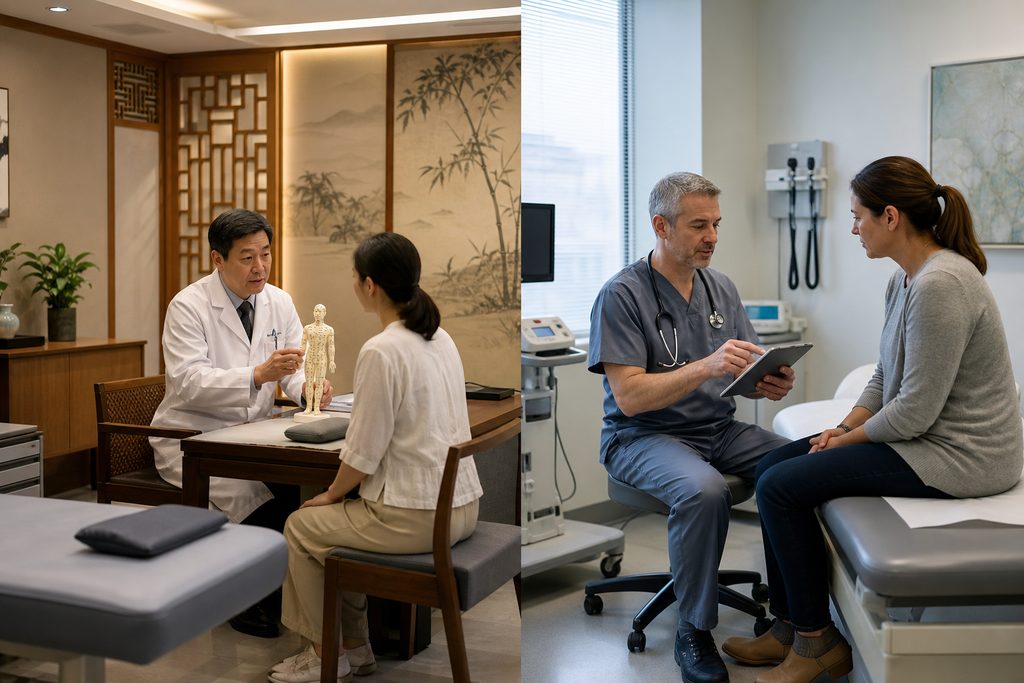
According to a 2024 analysis published in The Lancet Regional Health, chronic pain affects approximately 1 in 5 adults globally, yet fewer than 15% of those patients feel their treatment plan adequately addresses the root cause. That statistic sits at the center of why so many people now look beyond their home country’s borders. The pain management cost China vs Western hospitals comparison often starts the search. But the real differences run deeper than a price tag. They touch philosophy, treatment sequencing, and what a doctor actually does during your first appointment.
We see the confusion every day. A patient from Manchester sends us their MRI report. They have been on gabapentin for eighteen months. Their pain specialist suggested a spinal cord stimulator trial. They want to know if a hospital in Shanghai would do the same thing. Usually, the answer is no. Not because one approach is better. Because the starting assumptions are completely different.
Our team connects international patients with top-tier Chinese hospitals. We do not practice medicine. We translate records, coordinate appointments, and make sure you understand what is happening at every step. This article walks through the differences that actually affect your treatment plan, your timeline, and your wallet.
How This Actually Works, Step by Step
Let us walk through the real sequence. Not the idealized version. What happens from the moment you decide to explore treatment in China.
Week 1: Records collection. You gather every relevant document. Imaging studies on CD or cloud link. Blood work from the past year. A summary letter from your current pain specialist detailing what has been tried and what failed. Medication list with dosages and duration. We need the full picture. An incomplete history leads to an incomplete second opinion.
Week 2: Translation and review. Our team translates your records into clinical Chinese. Not Google Translate. A medically-trained translator who understands lab values, imaging terminology, and pharmaceutical nomenclature. The translated packet goes to the international department of two or three hospitals that match your condition. We look at the Fudan Hospital Rankings for the relevant specialty. For chronic back pain with radiculopathy, that might mean the orthopedics department at Peking University Third Hospital. For complex regional pain syndrome, the rehabilitation medicine team at West China Hospital in Chengdu.
Week 3-4: Written second opinion arrives. A senior specialist reviews your case. You receive a report — typically 3 to 5 pages — analyzing your diagnosis, commenting on prior treatments, and proposing a treatment pathway. This is the inflection point. You now have enough information to decide whether to proceed further. The written second opinion costs from $300 to $500. If you later come to China for treatment, that fee is credited in full toward our coordination service.
Week 5-6: Video consultation. If the written opinion raises questions — and it usually does — a video consultation follows. You speak directly with the specialist. A bilingual coordinator stays on the line. You discuss symptoms, goals, concerns. The doctor explains what they would recommend and why. This session costs $500 to $800 for a top-specialist consultation.
Week 7-10: Decision and logistics. You decide to proceed. We coordinate your S2 visa application, hospital appointment scheduling, accommodation, and airport transfer. The S2 visa is the correct category for short-term private affairs including medical treatment. Processing typically takes one to two weeks at your local Chinese embassy or consulate, once the hospital provides the invitation letter.
Week 11+: Arrival and treatment. You land. Our bilingual medical companion meets you. They handle registration, payment, queue navigation, and translation during every consultation. Treatment begins. The timeline from here depends entirely on your protocol.
Where the Philosophies Actually Split
There is no single answer. The best hospital depends on your diagnosis. For spinal pain with radiculopathy, the orthopedics or rehabilitation medicine departments at Peking University Third Hospital and West China Hospital are highly ranked. For neuropathic pain, the neurology department at Xuanwu Hospital in Beijing has a dedicated pain program. For TCM-based approaches, the affiliated hospitals of Shanghai University of Traditional Chinese Medicine are well-regarded. We match you to a hospital based on your specific condition, prior treatment history, and the specialist whose expertise aligns with your case. Our hospital database covers over 340 top-ranked institutions across 37 cities.
Acupuncture vs opioids for pain relief abroad — which should I expect to receive?
If you come to China specifically seeking an alternative to long-term opioid therapy, you will likely find a receptive clinical environment. Chinese pain specialists generally view opioids as a short-term bridge, not a chronic maintenance strategy. That said, if you have been on high-dose opioids for years, a rapid taper is dangerous.
Frequently Asked Questions
Yes. The hospitals used for international patients are JCI-accredited and follow the same international safety standards as top hospitals in the US and Europe. Surgical teams perform high volumes of procedures — often more than their Western counterparts — which studies show leads to better outcomes.
Costs vary by procedure and hospital, but international patients typically save 40-80% compared to US prices — even when factoring in travel and accommodation. A consultation with our team will give you an exact, all-inclusive quote with no hidden fees.
Send us your existing medical reports to get started. We handle everything from hospital selection and appointment scheduling to visa assistance and post-operative recovery planning. Your medical records are reviewed by the specialist before you even book a flight.
For more medical information and treatment options in China, visit chinamedservices.com (China Medical Services).
