Medical Translation: What We Translate for Foreign Patients in China
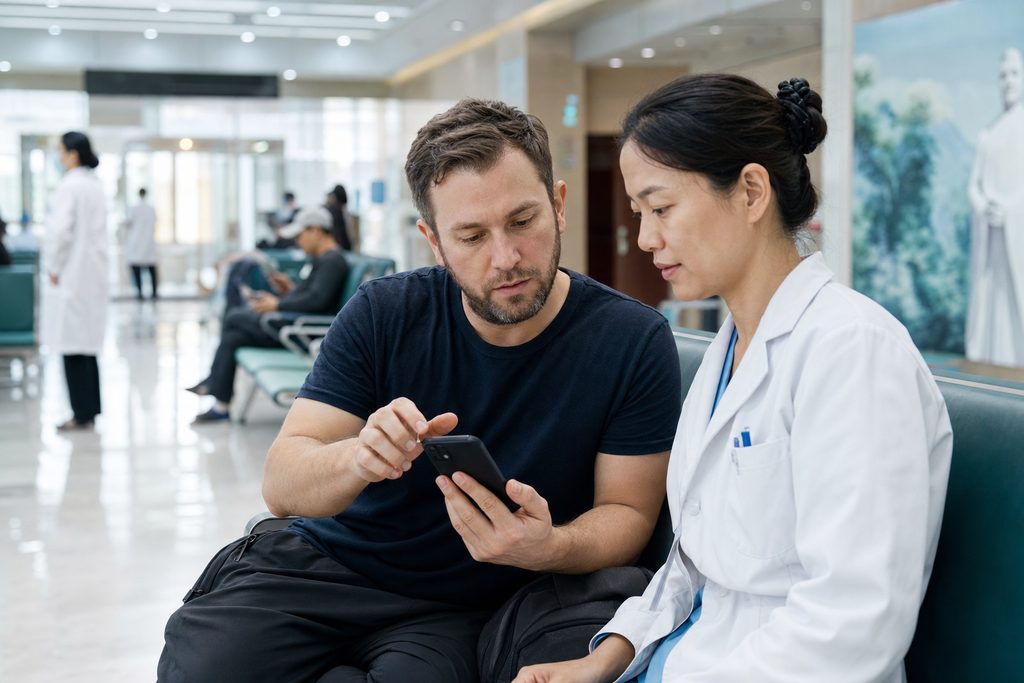
When 54-year-old Daniel from Manchester was diagnosed with stage III colorectal cancer, his oncologist suggested a treatment plan that would cost over £80,000 privately. He started researching alternatives. Within three weeks, he had sent his complete medical file to a hospital in Shanghai. But here is what almost stopped him: every single page of his records was in English. The hospital needed Chinese. And not just any Chinese — precise, medically accurate, clinically formatted Chinese that a surgical team could act on without ambiguity.
This is the quiet bottleneck in cross-border healthcare. Patients spend months researching hospitals, comparing costs, and securing visas. Then they hit the translation wall. A pathology report that says “moderately differentiated adenocarcinoma with lymphovascular invasion” cannot be run through a generic translation app. A single mistranslated term can change a surgical plan. Our team at China Medical Services handles this every day. This article explains what we translate, why precision matters more than speed, and what you need to know before sending records anywhere.
Key Takeaways
- Medical translation for Chinese hospitals requires clinical terminology mapping, not just language conversion — a single term error can alter a treatment decision.
- China’s top hospitals receive over 10,000 outpatient visits daily; records that arrive pre-translated into Chinese move through triage significantly faster.
- Standard translation services miss the mark. You need someone who understands both the source medical system and Chinese hospital documentation conventions.
- Imaging reports, pathology slides, lab values, and medication histories each require different translation approaches — one format does not fit all.
The Problem: Language Is the First Medical Barrier
A 2023 study published in the Journal of General Internal Medicine found that 22% of patients with limited English proficiency experienced a clinically significant communication error during a single hospital encounter. That is roughly one in five patients. Now multiply that risk when the entire medical record crosses from English into Chinese. The stakes are not abstract.
Consider what happens when a patient sends untranslated English records to a Chinese public hospital. The records sit in a queue. A junior staff member with partial English proficiency attempts to extract key data points. The oncology department receives a summary, not the full picture. Nuance disappears. A note about a previous adverse reaction to oxaliplatin gets compressed into “history of chemotherapy.” The Chinese team proceeds with a standard protocol that includes oxaliplatin. The patient arrives for treatment and discovers the error at the pre-admission consultation. Precious weeks lost.
This is not a hypothetical. It is the predictable outcome of a system where Chinese public hospitals process thousands of foreign patient inquiries monthly but have limited in-house translation capacity. The hospitals are not the problem. The expectation that they should handle translation is.
Medical translation for Chinese hospitals is a specialized discipline. It requires source-language fluency, target-language clinical precision, and enough medical knowledge to know when a term does not have a direct equivalent.
Why Medical Translation for Chinese Hospitals Demands Clinical Precision
The gap between conversational translation and clinical translation is enormous. A bilingual friend can translate a restaurant menu. They cannot safely translate a cardiac catheterization report. Here is what separates the two.
Terminology Mapping Between Medical Systems
Western and Chinese medical documentation follow different conventions. A “complete blood count” in the US is a “血常规” (routine blood panel) in Chinese clinical practice. The parameters are similar but not identical. Chinese labs often report additional markers like erythrocyte sedimentation rate as part of routine panels. A translator who does not know this will produce a literal translation that confuses the receiving physician.
Drug names are another minefield. A patient taking “paracetamol” in the UK needs the Chinese generic name “对乙酰氨基酚” on their medication list. Brand-name-only translation fails. Chinese hospital pharmacies stock generics, not Western brand names. The same applies to insulin formulations, biologics, and anticoagulants. Our translation team maintains a living database of over 4,000 medication name mappings between Western and Chinese pharmacopoeias.
Pathology and Imaging Reports Need Special Handling
Pathology is where precision matters most. A report that reads “invasive ductal carcinoma, Nottingham grade 2, ER positive 80%, PR positive 60%, HER2 negative by IHC” contains five independent data points that determine treatment. Each requires exact Chinese clinical terminology. “Nottingham grade” has a specific Chinese equivalent. Hormone receptor percentages must be preserved exactly. A translation that says “breast cancer, hormone positive” loses the quantitative detail that determines whether endocrine therapy alone is sufficient or chemotherapy is also indicated.
Imaging reports present a different challenge. Chinese radiologists use standardized reporting templates. A Western CT report written in narrative prose needs restructuring into the format Chinese physicians expect. Lesion measurements must be converted to metric precisely. A 1.2 cm nodule is 12 mm, not “small.” Lymph node stations must use the Chinese numbering system consistently. A translator who has never seen a Chinese radiology report will produce something readable but not actionable.
Lab Values and Reference Ranges
Every lab value needs context. Chinese hospitals use both conventional units and SI units depending on the analyte. A blood glucose of 126 mg/dL in the US equals 7.0 mmol/L in China. A translator who simply copies “126” without converting creates confusion. The same applies to creatinine, bilirubin, and lipid panels. Our translation protocol includes unit conversion for every numerical lab value, with the original value preserved in parentheses for verification.
What We Translate: The Complete Record Inventory
Patients often ask what they need to send. The answer is: everything. Chinese specialists want the complete clinical picture, not a curated summary. Here is what our translation team handles for every patient preparing for treatment in China.
Core Medical Documents
- Discharge summaries from every hospitalization in the past five years — these contain the narrative history Chinese physicians rely on
- Operative reports for any prior surgery — surgical details matter for planning reoperation or assessing scar tissue
- Pathology reports including immunohistochemistry and molecular testing — this is often the single most important document for oncology cases
- Imaging reports for CT, MRI, PET-CT, ultrasound, and X-ray — the images themselves may need to be sent separately on disc or via secure upload
- Laboratory results from the past 12 months — recent values matter more than historical ones
- Medication lists with generic names, dosages, and frequency — including over-the-counter supplements
- Physician referral letters explaining why the patient is seeking treatment abroad
Specialized Documents by Department
Oncology patients should include tumor marker trends over time, not just the most recent value. Cardiac patients need echocardiogram reports, stress test results, and any catheterization findings. Orthopedic patients should include range-of-motion measurements and prior physical therapy notes. Reproductive medicine cases require hormone panels, semen analyses, and any prior IVF cycle records. Each specialty has its own document hierarchy, and our team knows which documents Chinese specialists in each department prioritize.
What We Do Not Translate
Insurance policy documents, visa application forms, and hotel reservations do not need medical translation. Standard business translation works fine for those. We focus exclusively on clinical documents where accuracy affects care decisions. That focus is what makes the difference.
How Much Is a Hip Replacement in Shanghai? Understanding the Cost Context
Translation is a small line item in the total cost of treatment abroad. But it is the one that determines whether the larger investment succeeds. Patients researching how much is a hip replacement in Shanghai find that the procedure itself ranges from $12,000 to $18,000 at top public hospitals, compared to $40,000 to $60,000 in the United States. The translation cost of $300 to $500 for a complete orthopedic record is approximately 2-3% of the surgical fee. Skipping it to save money is false economy.
Why? Because the Chinese orthopedic surgeon needs to see prior imaging reports, bone density scores, and any previous joint surgeries before accepting the case. A poorly translated record leads to a rejected consultation. The patient then pays for translation anyway, plus loses two to three weeks of waiting time.
This pattern repeats across specialties. The cost of IVF with donor eggs in China runs $15,000 to $25,000 all-inclusive at reputable centers. Translation of the female partner’s ovarian reserve testing and the couple’s genetic screening results costs under $400. Without accurate translation, the reproductive endocrinologist cannot assess ovarian stimulation protocols. The cycle gets delayed or canceled.
Can I Trust Chinese Hospitals for Heart Surgery? What the Record Shows
Patients asking can I trust Chinese hospitals for heart surgery are really asking two questions. First: is the clinical quality comparable to Western standards? Second: will the Chinese team understand my case well enough to operate safely? Translation answers the second question directly.
Fuwai Hospital in Beijing performs over 14,000 cardiac surgeries annually — the highest volume of any heart center globally. A cardiac surgeon there completes more bypass procedures in a month than many Western surgeons complete in a year. But volume means nothing if the pre-operative assessment is built on mistranslated data. A patient with a history of heparin-induced thrombocytopenia needs that allergy documented in Chinese medical terminology before surgery. A translator who renders it as “blood problem with heparin” creates a life-threatening ambiguity.
Our translation team includes specialists who have worked with cardiac surgery departments. They know that “ejection fraction 35%” must be translated with the exact percentage and the Chinese abbreviation “EF 35%” preserved. They know that “left main disease” has a specific Chinese clinical term that triggers immediate surgical consultation. They know which values the Chinese anesthesiologist will check first.
Practical Considerations: Preparing Your Records for Translation
No. Machine translation is not reliable for clinical documents. A 2024 study in The Lancet Digital Health found that AI translation tools made clinically significant errors in 8% of medical document translations. That is one in twelve documents. For a pathology report or surgical history, that error rate is unacceptable. Human medical translators with clinical knowledge remain the standard.
The hospital will flag the discrepancy and request clarification. This delays your consultation by days or weeks. In some cases, the hospital may reject the records entirely and request a certified re-translation. Our translation protocol includes dual-review by two independent medical translators precisely to minimize this risk.
No. Private international hospitals like United Family and Jiahui operate in English and accept English records directly. Translation is required only for public hospitals and public hospital international departments. If you are unsure which type of hospital you need, our team can advise based on your condition and budget.
Yes. We operate under strict confidentiality protocols. Your records are stored on encrypted servers and accessed only by the translation team assigned to your case. We never share your information with any third party without your written consent. You can request deletion of your records after translation is complete.
Your Next Step
Medical translation is the first concrete step in a cross-border treatment journey. It converts your Western medical history into a format Chinese specialists can act
Frequently Asked Questions
Yes. The hospitals used for international patients are JCI-accredited and follow the same international safety standards as top hospitals in the US and Europe. Surgical teams perform high volumes of procedures — often more than their Western counterparts — which studies show leads to better outcomes.
Costs vary by procedure and hospital, but international patients typically save 40-80% compared to US prices — even when factoring in travel and accommodation. A consultation with our team will give you an exact, all-inclusive quote with no hidden fees.
Send us your existing medical reports to get started. We handle everything from hospital selection and appointment scheduling to visa assistance and post-operative recovery planning. Your medical records are reviewed by the specialist before you even book a flight.
For more medical information and treatment options in China, visit chinamedservices.com (China Medical Services).
