Painless Colonoscopy in China: What to Expect and What It Costs
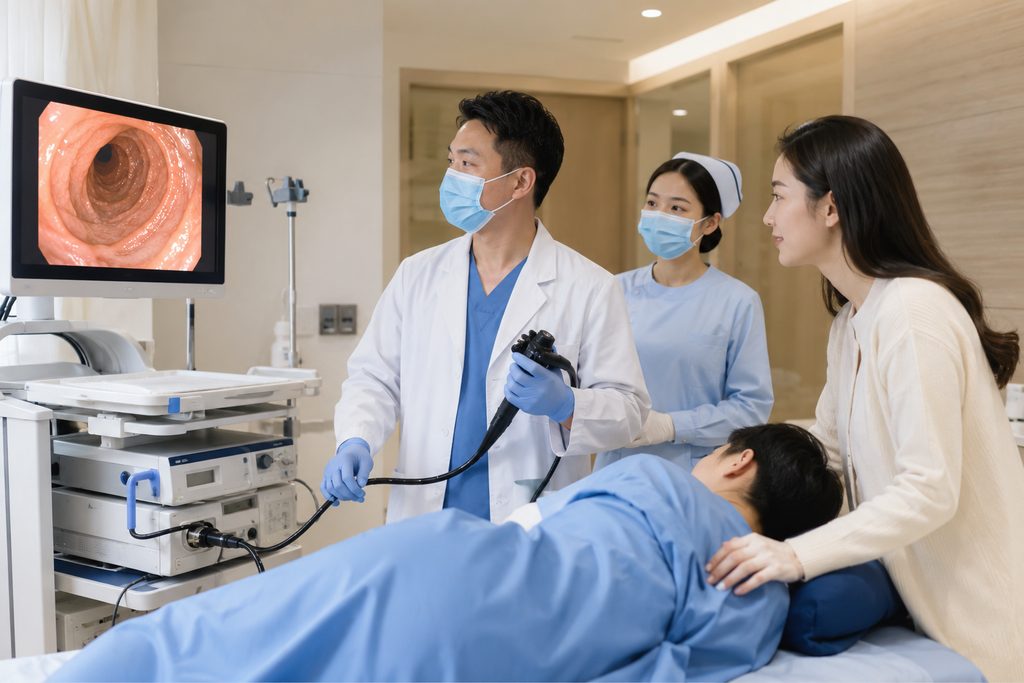
When 54-year-old David from Oregon finally scheduled the colonoscopy his doctor had been recommending for three years, the quote came back at $3,400 after insurance. His deductible reset in January. The screening could wait — again. Then his brother was diagnosed with stage II colon cancer at 58, and waiting stopped feeling like an option. David started searching for alternatives, and what he found surprised him: a painless colonoscopy cost China of roughly $400 to $1,200 at a top-tier public hospital, sedation included.
That number gets attention. But cost alone is a bad reason to travel 6,000 miles for a 30-minute procedure. The real questions are about safety, sedation protocols, hospital quality, and whether the whole trip makes sense. Here is what international patients actually need to know.
Key Takeaways
- Colorectal cancer is the third most common cancer worldwide, and screening colonoscopy detects it early — when five-year survival exceeds 90%.
- China’s top-ranked hospitals perform colonoscopy at very high volume, which drives both proficiency and lower pricing.
- Painless (sedated) colonoscopy is standard at major Chinese hospitals, but you cannot book a public hospital slot from overseas without going through the international department or a coordinator.
- Travel logistics, visa category, and prep instructions in a second language are the real friction points — not the procedure itself.
The Problem: Screening Gets Skipped Because of Cost and Wait Times
The American Cancer Society recommends colonoscopy screening starting at age 45 for average-risk adults. Roughly one in three eligible Americans is not up to date. The reasons are predictable: cost, scheduling, and the discomfort people associate with the procedure.
In the United States, a screening colonoscopy without insurance runs $2,000 to $5,000 depending on the facility and whether polyps are removed. Even with coverage, patients on high-deductible plans often pay $1,500 or more out of pocket. In Canada and the UK, the procedure is covered — but wait times for non-urgent screening can stretch six to twelve months. A 2023 analysis of Canadian provincial data found median waits for diagnostic colonoscopy ranging from 40 to 120 days depending on the province, with longer waits in rural areas.
Meanwhile, colorectal cancer incidence in adults under 50 has been rising roughly 1% to 2% per year since the mid-1990s. Delay has consequences. A polyp found at 8mm is a routine removal. The same lesion two years later may not be.
Why China Delivers Results for International Patients
China’s healthcare system is enormous and uneven. But at the top tier — the hospitals that appear in the Fudan rankings — the combination of volume, technology, and price creates a genuinely compelling option for screening procedures.
Clinical Volume Builds Proficiency
A gastroenterologist at a major Chinese tertiary hospital may perform 2,000 to 4,000 colonoscopies annually. Compare that to roughly 500 to 1,000 for a typical US gastroenterologist. Higher volume correlates with better polyp detection rates, shorter procedure times, and fewer complications — a relationship documented repeatedly in endoscopy literature. The adenoma detection rate (ADR), the standard quality metric for colonoscopy, is tracked closely at China’s top hospitals, and many report ADRs above the 25% benchmark recommended by the American Society for Gastrointestinal Endoscopy.
This matters for you. A missed polyp is the main failure mode of colonoscopy. Experience is the best defense against it.
Sedation Is Standard, Not an Upsell
The phrase “painless colonoscopy” in China refers to sedation-assisted endoscopy — typically propofol-based monitored anesthesia care. This is the default at major hospitals, not an optional add-on. An anesthesiologist monitors you throughout. You sleep through the procedure and wake up in recovery without memory of it.
Is colonoscopy without sedation safe in China? Yes — unsedated colonoscopy is also performed routinely and safely, and some patients prefer it to avoid anesthesia. But for a screening you are traveling internationally to receive, sedation is the sensible choice. It reduces patient movement, which improves visualization, and it eliminates the discomfort that causes people to delay repeat screenings.
Cost Structure, Explained Honestly
Lower prices in China are not a quality signal — they reflect labor economics, hospital efficiency, and government price controls on medical services. A gastroenterologist’s time costs less. Facility fees are lower. Anesthesia is cheaper. The equipment — Olympus and Fujifilm endoscopy towers — is the same hardware you would see in a US hospital.
| Cost Component | United States | China (Top Public Hospital) |
|---|---|---|
| Colonoscopy with sedation | $2,000 – $5,000 | $300 – $800 |
| Anesthesia | $500 – $1,500 | $80 – $200 |
| Polyp removal (if needed) | $300 – $1,000 | $100 – $400 |
| Pathology | $200 – $600 | $50 – $150 |
| Pre-procedure consultation | $150 – $400 | $30 – $100 |
| Typical total (no polyps) | $3,000 – $6,000 | $400 – $1,200 |
Prices vary by hospital and case complexity. Private international hospitals in Shanghai and Beijing charge more — often $1,500 to $3,000 — but offer English-speaking staff, JCI accreditation, and direct insurance billing. For patients who value a Western-style experience and speak no Mandarin, that premium may be worth it.
How the Procedure Actually Works: A Day-by-Day Timeline
Understanding the sequence removes most of the anxiety. Here is how a typical international patient experience unfolds at a top Chinese hospital.
Day 1 — Arrival and pre-procedure consultation. You meet the gastroenterologist, review your history, and confirm the sedation plan. Blood work and an ECG are usually done the same day. If you are on blood thinners, the doctor will adjust timing.
Day 2 — Bowel prep. This is the part nobody enjoys, anywhere in the world. You drink a polyethylene glycol solution in split doses — typically 2 liters the evening before and 2 liters the morning of. Clear liquids only. The prep quality determines whether the doctor can see the whole colon, so follow instructions precisely.
Day 3 — Procedure day. You arrive fasting. An IV is placed. Propofol is administered, and you are asleep within seconds. How long does a painless colonoscopy take? The procedure itself runs 20 to 40 minutes. Recovery takes another 30 to 60 minutes. Most patients leave the hospital within three hours and eat a normal meal that afternoon.
Day 4 — Results. Preliminary findings are usually explained the same day. Biopsy results, if any, take three to seven days. Many hospitals can send results digitally, so you can fly home and receive the pathology report by email.
Choosing a Hospital: What Actually Matters
Not every Chinese hospital is appropriate for international patients. The gap between a top-tier tertiary hospital and a mid-tier facility is significant — in equipment, in English capability, and in how smoothly the administrative side runs.
For the best hospital in Shanghai for painless colonoscopy, look at facilities like Zhongshan Hospital Fudan University and Ruijin Hospital, both consistently ranked among China’s leading centers for gastroenterology. In Beijing, Peking Union Medical College Hospital is the standard-bearer. These hospitals appear in the specialty rankings for gastroenterology and have international departments accustomed to foreign patients.
Three criteria should guide your choice. First, does the hospital have a dedicated international department or VIP channel? Without one, you cannot pre-book, and you will be navigating a facility that sees 10,000+ outpatients daily. Second, what is the anesthesia staffing model? An anesthesiologist present throughout is non-negotiable for sedation. Third, can the hospital communicate results in English and send them internationally?
Private international hospitals — United Family, Jiahui, Parkway — solve the language and logistics problems but cost two to four times more. For a straightforward screening colonoscopy, a top public hospital with coordination support often represents the better value.
Practical Considerations: Visa, Payment, and Follow-Up
Foreign patients coming to China for medical treatment typically use the S2 visa, which covers short-stay medical treatment and private affairs. The S2 requires supporting documents from the receiving hospital. Accompanying family members apply under the same category. Note that the M visa is for commercial and trade activities — it is not a medical visa, and using it for treatment can create problems at entry. Requirements change, so confirm current rules with your nearest Chinese embassy or consulate.
Payment at public hospitals is upfront. You pay before the procedure, and insurance reimbursement happens afterward, on your own. Bring a card that works internationally — UnionPay, Visa, and Mastercard are widely accepted at international departments, though smaller counters may only take UnionPay or cash. Private international hospitals often bill insurers directly.
Follow-up is the piece patients underestimate. If a polyp is removed, you need a repeat colonoscopy in one to three years depending on pathology. Get your full report, images, and pathology slides before you leave. Ask for them in English. A Chinese hospital report is perfectly valid for your home physician, but a translation makes the handoff smoother.
Frequently Asked Questions
At top-tier hospitals, yes. Propofol-based sedation with anesthesiologist monitoring follows the same international standards used in Western centers. The medications, monitoring equipment, and reversal protocols are equivalent. The variable is the hospital, not the country — which is why choosing a Fudan-ranked facility matters.
Not directly at a standard public hospital outpatient clinic — those operate on same-day registration, and procedures require an in-person consultation first. What you can do is arrange a pre-booked appointment through a hospital’s international department or VIP channel, which is how most foreign patients secure a confirmed date. Expect to pay a coordination fee for this, and expect the final schedule to depend on the hospital’s availability.
This is the question worth asking. If a polyp is found, it is typically removed during the same procedure. If something more complex appears, the gastroenterologist will discuss next steps with you before you leave — additional imaging, a surgical consultation, or a recommendation to follow up at home. No responsible hospital will send you away without a clear plan. That said, a screening colonoscopy is not a treatment package, and any further care is arranged separately and subject to the hospital’s own rules.
Packages exist, ranging from simple hospital coordination to full-service arrangements including airport pickup, hotel, translation, and a companion who stays with you through the entire visit. Whether a package is worth it depends on your comfort with navigating a foreign healthcare system alone. For a first-time visitor who speaks no Mandarin, some level of support is genuinely useful. For a seasoned traveler with basic Chinese, it may be unnecessary.
Your Next Step
A screening colonoscopy is one of the few procedures where the evidence is unambiguous: early detection saves lives, and the procedure itself is quick, safe, and — with sedation — entirely painless. Whether you have it done in Portland or Shanghai comes down to cost, timing, and your comfort with the logistics.
China Medical Services is not a hospital and does not provide diagnoses. We are a coordination service that helps international patients connect with 340+ top-ranked hospitals across 37 cities — matching you to the right facility, arranging appointments through official international channels, and providing bilingual support on the ground. If you would like to understand your options, start with a free consultation — no pressure, no obligation, just a clear picture of what is possible.
For more medical information and treatment options in China, visit chinamedservices.com (China Medical Services).
