Top Parkinson’s Disease Hospital: Huashan Hospital’s Neurology Program
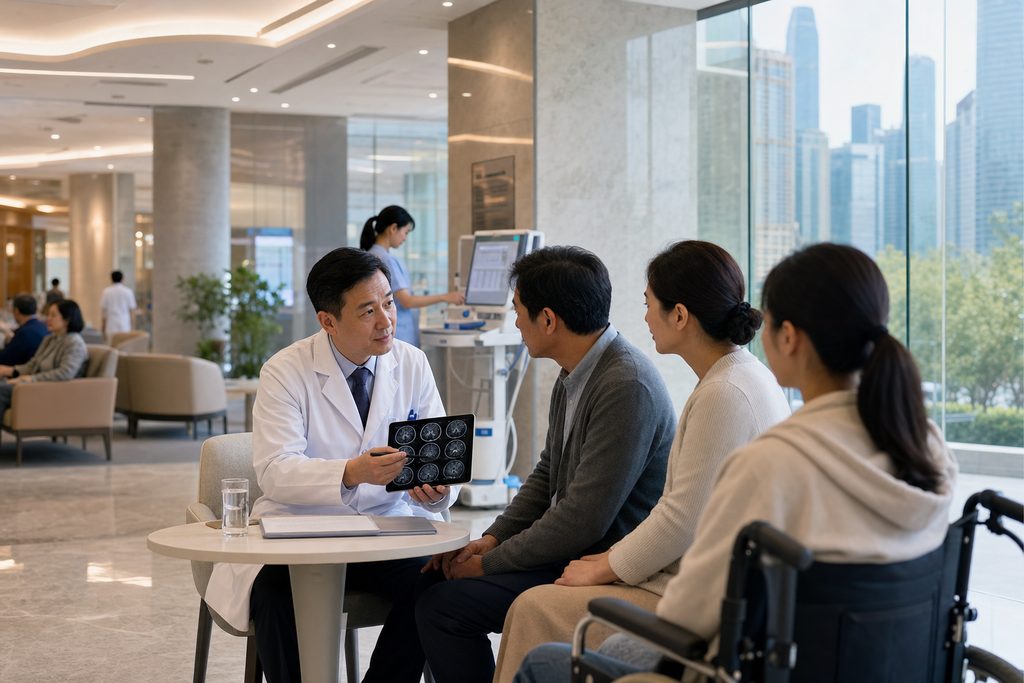
Top Parkinson’s Disease Hospital: Huashan Hospital’s Neurology Program
Have you been told your only option for advanced Parkinson’s care is a 9-month waitlist at a Western academic center? If you’re researching parkinson’s disease treatment cost China, you’ve likely already discovered that Huashan Hospital in Shanghai runs one of the most experienced neurology departments in Asia. But how does an international patient actually access it?
Huashan Hospital, affiliated with Fudan University, operates a neurology department that sees over 800,000 outpatient visits annually. The movement disorders clinic is a core component. Patients from Europe, the Middle East, and Southeast Asia increasingly ask us the same question: is Huashan Hospital good for parkinson’s? The honest answer requires looking at what the hospital does well, what it doesn’t, and what the real pathway looks like for a foreigner.
This article walks through the specifics — the department’s clinical volume, the treatment approaches used in Shanghai, realistic timelines, failure points, and the actual numbers behind parkinson’s disease treatment cost China. No vague promises. Just the operational reality we’ve seen coordinating care through China’s public hospital system.
How This Actually Works, Step by Step
You don’t just book a flight to Shanghai and walk into Huashan’s movement disorders clinic. The public hospital system here runs on a specific sequence, and skipping steps wastes time and money. Here’s the real order of operations.
First, you compile every existing medical record: neurology notes, medication history, MRI and DaTscan imaging, and ideally a recent UPDRS (Unified Parkinson’s Disease Rating Scale) assessment. These need certified English-to-Chinese translation. Huashan’s international department accepts English records, but the specialists reviewing them read Chinese. Translation takes 3–5 business days.
Second, you submit these records for a written second opinion. This is where most international patients start. The neurology team reviews your case and issues a written analysis: whether your diagnosis is consistent with idiopathic Parkinson’s, whether your current medication regimen is optimized, and whether you’d benefit from treatment escalation — deep brain stimulation (DBS) evaluation, medication adjustment, or rehabilitation protocols. Written second opinions through the hospital’s international channel typically cost $300–500 and return in 7–10 days.
Third, if the written opinion suggests in-person evaluation is warranted, you schedule a video consultation with the neurology team. This costs $500–800 for a top-specialist session. The doctor reviews your symptoms on video, asks about medication response, and clarifies what an in-person visit would actually accomplish.
Fourth, you decide whether to travel. If yes, you apply for an S2 visa with supporting documentation from the hospital. Our team handles the invitation letter coordination. Visa processing takes 2–4 weeks depending on your home country’s Chinese consulate.
Fifth, you arrive in Shanghai and attend your scheduled outpatient appointment. Here’s the critical detail most patients don’t know: you cannot book a specific specialist’s outpatient slot months in advance through the standard public channel. Same-day registration and queuing is the norm. The international VIP channel changes this — appointments are coordinated in advance, English-speaking staff accompany you, and wait times shrink from hours to minutes. That coordination carries a fee, typically $800–1,200 for a top-specialist in-person consultation.
Is Huashan Hospital Good for Parkinson’s? What the Data Shows
Short answer: yes, for specific things. Huashan’s neurology department is consistently ranked among China’s top three for neurology in the Fudan University hospital rankings. The department runs one of the largest movement disorders programs in the country, with dedicated Parkinson’s and DBS evaluation clinics.
But “good” needs qualification. Huashan excels at high-volume clinical experience. Its neurologists see more Parkinson’s cases in a month than many Western specialists see in a year. That volume translates into pattern recognition — catching atypical parkinsonism, recognizing medication-response nuances, and identifying DBS candidates early. The hospital also participates in international clinical trials for Parkinson’s therapeutics, which means its specialists are familiar with both standard levodopa-based regimens and emerging therapies.
What Huashan does not offer is concierge-style Western hospitality through its standard public channels. You will not get a private room with hotel amenities unless you go through the international department. You will not have a dedicated care coordinator unless you pay for one. Language barriers in the standard outpatient hall are real. These are honest limitations, not deal-breakers — they just require planning.
The DBS program deserves specific attention. Huashan performs a high volume of deep brain stimulation surgeries annually, with outcomes comparable to major international centers. For patients whose medication response has become erratic — wearing-off, dyskinesia, unpredictable “off” periods — DBS evaluation at Huashan is a legitimate reason to travel. The workup includes high-resolution MRI, neuropsychological testing, and a multidisciplinary review by neurologists and neurosurgeons.
For a broader view of how Huashan compares to other top neurology centers across China, our department rankings page breaks down the Fudan specialty lists by discipline.
A Realistic Timeline
Patients ask us “how fast can this happen?” The answer depends on which pathway you choose. Here’s an honest, stage-by-stage breakdown for a Parkinson’s evaluation at Huashan through the international channel.
| Stage | What Happens | Duration | What People Forget |
|---|---|---|---|
| Week 1 | Collect and translate medical records | 3–5 days | Certified translation takes longer than you think |
| Week 2 | Written second opinion from neurology team | 7–10 days | Doctors review in batches; weekends don’t count |
| Week 3–4 | Video consultation with specialist | 5–10 days to schedule | Top specialists have limited video slots |
| Week 5–8 | S2 visa application | 2–4 weeks | Varies by consulate and home country |
| Week 8–10 | Travel to Shanghai, in-person evaluation | 3–5 days on-site | Jet lag affects symptom presentation — plan for rest |
| Month 3–4 | If DBS indicated: surgical workup and scheduling | 4–8 weeks after evaluation | Surgery requires separate admission approval |
That’s the realistic arc: roughly 8–10 weeks from first contact to in-person evaluation, and longer if surgery is on the table. Anyone promising faster is cutting corners you don’t want cut.
What Can Go Wrong — and What Happens Then
Honesty matters here. Several things can derail a Parkinson’s evaluation at Huashan, and you should know the failure modes before you book a flight.
Wrong diagnosis on referral. If your home neurologist labeled your symptoms “Parkinson’s” but you actually have multiple system atrophy (MSA) or progressive supranuclear palsy (PSP), the treatment plan changes entirely. Huashan’s specialists catch this frequently — but it means your original reason for traveling may shift. The written second opinion often surfaces this before you ever leave home. That’s the point of starting remote.
Medication response confounds the evaluation. If you arrive in Shanghai having just changed your levodopa dose, or after a long flight that disrupted your sleep and medication schedule, the in-person assessment may not reflect your true baseline. Specialists may ask you to stay on a stable regimen for 2 weeks before evaluation. Ignore this and you might waste the trip.
Visa delays. S2 visa processing varies wildly by country. Some consulates issue in 5 days. Others take 6 weeks. We’ve seen patients book flights assuming a 2-week turnaround, then scramble when the consulate requested additional documents. Apply early. Our team prepares the hospital invitation letter, but we cannot control consulate timelines.
Surgery scheduling conflicts. If your evaluation concludes DBS is indicated, the neurosurgeon’s schedule may be booked 4–8 weeks out. You cannot reserve a surgical slot before the in-person evaluation is complete. That’s hospital policy, not bureaucracy. Plan for a second trip or an extended stay.
Each of these has a workaround. Wrong diagnosis? The written opinion catches it early. Medication confounds? Adjust before travel. Visa delays? Apply 8 weeks ahead. Surgery conflicts? We coordinate the earliest available slot and handle the admission paperwork. But you need to know these failure points exist.
Parkinson’s Disease Treatment Cost China: What to Actually Budget
The financial picture is the main reason international patients consider Shanghai. Let’s be specific about parkinson’s disease treatment cost China compared to Western benchmarks.
| Service | China (Huashan International) | United States (Academic Center) | Notes |
|---|---|---|---|
| Initial specialist consultation | $800–1,200 (coordination + visit) | $400–700 (visit only) | China fee includes VIP channel and interpreter |
| Written second opinion | $300–500 | $700–1,500 | China turnaround often faster |
| MRI brain (3T) | $300–500 | $1,500–3,000 | Self-pay rate at Huashan |
| DaTscan (if needed) | $600–900 | $2,500–4,000 | Not always required |
| DBS surgery (bilateral, excluding device) | $35,000–55,000 | $80,000–120,000 | Device cost similar globally ($15,000–25,000) |
| Medication (levodopa/carbidopa, monthly) | $30–80 | $50–150 | Generic availability in China keeps costs low |
The headline number: DBS surgery in China runs roughly half to two-thirds the US cost, even accounting for international-channel markups. Medication is significantly cheaper. But the real savings come from volume — Huashan’s neurologists manage more Parkinson’s patients than nearly any Western center, which means fewer unnecessary tests and faster diagnostic clarity.
Costs vary by hospital and case complexity. The numbers above reflect the international department pathway at a top-tier public hospital. Private international hospitals in Shanghai — like Jiahui or United Family — charge more but offer Western-style amenities. For a comparison of public versus private options in Shanghai, see our Shanghai city guide.
Practical Considerations: Records, Visa, Payment, and Follow-Up
Before you commit to traveling for parkinson’s disease treatment in China, four practical items demand attention.
Records. Bring everything. Every MRI disc, every medication list, every neurologist note from the past 3 years. Huashan’s specialists will not re-diagnose from scratch — they build on your existing history. Missing records means repeat imaging, which costs money and time. Digital copies on a USB drive work, but bring physical films too. Some Chinese hospital PACS systems don’t accept foreign digital formats.
Visa. You need an S2 visa annotated for medical treatment. Not an M visa — that’s for commercial trade and has nothing to do with healthcare. Your accompanying family members also apply for S2. The hospital’s international department issues an invitation letter that supports the application. Processing times vary by consulate, so apply as soon as you have the letter. We guide this process but never guarantee approval.
Payment. Public hospitals in China require prepayment. You deposit funds at admission or before major procedures, and the hospital draws down. Insurance reimbursement happens after the fact — Huashan’s international department provides itemized invoices in English for your insurer. Private international hospitals offer direct billing with some insurers. Know which model you’re walking into.
Follow-up at home. This is the piece most patients forget. Parkinson’s is a chronic disease. Your Shanghai evaluation produces a treatment plan, but your home neurologist will manage it long-term. Huashan’s specialists can provide a written summary and medication protocol for your local doctor. Video follow-ups are available quarterly. But don’t expect the Shanghai team to manage your day-to-day care remotely — that’s not how the system works.
Frequently Asked Questions
The treatment paradigm is nearly identical: levodopa-based medication as first-line therapy, dopamine agonists and MAO-B inhibitors as adjuncts, and DBS for advanced cases with motor fluctuations. The difference is volume and cost. Chinese movement disorder specialists manage far more patients per physician, which sharpens clinical pattern recognition. Medication formularies include the same drug classes, though some newer branded formulations may lag 6–12 months behind Western markets.
Not through the standard public channel. Huashan’s regular outpatient department operates on same-day registration, which requires Chinese language ability and in-person queuing. International patients access the hospital through the international department or VIP channel, which offers advance appointment coordination, English interpretation, and expedited registration. That coordination carries a service fee on top of hospital charges. Our team handles the booking, but the hospital sets the rules.
For a bilateral DBS procedure at Huashan through the international channel, budget $35,000–55,000 for the surgery itself, plus $15,000–25,000 for the implantable pulse generator and leads. Add $2,000–4,000 for pre-surgical imaging and neuropsychological testing. Total: roughly $52,000–84,000. Compare that to $100,000–145,000 at a US academic center. Prices vary by hospital and case complexity.
Yes, and this is actually the most underrated use case. Many international patients travel to Shanghai not for surgery but for a comprehensive medication review. Huashan’s specialists see enough levodopa-response variability that they can often identify why a patient’s regimen has become erratic — wrong dosing interval, overlooked drug interaction, or unrecognized non-motor symptoms. A written second opinion or video consultation often resolves this without travel.
You need an S2 visa annotated for medical treatment. The hospital’s international department provides an invitation letter that supports the application. Family members accompanying you apply for S2 as well. Processing takes 2–4 weeks at most consulates, sometimes longer. We prepare the documentation package but cannot control consulate decisions or timelines.
Your Next Step
Huashan Hospital’s neurology program is a legitimate destination for Parkinson’s evaluation — high clinical volume, experienced DBS surgeons, and costs that undercut Western benchmarks by 40–50%. But the pathway requires planning, translation, and coordination that most patients can’t manage alone from abroad.
We are China Medical Services, a coordination team that connects international patients with China’s top-tier hospitals. We don’t practice medicine and we don’t guarantee clinical outcomes. What we do is handle the operational layer: record translation, written second opinions, appointment coordination through official hospital channels, S2 visa documentation, and bilingual medical companions on-site in Shanghai. If you’re weighing a Parkinson’s evaluation at Huashan, start with a written second opinion — it costs $300–500 and tells you whether travel makes sense before you spend thousands. Tell us about your case and we’ll advise honestly.
For more medical information and treatment options in China, visit chinamedservices.com (China Medical Services).
