Patients Alone: A Companion Who Stays in China Hospitals
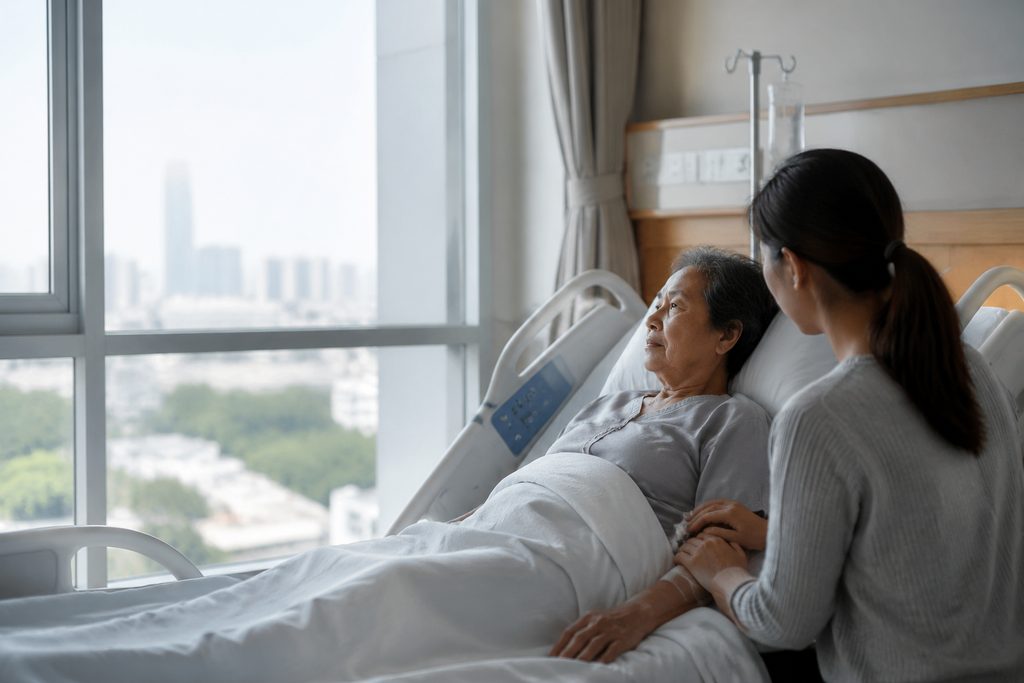
When 67-year-old Margaret flew from Manchester to Shanghai for a knee replacement at a top orthopedic center, she assumed the hospital would handle everything. She spoke no Mandarin. Her daughter couldn’t get two weeks off work. Three days in, Margaret sat alone in a pre-op consultation room, unable to understand whether the surgeon had just changed her surgery date or asked about her blood thinners. She called us in tears. That afternoon, a bilingual companion stood beside her bed, translated every word, and stayed through discharge.
Being alone in a foreign hospital is not a minor inconvenience. It is a clinical risk. Medication errors rise when patients can’t describe symptoms. Discharge instructions get misunderstood. Insurance claims stall without proper documentation. A medical companion for elderly in China hospital settings is not a luxury add-on. For many international patients, it is the difference between a successful treatment trip and a dangerous one.
How This Actually Works, Step by Step
The process starts before you arrive. You send us your existing medical records — scans, lab reports, medication list, referral letters. Our team reviews them with a relevant specialist to confirm whether coming to China makes sense for your case. That written second opinion costs between $300 and $500, and it is for reference only, not a prescription.
Once you decide to proceed, we coordinate your appointment through the hospital’s official international department or VIP channel. Public hospital walk-in clinics cannot be pre-booked from overseas. The international pathway is the only reliable route. You then apply for an S2 visa with supporting documents from the hospital. Visa processing takes one to three weeks depending on your consulate.
On the day of your appointment, your companion meets you at the hospital entrance. They handle registration, queue management, payment counters, pharmacy runs, and translation during every doctor interaction. For a full day, that service costs from $300. For elderly patients, we recommend booking at least the first three days — diagnosis, pre-op tests, and admission all happen in that window.
Hiring a Medical Companion for Elderly in China Hospital Stays
Elderly patients face compounding challenges in Chinese public hospitals. These are massive facilities. A single outpatient building can see 10,000 patients a day. Signage is in Chinese. Registration kiosks require a local phone number. Payment windows move fast. Without help, a 70-year-old recovering from surgery cannot reasonably manage this alone.
So what does a companion actually do? They are not nurses. They do not administer medication or make clinical decisions. They are logistics experts and translators. They know where the CT department is on the fourth floor of Building B. They know which window accepts international credit cards. They know how to request an English discharge summary. They sit with you during IV infusions, call your family with updates, and make sure the doctor’s instructions are written down in a language you understand.
For family members asking “can I have a family member stay with me during surgery in China” — the answer is yes, with limits. Most public hospital wards allow one family member during visiting hours only, not overnight. Private international hospitals like United Family or Jiahui often permit 24-hour family presence in private rooms. But a family member who speaks no Mandarin faces the same language barrier you do. Many families choose a hybrid: a relative flies in for the surgery week, while a professional companion covers the admission and discharge logistics.
A Realistic Timeline
| Stage | What Happens | Realistic Duration |
|---|---|---|
| Week 1 | Send records, receive written second opinion | 5–10 business days |
| Week 2–3 | Confirm treatment plan, hospital accepts your case | 7–14 days |
| Week 3–5 | S2 visa application with hospital invitation letter | 1–3 weeks |
| Week 4–6 | Arrive in China, first consultation, pre-op tests | 3–5 days |
| Week 6–8 | Surgery or treatment, inpatient stay | 5–14 days typical |
| Week 8–12 | Post-op follow-up, discharge, return home | 1–2 weeks |
People forget about document translation. Your medical records need certified English-to-Chinese translation before the hospital will accept them. That takes three to five days. They also forget about the gap between landing and the first appointment. Jet lag, unfamiliar food, and a new city hit harder when you’re already sick. Book your companion for the day after you land, not just the appointment day.
What Can Go Wrong — and What Happens Then
The honest failure modes matter here. What if the hospital changes your surgery date at the last minute? It happens. Chinese public hospitals manage enormous patient volumes, and emergency cases bump elective surgeries. If your date moves, your companion rebooks, your visa stay gets extended, and your accommodation adjusts. That flexibility is built into the service.
What if you get a companion who is bilingual but unfamiliar with your specific hospital? We match companions to hospitals they know. Someone who works regularly at Huashan Hospital knows where the international pharmacy is. Someone who only knows Beijing United Family will be lost in a public facility. Ask before you book: which hospitals has this person worked in this year?
What if you need actual nursing care, not just logistics? A companion is not a substitute for a private nurse. If you need help bathing, toileting, or wound care, you need clinical staff. The cost for a private nurse in a Beijing hospital varies widely — from $80 to $200 per day depending on qualifications and hospital. Some public hospitals have in-house nursing assistants. Private international hospitals can arrange dedicated nurses. Be clear about what you’re hiring for.
Private Nurse and Caregiver Costs: What the Numbers Mean
You’ll see a range of prices for support services in China. Here’s what they actually reflect. A private nurse cost per day Beijing hospital settings runs lower than in Shanghai or Guangzhou, but qualifications vary more widely. A hospital-employed nursing assistant might cost $50–80 per day. A registered nurse with ICU experience costs $150–250 per day. A 24 hour caregiver for hospital stay abroad situations typically means two rotating caregivers, because no single person can safely work 24 hours straight.
| Service | Typical Range (USD) | What It Includes |
|---|---|---|
| Bilingual medical companion | from $300/day | Translation, logistics, queue management, emotional support |
| Private nurse (public hospital) | $80–200/day | Clinical care, medication administration, wound care |
| Private nurse (international hospital) | $150–300/day | As above, plus English documentation |
| 24-hour caregiver | $200–400/day | Two rotating caregivers, non-clinical assistance |
| Airport transfer | $200 round-trip | Pickup, hospital drop-off, return |
International patient support services China price points range from $100 for a basic video consultation to $2,000 for a multi-disciplinary team review. The key mechanism to understand: any consultation fee is credited in full toward on-the-ground coordination if you proceed within 90 days. That means a $500 written second opinion isn’t sunk cost — it becomes a down payment on your companion service.
Practical Considerations: Records, Visa, Payment, and Follow-Up
Bring every medical document you have. Radiology discs, not just reports. Pathology slides if relevant. A complete medication list with generic names, not brand names. Chinese pharmacists may not recognize a UK or US brand name, but they will recognize the active ingredient.
Your S2 visa is the correct category for medical treatment. It covers short stays for private affairs including medical care. If your treatment exceeds 180 days, you need an S1. Family members accompanying you apply for their own S2 visas. We provide the hospital invitation letter and supporting documents, but approval always rests with the consulate.
Payment in public hospitals is prepaid. You deposit funds at admission, and costs are deducted daily. International credit cards work at major hospital international departments, but bring a backup. Many patients open a local bank account or use Alipay for incidental costs. Private international hospitals like those on our JCI-accredited private hospital list often bill insurers directly.
Follow-up at home requires planning. Ask your Chinese doctor for a written treatment summary in English before you leave. Request copies of all imaging on CD. Schedule a video consultation for two weeks post-discharge. That costs $100–300 and catches complications early. Your home physician needs the full picture, not your memory of it.
Frequently Asked Questions
Yes, in most cases. Public hospitals allow family during visiting hours, typically 3–7pm. Private rooms in international hospitals often permit overnight stays. But language support matters more than physical presence. A bilingual companion during pre-op consultations prevents dangerous misunderstandings.
Contact a coordination service like ours before you travel. Send your records, confirm your hospital, and book the advocate for specific dates. We match advocates to hospitals they know well. You can also request one through the hospital’s international department, but availability is limited and language skills vary.
Budget $300 per day for the companion service. A five-day surgical stay with pre-op and discharge support typically runs $1,500–2,000. That includes translation, logistics, and coordination. It does not include hospital treatment charges or nursing care.
No. Companions handle language and logistics. Nurses handle clinical care. If you need medication administration, wound care, or mobility assistance, you need a nurse. Some patients need both. We help you arrange the right combination for your specific case.
We serve patients from the Middle East, Russia, Southeast Asia, and Europe. Companions can be arranged in Arabic, Russian, French, and other languages. Inform us of your language needs when you first contact us, and we’ll match accordingly.
Your Next Step
Traveling alone for surgery in a country where you cannot read a single sign is not brave. It is a gamble with your health. A medical companion for elderly in China hospital settings transforms that gamble into a managed process. Our team at China Medical Services coordinates hospital matching, appointment booking, visa documentation, and bilingual companionship across 340+ top-ranked hospitals in 37 cities. We do not provide medical advice, and we cannot guarantee treatment outcomes. What we do is make sure you are never alone in a system you cannot navigate. If you are planning treatment in China, start with a free consultation — tell us your diagnosis, your hospital preference, and your dates, and we’ll tell you honestly what support you need.
Being alone does not have to mean being unsupported. The right companion turns a foreign hospital into a manageable place. That is the entire job.
For more medical information and treatment options in China, visit chinamedservices.com (China Medical Services).
