Cancer Care at Peking University Cancer Hospital: What International Patients Should Know
The Short Answer
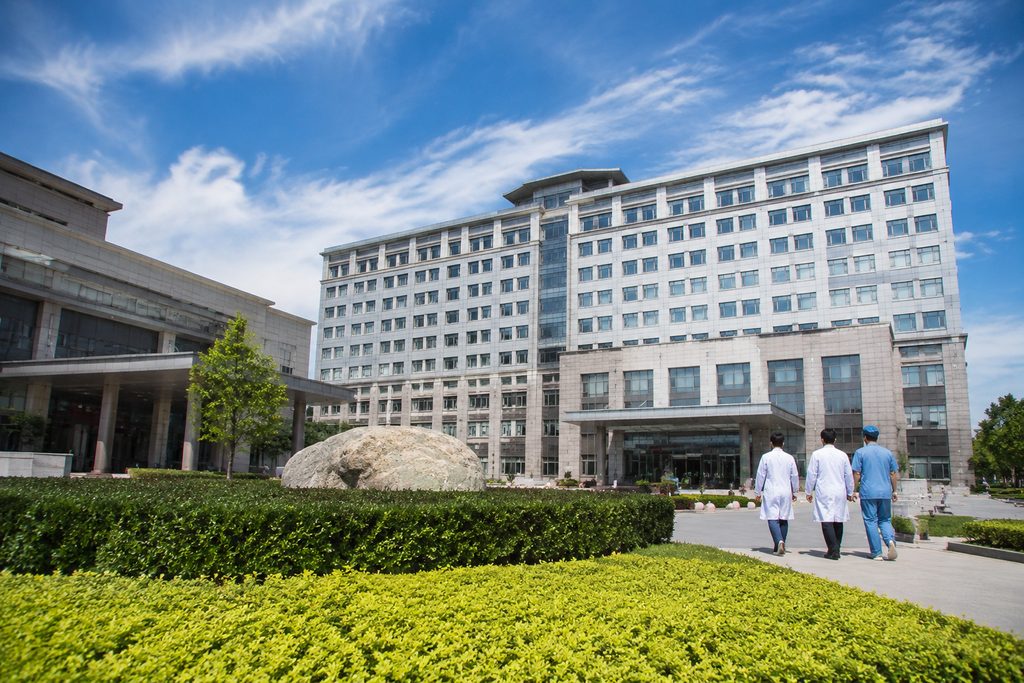
You’re facing a cancer diagnosis and searching for the right place to fight it. Peking University Cancer Hospital (PUCH) is one of Asia’s largest oncology centers, handling over 750,000 outpatient visits and 65,000 inpatient admissions annually. For international patients, treatment here typically costs 50-70% less than comparable care in the United States or Western Europe. But access isn’t as simple as booking a flight. The hospital’s public system doesn’t accept direct overseas appointments, and navigating it without Mandarin fluency and local know-how is nearly impossible. That’s the trade-off: world-class oncology at a fraction of Western prices, but only if you enter through the right channel.
Who This Is Right For — and Who It Isn’t
Making a good decision starts with knowing who benefits most from traveling to Beijing for cancer care. And who should stay home.
Typically a strong candidate:
- You have a confirmed diagnosis and recent imaging, pathology slides, and medical records ready to share for a remote evaluation first.
- Your case requires a complex surgical procedure — esophageal, gastric, liver, or thoracic cancers — where PUCH surgeons perform volumes that rival any Western center. The hospital completes over 15,000 cancer surgeries each year.
- You need advanced radiotherapy like IMRT or proton therapy, or cutting-edge interventional oncology procedures, and the wait at home is measured in months.
- You are medically stable enough for international travel. A transoceanic flight after major abdominal surgery isn’t realistic, so remote evaluation before travel is essential.
- Cost is a genuine barrier to treatment at home. You’ve seen the estimates and need a high-quality alternative that doesn’t exhaust your savings.
Should seriously reconsider:
- Your diagnosis is unclear. You need a diagnostic workup, not a treatment plan. Starting from scratch in a foreign country, in a different language, adds delays and stress.
- You have late-stage disease requiring intensive inpatient palliation and you lack family support who can travel with you. The emotional toll of isolation during treatment is real and under-discussed.
- You expect Western hotel-style hospital rooms. Chinese public hospitals, even top-tier ones, are functional and clean but often crowded. Private international wards exist but are limited.
- Your treatment requires a novel immunotherapy or targeted agent only recently approved in China. Drug availability differs by country, and not every Western-approved therapy is accessible here.
Being clear-eyed about who shouldn’t come is what makes the service credible. We turn away patients when staying home is genuinely the better medical decision.
The Options, Compared
When international patients consider Peking University Cancer Hospital Beijing cost and quality, the real comparison isn’t between hospitals in China. It’s between treatment pathways. Here’s how the paths stack up.
| Factor | PUCH Public Pathway (Self-Navigate) | PUCH International/VIP Channel (Coordinated) | US Academic Cancer Center (Cash Pay) |
|---|---|---|---|
| Typical wait for first specialist consult | 2-6 weeks (in-person queuing required) | 5-14 days after records received | 1-4 weeks |
| Language support | Mandarin only | English-speaking coordinator + bilingual companion | English (native) |
| Complex surgical oncology cost (e.g., esophagectomy) | $8,000 – $15,000 | $12,000 – $22,000 | $80,000 – $150,000 |
| Radiotherapy course (IMRT, 6-8 weeks) | $5,000 – $10,000 | $8,000 – $14,000 | $40,000 – $80,000 |
| Can you book before arriving? | No — must appear in person | Yes — remote evaluation then confirmed schedule | Yes |
| Post-treatment follow-up coordination | On your own | Structured handoff to home oncologist | Built into system |
The public pathway looks cheapest on paper. It isn’t realistic for someone who doesn’t speak Chinese and isn’t already in Beijing. The coordinated international channel is the practical route — and even at the higher end, it comes in at roughly one-fifth to one-third of the US cash price. For patients whose insurance doesn’t cover treatment at an American academic center, or whose deductible makes it unaffordable, the math is straightforward.
Peking University Cancer Hospital Beijing Cost: What the Numbers Actually Include
Let’s get specific. When a patient asks us “how much does cancer treatment cost in Beijing,” we break it into layers. The hospital’s charges are one layer. Everything around the hospital is another.
A complex surgical oncology procedure — say, a minimally invasive Ivor Lewis esophagectomy — at PUCH through the international channel typically runs $15,000 to $22,000. That covers the surgeon’s fee, anesthesiology, operating room, hospital stay (often 7-14 days), and standard pathology. It does not include pre-surgery imaging if yours needs repeating, specialized molecular profiling of the tumor, or any unexpected ICU days.
A full course of intensity-modulated radiation therapy (IMRT) for a thoracic or head and neck malignancy ranges from $8,000 to $14,000. That includes treatment planning, daily fractions over six to eight weeks, and weekly on-treatment visits. It doesn’t include housing near the hospital for two months. A serviced apartment in Beijing’s Haidian district, near the hospital, runs $2,500 to $4,000 per month. Food, local transport, and a bilingual companion for clinic days add another layer.
Chemotherapy costs vary wildly by regimen. Generic platinum-based doublets common for lung or gastric cancers might run $500 to $1,500 per cycle. Newer biologics or immunotherapies — if available — can push that to $3,000 to $8,000 per cycle. Always ask whether your specific drug is on the hospital formulary before booking travel.
What drives the variance? Three things. First, case complexity — a straightforward lobectomy costs less than a multi-organ resection. Second, whether you need imported consumables like specific staplers or mesh that the surgeon prefers. Third, length of stay, which depends on your recovery speed and whether complications arise. Nobody can quote a fixed price before reviewing your records and imaging.
Our team provides a detailed cost estimate only after the hospital’s oncology team has reviewed your case remotely. That written second opinion — which costs from $300 to $500 — is the single most valuable document you’ll receive. It tells you whether they can treat you, how they’d approach it, and what the hospital-side costs will look like. And if you later proceed to treatment in Beijing, that fee is credited in full toward the coordination service.
Is Cancer Care in China Safe for Foreigners? What the Data Shows
This question comes up in every consultation. It deserves an honest answer, not a sales pitch.
Peking University Cancer Hospital is ranked among China’s top 10 for oncology in the Fudan University Hospital Rankings, the country’s most authoritative hospital evaluation system. It operates 790 licensed beds dedicated to cancer care, runs one of China’s largest clinical trial programs, and serves as a national training center for surgical oncology. Its thoracic surgery department alone performs over 2,000 esophageal cancer resections annually — a volume that, by itself, exceeds what many entire countries complete in a year.
Volume matters in cancer surgery. A 2015 study in The Lancet analyzing over 500,000 esophagectomy patients across multiple countries found a strong inverse relationship between hospital procedure volume and 30-day mortality. Surgeons who do the same operation hundreds of times a year simply have lower complication rates. That’s the argument for seeking care at a high-volume center, whether it’s in Houston, Heidelberg, or Beijing.
Safety for foreign patients specifically depends on two things: the quality of the medical team and the quality of communication. The medical team at PUCH is world-class. The communication piece is where it gets complicated. A Mandarin-speaking patient can ask questions, clarify symptoms, and understand discharge instructions directly. A non-Mandarin speaker cannot.
This is where the “safe” question gets real. It’s safe if you have a bilingual medical companion who understands oncology terminology, can translate nuanced conversations between you and your attending physician, and can catch discrepancies before they become problems. It’s less safe if you’re relying on a hospital-supplied translator who may not be available for every interaction, or a family member who speaks conversational Chinese but doesn’t know medical vocabulary.
Infection control, surgical sterility, and emergency response protocols at PUCH meet Joint Commission International-equivalent standards. The hospital is not JCI-accredited — few Chinese public hospitals are — but its internal quality metrics are audited by China’s National Health Commission. Post-operative infection rates for clean-contaminated surgical wounds are comparable to published Western benchmarks.
So: is cancer care in China safe for foreigners? The hospital’s clinical quality is not the limiting factor. The limiting factor is whether you have the right support structure around you. That’s the honest answer.
Practical Considerations: Records, Visas, and What Happens After You Go Home
This is the hardest question, and the answer isn’t comforting by design. Cancer treatment carries inherent risk regardless of where it’s performed. If complications arise during your stay in Beijing, PUCH has full intensive care capability and can manage surgical complications, infections, and treatment-related toxicities. If a complication arises after you return home, your local medical team takes over. The Beijing team can consult remotely, but they cannot prescribe across borders or intervene directly. You should not travel for cancer treatment unless you have a clear plan for continuity of care at home. We help structure that plan. We cannot guarantee outcomes.
No. The hospital itself does not sell “packages” in the tourism sense. What exists is a coordinated care pathway: remote case evaluation, confirmed appointment scheduling, admission coordination, and in-hospital bilingual support. Third-party coordination services — like ours — bundle the logistics around the hospital stay: visa documentation, airport transfers, accommodation near the hospital, and daily bilingual companion services. The hospital provides the medicine. We provide the bridge. That distinction matters because anyone promising an all-inclusive “cancer package” is likely inflating what they can deliver.
Your Next Step
A cancer diagnosis forces hard decisions under pressure. If you’re reading this, you’re likely weighing whether traveling to Beijing for treatment makes medical and financial sense. The only way to know is to have Peking University Cancer Hospital’s oncology team review your actual records. Everything else is speculation.
Our team at China Medical Services handles that first step. We’re not a hospital, we don’t employ doctors, and we don’t give medical advice. What we do is connect you with the right specialists at Beijing’s top-ranked oncology centers, manage the document translation and case submission, and give you a clear answer on feasibility and Peking University Cancer Hospital Beijing cost before you book a flight. The initial consultation is free. The written second opinion — the document that tells you whether this path is real — starts at $300, and that amount is fully credited if you later choose to pursue treatment in China.
You have options. Let’s find out which ones are actually open to you.
Frequently Asked Questions
Yes. The hospitals used for international patients are JCI-accredited and follow the same international safety standards as top hospitals in the US and Europe. Surgical teams perform high volumes of procedures — often more than their Western counterparts — which studies show leads to better outcomes.
Costs vary by procedure and hospital, but international patients typically save 40-80% compared to US prices — even when factoring in travel and accommodation. A consultation with our team will give you an exact, all-inclusive quote with no hidden fees.
Send us your existing medical reports to get started. We handle everything from hospital selection and appointment scheduling to visa assistance and post-operative recovery planning. Your medical records are reviewed by the specialist before you even book a flight.
For more medical information and treatment options in China, visit chinamedservices.com (China Medical Services).
