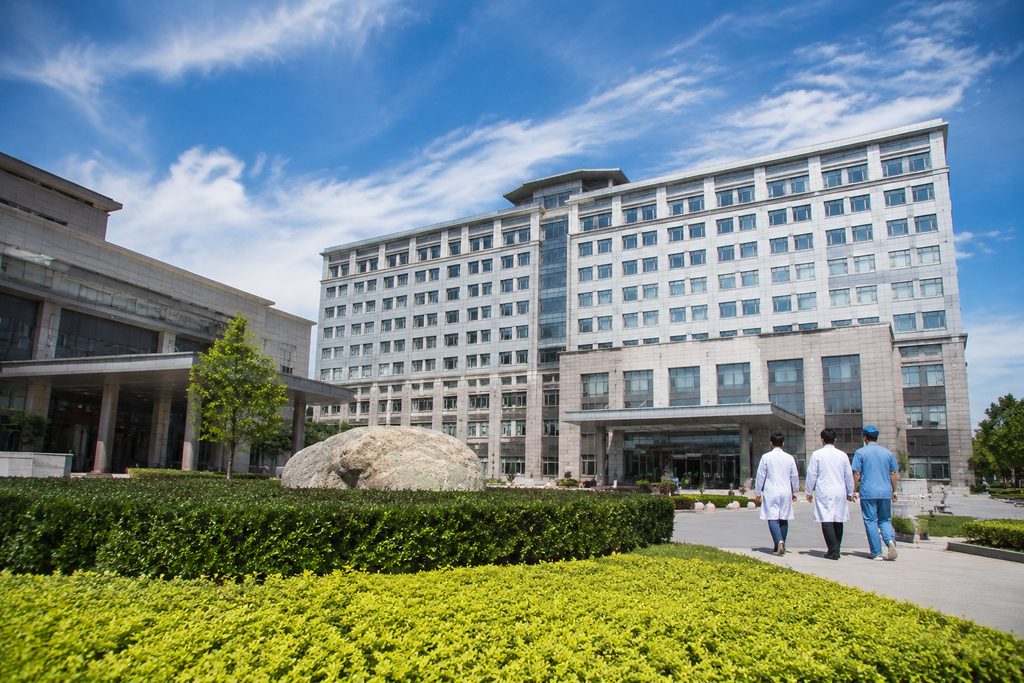
Peking University First Hospital: Nephrology and Urology Care for International Patients in Beijing
Key Takeaways
- Peking University First Hospital‘s nephrology department is ranked among China’s top 2 nationally in the Fudan specialist rankings, managing a clinical volume that dwarfs most Western centers.
- The hospital’s urology institute pioneered minimally invasive techniques now adopted globally, with a surgical volume exceeding 6,000 major procedures annually.
- International patients cannot independently book appointments through the standard public system—access requires coordination through the hospital’s official International Medical Department, which operates on a different scheduling and pricing structure.
- Treatment costs for complex urological procedures typically range from 20% to 35% of comparable US pricing, but the trade-off is a system that demands flexibility and local navigation support.
When 54-year-old Ahmed from Dubai received his diagnosis of renal cell carcinoma, his first instinct was to research treatment options in Germany. The quoted price stopped him cold: €48,000 for the surgery alone, with a six-week wait just for the initial consultation. His nephrologist mentioned another path—one that led him to a sprawling medical campus in central Beijing where surgeons perform more than 1,200 kidney tumor resections every year. Ahmed had never considered China. Six months later, he tells us the only regret was not knowing about it sooner.
Chronic kidney disease affects approximately 1 in 10 adults worldwide. That is over 850 million people. For those who progress to end-stage renal disease, the options narrow dramatically: dialysis indefinitely, or a transplant that may carry a five-year waiting list in their home country. Urological cancers—bladder, prostate, kidney—add another layer of urgency. The clock ticks. Meanwhile, Western healthcare systems strain under backlogged surgical schedules and costs that can bankrupt families. A radical cystectomy in the United States averages $65,000 to $120,000. The same procedure, performed by a surgeon who does 300 of them a year at a top Chinese center, costs a fraction of that. The question is not whether the clinical expertise exists in China. The question is whether you can access it efficiently, safely, and without losing your sanity to logistics. That is where we come in.
Who We Are
We are not a hospital. We do not provide medical treatment, clinical diagnoses, or surgical care. Our team at China Medical Services functions as your logistical architects—the bridge between you and the best nephrology hospital Beijing international patients cost considerations demand. We handle the architecture of your medical journey: hospital matching based on your specific diagnosis, appointment coordination through official international departments, bilingual medical companions who translate both language and culture, and the visa guidance that gets you here legally. We have built relationships with 340+ top-ranked hospitals across 37 cities. We know which department head specializes in complex partial nephrectomies. We know the difference between a hospital’s public-facing website and what their international patient office actually offers. And we tell you the truth, even when the truth is inconvenient.
Why Peking University First Hospital Sets the Standard for Nephrology and Urology
Peking University First Hospital—often abbreviated as PKUFH—is not just another large Chinese hospital. It is the institution that wrote the textbook. Literally. Its nephrology department, founded in the 1950s, produced the first generation of Chinese kidney specialists who went on to establish nephrology programs nationwide. Today the hospital operates under the Peking University Health Science Center, a research powerhouse that feeds clinical innovations directly into patient care. For international patients evaluating whether Peking University First Hospital is good for urology international patients, the evidence rests on three pillars: clinical volume, research output, and the structural advantages of a system built for scale.
Clinical Volume That Creates Surgical Mastery
There is a well-documented relationship in medicine between volume and outcomes. Surgeons who perform a procedure more frequently have lower complication rates. Hospitals that see more of a condition develop better protocols. This is not controversial. It is established in the surgical literature. At PKUFH, the Department of Urology performs over 6,000 major surgeries annually. The nephrology service manages more than 1,200 inpatient beds dedicated to kidney disease. A urologist here might perform 200 radical prostatectomies in a year. The average American urologist does perhaps 25. When you ask how to book kidney surgery at Peking University First Hospital international department, you are not just booking an operation. You are booking a surgeon whose hands have done this exact procedure more times than most Western surgeons will in a decade.
The Institute of Urology at PKUFH was the first of its kind in China, established in 1946. It pioneered transurethral resection techniques in the country. It developed the protocols for laparoscopic renal surgery that spread across Asia. Today its surgeons are proficient in robotic-assisted laparoscopic procedures using the da Vinci system, holmium laser enucleation of the prostate, and complex urinary reconstruction. The department sees a steady stream of international patients from Southeast Asia, the Middle East, and increasingly from Europe and North America—people who did the math on wait times and costs and decided the flight was worth it.
Nephrology: Where Research Meets Clinical Reality
The Renal Division at PKUFH consistently ranks at the very top of China’s Fudan specialist rankings. It is not simply a dialysis center. It is a comprehensive kidney disease institute covering glomerular disease, diabetic nephropathy, genetic kidney disorders, and renal pathology. The division runs one of China’s largest renal biopsy programs, processing thousands of tissue samples annually with turnaround times that support rapid clinical decision-making. For patients researching the best nephrology hospital Beijing international patients cost comparisons, this matters. An accurate biopsy read determines whether you need immunosuppression, targeted therapy, or a transplant workup. Getting it right the first time saves months of ineffective treatment.
The hospital also operates a kidney transplant program that is among China’s most active. Transplant candidates from overseas face additional layers of regulatory and ethical scrutiny—China strictly regulates organ sourcing and foreign patient eligibility. This is not a fast track. It is a process. But for patients who qualify, the transplant package for overseas patients at a Beijing hospital like PKUFH can represent a life-changing option when dialysis is no longer sustainable. We help patients understand what is possible before they book a flight.
Understanding Peking University First Hospital Urology Treatment Price for Foreigners
Let us talk about money directly. The Peking University First Hospital urology treatment price for foreigners differs from what a Chinese national with local insurance pays. International patients access care through the hospital’s International Medical Department or VIP clinic channels. This means higher fees—but also English-speaking coordination, expedited scheduling, and private inpatient rooms. The premium over standard public pricing runs roughly 50% to 100%. Even with that markup, the numbers remain dramatically below Western benchmarks.
| Procedure | PKUFH International Dept (USD) | US Average (USD) | UK Private (USD) |
|---|---|---|---|
| Radical nephrectomy (kidney removal) | $8,000 – $14,000 | $45,000 – $75,000 | $28,000 – $40,000 |
| Partial nephrectomy (kidney-sparing) | $10,000 – $16,000 | $50,000 – $85,000 | $32,000 – $45,000 |
| Radical prostatectomy (robotic) | $15,000 – $22,000 | $40,000 – $70,000 | $25,000 – $38,000 |
| Transurethral resection of bladder tumor | $4,000 – $7,000 | $15,000 – $30,000 | $10,000 – $18,000 |
| Kidney transplant evaluation and surgery | $45,000 – $65,000 | $120,000 – $180,000 | $70,000 – $100,000 |
These are estimates. They vary by case complexity, length of stay, and the specific specialist assigned. They do not include travel, accommodation, or our coordination fees. But the pattern holds: you are looking at roughly one-fifth to one-third of US costs. For a Beijing hospital kidney transplant package for overseas patients, the savings can exceed $100,000. That buys a lot of post-operative recovery time in a serviced apartment near the hospital.
Why are costs so different? Not because quality is lower. Because China’s hospital system operates on high volume with lower labor costs, lower administrative overhead, and a medical device market that has become increasingly competitive with domestic manufacturers. A surgical robot costs the same to acquire, but the per-case amortization drops when you run it across 500 cases a year instead of 80. The clinical outcomes for these procedures, tracked in published studies, are comparable to international benchmarks. The cost difference is structural, not qualitative.
What You Need to Know Before Going Alone
We need to be honest about what independent international patients face when trying to navigate PKUFH. The hospital’s public registration system is not designed for overseas visitors. Here is what you will encounter:
- Appointment booking: The standard outpatient system requires a Chinese ID number, a local phone number, and often a hospital-issued registration card obtained in person. There is no English-language online portal for the public clinics. You cannot simply email the nephrology department and request a slot. The Peking University First Hospital nephrology appointment for foreigners runs exclusively through the International Medical Department, which has its own contact channels, scheduling availability, and pricing structure. Finding that department’s direct contact information from outside China is surprisingly difficult—their web presence is minimal and primarily in Chinese.
- Payment systems: Chinese hospitals operate on a prepaid deposit model. You load money onto a hospital account card at admission, and services are deducted as you go. International credit cards are not accepted at most hospital payment counters. WeChat Pay and Alipay dominate, but linking a foreign bank card to these platforms has become increasingly restricted. You need a reliable method to transfer and access funds in RMB. Cash works but carrying tens of thousands of dollars in currency through customs is not advisable.
- Language and clinical communication: The nephrologists and urologists at PKUFH are academically accomplished. Many read English medical literature fluently. But spoken English proficiency varies widely. Informed consent discussions, surgical planning conversations, and post-operative instructions happen in Mandarin unless you have arranged interpretation. A bilingual medical companion is not a luxury in this environment. It is the difference between informed participation in your care and nodding along to a conversation you do not understand.
How We Help You Navigate This
These barriers are real. They are also solvable with the right preparation. Our role is to convert a complex, opaque process into a structured pathway. Here is what that looks like in practice for a patient seeking nephrology or urology care at PKUFH.
Before you travel, we collect your medical records—imaging, pathology reports, lab results, referral letters—and have them professionally translated into Chinese by medical translators who understand nephrology and urology terminology. We present your case to the International Medical Department at PKUFH and, when appropriate, to alternative top-tier hospitals so you have options to compare. If a remote consultation makes sense before committing to travel, we arrange a video consultation with a relevant specialist, with interpretation built in. The cost for this ranges from $500 to $800 for a top-specialist session, and if you proceed to on-the-ground treatment within 90 days, that fee is credited in full toward our coordination service.
Once you decide to proceed, we handle the logistics. We coordinate your S2 visa invitation letter from the hospital—the correct document for medical treatment purposes. We confirm your appointment dates, arrange your airport transfer, and book accommodation near the hospital that suits your recovery needs. On the day of your first consultation, a bilingual medical companion meets you at the hospital entrance. They handle registration, payment deposits, navigation between departments, and real-time interpretation during your consultation. They do not make medical decisions for you. They make sure you understand every medical decision presented to you.
During your treatment and recovery, we remain your operational backbone. If your surgery requires a longer inpatient stay, we coordinate with the hospital’s international ward for family accommodation. If follow-up care requires additional specialist consults, we arrange those. When you are discharged, we ensure you have translated discharge summaries, medication instructions, and a clear plan for follow-up communication with your home physician. Our service does not end when you leave the hospital. It ends when you are safely home with a clear path forward.
Frequently Asked Questions
Yes, by any objective measure. In the Fudan University Hospital Rankings—China’s most authoritative hospital evaluation system—PKUFH’s nephrology department has consistently been ranked either first or second nationally for over a decade. Its urology institute is ranked among the top five in the country. These are not marketing claims. They are peer-assessed specialist reputation rankings based on surveys of thousands of Chinese physicians. The hospital is also a major research center, with its faculty publishing extensively in international journals including Kidney International, Journal of Urology, and European Urology. For international patients wondering “is Peking University First Hospital good for urology international patients,” the clinical evidence says yes—provided you can navigate the access pathway effectively.
For international patients paying out of pocket through the International Medical Department, a partial or radical nephrectomy typically ranges from $8,000 to $16,000 depending on surgical complexity, length of stay, and whether robotic assistance is used. A kidney transplant evaluation and surgery package generally falls between $45,000 and $65,000. These figures include the hospital’s facility fees, surgeon fees, anesthesia, standard inpatient care, and basic post-operative monitoring. They do not include pre-surgical imaging if it needs to be repeated locally, extended ICU stays, or management of complications. We always advise patients to budget a 20% contingency above the initial estimate. Compared to $45,000 to $75,000 for a nephrectomy in the US, the savings are substantial. But you should never choose a surgical destination on price alone—clinical quality and communication matter more.
China permits kidney transplantation for foreign nationals under strict regulatory conditions. You must have a legally recognized relationship with your donor if it is a living donor transplant—typically a spouse or blood relative. Deceased donor transplantation for foreigners is extremely limited and subject to additional regulatory approvals. The process requires extensive documentation, legal verification in both your home country and China, and approval from the hospital’s ethics committee. This is not a quick process. It can take months of preparation before you are even placed on the surgical schedule. We help patients understand eligibility requirements early so no one books a flight under false assumptions. A Beijing hospital kidney transplant package for overseas patients exists as a pathway, but it is narrow and requires patience and full documentation.
You cannot walk in and register at the public outpatient window as an international patient. The Peking University First Hospital nephrology appointment for foreigners must be coordinated through the hospital’s International Medical Department, which operates separately from the public registration system. This department has its own phone lines, email addresses, and scheduling staff—but their English-language responsiveness varies. We contact them directly on your behalf, present your translated case summary, and negotiate an appointment timeline that works for your travel window. Without this intermediary step, many international patients spend weeks emailing addresses that go unanswered or calling numbers where no one speaks English. The system works once you are in it. Getting in is the hard part.
This is the question everyone should ask. PKUFH is a major academic medical center with full intensive care capabilities, 24-hour emergency surgical coverage, and specialists across every medical discipline available for urgent consultation. Complication rates for urological procedures at top Chinese centers are published and comparable to international standards. That said, medical complications happen everywhere. If you require extended hospitalization, we coordinate with the hospital’s international ward and your insurance provider. If you need to extend your stay in Beijing for recovery, we adjust your accommodation and visa arrangements. Our team remains on the ground with you. We do not disappear after the initial consultation. The reality is that recovering from surgery in a foreign country is challenging, and we plan for that reality from day one.
Your Next Step
The decision to travel internationally for nephrology or urology care is not simple. It involves weighing clinical quality against logistical complexity, cost savings against the comfort of staying close to home. Peking University First Hospital offers world-class expertise in kidney and urological disease—the kind of specialized, high-volume care that produces excellent outcomes. Accessing it requires navigating a system that was not designed with international patients in mind. That is the gap we fill.
If you are considering treatment at PKUFH or want to understand whether another center in our network of 340+ top-ranked hospitals might be a better fit for your specific diagnosis, start with a conversation. Our team reviews your medical records, explains your options with honest cost estimates, and helps you decide whether the path makes sense. There is no pressure. There is no commitment. Just clarity. Request a free consultation and let us show you what is possible.
For more medical information and treatment options in China, visit chinamedservices.com (China Medical Services).
