Bone Sarcoma Surgery in China: Access Peking University People’s Hospital’s Orthopedic Oncology Center
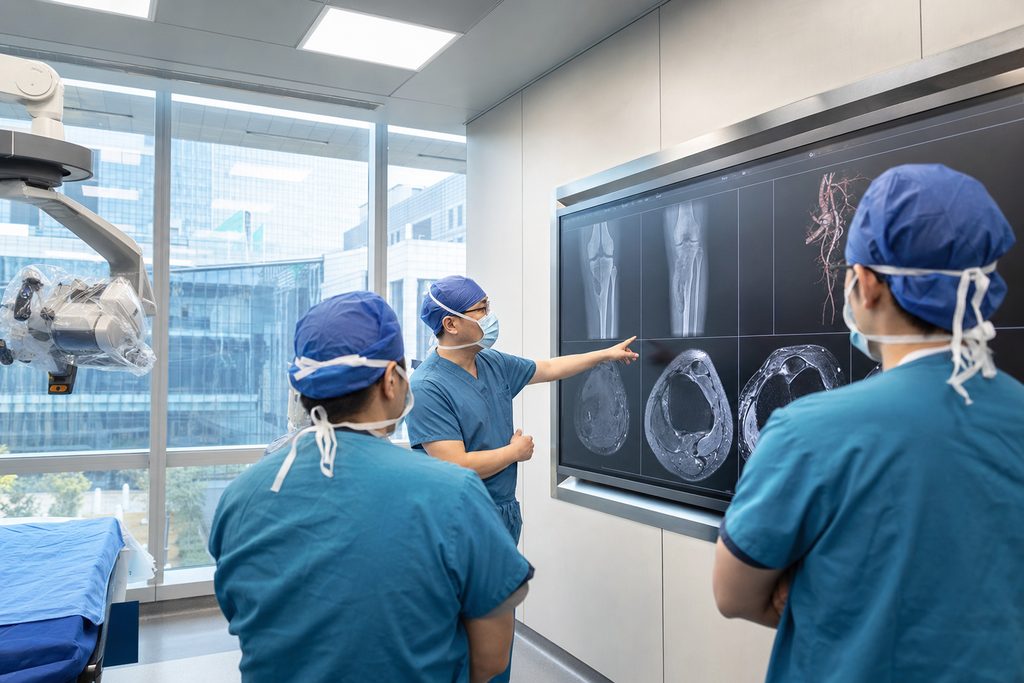
Bone Sarcoma Surgery in China: How to Access Peking University People’s Hospital’s Orthopedic Oncology Center
The bone sarcoma surgery cost Beijing ranges from $15,000 to $35,000 for complex limb-salvage procedures at a top-tier public hospital. That figure lands at roughly one-fifth to one-tenth of what the same operation costs in the United States, where bills routinely exceed $120,000. The number shocks most Western patients who call us. But the price tag is only part of the story. The real question is whether you can access the surgical expertise behind it — and whether the system will accept you as an international patient.
Key Takeaways
- Peking University People’s Hospital runs one of China’s highest-volume orthopedic oncology units, handling over 1,200 bone and soft-tissue sarcoma surgeries annually.
- The bone sarcoma surgery cost Beijing averages $15,000–35,000 — a fraction of US and European prices — without sacrificing the limb-salvage techniques used at major Western centers.
- International patients cannot simply book surgery online. You need a confirmed in-person consultation first, plus an S2 medical visa, and navigating the 4,000-bed public hospital alone is genuinely difficult without Mandarin.
- Sarcoma surgery here is not experimental or unregulated. The department follows NCCN guidelines, uses modular tumor prostheses from the same manufacturers supplied to US hospitals, and publishes outcomes in peer-reviewed journals.
The Problem: A Rare Cancer, a Crushing Bill, and a Closing Window
Bone sarcomas are rare. Osteosarcoma strikes approximately 3.4 per million people each year. Ewing sarcoma is even less common. Because these cancers are uncommon, expertise concentrates in a handful of centers. In the United States, that means MD Anderson, Memorial Sloan Kettering, Mayo Clinic, and a few others. Wait times for a new-patient sarcoma appointment at these institutions can stretch to four or six weeks. Then comes the financial gut-punch. A limb-salvage surgery with a custom tumor prosthesis, inpatient recovery, and adjuvant therapy generates bills between $100,000 and $200,000. Even with insurance, out-of-pocket maximums and denied pre-authorizations leave families scrambling. Some patients liquidate savings. Others delay surgery — and with high-grade sarcomas, delay is not a neutral choice.
We hear from these patients every month. They are not looking for bargain medicine. They are looking for a center that performs enough sarcoma resections each year to make the surgical team’s hands steady. They want a hospital that stocks modular tumor prostheses and allograft bone banks. They need a pathway that does not bankrupt them before they start chemotherapy. Peking University People’s Hospital in Beijing checks those boxes. But getting there from London, Dubai, or Los Angeles requires more than a plane ticket.
Who We Are
We are China Medical Services, a medical concierge organization that connects international patients with China’s top-ranked hospitals. We are not a hospital. We do not treat disease, perform surgery, or prescribe medication. Our team handles the logistics that make treatment possible: hospital matching based on your diagnosis and imaging, appointment coordination through official hospital international channels, bilingual medical companions who stay with you through every consultation and admission, visa guidance, and post-operative recovery planning. Think of us as the bridge. You bring the clinical need. We bring the operational know-how to get you in front of the right surgical team.
Why Peking University People’s Hospital Draws International Sarcoma Patients
Peking University People’s Hospital — often abbreviated as PKUPH — is not a small boutique clinic. It is a 4,000-bed academic medical center attached to one of China’s most prestigious medical schools. Its Orthopedic Oncology Center sits inside the hospital’s Musculoskeletal Tumor Department, which is ranked among China’s top orthopedic oncology programs in the Fudan University Hospital Rankings, the country’s most authoritative hospital evaluation system. The department does not dabble in sarcoma. It is a dedicated bone and soft-tissue tumor unit that performs over 1,200 sarcoma surgeries each year, making it one of the highest-volume centers in the world for these rare procedures.
Surgical Volume That Rivals Any Western Center
Volume matters in sarcoma surgery. A 2022 study published in The Bone & Joint Journal found that centers performing more than 50 pelvic sarcoma resections annually had significantly lower local recurrence rates than lower-volume hospitals. PKUPH’s orthopedic oncology team operates well above that threshold. The department’s surgeons each complete 200 to 400 tumor resections per year. For context, the average orthopedic oncologist in the United States might perform 50 to 80 sarcoma surgeries annually. When you are dealing with a cancer that most surgeons see a handful of times in their career, you want the team that sees it every morning.
The center’s limb-salvage rate — the proportion of patients who keep their limb rather than undergoing amputation — exceeds 90% for extremity osteosarcoma. That figure aligns with outcomes reported by leading Western sarcoma centers. They achieve this using the same surgical techniques: wide en-bloc resection with negative margins, followed by reconstruction with modular tumor endoprostheses, allograft-prosthetic composites, or biological reconstruction using recycled autograft bone treated with liquid nitrogen or irradiation.
Technology Without the Markup
The prostheses used at PKUPH come from the same global manufacturers that supply US and European hospitals — Stryker, Zimmer Biomet, and Chinese manufacturers like Chunli and Wego that produce CE-marked and FDA-cleared implants. The hospital’s intraoperative navigation systems, 3D-printed custom cutting guides, and intraoperative frozen-section pathology capabilities are standard equipment, not experimental add-ons. The cost difference does not come from using cheaper implants. It comes from structural economics: lower physician and hospital labor costs, higher patient throughput, and a healthcare system that does not carry the administrative overhead of American insurance billing.
Cost Breakdown: What You Actually Pay
Let us put numbers on the table. The bone sarcoma surgery cost Beijing at a top public hospital like PKUPH breaks down roughly like this:
| Cost Component | Estimated Range (USD) | Notes |
|---|---|---|
| Surgical procedure (limb-salvage with prosthesis) | $10,000–$20,000 | Includes surgeon fee, operating room, anesthesia |
| Tumor prosthesis (modular or custom) | $5,000–$12,000 | Varies by manufacturer and complexity |
| Inpatient stay (10–21 days) | $2,000–$5,000 | Ward bed; VIP/international ward is higher |
| Pre-op imaging and pathology review | $1,000–$2,500 | MRI, CT, PET-CT if needed, biopsy review |
| Post-op rehabilitation (initial phase) | $1,500–$3,000 | In-hospital physiotherapy |
| Estimated Total | $15,000–$35,000 | Excludes international travel and accommodation |
Compare this to the United States, where the same limb-salvage procedure with a tumor prosthesis typically bills between $100,000 and $200,000. Even patients with insurance often face out-of-pocket costs exceeding $15,000 after deductibles, co-insurance, and coverage gaps. For uninsured or underinsured international patients, the math becomes stark. The Peking University People’s Hospital orthopedic oncology price structure makes treatment possible for families who would otherwise face impossible choices.
Is Sarcoma Surgery Safe in China? The Evidence
The question “is sarcoma surgery safe in China” deserves a straight answer. Yes — at accredited top-tier centers. No — if you walk into an unvetted hospital without verifying credentials. The distinction matters enormously.
Peking University People’s Hospital is not an unregulated facility. It holds national hospital accreditation and its orthopedic oncology department publishes outcomes data in international journals. A 2020 study from the department, published in the Journal of Bone and Joint Surgery, reported a five-year overall survival rate of 72% for non-metastatic osteosarcoma treated with neoadjuvant chemotherapy and limb-salvage surgery — comparable to survival rates reported by the Cooperative Osteosarcoma Study Group in Europe and the Children’s Oncology Group in North America.
Infection rates, implant failure rates, and local recurrence rates at this center fall within internationally accepted benchmarks. The surgical team follows NCCN (National Comprehensive Cancer Network) guidelines for sarcoma management. Pre-operative planning includes multidisciplinary tumor board review with medical oncologists, radiation oncologists, pathologists, and radiologists. This is not a stripped-down version of sarcoma care. It is the same protocol-driven approach you would find at a major Western academic center, delivered in a Chinese hospital setting.
The safety question, then, is less about clinical competence and more about navigation. The hospital is safe. Getting through it without language support, cultural context, and someone who knows which floor has the CT scanner and which window processes international patient payments — that is where risk creeps in. We address that directly.
What Is Recovery Time for Bone Tumor Surgery Abroad?
Patients searching for “what is recovery time for bone tumor surgery abroad” are usually trying to calculate how long they need to stay in a foreign country before flying home. The answer depends on the surgical site, reconstruction type, and whether adjuvant chemotherapy is planned.
For a distal femur or proximal tibia replacement — the most common limb-salvage procedures for osteosarcoma — the typical inpatient stay at PKUPH runs 10 to 21 days. Drain removal, wound checks, and initial physiotherapy happen during this window. Sutures or staples come out around day 14. By discharge, most patients can transfer from bed to chair independently and begin partial weight-bearing with a walker.
After discharge, you are not cleared to fly home immediately. The surgical team typically wants you to remain in Beijing for an additional two to four weeks for wound surveillance and early rehabilitation. A long-haul flight before the two-week mark carries elevated deep vein thrombosis risk, and a wound infection caught after you board a plane to another continent becomes a logistical nightmare. Plan on four to six weeks total in Beijing from surgery date to flight clearance. Some patients stay longer if they start adjuvant chemotherapy at PKUPH before returning home.
Full recovery — return to unassisted walking, driving, and daily activities — takes three to six months. Return to sports or physically demanding work can take nine to twelve months. These timelines mirror what any Western sarcoma center would quote. The biology of bone healing does not accelerate just because you crossed the Pacific.
What You Need to Know Before Going Alone
Arriving at a 4,000-bed Chinese public hospital as a non-Mandarin-speaking international patient without preparation is not brave. It is a recipe for exhaustion and missed appointments. Here are the barriers you will face:
- Medical Visa Requirements: You need an S2 visa with a medical treatment annotation. The hospital must issue an official invitation letter and a confirmed treatment plan before the Chinese embassy processes your application. This is not a tourist visa situation. Showing up on an L visa and hoping to register at the orthopedic oncology clinic will not work. The visa process alone typically takes two to four weeks, and errors in documentation cause delays that sarcoma patients cannot afford.
- Hospital Registration and Payment: Public hospital registration works on a same-day queue system for standard outpatient clinics. International patients cannot book a specialist appointment months in advance through the public channel. The international medical department offers pre-scheduled appointments, but it operates separately from the standard system. Payment is upfront — you deposit funds at admission, and the hospital draws down against that balance. Credit cards work inconsistently. WeChat Pay and Alipay dominate, but linking a foreign card to these platforms is not always straightforward.
- Language and Navigation: The orthopedic oncology department sees thousands of patients daily. Signage in English is limited. Your surgeon may speak some English, but the residents, nurses, radiologists, billing staff, and pharmacy counter almost certainly do not. When the nurse explains post-op drain management at 7 a.m., and you do not understand a word, the quality of your care suffers — not because the nurse is incompetent, but because the information never reached you.
- Medical Records and Imaging Review: The surgical team will want to review your original pathology slides, not just the pathology report. They may request a repeat biopsy if the sample is unavailable or insufficient. Imaging must be provided in DICOM format on a CD or USB drive — JPEG files or printed films are not adequate for surgical planning. Coordinating this across borders, with referring hospitals that may be slow to release records, takes time and persistence.
How We Help You Navigate This
These barriers are real. They are also solvable with the right operational support. Our team has guided sarcoma patients through the Peking University People’s Hospital orthopedic oncology pathway enough times to know where the friction points live and how to smooth them.
Before you travel, we handle the hospital matching process. You send us your imaging, pathology report, and clinical summary. We translate these documents into medical Chinese and submit them through the hospital’s international patient channel. The orthopedic oncology team reviews your case and confirms whether they can offer surgery. If the answer is yes, we secure the official invitation letter required for your S2 visa application. This step alone saves weeks of back-and-forth with consular offices.
During your stay, a bilingual medical companion accompanies you to every consultation, every imaging appointment, every pre-operative assessment, and every post-operative ward round. This person is not a doctor. They are a trained medical interpreter who knows the hospital layout, understands the registration workflow, and ensures that when the surgeon explains the planned resection margins, you understand exactly what is being proposed. They also handle the practical chaos — queuing for registration, collecting lab results, confirming admission dates, and translating discharge instructions into clear English.
After surgery, we coordinate your follow-up imaging schedule, arrange accommodation near the hospital for your recovery period, and help plan your return travel once the surgical team clears you. If you need adjuvant chemotherapy at PKUPH, we structure the treatment calendar so you know exactly how long you will be in Beijing and what each week entails.
We do not promise outcomes. No ethical organization does. We promise that the logistical pathway — from first contact to post-operative discharge — will be as efficient and transparent as possible. For families already carrying the weight of a sarcoma diagnosis, that operational certainty is its own form of relief.
Frequently Asked Questions
You cannot book surgery directly from overseas through the public hospital system. The standard pathway requires an in-person consultation first. However, through the hospital’s international medical department — which we access on your behalf — you can secure a pre-scheduled specialist appointment and have your case reviewed by the orthopedic oncology team before you board a plane. If the team confirms surgical candidacy based on your submitted imaging and records, we can coordinate a surgery date during that same trip. This is how most international patients seeking to book osteosarcoma treatment Peking University hospital actually proceed. The key is having a confirmed appointment and a reviewed case before you travel, not arriving cold and hoping for the best.
Peking University People’s Hospital has a dedicated medical oncology department that works closely with the orthopedic oncology team. Neoadjuvant chemotherapy (before surgery) and adjuvant chemotherapy (after surgery) follow standard protocols — typically MAP regimen for osteosarcoma or VDC/IE for Ewing sarcoma. The oncology team can administer chemotherapy during your stay. Some patients complete all cycles in Beijing. Others do neoadjuvant chemo and surgery in Beijing, then return home for adjuvant therapy with a detailed treatment summary from PKUPH. The medical oncologists at PKUPH are accustomed to coordinating with overseas physicians and will provide comprehensive treatment records in English upon request.
No. While Peking University People’s Hospital is one of the strongest choices — and our most frequent recommendation for complex pelvic and sacral sarcomas — the best hospital for bone cancer surgery China depends on your specific tumor type and location. Other top-ranked orthopedic oncology programs include Shanghai Ninth People’s Hospital (known for pelvic tumor reconstruction), West China Hospital in Chengdu (high-volume sarcoma unit), and the orthopedic oncology department at the Second Affiliated Hospital of Zhejiang University in Hangzhou. We match you to the center best suited to your case, not to the one most convenient for us. Our hospital database covers oncology and orthopedic surgery departments across 37 cities, and we draw on the Fudan University specialty rankings to guide our recommendations.
Peking University People’s Hospital has full intensive care capabilities, 24-hour in-house orthopedic residents, and an infectious disease team experienced in managing periprosthetic joint infections — the most common serious complication after tumor prosthesis surgery. The hospital is equipped to manage wound dehiscence, deep infection, implant failure, and thromboembolic events. If a prosthesis becomes infected, the orthopedic oncology team can perform staged revision surgery — removing the implant, placing an antibiotic cement spacer, and re-implanting after infection clearance. This is not a facility where complications get ignored. The surgical volume means the team has seen and managed the full spectrum of post-operative problems. That said, international patients should budget for the possibility of an extended stay if complications arise, and ensure their travel insurance or self-pay reserves can accommodate additional inpatient days.
Your Next Step
Bone sarcoma forces difficult decisions on compressed timelines. The window between diagnosis and definitive surgery is measured in weeks, not months, and every delay carries oncologic risk. Peking University People’s Hospital offers a combination that is genuinely hard to find elsewhere: a surgical team that performs over a thousand sarcoma resections annually, limb-salvage outcomes that match international benchmarks, and a cost structure that does not consume a family’s financial future. The trade-off is complexity. Navigating a Chinese academic medical center from another continent requires language support, cultural fluency, and someone who knows the system’s operational logic.
That is what we provide. If you are considering bone sarcoma surgery in Beijing, start with a conversation. Send us your imaging and clinical summary. We will review your case, confirm whether PKUPH’s orthopedic oncology team can help, and give you a transparent picture of costs, timelines, and what to expect — before you commit to anything. Get a free consultation with our team and let us show you the pathway.
This article is for informational purposes only and does not constitute medical advice. Treatment decisions should be made in consultation with a qualified physician after a thorough clinical evaluation.
For more medical information and treatment options in China, visit chinamedservices.com (China Medical Services).
