Peking University People’s Hospital Orthopedics: A Guide for International Patients
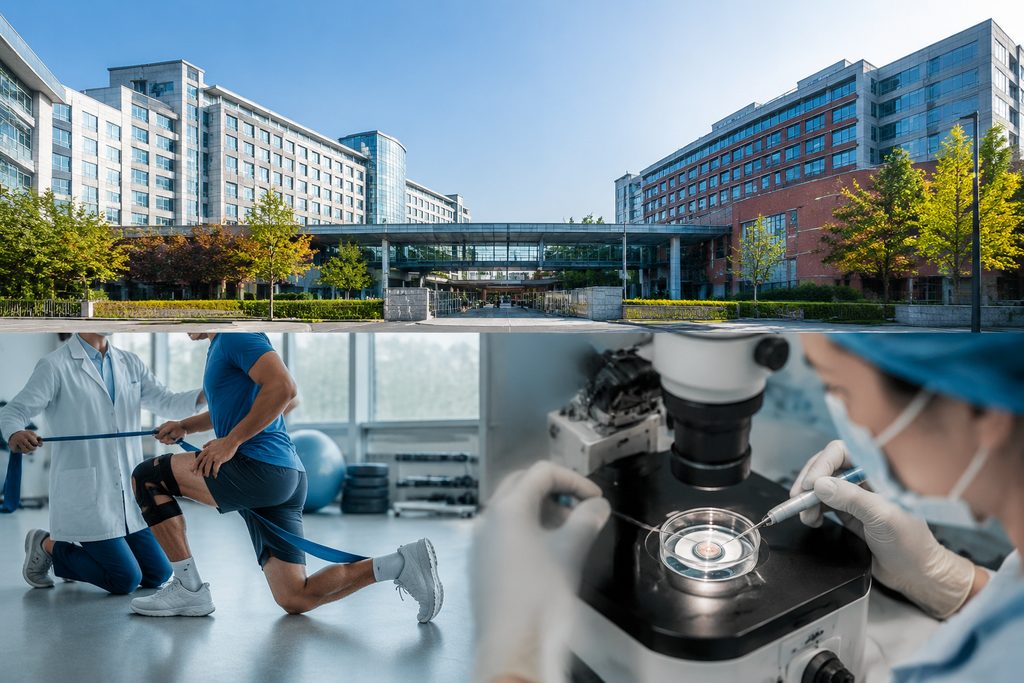
When 54-year-old Daniel from Manchester started researching knee replacement options abroad, he kept hitting the same wall. Every hospital website looked impressive. Every brochure promised excellence. But none of them answered the one question that mattered most: what would this actually cost him, and could he trust the process from six thousand miles away? He had never heard of Peking University People’s Hospital until a colleague mentioned it. Three months later, he was walking through its orthopedic department with a bilingual coordinator by his side.
This guide answers the questions Daniel had — and the ones you probably have right now.
Peking University People’s Hospital Orthopedic Surgery Price for Foreigners: The Short Answer
A total knee replacement at Peking University People’s Hospital typically costs between $12,000 and $18,000 for international patients. That figure includes the implant, surgeon fees, hospital stay, and standard post-operative care. A hip replacement runs in a similar range, usually $13,000 to $20,000 depending on implant type. Spine procedures vary far more — a single-level lumbar fusion might land between $15,000 and $25,000, while a complex multi-level reconstruction can reach $35,000 or more.
Those numbers shift based on case complexity, implant brand, and whether you access care through the hospital’s international department or the standard public pathway. The international department charges roughly 1.5 to 2 times standard rates, but that premium buys English-speaking coordination and faster access to senior surgeons. You should also factor in pre-operative imaging, post-surgical rehabilitation, and your own travel and accommodation. None of those are included in the surgical quote.
Who This Is Right For — and Who It Isn’t
Orthopedic care in China suits a specific profile. You are likely a good candidate for treatment at Peking University People’s Hospital if:
- You need a hip or knee replacement, spinal decompression, or arthroscopic repair and face a long wait at home — 6 to 18 months is common in Canada, the UK, and parts of Europe
- Your insurance does not cover the procedure domestically and the out-of-pocket quote exceeds $30,000
- You are willing to spend 2 to 4 weeks in Beijing for surgery plus initial recovery
- You can provide recent imaging (MRI, CT, X-ray) and a clear referral summary from your home orthopedic specialist
- You accept that follow-up care after returning home will be managed by your local physician, not the Chinese surgical team
And there are people who should not pursue this route. If you have unstable cardiovascular disease, uncontrolled diabetes, or a BMI above 40, the surgical team will likely require medical optimization before clearing you — and that may be better handled at home. If you need a revision of a failed implant with unusual hardware, the original manufacturer’s components may not be available in China. If you cannot tolerate a 10-hour flight within two weeks after major joint surgery, this is not the right option. And if your primary motivation is avoiding a 6-week wait rather than a 6-month one, the logistics alone will not justify the trip.
Is Peking University People’s Hospital Good for Joint Replacement?
The short answer: yes, with qualifications. The hospital’s orthopedic department consistently ranks among China’s top 10 for orthopedics in the Fudan University hospital rankings, which evaluate clinical reputation and research output across the country’s 3,500+ tertiary hospitals. Its joint replacement volume is substantial — the department performs well over 2,000 hip and knee arthroplasties annually, a case volume that correlates with lower complication rates in multiple international studies.
But “good” means different things to different patients. The surgical technique and implant quality are comparable to Western academic centers. The nursing model differs — family members or hired caregivers are expected to assist with non-clinical tasks like meal delivery and bathing. The ward environment is functional rather than luxurious. And the post-operative rehabilitation philosophy places more emphasis on patient self-directed exercise than on intensive one-on-one physiotherapy. None of these are dealbreakers. They are simply realities you should know before committing.
Best Orthopedic Hospital Beijing for International Patients: How It Compares
Peking University People’s Hospital is not the only strong orthopedic option in Beijing. Here is how it stacks up against two other frequently chosen institutions:
| Factor | Peking University People’s Hospital | Peking Union Medical College Hospital | Jishuitan Hospital |
|---|---|---|---|
| Orthopedic focus | Joint replacement, spine, trauma | Complex revision, rare bone tumors | Trauma, hand surgery, sports medicine |
| Annual joint replacements | 2,000+ | 1,200–1,500 | 1,500+ (trauma-heavy) |
| International patient infrastructure | Dedicated international department | Strong, long-established | Limited — primarily domestic focus |
| Typical knee replacement cost (international) | $12,000–$18,000 | $14,000–$20,000 | $10,000–$15,000 |
| English-speaking coordination | Available through international department | Available, more formalized | Minimal |
Jishuitan Hospital is cheaper, but you will navigate far more of the process alone. Peking Union Medical College Hospital has the most polished international service, but you pay for that polish. Peking University People’s Hospital sits in the middle — strong clinical volume, a functioning international pathway, and prices that reflect its position as a top-tier public institution rather than a luxury brand. For most international patients seeking joint replacement, it represents the best balance of clinical credibility and cost.
How Much Does Knee Replacement Cost at Peking University People’s Hospital? A Line-by-Line Breakdown
The headline number never tells the full story. Here is what a typical total knee replacement actually costs for a foreign patient, line by line:
- Implant (prosthesis): $4,000–$7,000 depending on brand. American-made implants (Zimmer, Stryker, DePuy) sit at the higher end; domestic Chinese implants cost less but may have shorter track records in Western registries.
- Surgeon and anesthesia fees: $2,500–$4,000. Senior professors command the top of this range.
- Hospital stay (5–7 days): $1,500–$2,500 in a standard international ward room.
- Operating room and consumables: $2,000–$3,000.
- Pre-operative imaging and lab work: $500–$800.
- Post-operative medications and basic rehab instruction: $300–$600.
Total: roughly $10,800 to $17,900. The variance comes mostly from implant choice and surgeon seniority. For comparison, the same procedure in the United States averages $35,000 to $50,000 for uninsured patients, and $15,000 to $25,000 at private hospitals in Thailand or India. China’s pricing is competitive without being suspiciously cheap — a point worth remembering if you see quotes below $8,000, which usually signal domestic-only pathways or older implant models.
Booking Spine Surgery at Peking University People’s Hospital: The Actual Process
You cannot book spine surgery at Peking University People’s Hospital from overseas with a few emails and a deposit. The process is sequential, and skipping steps means wasted flights.
Step one is a remote evaluation. You send your existing MRI, CT, X-ray, and clinical summary to the orthopedic department for review. A written second opinion typically costs $300–$500 and takes 5 to 10 working days. The surgeon will state whether your case is appropriate for treatment in China and what procedure they would recommend. This step exists because no responsible surgeon will promise surgery without seeing your imaging.
Step two is the in-person consultation. You travel to Beijing, meet the surgeon, and undergo any additional imaging they request. Only after this face-to-face assessment will the hospital schedule a surgical date. For most spine cases, surgery happens 1 to 3 weeks after the consultation, depending on OR availability and pre-operative clearance.
Step three is admission and surgery. The international department handles admission paperwork, but you will need to pay a deposit — typically 50% to 100% of the estimated total — before the procedure. Payment is by bank transfer or major credit card. Cash is not practical for amounts this size.
Step four is post-operative care and discharge. Spine patients usually stay 5 to 10 days after surgery. You will be discharged with a written summary in English and instructions for your home physician.
The entire process, from first email to walking out of the hospital, typically takes 4 to 8 weeks. There is no shortcut.
Peking University People’s Hospital Orthopedic International Patient Reviews: What People Actually Say
You will not find a TripAdvisor page for this hospital’s orthopedic department, and that is probably a good thing. Formal patient-review platforms for Chinese public hospitals are limited, and most international feedback circulates through word of mouth, expat forums, and medical tourism agencies. What emerges from those channels is consistent.
Patients consistently praise the surgical skill. Multiple expat forum threads describe successful joint replacements and spinal decompressions with outcomes matching or exceeding what they were quoted at home. The recurring complaint is not about medicine — it is about logistics. Queueing for registration, finding the right department in a hospital that sees over 10,000 outpatient visits per day, and communicating with nursing staff who speak limited English. Patients who hired a bilingual companion report a dramatically smoother experience than those who tried to navigate alone.
Practical Considerations: Documents, Visa, Payment, and Follow-Up
You will need specific documents before any hospital in China will take your case seriously. Recent imaging is non-negotiable — MRI or CT within the last 3 to 6 months, plus X-rays where relevant. A referral letter from your home orthopedic surgeon summarizing your diagnosis, treatment history, and current medications is equally important. If your records are not in English, arrange certified translation before sending them.
Visa requirements are straightforward but often misunderstood. For medical treatment in China, you apply for an S2 visa, not an M visa. The M visa is for commercial and trade activities and is not appropriate for hospital admission. Your S2 application should include an invitation letter or medical treatment confirmation from the hospital’s international department, which they provide after the remote evaluation stage. Family members accompanying you also apply for S2 visas. Processing typically takes 1 to 3 weeks depending on your home country’s Chinese embassy or consulate. Requirements change, so verify current rules with your local embassy before booking flights.
Payment is almost always out-of-pocket upfront. Chinese public hospitals do not bill international insurance companies directly. You pay the full estimated cost before surgery, then submit your itemized receipts and medical records to your insurer for reimbursement after returning home. Some international insurance policies cover treatment in China; most require pre-authorization. Check this before you commit to anything.
Language is the single biggest practical barrier. The international department has English-speaking staff, but their availability is limited to office hours and specific coordination tasks. Ward nurses and technicians generally do not speak English. You will need either a bilingual companion or a very patient translation app — and for anything involving informed consent or post-operative instructions, a human translator is strongly advisable.
Follow-up after you return home is your responsibility. The Chinese surgical team will provide a discharge summary and recommendations for rehabilitation, but they will not manage your long-term recovery. Your local orthopedic surgeon or physiotherapist takes over. Some patients arrange one video consultation with the Chinese surgeon at the 6-week or 3-month mark, typically costing $100–$300. It is useful for answering questions your local team may have about the specific procedure.
Frequently Asked Questions
No. The hospital requires an in-person consultation before scheduling any surgical procedure. You can complete the remote evaluation and receive a written opinion from overseas, but the final decision and surgical booking happen only after you meet the surgeon in Beijing. This is standard practice across all Chinese public hospitals, not a quirk of this institution.
Your home orthopedic surgeon handles it. The Chinese team will provide complete surgical records, implant details, and imaging, but they will not perform follow-up procedures remotely. If a revision is needed, it happens in your home country under your local healthcare system. This is a real limitation of any cross-border surgical care, and you should weigh it honestly before deciding.
Often yes, but not automatically. Major international brands like Zimmer, Stryker, and DePuy are widely used in Chinese top-tier hospitals. However, some hospitals also offer domestic Chinese implant brands that cost less but have shorter published long-term outcome data in Western registries. You can and should ask which implant the surgeon plans to use and request one with a track record you are comfortable with. This is a standard question, not an offensive one.
Some policies will, many will not. International health insurance plans with worldwide coverage sometimes include China, but they typically require pre-authorization and may only cover treatment at specific accredited facilities. Domestic insurance from the US, UK, Canada, or Australia almost never covers elective surgery in China. Contact your insurer before making any financial commitment, and get their answer in writing.
Surgeons at Peking University People’s Hospital are full-time faculty at one of China’s most selective medical institutions. Senior orthopedic surgeons there typically hold professorships, have published in international peer-reviewed journals, and perform hundreds of procedures annually. You can ask for the surgeon’s CV and publication list during the remote evaluation stage. Any legitimate international department will provide this without hesitation.
Your Next Step
The decision to travel across the world for orthopedic surgery is not one you make from a brochure. You make it from evidence — your imaging reviewed by a surgeon who has seen thousands of cases like yours, a clear written opinion, and a realistic picture of the costs and logistics involved.
That is where we come in. China Medical Services helps international patients navigate the Chinese healthcare system — hospital matching, appointment coordination, bilingual accompaniment, and visa guidance. We are not a hospital, we do not employ doctors, and we do not diagnose or treat anything. What we do is make a complex system legible for people who do not speak the language and have never set foot in a Chinese hospital. You can explore our database of top-ranked Chinese hospitals or review orthopedic department rankings by specialty to start your own research.
When you are ready, request a free consultation. We will ask about your condition, your imaging, and your goals — and tell you honestly whether treatment in China makes sense for your situation. No pressure, no obligation. Just a clear answer.
The hardest part of Daniel’s journey was not the surgery. It was the uncertainty before it. The more you know before you go, the smoother everything becomes.
For more medical information and treatment options in China, visit chinamedservices.com (China Medical Services).
