Peking University Shenzhen Hospital Oncology: A Guide for International Patients
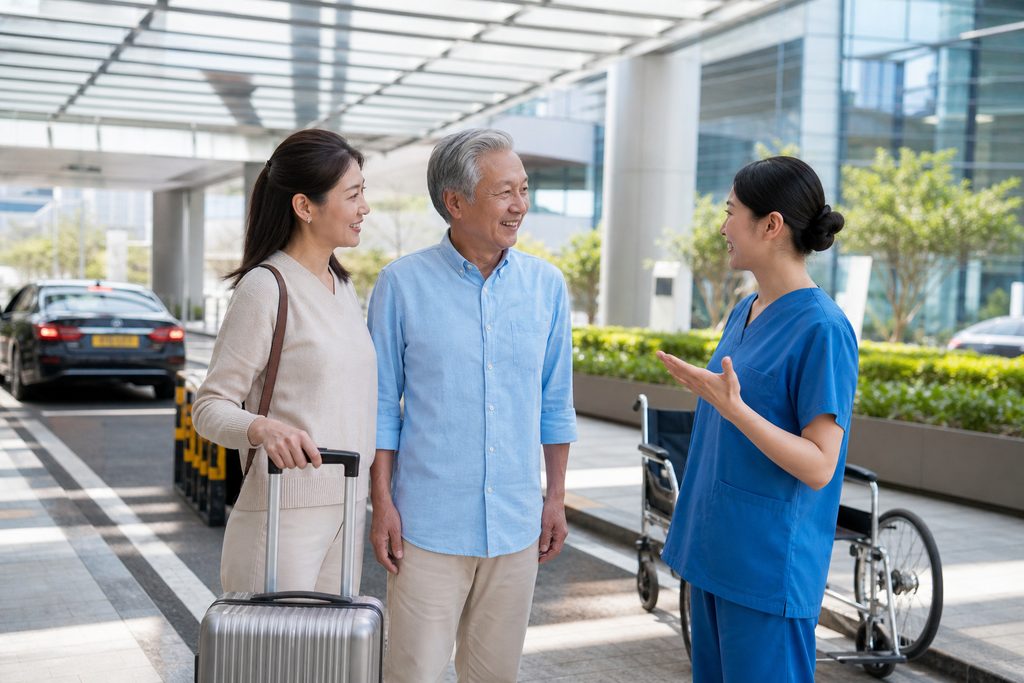
According to the World Health Organization’s 2024 global cancer statistics, China records approximately 4.8 million new cancer cases annually. That staggering volume has pushed Chinese oncology departments to develop protocols that handle complex cases at a scale few Western hospitals ever see. For international patients, this translates into something specific: access to clinicians who treat rare and advanced cancers as routine work. Peking University Shenzhen Hospital oncology cost is a frequent starting question for patients evaluating whether this particular institution fits their budget and clinical needs.
We work with patients from the United States, Europe, and the Middle East who are weighing Shenzhen against other Chinese cities. Shenzhen is not Beijing or Shanghai. It is younger, faster, and in many ways more pragmatic. The hospital itself — Peking University Shenzhen Hospital — sits inside the Shenzhen Special Economic Zone, a region that has spent four decades building infrastructure at a pace that surprises first-time visitors. But infrastructure does not treat cancer. Doctors do. And the oncology department here operates under Peking University’s clinical governance, which matters more than the skyline.
This guide explains how the process actually works, what the Shenzhen medical landscape offers, where the costs land, and which steps trip people up. No marketing gloss. Just the sequence, the numbers, and the honest failure points.
How This Actually Works, Step by Step
The pathway from “I found this hospital online” to “I am sitting in an oncologist’s office” is not a single click. It is a sequence of document exchanges, reviews, and confirmations. Here is the unvarnished version.
Step 1: You send your existing medical records. That means pathology reports, imaging (CT, MRI, PET-CT), blood work, and any treatment history. Not summaries. Actual reports. These get translated into Chinese by a medical translator — not a general translator, because “infiltrating ductal carcinoma” requires precise terminology. A mistranslated pathology report can derail an entire consultation.
Step 2: The oncology team reviews your file. This usually takes 3 to 7 working days. The department decides whether your case falls within their treatment scope and whether remote consultation is appropriate or whether an in-person visit is necessary. Some advanced cases require physical examination and additional imaging before any treatment plan can be proposed.
Step 3: You receive a written or video-based preliminary assessment. This is not a prescription. It is a clinical opinion: what the team sees, what they would recommend investigating further, and whether they believe treatment in Shenzhen is viable. This step alone helps many patients decide whether to commit to travel.
Step 4: If you proceed, we coordinate the appointment. Chinese public hospitals do not allow overseas patients to book outpatient slots through a website. You need a local presence — someone who physically goes to the registration window or the international patient department with your documents. That is a core part of what we handle at China Medical Services.
Step 5: You travel, attend the consultation, and the treatment plan is finalized. Surgery, chemotherapy, radiation, or a combination — the plan emerges only after the in-person evaluation. Nothing is promised before that point.
Peking University Shenzhen Hospital Oncology Cost: What the Numbers Actually Look Like
The Peking University Shenzhen Hospital oncology cost question deserves a direct answer. Oncology is not a single line item. It is a bundle: consultation, imaging, pathology review, treatment, hospitalization, and follow-up. Here is a realistic breakdown for international patients using the hospital’s international department or VIP channel.
| Service | Estimated Cost (USD) | Notes |
|---|---|---|
| Initial specialist consultation (international dept.) | $150–$350 | Includes review of translated records |
| Comprehensive imaging (CT/MRI/PET-CT) | $300–$1,200 | PET-CT is the higher end |
| Pathology review (second opinion on slides) | $200–$600 | Depends on complexity and markers |
| Chemotherapy cycle (per session, outpatient) | $800–$3,000 | Drug-dependent; immunotherapy higher |
| Radiation therapy (full course) | $8,000–$20,000 | IMRT/VMAT techniques |
| Surgical oncology (major resection) | $12,000–$30,000 | Varies by site and complexity |
| Inpatient stay (per day, VIP ward) | $200–$500 | Private room, English-speaking nursing |
These figures reflect the international patient pathway, not the standard public outpatient route. The standard route is cheaper — sometimes by half — but it requires Chinese language ability, same-day queueing, and no guarantee of seeing a senior specialist. For most foreign patients, the international department is the only realistic option. That premium buys English coordination, scheduled appointments, and continuity of care.
Compare this to U.S. oncology pricing. A single chemotherapy cycle for common regimens runs $10,000 to $30,000 in American hospitals. Radiation courses frequently exceed $50,000. Even with the international department markup, Shenzhen oncology treatment price typically lands at one-fifth to one-third of U.S. equivalents. That gap is the primary reason patients from self-paying markets — the Middle East, Southeast Asia, parts of Europe — consider China at all.
A Realistic Timeline
People underestimate the waiting steps. Here is what the calendar actually looks like, from first inquiry to first treatment.
| Stage | Duration | What Happens |
|---|---|---|
| Day 1–3 | Initial contact | You submit records and a brief medical summary |
| Day 3–10 | Document translation and clinical review | Medical translator converts records; oncology team evaluates |
| Day 10–17 | Preliminary assessment delivered | Written opinion or video consultation scheduled |
| Week 3–6 | Visa processing (S2) | Hospital invitation letter required; embassy processing varies by country |
| Week 4–7 | Travel and first in-person consultation | Physical exam, additional imaging if needed |
| Week 6–10 | Treatment initiation | Surgery, chemotherapy, or radiation begins |
That is 6 to 10 weeks from first message to first treatment, assuming no complications. Visa processing is the wildcard. Some embassies issue S2 visas in five working days. Others take three weeks. The hospital’s international patient department must issue an invitation letter with the correct diagnosis and treatment purpose — a document that takes several days to prepare correctly.
What Can Go Wrong — and What Happens Then
Let’s be direct about failure modes. They exist, and knowing them in advance is better than discovering them in a hospital corridor.
Records are incomplete or unclear. A patient sends a single CT report and expects a treatment plan. The oncology team responds: we need the actual DICOM imaging files, not just the radiologist’s summary. This adds 1 to 2 weeks. The fix: request all imaging in digital format from your home hospital before initiating contact.
The case is more advanced than the records suggest. The preliminary assessment says “treatable.” The in-person evaluation finds additional metastasis. The treatment plan changes from curative to palliative. This happens. The fix is not to blame the hospital — it is to understand that remote review has limits. Physical examination and fresh imaging exist precisely because files lie.
Visa rejection or delay. The S2 visa is generally straightforward for medical purposes, but consular officers can ask for additional documentation. A hospital invitation letter that lacks specific treatment dates can trigger requests for clarification. The fix: work with a coordinator who knows exactly what the embassy needs.
Cost overruns. The initial estimate covered chemotherapy. Then the tumor board recommends adding immunotherapy. The monthly cost jumps from $2,000 to $8,000. This is not bait-and-switch — it is clinical reality. The fix: request a written cost range for the full treatment pathway, not just the first intervention, before committing to travel.
None of these are reasons to avoid treatment in Shenzhen. They are reasons to prepare properly.
Why International Patients Choose Shenzhen for Oncology — and When They Shouldn’t
Shenzhen occupies a specific niche in Chinese oncology care. It is not the first city most Western patients think of. Beijing has the historical prestige. Shanghai has the international reputation. Shenzhen has something else: a younger hospital system, aggressive investment in medical technology, and a patient flow that skews toward working-age adults rather than retirees.
Peking University Shenzhen Hospital falls under Peking University Health Science Center’s network, which means its oncology protocols align with one of China’s most respected medical education systems. For patients asking about the best cancer hospital in Shenzhen for foreigners, this institution is usually the first answer — not because it is the only option, but because its international patient department is among the more established in the city. Other Shenzhen hospitals offer oncology services, but few match the combination of academic governance and foreign-patient infrastructure.
But Shenzhen is not always the right choice. If your case requires a highly specialized surgical technique performed at only a handful of centers globally, Beijing or Shanghai may offer more depth. If you want access to a specific clinical trial, you need to check which city hosts it. Shenzhen’s strength is efficient, protocol-driven oncology care at a reasonable cost — not experimental medicine.
For patients evaluating China’s top oncology departments, the comparison should factor in tumor type, treatment history, and whether the goal is curative or palliative. A stage II breast cancer patient and a stage IV pancreatic cancer patient need very different things from a hospital.
Practical Considerations: Records, Visa, Payment, and Follow-Up
Four things determine whether your Shenzhen oncology journey succeeds. None of them are optional.
Medical records. You need everything. Pathology slides, imaging files, treatment summaries, surgical notes, current medication list. If a document exists, send it. The oncology team would rather ignore irrelevant material than request something you left at home. Digital copies are fine for the initial review. Original pathology slides may be requested for a second opinion on the actual tissue.
Visa. Foreign nationals seeking medical treatment in China apply for an S2 visa, annotated for medical purposes. Your accompanying family members apply for S2 as well. The hospital’s international patient department issues an invitation letter that supports the application. Processing time varies by embassy — plan for 2 to 4 weeks. Do not book flights until the visa is in hand.
Payment. Chinese public hospitals operate on a prepayment model. You deposit funds at admission, and treatment is drawn against that balance. International insurance is rarely accepted for direct billing at public hospitals — you pay, then claim reimbursement. Private international hospitals in Shenzhen do offer direct billing, but they do not have the same oncology depth. If your insurer requires direct billing, you need to discuss this before choosing a hospital.
Follow-up at home. After you return, your home oncologist needs a complete treatment summary in English. The hospital provides this, but it takes time to prepare. Request it before discharge, not after you have left the country. Telemedicine follow-up with the Shenzhen team is possible, but it is not a substitute for local monitoring.
Practical tip: Ask the international patient department to assign a single point of contact for your case. One person who knows your file, answers your questions, and coordinates with the clinical team. This single step reduces miscommunication more than any other.
Frequently Asked Questions
You cannot book directly through the hospital’s public website from overseas. The process requires submitting your medical records for review, obtaining a preliminary assessment, and then having a local coordinator arrange the appointment through the international patient department. This is the standard pathway for all foreign patients at Chinese public hospitals.
Typical oncology treatment at the international department runs one-fifth to one-third of U.S. prices. A chemotherapy cycle that costs $15,000 in the U.S. might cost $2,000 to $4,000 in Shenzhen. Major oncologic surgery that costs $80,000 in the U.S. might cost $15,000 to $25,000. Actual costs vary by tumor type, drug regimen, and whether complications arise.
Senior oncologists at the international department generally speak functional English, and the department provides interpreter services for clinical consultations. Nursing staff in the international ward have basic English training. Complex discussions about treatment options are typically conducted with a medical interpreter present to ensure accuracy.
You need three things: an S2 visa for medical treatment, a hospital that accepts international patients, and a bilingual coordinator who handles registration, payment, translation, and navigation. Without the third element, even simple tasks like collecting medication or scheduling imaging become difficult. This is the core service that medical coordination companies provide.
Usually yes, but the plan must be translated into English with proper medical terminology. Most Western oncologists respect treatment protocols from major Chinese academic hospitals, especially when the pathology and imaging are clearly documented. Some may request additional testing upon your return. That is normal and does not reflect distrust of the Chinese treatment.
Your Next Step
Shenzhen oncology care through Peking University Shenzhen Hospital is a viable option for international patients who need high-volume clinical expertise at a fraction of Western costs. The pathway is not simple, but it is navigable with the right preparation. We help patients compile records, obtain preliminary assessments, coordinate appointments, and navigate the hospital on the ground. We do not provide medical advice, and we do not promise outcomes — we handle the logistics so you can focus on treatment decisions. If you are weighing this option, start with a conversation about your specific case. The first step is sending your records for review.
That is the whole picture. Costs, timelines, failure points, and the honest trade-offs. If this sounds like the right path for your situation, reach out for a free consultation and we will help you figure out whether Shenzhen is the right destination for your oncology care.
For more medical information and treatment options in China, visit chinamedservices.com (China Medical Services).
