Peritoneal Metastasis Treatment in China: Guide for Global Patients
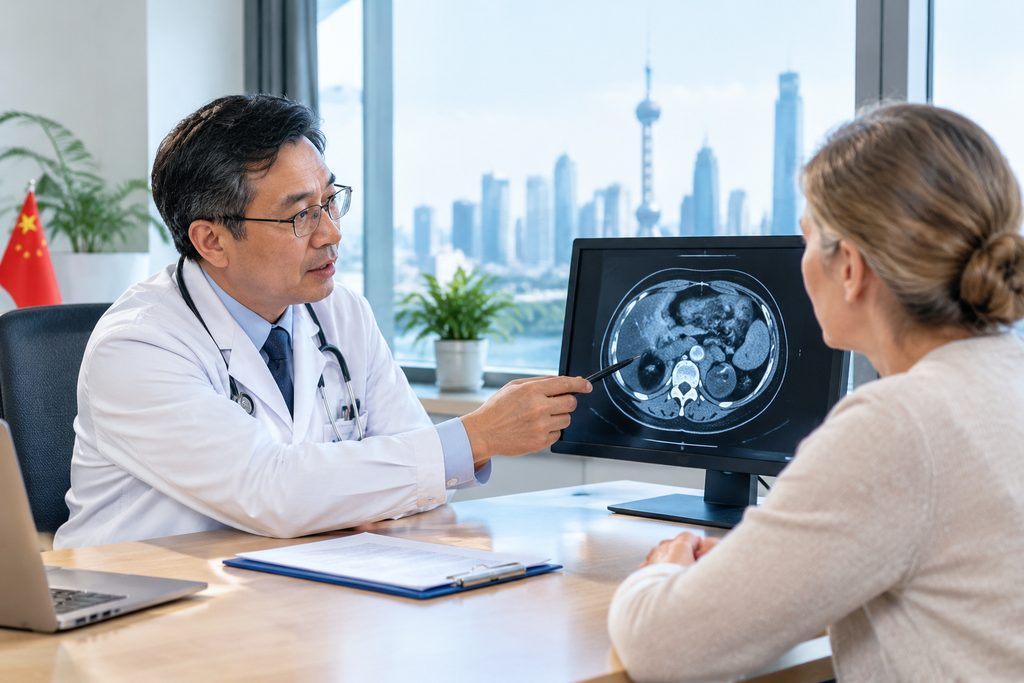
Peritoneal Metastasis Treatment in China: Guide for Global Patients
Peritoneal metastasis means cancer has spread to the lining of the abdomen — the peritoneum. In plain terms, tumor cells have seeded themselves across the thin membrane that wraps your stomach, intestines, liver, and other organs. It is not the same as a tumor growing inside one organ. It is a surface disease, and that distinction shapes everything about treatment. For international patients researching peritoneal metastasis treatment in China, the honest short answer is this: China offers cytoreductive surgery (CRS) combined with HIPEC at a handful of high-volume centers, typically at 40–70% of Western private-hospital pricing, but access runs through hospital international departments and the process takes weeks, not days.
That caveat matters more than the headline. Not every patient with peritoneal spread is a candidate for surgery. Some are. Some are better served by systemic therapy alone. And some should stay close to home.
Peritoneal Metastasis Treatment in China: The Short Answer
China’s leading cancer centers perform CRS-HIPEC — surgical removal of visible peritoneal deposits followed by heated chemotherapy circulated through the abdomen. Published international experience puts median survival for well-selected patients with peritoneal carcinomatosis from colorectal or appendiceal origin in the range of 30 to 60 months, with wide variation by tumor type and completeness of cytoreduction. Chinese high-volume centers report outcomes broadly consistent with those figures, though no single center’s numbers should be treated as a promise for any individual.
The catch: candidacy is narrow. Tumor biology, prior surgeries, the number of affected abdominal regions, and how completely a surgeon can remove disease all determine whether HIPEC helps or harms. Two patients with identical scans can get opposite recommendations.
Who This Is Right For — and Who It Isn’t
Good candidates for pursuing care in China generally share a few traits.
- Diagnosed with peritoneal carcinomatosis from colorectal, appendiceal, gastric, or ovarian primary tumors
- Disease confined to the abdomen, with no or limited spread to liver, lungs, or bone
- Physically fit enough for a procedure that can run 8 to 12 hours
- Have a complete imaging and pathology file ready to send ahead
- Can fund treatment upfront and pursue reimbursement afterward
Who should not pursue this path? Patients with extensive extra-abdominal metastases. Those whose tumors progressed rapidly through multiple systemic regimens. Anyone too frail for major surgery. And patients who cannot realistically travel and stay abroad for four to eight weeks — recovery from CRS-HIPEC is long.
The Options, Compared
Here is how the realistic paths stack up. All figures are indicative and vary by hospital and case complexity.
| Path | Typical Cost (USD) | Time to Start | Best Suited To |
|---|---|---|---|
| Systemic chemotherapy only, home country | $5,000–$15,000 per cycle course | 1–3 weeks | Non-surgical candidates; rapid progression |
| CRS-HIPEC, U.S. or Western Europe | $80,000–$150,000+ | 4–12 weeks | Patients with full insurance coverage |
| CRS-HIPEC, top Chinese public hospital | $25,000–$50,000 | 3–6 weeks | Self-funding patients; complex cases |
| CRS-HIPEC, Chinese private international hospital | $50,000–$90,000 | 2–4 weeks | Patients wanting English-first service |
| Palliative systemic therapy in China | $8,000–$20,000 per course | 2–4 weeks | Patients seeking cost relief on drugs |
Which column fits you? If cost is the binding constraint and your case is surgically plausible, a top public hospital is the rational choice — accept the crowds and bring a bilingual companion. If you want a Western-style experience with direct insurance billing, look at the JCI-accredited private international hospitals. If surgery is off the table, the calculus changes entirely.
Why Chinese Centers Attract Peritoneal Malignancy Patients
Volume. China’s top oncology hospitals treat patient numbers that most Western centers never approach, and surgical skill in peritoneal stripping is built through repetition. Several institutions ranked among China’s top 10 for oncology in the Fudan specialist reputation rankings run dedicated peritoneal malignancy programs.
Cost is the second draw. A CRS-HIPEC episode that bills at $100,000 or more in the United States frequently lands between $25,000 and $50,000 at a leading Chinese public hospital, including the ICU stay. Drug pricing for intraperitoneal chemotherapy agents is also substantially lower.
Technology access is the third. HIPEC perfusion equipment, intraoperative imaging, and modern ICU care are standard at major centers. This is not experimental territory in China — it is routine practice at the top tier.
What China does not offer is a shortcut around the rules. Public hospital outpatient clinics cannot be pre-booked from overseas in the ordinary queue. To lock in a surgical consultation in advance, you go through the hospital’s international department or VIP channel, where senior specialists see fewer patients and prices run roughly 1.5 to 2 times the standard rate.
What It Costs and How Long It Takes
Budget for the full episode, not just the surgery. A realistic breakdown for CRS-HIPEC at a top public hospital:
- Surgical fees and operating room: $8,000–$15,000
- HIPEC perfusion and chemotherapy drugs: $4,000–$9,000
- ICU stay, typically 2–5 days: $3,000–$8,000
- Ward stay, 10–21 days: $2,000–$5,000
- Imaging, labs, pathology: $1,500–$4,000
- Complications buffer: $3,000–$10,000
Total: roughly $25,000 to $50,000. Add accommodation, flights, and a bilingual companion if you need one. Our bilingual medical companion service starts at $300 per day, and most patients need 5 to 10 days of it around the surgical window.
Timeline-wise, expect two to four weeks from first contact to a confirmed surgical plan, assuming your records are complete. Surgery itself is scheduled once the hospital reviews imaging and pathology. Recovery before flying home: four to six weeks minimum, often longer.
Practical Considerations for International Patients
Start with the visa. Medical travel to China uses the S2 visa, annotated for medical treatment purposes. Stays exceeding 180 days require the S1 category. Accompanying family members apply for S2 as well. Note clearly: the M visa is for commercial and trade activity and has nothing to do with medical care. Requirements shift, so confirm current documentation with your nearest Chinese embassy or consulate — typically a hospital invitation letter and proof of appointment.
Payment is another reality check. Chinese public hospitals require prepayment for major procedures. International insurance is generally reimbursed after the fact, not billed directly, unless you are at a private hospital with a direct-billing agreement. Bring a payment method that works internationally and confirm limits with your bank before you travel.
Language is the third hurdle. China’s flagship hospitals see tens of thousands of outpatients daily. Signage is in Chinese. Without a Chinese-speaking companion, navigating registration, payment windows, and pharmacy queues is genuinely difficult. This is not a reason to avoid China — it is a reason to plan the logistics properly.
Finally, arrange follow-up before you leave. Ask your surgical team for a written plan covering imaging intervals, lab monitoring, and when systemic therapy should resume. Your oncologist at home will need it.
Frequently Asked Questions
Yes, and you should. A written second opinion from a Chinese specialist runs $300–$500, and a video consultation with a top specialist runs $500–$800. Multidisciplinary team reviews, where surgeons, oncologists, and radiologists assess your case together, cost $1,500–$2,000. Any consultation fee is credited in full toward on-the-ground coordination if you proceed within 90 days.
Not in the Western sense. Chinese public hospitals do not maintain long surgical queues for international patients the way some national health systems do. Once you are evaluated in person and accepted as a surgical candidate, scheduling typically happens within days to a few weeks. What cannot be guaranteed is acceptance itself — the surgical team decides based on your case.
This is the hardest question, and it deserves a straight answer. Major abdominal surgery carries real risks — infection, anastomotic leaks, prolonged ileus — and some appear after discharge. Request a complete discharge summary in English before leaving China, including operative details and imaging. Share it with your local physician immediately. For early complications, staying in China through the full recovery window is safer than flying at week three.
Your Next Step
Peritoneal metastasis is serious, but it is not automatically terminal — selection is everything, and the right evaluation can clarify whether surgery offers you real benefit or false hope. China’s top hospitals deliver that evaluation at a fraction of Western pricing, provided you navigate the access rules correctly.
We are China Medical Services, a coordination team, not a hospital and not physicians. We do not diagnose, and we do not promise outcomes. What we do is connect you with the right specialty team through our hospital network, arrange written second opinions or video consultations, and handle the logistics once you decide to travel. If you want to know whether your case is worth pursuing, start with a records review — no commitment, no pressure.
For more medical information and treatment options in China, visit chinamedservices.com (China Medical Services).
