PET-CT in China: Which Hospital Offers Scans and What It Costs
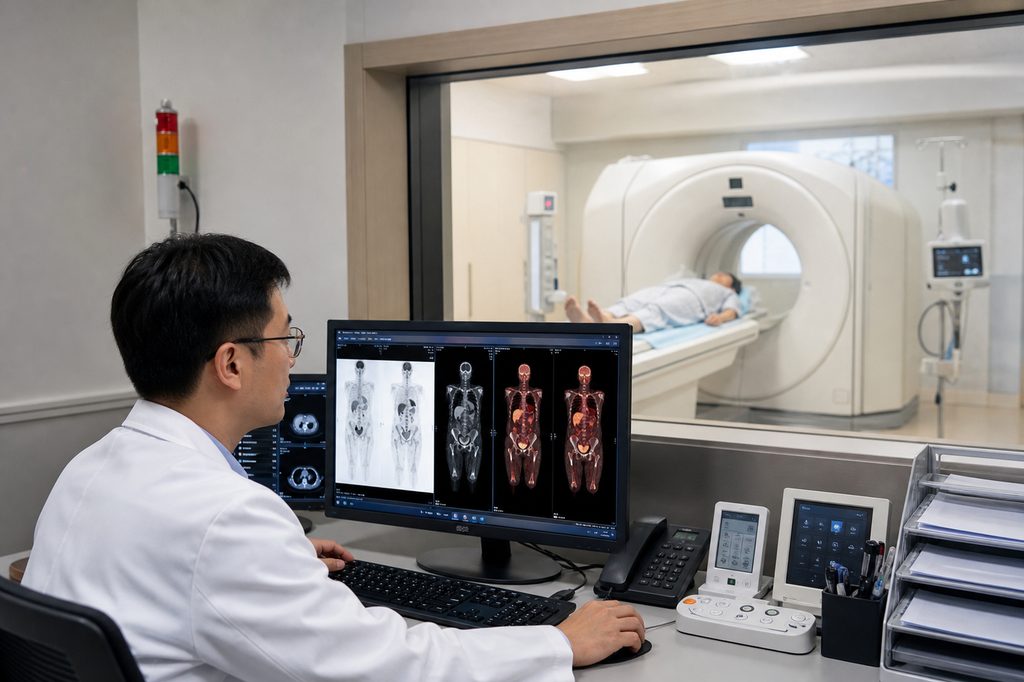
When 42-year-old Michael first heard the word “oncologist,” his next question wasn’t about treatment. It was about imaging. His doctor in Manchester had ordered a PET-CT scan, but the next available slot was 6 weeks out. Michael didn’t have 6 weeks of patience. He started searching: “Which hospital in China offers a PET-CT scan?” He found dozens of facilities, wildly different prices, and almost no clear guidance in English. That’s the gap this article fills.
PET-CT in China: The Short Answer
Nearly every top-tier hospital in China offers PET-CT scanning. The real question isn’t availability — it’s access, scheduling, and the pet ct scan cost China patients actually pay. A scan at a public Grade A tertiary hospital typically runs between $700 and $1,500 USD. Private international hospitals charge $1,500 to $2,500. Same machine, same tracer, different service layer.
The complication? Most public hospitals don’t let overseas patients book a PET-CT online. You need someone physically present to register, pay, and schedule. That’s where the process gets tricky — and where planning matters more than choosing a hospital name.
Who This Is Right For — and Who It Isn’t
A PET-CT scan in China makes sense for a specific type of patient. Not everyone should fly across the world for imaging.
Good candidates:
- Patients with a confirmed or suspected cancer diagnosis who need staging before treatment begins
- People facing long imaging wait times in their home country (6+ weeks) who need results faster
- Patients already planning treatment in China who want imaging done at the same hospital
- Those comparing costs — a PET-CT in the US averages $3,000 to $6,000, so even with travel, China can be cheaper
- International patients who want a full-body scan as part of a comprehensive health screening package
Who should not pursue this:
- Patients whose doctors have not recommended a PET-CT — it’s not a routine screening tool for healthy people
- Pregnant women (the tracer crosses the placenta)
- Anyone with uncontrolled diabetes — high blood sugar interferes with FDG uptake and degrades image quality
- Patients who need immediate treatment, not just diagnosis — a scan is one step, not the destination
- People who cannot travel safely or who need intensive medical support during transit
If you’re in that second group, stay home. Get the imaging where your care team is. A scan in China only helps if you can act on the results.
The Options, Compared
Not all PET-CT facilities in China are equal. The table below breaks down the genuine alternatives — public hospital international departments, private international hospitals, and dedicated imaging centers.
| Facility Type | Typical Scan Cost (USD) | Scheduling Lead Time | English Support | Best For |
|---|---|---|---|---|
| Public Grade A hospital (standard dept.) | $700–$1,200 | 1–7 days in person | Limited — Chinese only | Patients with local contacts |
| Public hospital international dept. | $1,000–$1,500 | 1–3 days | Yes — bilingual staff | International patients wanting lower cost + support |
| Private international hospital | $1,500–$2,500 | Same day to 48 hours | Yes — full English service | Patients prioritizing convenience and insurance billing |
| Standalone imaging center | $600–$1,000 | Same day | Varies widely | Cost-sensitive patients with a local guide |
Which column fits you? If you’re an international patient without Chinese language skills, the public hospital international department is usually the sweet spot. You get the same scanner and radiologist as the standard department, but with English coordination and faster scheduling. Private international hospitals cost more but handle everything — registration, payment, insurance paperwork, and report translation.
Best Hospital in China for PET-CT: What Actually Matters
Patients searching “best hospital in China for pet ct” often expect a single name. That’s the wrong question. The right question is: which hospital has the newest scanner, the most experienced nuclear medicine team, and a process that works for foreign patients?
Several factors separate a good PET-CT experience from a frustrating one:
Scanner generation. Newer PET-CT machines (like the Siemens Biograph Vision or GE Discovery MI) produce sharper images with lower tracer doses. Many top hospitals in Beijing, Shanghai, and Guangzhou have installed these within the last 3 years. Older machines still work, but image quality and scan time differ.
Radiologist experience. A PET-CT is only as good as the doctor reading it. Hospitals with high oncology volumes — think 10,000+ cancer patients annually — have nuclear medicine physicians who see more rare presentations and staging patterns. That experience translates to more accurate reports.
Report language. If you’re flying home after the scan, you need a report in English. Not every public hospital provides this. International departments do. Private hospitals always do. Confirm before you commit.
Turnaround time. Some hospitals deliver the written report in 24 hours. Others take 3 to 5 days. If you’re traveling for the scan, that difference matters — it affects how long you stay.
For international patients, the practical answer is usually a top-tier public hospital with a dedicated international medical department. These are concentrated in Beijing and Shanghai. You can explore our ranked database of top Chinese hospitals by city to see which facilities match your specialty needs.
How Much Is a PET-CT Scan in Shanghai? And Other Cost Questions
Usually not at public hospitals. Their systems require in-person registration and payment. Some private international hospitals and hospital international departments can pre-schedule for overseas patients, but even then, you’ll need to complete registration on arrival. What you can do remotely is confirm which hospitals offer the service, verify pricing, and prepare your medical records so the in-person step is fast.
The equipment is the same. Top Chinese hospitals use Siemens, GE, and Philips scanners — identical models to those in Western centers. The variability is in interpretation. Hospitals with high oncology volumes have radiologists who read PET-CT scans daily, and their accuracy for common cancers is comparable to Western centers. The key is choosing a hospital with a strong nuclear medicine department, not just any facility with a scanner.
You’ll receive a written report, and in most cases, the nuclear medicine physician or an oncologist can discuss the findings with you. If the result suggests cancer, the hospital can usually arrange follow-up consultations — often within days. You then decide whether to pursue treatment in China or return home with the report. No one will pressure you into immediate treatment. The report is yours to take.
Yes. Hospitals won’t perform a PET-CT without a clinical indication — a suspected or confirmed cancer diagnosis, a treatment response assessment, or another documented medical reason. You’ll need to provide prior imaging, pathology reports, or a referral letter from your physician. This isn’t bureaucratic red tape; it’s appropriate medical practice. A PET-CT exposes you to radiation and should only be done when clinically justified.
Your Next Step
A PET-CT scan in China is accessible, accurate, and significantly cheaper than in most Western countries. The challenge isn’t the technology — it’s navigating the system. Registration, payment, scheduling, and language barriers are real. China Medical Services helps international patients coordinate imaging and treatment at top-tier Chinese hospitals. We’re not a hospital, and we don’t provide diagnoses. We connect you with the right facility, handle the logistics, and make sure your records are in order before you travel.
If you’re considering a PET-CT in China, start by understanding your options. A free consultation with our team can clarify which hospitals fit your needs and what the process will actually look like. Tell us about your situation — we’ll help you figure out the next step, whether that’s in China or closer to home.
The scan is the easy part. Getting there with a clear plan makes all the difference.
For more medical information and treatment options in China, visit chinamedservices.com (China Medical Services).
