Fast-Track Cancer Diagnosis in China: From Scan to Plan in Days
Fast-Track Cancer Diagnosis in China: The Short Answer
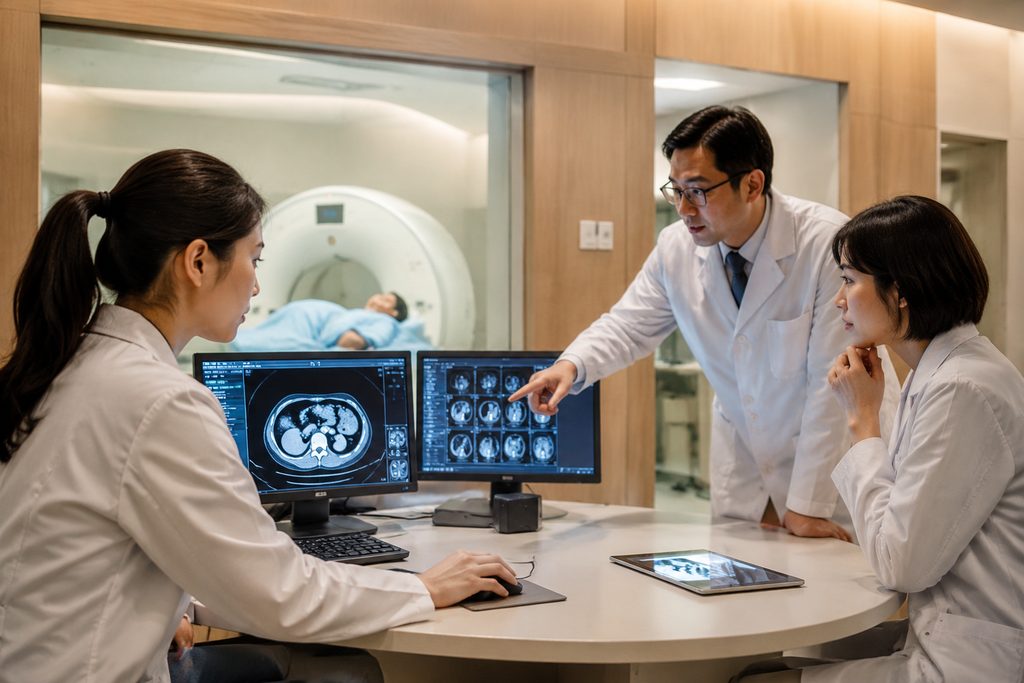
A cancer diagnosis feels like the ground opening beneath you. In simple terms, we are talking about the sequence of imaging scans, blood tests, and tissue biopsies that confirm whether a suspicious finding is malignant — and if so, exactly what type and stage it is. For international patients, the core question is usually: how fast can this happen, and what is the cancer diagnosis cost China? The short answer is that at top-tier Chinese hospitals using international department or VIP channels, a comprehensive diagnostic workup — from first PET-CT or MRI to a finalized multidisciplinary treatment plan — can realistically be completed in 3 to 7 working days. That compares to 3 to 8 weeks in many Western public health systems.
But that speed depends entirely on how you enter the system. Walk into a standard public outpatient clinic without Chinese language skills or local guidance, and you may wait days just to get registered. Use a structured coordination pathway, and the timeline compresses dramatically. The cost also varies widely by city, hospital tier, and scan type — we’ll break that down with real numbers below.
Who This Is Right For — and Who It Isn’t
Fast-track diagnosis in China suits a specific profile. It is not a universal solution, and being honest about that matters more than a brochure-friendly pitch.
Typically a good candidate:
- You have imaging or lab results from home suggesting malignancy, but you face a 3-week or longer wait for a confirmatory biopsy or PET-CT.
- You want a written second opinion or video consultation with a top oncology team before committing to travel.
- You are comfortable covering diagnostic costs out-of-pocket and claiming reimbursement from your insurer later.
- You need staging clarity — TNM staging, molecular markers, receptor status — before deciding between surgery, targeted therapy, or immunotherapy.
- You can travel with a family member or companion, or you are willing to use a bilingual medical companion service.
Who should think twice:
- Patients who are medically unstable for international travel. A long-haul flight during an active oncologic emergency is dangerous. Your home oncologist should clear you first.
- Those who expect a single fixed price. Diagnostics are priced per scan and per test. The total depends on what the imaging reveals.
- Anyone assuming treatment will immediately follow diagnosis. In China’s public hospital system, surgery and inpatient admission still require in-person outpatient evaluation first, even after a fast-track diagnostic workup.
- Patients with complex rare cancers where a local academic center already has a dedicated multidisciplinary team and clinical trial access. Sometimes staying home is genuinely better.
That last group is real. Speed is not a substitute for the right clinical expertise.
The Options, Compared
When patients ask us about fast-track cancer screening Shanghai or a rapid diagnostic pathway in Beijing, they are usually weighing three distinct options. The table below compares what each one actually delivers.
| Option | Time from Arrival to Diagnosis | Estimated Cost (USD) | English Support | Best For |
|---|---|---|---|---|
| Standard public outpatient (self-navigated) | 2–4 weeks | $800–$2,500 | Minimal | Budget-constrained patients with local contacts |
| International department / VIP channel (coordinated) | 3–7 working days | $3,000–$9,000 | Yes, hospital-provided | Most international patients seeking speed and clarity |
| Private international hospital (e.g., United Family, Jiahui) | 5–10 working days | $6,000–$15,000 | Yes, fully Western-style | Patients with direct-billing insurance or higher budgets |
The coordinated international department pathway is where most of our patients land. It costs roughly 1.5 to 2 times the standard public route, but it removes the single biggest bottleneck: navigating a system where daily outpatient volumes at top hospitals can exceed 10,000 visits. Private international hospitals offer the smoothest experience and direct insurance billing, but their oncology diagnostics are often priced at a premium without necessarily offering faster imaging than a well-coordinated public hospital international department.
Fast-Track Cancer Screening in Shanghai and Beijing: What Actually Happens Day by Day
Let’s be concrete about the sequence. A patient contacting us with a suspicious lung nodule or breast mass typically follows this path.
Day 1: Arrival and hospital registration. Your existing scans and pathology slides from home are translated and submitted to the oncology department. A coordinating physician reviews what is missing and orders the necessary tests.
Day 2: Blood work — complete blood count, tumor markers, liver and kidney function — plus the first imaging. If a PET-CT is indicated, it is often scheduled for day 2 or 3. Fasting and glucose control requirements apply.
Day 3: PET-CT or contrast-enhanced MRI. Results are usually available within 24 hours. If a biopsy is needed, it is scheduled immediately.
Day 4: Ultrasound-guided or CT-guided core needle biopsy. Tissue goes to pathology the same day.
Day 5–7: Pathology report, including immunohistochemistry and, where relevant, genetic sequencing panels. The oncology team holds a multidisciplinary discussion. You receive a written treatment plan.
That is the 3-to-7-day window, and it is achievable when imaging slots are pre-reserved and the patient’s prior records are complete. What slows it down: incomplete home records, uncontrolled diabetes affecting PET-CT quality, or a biopsy site that requires a repeat pass.
For patients specifically searching how fast can I get cancer scan in China, the honest answer is: the scan itself can happen within 48 hours of arrival. The full diagnostic-to-plan sequence takes the rest of the week.
Cancer Diagnosis Cost China: Real Numbers and What Drives Variance
Let’s address the cancer diagnosis cost China question without vague ranges. Here is what patients actually pay at top-tier public hospital international departments in Shanghai, Beijing, and Guangzhou.
- Contrast-enhanced CT (chest/abdomen/pelvis): $300–$600 per region
- Contrast-enhanced MRI: $500–$900 per region
- PET-CT whole body: $900–$1,500 (China’s PET-CT pricing is among the lowest globally for this technology; the same scan runs $3,000–$6,000 in the US)
- Ultrasound-guided core biopsy: $400–$800 including pathology
- CT-guided lung biopsy: $800–$1,500
- Immunohistochemistry panel: $200–$500
- Next-generation sequencing (NGS) panel: $1,500–$3,000 depending on gene count
- Specialist consultation fees (international department): $100–$300 per visit
- Multidisciplinary team (MDT) discussion: $1,500–$2,000 for a coordinated video or in-person review
A typical full diagnostic workup for a suspected solid tumor — say lung or colorectal — lands between $4,000 and $8,000 at a public hospital international department. The same sequence in the US often exceeds $20,000 before insurance negotiation.
What drives the variance: the number of imaging regions, whether NGS is required, whether a repeat biopsy is needed, and which city you choose. Beijing and Shanghai trend toward the higher end. Chengdu, Guangzhou, and Hangzhou often price 10–20% lower for equivalent quality.
None of these figures include treatment. Surgery, chemotherapy, and radiation are billed separately, and those costs vary enormously by regimen and hospital. We are talking purely about the diagnostic phase here.
Practical Considerations: Records, Visas, Payment, and What Happens After
Speed depends on preparation. The patients who move fastest are the ones who arrive with organized records.
Medical records: Bring every prior scan on CD or USB, not just printed reports. Radiologists here will want the original DICOM files. Bring pathology slides if a biopsy was already done at home — Chinese pathologists will often re-read them. Bring a written summary from your home oncologist, translated to English if it is not already. Our team handles Chinese translation, but the source documents must be complete.
Visa: For medical treatment in China, the applicable short-stay category is the S2 visa, annotated for medical treatment purposes. Family members accompanying you also apply for S2. Processing times vary by embassy and country, typically 4 to 10 working days. Supporting documents from the receiving hospital strengthen the application. No visa category guarantees approval, and requirements change — always confirm with the nearest Chinese embassy or consulate before booking flights.
Payment: Public hospital international departments and VIP channels require prepayment. Bring a credit card with a high limit or arrange a wire transfer in advance. Private international hospitals like those on our private hospitals page often accept direct insurance billing. If you have international health insurance, contact your insurer before traveling — some require pre-authorization for PET-CT and NGS testing.
Language: Even in international departments, not every technician or nurse speaks English. A bilingual medical companion — from $300 per day — handles registration, queue management, payment counters, and translation during consultations. Patients who speak no Mandarin and travel alone often lose 1–2 days purely to administrative friction.
After diagnosis: The written treatment plan you receive is a recommendation, not a binding commitment. If you choose surgery or systemic therapy in China, admission is subject to hospital rules and bed availability. If you return home for treatment, the diagnostic report and DICOM files are yours to take. Your home oncologist can act on them directly.
Is Cancer Diagnosis in China Reliable?
This question deserves a direct answer, because it sits behind every other concern.
At the hospitals we work with — those ranked in the Fudan University hospital rankings or holding JCI accreditation — diagnostic standards meet or exceed international norms. Pathology departments at major centers like Peking Union Medical College Hospital and Fudan University Zhongshan Hospital process enormous case volumes, which builds diagnostic pattern recognition that smaller centers cannot match. PET-CT scanners are current-generation. NGS panels cover the same targetable mutations as Western commercial panels.
But reliability is not uniform across all 35,000+ Chinese hospitals. The top 5% — roughly 340+ hospitals across 37 cities — is where international patients should focus. Below that tier, equipment age, pathologist experience, and reporting standards vary. That is precisely why we maintain a curated database of top-ranked hospitals rather than sending patients to the nearest facility.
And a second opinion is always reasonable. If a Chinese hospital delivers a diagnosis that changes your treatment trajectory, you can request a written second opinion from another institution. The cost — $300 to $500 for a top-specialist written review — is small relative to the stakes.
Frequently Asked Questions
Through a coordinated international department pathway, a PET-CT can typically be scheduled within 48 hours of arrival, sometimes same-week. Walk-in public outpatient routes may take 1–2 weeks. The scan itself takes 20–30 minutes, plus a 60-minute uptake period after tracer injection. Results are usually reported within 24 hours.
Diagnostic workup: $4,000–$8,000. Round-trip international flights: $800–$2,500 depending on origin. Accommodation near a major hospital: $60–$150 per night for a decent hotel. Food and local transport: $30–$60 per day. A one-week diagnostic trip for one patient and one companion typically totals $7,000–$12,000 all-in, excluding any treatment.
Yes, through a coordination service. The hospital international department can pre-reserve an imaging slot once your records are reviewed and a deposit is paid. You cannot book directly online as a foreign patient without a Chinese hospital medical card, which requires in-person registration. This is one area where a coordination fee — from $300 — directly saves you days.
In most cases, yes, especially if the report comes from a Fudan-ranked or JCI-accredited hospital and includes immunohistochemistry and molecular data. Some Western oncologists prefer to re-review the pathology slides themselves, which is your right. Request the slides and paraffin blocks before leaving China if you anticipate this.
This happens more often than patients expect, particularly with rare tumor subtypes or borderline pathology. The correct response is not to panic. Request a second pathology read — either at a different Chinese hospital or at your home institution. Discrepancies are usually resolved by additional immunohistochemistry or molecular testing, not by assuming one side is wrong.
Your Next Step
Speed matters in oncology, but so does accuracy and trust. The 3-to-7-day diagnostic window in China is real, and the cost is a fraction of Western private-pay rates. What makes it work is preparation: complete records, the right hospital for your suspected cancer type, and someone on the ground who speaks the language and knows the system.
We are China Medical Services, a coordination team that connects international patients with top-tier Chinese hospitals. We are not a hospital, we do not employ doctors, and we do not diagnose or treat. What we do is handle the logistics — hospital matching, record translation, appointment coordination, bilingual accompaniment — so you can focus on the medical decisions. If you want to explore whether a fast-track diagnostic pathway makes sense for your situation, start with a free consultation. There is no pressure and no commitment. Just a conversation about your options.
Get a free consultation at our patient services page. Or browse our oncology department rankings to see which hospitals lead in your specific cancer type.
The diagnosis comes first. Everything else follows from that.
For more medical information and treatment options in China, visit chinamedservices.com (China Medical Services).
