Pharmaceutical Supply Chain Integrity in China: How We Verify Your Medications Are Authentic
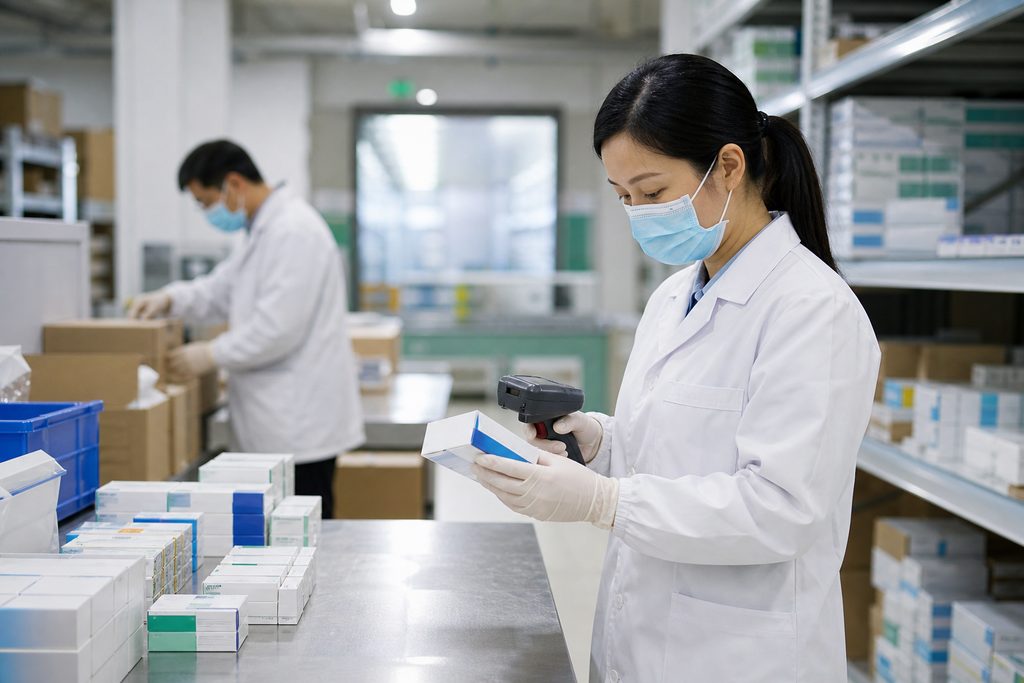
In 2023, Interpol’s Operation Pangea seized roughly $7 million in counterfeit pharmaceuticals across 89 countries. That number sounds alarming. It should. But here is what rarely gets reported: China now runs one of the world’s most aggressive pharmaceutical traceability systems, and the hospitals we connect patients with operate inside a regulatory framework that has fundamentally changed since 2019. The question is not whether fake medicine exists somewhere in the world. It does. The question is how do hospitals in China verify medicine authenticity when your treatment is on the line — and what happens before a single vial reaches your IV line.
We have spent years auditing pharmacy workflows inside China’s top-tier hospitals. Not from a distance. On the ground. What we found is a layered verification system that starts at the manufacturing plant and ends with a pharmacist scanning a box at the point of dispensation. For international patients who cannot read Chinese labels and have no way to personally inspect every package, that system is the difference between trust and blind faith.
This article walks through the verification infrastructure exactly as it functions inside the 340+ hospitals in our network. No marketing. No hand-waving. Just the mechanics of how your medications get checked, who checks them, and what happens when something does not match.
How This Actually Works, Step by Step
The verification process inside a major Chinese hospital pharmacy is not a single checkpoint. It is a chain of mandatory scans, database cross-references, and physical inspections that repeat at every handoff. Here is the sequence a typical unit of injectable medication follows before it reaches a patient.
Step 1: Manufacturer serialization. Every saleable drug unit produced in China since 2019 carries a unique 20-digit Drug Traceability Code issued by the National Medical Products Administration. This is not optional. The code is printed on the secondary packaging — the box — and linked in a national database to that specific unit’s batch number, expiration date, and manufacturing record. Counterfeiters cannot replicate a valid code because the database only recognizes codes it issued.
Step 2: Wholesaler scan-in. When a licensed pharmaceutical distributor receives a shipment from a manufacturer, every unit gets scanned. The distributor’s system queries the national traceability platform in real time. If a code does not exist in the database, or if it has already been marked as dispensed somewhere else, the system flags it immediately. The flagged unit is quarantined and reported. This is where diverted or re-labeled products get caught.
Step 3: Hospital pharmacy scan-in. Upon arrival at the hospital, the pharmacy team scans every unit again. They are not just checking that the code exists. They are verifying that the batch matches the purchase order, that the cold chain data is intact for temperature-sensitive products, and that the expiration date falls within the hospital’s internal window. Any mismatch stops the intake process.
Step 4: Pharmacist dispensation scan. Before a medication leaves the pharmacy — whether to an inpatient floor or an outpatient pickup window — the dispensing pharmacist scans the code one final time. This scan records exactly which patient the unit is linked to, at which hospital, on which date. The code is then marked as “dispensed” in the national database. It cannot be used again. A second scan of the same code at any other facility triggers an alert.
Step 5: Bedside verification. In the hospitals we work with, the nurse administering the medication performs a fifth check: matching the patient wristband, the medication label, and the physician’s order. Some facilities use barcode-enabled administration systems that block administration if the scanned medication does not match the patient’s electronic record. This step catches not counterfeits — those were already stopped upstream — but human dispensing errors.
Five scans. Five database queries. Any one of them fails, and the medication never touches the patient.
What the Traceability System Actually Enforces
The national drug traceability platform is the backbone here. It went fully operational in 2020 under the NMPA, and it covers all prescription drugs, vaccines, and traditional Chinese medicine injections sold in China. By the end of 2023, over 95% of drug manufacturers and distributors were connected to the platform, according to NMPA public filings.
What does that mean in practical terms? Every code is unique. Every scan is logged. The system is centralized — not fragmented across provincial databases that might not talk to each other. When a hospital pharmacy in Shanghai scans a unit manufactured in Shandong, the query hits the same national server that a pharmacy in Guangzhou would hit. There is no gap to exploit.
For international patients, this matters in a specific way. You cannot read the packaging. You do not know what the box should look like. But the traceability code does not require you to know. The system flags anomalies automatically, and the hospital’s pharmacy staff are legally required to quarantine any flagged product. The verification is procedural, not dependent on patient vigilance.
Also worth noting: the platform is mandatory for drugs reimbursed through China’s national medical insurance system. Since the vast majority of hospitals in our network are public institutions where insurance-covered drugs dominate the formulary, almost every medication dispensed runs through this system by default. Private and international hospitals, including those we feature on our private hospitals page, often maintain parallel verification protocols using their own procurement chains and international accreditation standards like JCI.
A Realistic Timeline
Verification is fast. Procurement is not. If you are an international patient planning treatment in China, understanding the lead time for medication sourcing is as important as understanding the verification itself. Here is what the timeline looks like for a medication that the hospital does not keep in routine stock — an oncology infusion, a specific biologic, or a rare-disease drug.
| Stage | Typical Duration | What Happens |
|---|---|---|
| Physician prescription | Day 1 | Specialist writes the order after in-person consultation. Cannot be done remotely. |
| Pharmacy inventory check | Day 1–2 | Hospital pharmacy confirms stock or initiates procurement from licensed distributor. |
| Distributor sourcing | 3–10 days | If not in regional warehouse stock, distributor orders from manufacturer. Lead time varies by drug class. |
| Cold chain transport | 1–3 days | Temperature-controlled logistics with data loggers. Any excursion above 2–8°C triggers rejection. |
| Pharmacy intake verification | Same day as arrival | Scan-in, batch check, cold chain data review, quarantine if flagged. |
| Dispensation and administration | Within 24 hours of intake | Final scan, patient match, bedside verification, administration. |
Total lead time for a non-stock medication: typically 5 to 14 days from prescription to administration. This is not a delay caused by verification. The verification steps take seconds. The delay is logistics — and it is the same delay you would encounter at any major hospital system that does not warehouse every possible drug on-site.
For patients traveling from abroad, this timeline has a direct implication: your initial consultation may not result in same-day treatment. You may need to return for a second visit after the medication arrives. Our team factors this into scheduling so patients do not book return flights too early.
What Can Go Wrong — and What Happens Then
No system is perfect. The question patients should ask is not whether failures are possible, but what the failure modes are and what recourse exists when they happen. Here are the real scenarios we have observed.
Cold chain breach. A temperature-sensitive biologic arrives at the pharmacy, and the data logger shows a 3-hour window at 11°C when the specification requires 2–8°C. The pharmacy rejects the shipment outright. The distributor must replace it with a new unit from a different batch. This adds 3–7 days to the timeline. It is frustrating. It is also exactly what should happen. A pharmacy that accepts a breached cold chain unit is not doing you a favor.
Code mismatch. A scan returns a “code not found” error. This is rare — we have seen it twice in five years across our network — but it triggers an immediate quarantine. The unit is sealed, reported to the NMPA platform, and investigated. The patient receives a replacement from a verified batch. The investigation typically takes 2–4 weeks and the patient is never involved beyond being informed of the delay.
Counterfeit detected. The traceability system flags a code that has already been dispensed elsewhere. This is the red-alert scenario. The unit is confiscated, the supplier is reported to provincial regulators, and the hospital’s pharmacy team conducts a full audit of every other unit from that distributor. We have not personally encountered this inside a top-tier public hospital. The regulatory and criminal consequences for a distributor caught supplying counterfeits to a Chinese public hospital are severe enough that the incentive structure works in the patient’s favor.
Human error at bedside. A nurse scans the wrong patient wristband. The barcode system blocks administration and sounds an alert. The error is caught before the medication enters the body. These systems exist in the hospitals we work with precisely because human error is predictable and preventable.
In every one of these scenarios, the failure is caught before the patient is harmed. That is the design principle. The system assumes failure will occur and builds checkpoints to intercept it.
How International Patients Can Independently Verify Their Medications
You do not need to be a pharmacist to run a basic authenticity check. China’s traceability system includes a public-facing component, and there are additional steps you can take regardless of language barriers.
Use the national drug code query app. The NMPA maintains a mobile application called “Drug Traceability” that allows anyone to scan a drug’s traceability code and see its registered information: manufacturer, batch number, expiration date, and dispensation status. The app is in Chinese, but the scan function is visual. Our bilingual medical companions can run this scan in front of you during your hospital visit, showing you the database record in real time. If the code returns no result or shows a mismatch, something is wrong.
Check for the traceability code itself. Every prescription drug unit sold in China must carry a visible traceability code on its secondary packaging. If a medication box lacks this code entirely, it is either an older unit manufactured before the mandate (increasingly unlikely as of 2025) or it did not enter the legal supply chain. Either way, ask the pharmacist.
Request hospital procurement records. Top-tier hospitals maintain detailed procurement logs for every drug unit. As an inpatient, you have the right to ask what was administered to you. The hospital can provide a record showing the drug name, batch number, manufacturer, and the traceability code that was scanned at dispensation. If you want to verify independently later, that record gives you a specific code to query.
Know the hospital’s accreditation status. JCI-accredited hospitals in China undergo regular audits of their pharmacy and medication management processes. The audit includes verification that traceability systems are functioning and that staff are following protocol. Hospitals that maintain JCI accreditation — including several on our private hospitals list — have passed external scrutiny of exactly these workflows. It is not a guarantee, but it is an independent check on institutional discipline.
These steps are not complicated. They require a smartphone camera and someone who can read Chinese or use a translation tool. For patients traveling alone, our team handles this as part of standard pharmacy accompaniment. For patients with family members present, we teach the process so they can run it themselves.
Practical Considerations: What to Ask Before You Arrive
If you are evaluating a Chinese hospital for treatment and medication safety is on your mind — it should be — here are the specific questions to ask during the consultation phase. The answers will tell you whether the hospital operates a rigorous verification protocol or a paper-based system with gaps.
Ask about the traceability scan process. “Can you walk me through how your pharmacy verifies incoming medications?” A hospital with a strong protocol will describe a scan-based system linked to the national platform. A vague answer about “quality checks” without specifics is a red flag.
Ask about cold chain monitoring. “How do you monitor temperature for biologics during transport and storage?” Look for continuous data logging, not spot checks. The answer should include what happens when a temperature excursion is detected — rejection and replacement, not “we evaluate case by case.”
Ask about bedside verification. “Do you use barcode scanning at the bedside before medication administration?” Barcode-enabled medication administration is standard in JCI-accredited hospitals and increasingly common in China’s top-tier public hospitals. If the answer is no, ask what manual verification process is used instead.
Ask about the pharmacy’s procurement sources. “Do you source medications directly from manufacturers or through licensed distributors?” Both are legitimate, but the hospital should be able to name its supply chain partners and confirm they are licensed by the NMPA. A hospital that cannot answer this question should not be administering drugs to you.
These questions are not confrontational. They are standard due diligence, and any reputable hospital will answer them without hesitation. If you encounter resistance, that is information too.
Frequently Asked Questions
Yes, with an important qualifier: trust should attach to specific hospitals with verifiable protocols, not to the country’s system as a whole. The hospitals in our network — top 5% nationally, ranked by Fudan University or JCI-accredited — operate traceability systems that match or exceed what you would find at a major Western teaching hospital. The national drug traceability platform provides a centralized verification infrastructure that many countries still lack. But the system only works if the hospital actually uses it. That is why we audit pharmacy workflows before adding any hospital to our network. For more on how we evaluate hospitals, see our top hospitals database.
You have three practical options. First, ask your bilingual medical companion to scan the traceability code using the NMPA’s public app and show you the database record. Second, request the hospital’s dispensation record, which will include the traceability code — you can have this record independently reviewed later. Third, verify that the medication’s physical appearance (color, form, packaging details) matches the official product description from the manufacturer’s website, which is usually available in English for major international drug brands. None of these steps requires you to read Chinese independently.
The unit is immediately quarantined and reported to provincial and national regulators. The supplier is investigated, and the hospital typically suspends all procurement from that distributor pending the investigation’s outcome. The patient who would have received the flagged unit gets a replacement from a verified batch. Criminal penalties for pharmaceutical counterfeiting in China were increased in 2019 and can include life imprisonment in cases involving serious health consequences. The deterrent is real. We have not encountered a counterfeit incident inside a top-tier public hospital in our operational history.
Not inside accredited hospital pharmacies, no. The risk profile for counterfeit medication exposure in China is concentrated in online pharmacies, unlicensed clinics, and informal drug sellers — exactly the channels that international patients should never use. Inside a JCI-accredited hospital or a Fudan-ranked public hospital, the medication supply chain is the same for Chinese patients and international patients. There is not a separate, less-regulated supply chain for foreigners. The drugs come from the same pharmacy, sourced through the same licensed distributors, verified through the same traceability system.
China’s system is centralized and mandatory. The US Drug Supply Chain Security Act requires serialization and traceability but has been implemented in phases, with full electronic interoperability not required until November 2023 and still rolling out. The EU’s Falsified Medicines Directive mandates serialization and a centralized verification system similar in concept to China’s. The key difference is enforcement: China’s single-payer insurance system and state-controlled hospital network give regulators direct leverage over institutional compliance that is harder to achieve in fragmented private healthcare markets. The system is not perfect. But on architecture, it is among the more rigorous globally.
Your Next Step
Medication safety is not a marketing point. It is a precondition for treatment. The verification infrastructure inside China’s top hospitals is real, auditable, and increasingly transparent — but it only protects you if you are inside a hospital that actually uses it. That is what we verify before we connect any patient to a facility.
China Medical Services maintains a network of 340+ top-ranked hospitals across 37 cities, and we audit pharmacy protocols, accreditation status, and supply chain integrity as part of our hospital evaluation process. We do not practice medicine. We do not prescribe treatments. What we do is make sure that when a physician prescribes something, the medication that reaches your body is exactly what was ordered — verified, traceable, and real. If you are considering treatment in China and want to understand exactly how your medications will be sourced and verified, contact our team for a free consultation. We will walk you through the process for your specific treatment, hospital, and drug list. No obligation. Just clarity.
For more medical information and treatment options in China, visit chinamedservices.com (China Medical Services).
