West China Hospital Oncology for International Patients: Access, Costs, and Process
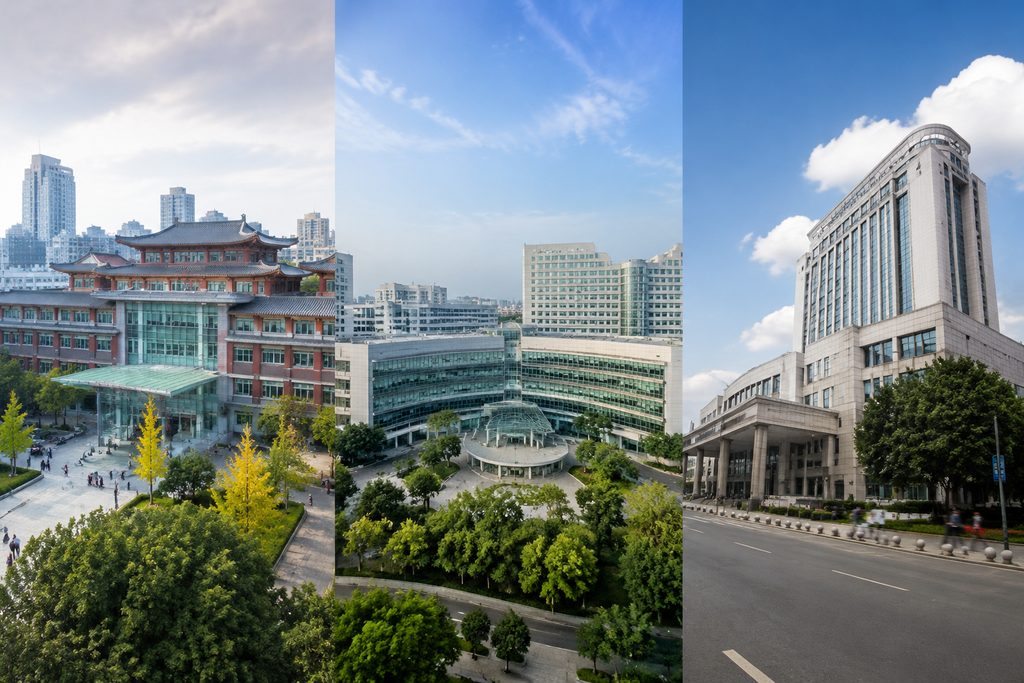
Cancer is a word that changes everything. When you or someone you love receives that diagnosis, the search for the best possible care becomes all-consuming. West China Hospital of Sichuan University, located in Chengdu, consistently ranks among China’s top five hospitals in the Fudan University national hospital rankings. Its oncology department sees enormous patient volumes and handles complex cases that many Western hospitals rarely encounter. But how does an international patient actually access that care? And what does West China Hospital oncology cost for foreigners look like in real numbers?
This is not a simple question with a one-line answer. The cost depends on your diagnosis, the treatment protocol, whether you use the public pathway or the international/VIP channel, and how long you stay in Chengdu. What we can tell you, based on our work coordinating care for international patients across China’s hospital system, is that the cost typically lands between one-fifth and one-tenth of what the same treatment would run in the United States or Western Europe. A course of chemotherapy that might bill at $80,000 in the US often totals $15,000 to $25,000 at West China Hospital. But getting there requires navigating a system that was not built for foreign patients.
That is where this guide comes in. We will walk through what West China Hospital actually offers in oncology, how to get treatment there as a foreigner, what the real costs look like, and the honest risks and friction points you should know before booking a flight.
How This Actually Works, Step by Step
Let us be direct: you cannot simply email West China Hospital and book a chemotherapy appointment. Chinese public hospitals operate on a same-day registration system for outpatient clinics. You show up, you queue, you get a number, and you wait. For a foreign patient who does not speak Mandarin, that process is nearly impossible to manage alone.
Here is the actual sequence that works:
Step 1: Gather every medical document you have. Pathology reports, imaging studies (CT, MRI, PET-CT), blood work, surgical notes, and your current treatment plan. These need to be translated into Chinese by a certified medical translator. Do not skip this step. Chinese oncologists will not make treatment decisions based on English-language reports alone.
Step 2: Request a written second opinion. You send your translated records to the oncology department at West China Hospital through a coordination channel. A specialist reviews your file and provides a written assessment: whether they agree with your current diagnosis, what treatment they would recommend, and whether they believe coming to Chengdu would change your outcome. This costs between $300 and $500 and typically takes 7 to 14 days.
Step 3: Decide on a video consultation if you want to speak directly with the team. This adds another $500 to $800 for a top specialist, but many patients find it worth the money. You can ask about treatment philosophy, expected side effects, and what the hospital would do differently.
Step 4: Plan your arrival. If the remote evaluation confirms that treatment in Chengdu makes sense, you apply for an S2 visa with the hospital’s invitation letter and supporting documents. Visa processing usually takes 2 to 4 weeks. You will also need to arrange accommodation near the hospital — Chengdu has plenty of options, but the area around West China Hospital is busy and booking early matters.
Step 5: Attend your first in-person consultation. This is mandatory before any surgery or inpatient treatment. The oncologist will examine you, review your records again, and order any additional tests they need. Only after this face-to-face meeting can a treatment plan be finalized and a hospital bed assigned.
Step 6: Begin treatment. Depending on your case, this could be chemotherapy, radiation, immunotherapy, targeted therapy, or surgery. The hospital will require prepayment for each phase of treatment. Insurance typically reimburses afterward — West China Hospital does not do direct billing with international insurers.
Is West China Hospital Good for Cancer Treatment?
The short answer is yes — with important context. West China Hospital is one of the largest single-campus hospitals in the world, with over 4,300 beds and an outpatient volume that exceeds 20,000 visits per day. Its oncology department handles a caseload that most Western cancer centers would find staggering. That volume translates into clinical experience: the oncologists here see rare presentations and late-stage cases routinely, not occasionally.
The hospital’s oncology program is ranked among China’s top 10 in the Fudan University specialty reputation rankings. That ranking is based on peer assessment from thousands of Chinese specialists, not marketing materials. The hospital is also a major research center, running clinical trials for new immunotherapy agents and targeted therapies that are often only available in China or at a fraction of Western prices.
But volume and reputation do not automatically mean the right fit for every patient. West China Hospital is a public hospital. The standard outpatient experience is crowded, fast-paced, and conducted entirely in Mandarin. Doctors see dozens of patients per day. You will not get the leisurely, relationship-based consultations that private Western clinics offer. For some patients, that is fine — they want the expertise and the lower cost. For others, the experience feels overwhelming.
There is an alternative: the hospital’s international department offers a more structured experience with English-speaking coordinators and scheduled appointments. The trade-off is cost. The international channel typically runs 1.5 to 2 times the price of the standard public pathway. For a foreign patient who does not speak Chinese and needs help navigating the system, that premium is often worth it.
A Realistic Timeline
People underestimate how long this process takes. Here is an honest breakdown, assuming you move efficiently at every step:
| Stage | What Happens | Time Required |
|---|---|---|
| Week 1 | Collect and translate medical records; submit for second opinion | 5–10 days for translation |
| Week 2–3 | Oncology team reviews your file; written opinion returned | 7–14 days |
| Week 3–4 | Optional video consultation with specialist | 3–7 days to schedule |
| Week 4–6 | S2 visa application with hospital invitation letter | 2–4 weeks (varies by embassy) |
| Week 6–7 | Travel to Chengdu; first in-person consultation | 1–3 days after arrival |
| Week 7–8 | Additional testing ordered by the oncologist | 3–7 days |
| Week 8 onward | Treatment begins (chemo, radiation, surgery, etc.) | Depends on protocol |
The step most people forget is document translation. A 50-page medical file can take a week or more to translate properly, and rushed translations cause delays downstream when the oncologist cannot read the pathology details clearly. Plan for it.
Visa processing is the other wildcard. Some embassies process S2 visas in 10 days. Others take a month. You cannot control this, but you can start early.
What Can Go Wrong — and What Happens Then
Let us be honest about the failure modes, because pretending they do not exist helps no one.
Your records are incomplete or poorly translated. The oncologist cannot make a treatment decision. You get asked to redo tests in Chengdu, which adds days and cost. The fix: have a medical professional review your translation before submission, not just a general translator.
The hospital cannot offer you a better option than what you already have at home. This happens. West China Hospital excels in certain cancers — particularly thoracic, gastrointestinal, and head and neck tumors — but it is not automatically the best choice for every diagnosis. If the second opinion says your current treatment is appropriate, you have spent $300 to $500 to confirm that. That is not wasted money; it is clarity.
Your insurance refuses to cover treatment in China. Many US and European insurers will not reimburse care at Chinese public hospitals, even top-ranked ones. You need to confirm coverage before you travel. If coverage is denied, you are paying out of pocket. Some patients choose to proceed anyway because the cash price is still lower than their copay at home. Others do not.
The treatment plan changes after you arrive. The in-person consultation reveals something the remote review missed. The planned 4-week course becomes 8 weeks. Your accommodation booking is now too short. This is not malpractice — it is medicine. Build flexibility into your plans.
For each of these, the recourse is the same: slow down, get clear information, and make a decision based on what you now know. The coordination team you work with should be able to explain what changed and why.
West China Hospital Oncology Cost for Foreigners: What the Numbers Actually Look Like
Now to the question everyone asks first. What does West China Hospital oncology cost for foreigners actually look like? Here are realistic ranges based on typical cases we have seen coordinated:
| Service | Estimated Cost at West China Hospital (USD) | Typical US Cost (USD) |
|---|---|---|
| Written second opinion (oncology specialist) | $300–500 | $2,000–5,000 |
| Video consultation with top specialist | $500–800 | $1,500–3,000 |
| Chemotherapy course (6 cycles, standard regimen) | $15,000–25,000 | $60,000–100,000 |
| Radiation therapy course (IMRT) | $8,000–15,000 | $50,000–80,000 |
| Major cancer surgery (e.g., esophagectomy, gastrectomy) | $12,000–20,000 | $80,000–150,000 |
| Immunotherapy (PD-1 inhibitor, per cycle) | $1,500–3,000 | $8,000–15,000 |
These figures vary by hospital department, case complexity, and whether you use the standard or international pathway. The international pathway adds roughly 50% to 100% on top of the public channel prices. That premium buys you English-speaking coordination, scheduled appointments instead of queueing, and a less chaotic experience.
Why is immunotherapy so much cheaper in China? Because Chinese pharmaceutical companies have developed domestic PD-1 inhibitors that compete directly with Keytruda and Opdivo. The Chinese drugs cost a fraction of the Western brands, and many are now approved for the same indications. Your oncologist at West China Hospital can discuss which option fits your case.
What you will not get is a fixed “cancer treatment package.” Some hospitals in Southeast Asia market all-inclusive packages. West China Hospital does not. You pay per service, per cycle, per procedure. The final bill depends on how your body responds and what the oncologist recommends after each phase. Budget for 20–30% more than the initial estimate.
Practical Considerations: Records, Visa, Payment, and Language
Medical records. Bring everything, including the original imaging files on CD or USB, not just the written reports. Chinese radiologists will want to review the actual scans. Bring a list of every medication you take, with generic names. Bring your pathology slides if you have them — the hospital may want to re-stain and re-read them.
Visa. The correct category is S2, not M. M visas are for commercial and trade activities. Medical treatment falls under S2, which covers short-term private affairs including medical visits. Your hospital invitation letter must state the purpose clearly. Family members accompanying you also apply for S2. For stays longer than 180 days, S1 applies. The latest requirements vary by embassy, so check with the Chinese consulate in your country before applying.
Payment. West China Hospital requires prepayment. You deposit funds at the hospital cashier before each treatment phase, and costs are deducted against that deposit. International credit cards are accepted at the international department, but the standard public counters often require a Chinese bank card or cash. Bring a debit card that works internationally and withdraw cash as backup.
Insurance. West China Hospital does not bill international insurers directly. You pay upfront and file for reimbursement yourself. Get pre-authorization from your insurer before traveling. Some insurers have partnerships with third-party administrators in China who can facilitate payment — ask your insurer specifically about this.
Language. Do not expect English-speaking staff in the standard outpatient clinics. The international department has English-speaking coordinators, but even there, the doctors themselves may prefer to speak through an interpreter. A bilingual medical companion who understands both the language and the hospital’s internal processes is, in our experience, the single most valuable service an international patient can arrange. The cost starts at $300 per day, and most patients tell us afterward it was the best money they spent.
Follow-up at home. Before you leave Chengdu, ask the oncologist for a written summary of your treatment, a medication list, and a recommended follow-up schedule. Your home oncologist will need this to continue your care. West China Hospital can provide these documents in English upon request — ask early, not on your last day.
Frequently Asked Questions
For many cancer types, yes. Its oncology department is ranked among China’s top 10 by the Fudan University specialty reputation rankings, and its patient volume gives its specialists deep clinical experience. The main trade-off is the patient experience: public hospital consultations are faster and less personalized than what many Western patients expect. The international department mitigates this but at a higher cost.
You cannot book treatment remotely. The process starts with submitting your translated medical records for a written second opinion or video consultation. If the oncology team recommends treatment in Chengdu, you then apply for an S2 visa, travel to Chengdu, and attend an in-person consultation. Only after that meeting can a treatment plan and hospital admission be arranged.
Costs are per service, not packaged. You pay separately for consultations, imaging, laboratory tests, chemotherapy drugs, radiation sessions, surgery, and hospital bed fees. The international pathway adds a coordination premium of roughly 50% to 100% over standard public pricing. A typical chemotherapy course runs $15,000 to $25,000; major cancer surgery runs $12,000 to $20,000. Final costs vary by case complexity and treatment response.
Yes. West China Hospital oncology second opinion for overseas patients is available through a written review of your medical records, priced from $300 to $500. You can also arrange a video consultation with a top specialist for $500 to $800. Many patients use this remote step to decide whether traveling to Chengdu is worthwhile before committing to the full journey.
That depends entirely on your policy. Some international insurers reimburse care at Chinese public hospitals; many do not. West China Hospital does not bill insurers directly, so you will pay upfront and seek reimbursement yourself. Check with your insurer before making any commitments, and get any coverage decisions in writing.
Your Next Step
West China Hospital is a genuinely world-class cancer center, and for the right patient, treatment there can deliver excellent outcomes at a fraction of Western costs. But the path from “I’m interested” to “I’m in a hospital bed in Chengdu” involves real friction: document translation, visa processing, language barriers, and a hospital system that was not designed for foreign patients.
At China Medical Services, we help international patients navigate that path. We coordinate written second opinions and video consultations with oncology teams at West China Hospital and other top-ranked Chinese hospitals, arrange bilingual medical companions for in-person visits, and guide you through the visa and logistics process. We do not provide medical advice, and we cannot promise specific outcomes or guaranteed access to any particular specialist. What we do is make the process manageable.
If you are considering cancer treatment at West China Hospital, start with a conversation. Tell us your diagnosis and what you are hoping to achieve. We will help you understand whether Chengdu is the right destination for your case, and what the realistic next step looks like. Request a free consultation through our patient services page — no commitment, just clarity.
Cancer forces hard decisions. Getting clear information should not be one of them.
For more medical information and treatment options in China, visit chinamedservices.com (China Medical Services).
