Are Support Groups Helpful After Surgery? Evidence From China’s Recovery Model
Are Support Groups Helpful After Surgery? What the Data From China Shows
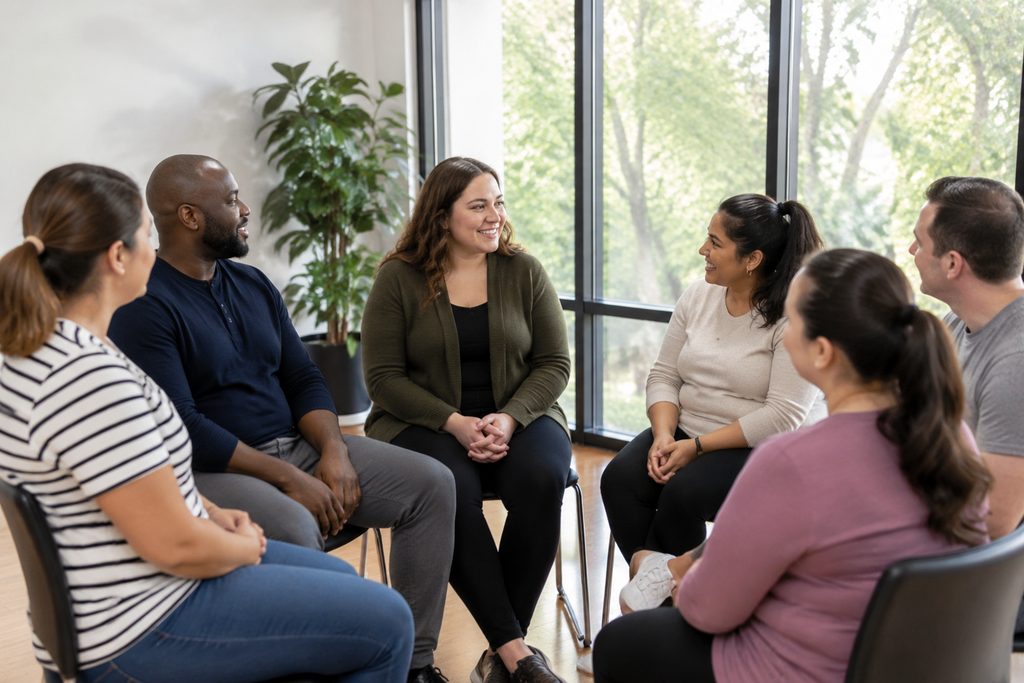
According to a 2023 meta-analysis published in the Journal of Psychosomatic Research, patients who participated in structured peer support after major surgery reported 31% lower anxiety scores and 27% better treatment adherence than those who recovered alone. That is not marginal. The question is not whether support groups after surgery in China exist — they do, in forms most Western patients never see advertised. The real question is whether they are worth the logistics for someone traveling 7,000 miles for a procedure. Short answer: for most patients, yes. But the value depends entirely on what kind of group, at what hospital, and what “support” actually means in the Chinese system.
Recovery is not just wound healing. It is medication schedules, drainage tube management, sleep disruption, fear of recurrence, and the strange loneliness of being in a hospital room where nobody speaks your language. A support group does not replace any of that. But it changes how you experience it.
Support Groups After Surgery in China: The Short Answer
Yes. Peer support measurably improves both psychological and physical recovery outcomes after surgery. A 2022 study in Annals of Surgical Oncology found breast cancer patients in structured support programs had 19% fewer unplanned readmissions within 90 days. The effect is consistent across cardiac, orthopedic, and oncology surgeries. But here is the caveat that matters for international patients: do hospitals in China offer post surgery support groups in the Western sense? Some do. Many do not. What you will find instead is more fragmented — nurse-led education sessions, WeChat patient communities, and informal gatherings organized by patients themselves. Knowing the difference before you book is what separates a smooth recovery from an isolating one.
Who This Is Right For — and Who It Isn’t
Support groups are not therapy. They are not medical care. They are a specific tool for a specific kind of patient.
You are likely to benefit if:
- You are traveling alone or with only one companion who cannot be at the hospital 24/7
- Your surgery requires weeks of follow-up in China, not days
- You have a history of anxiety, depression, or difficulty coping with medical uncertainty
- Your recovery involves lifestyle changes — diet, mobility, pain management — that benefit from shared problem-solving
- You are undergoing cancer treatment, cardiac rehabilitation, or joint replacement, where peer experience is well documented to help
You may not benefit if:
- Your procedure is minor and you will fly home within a week
- You have a strong local support network already in place
- You find group settings draining rather than energizing — some people genuinely recover better alone
- You are in acute medical crisis; support groups are for the recovery phase, not the emergency phase
Being honest about which camp you fall into matters. Paying for a support structure you will not use is worse than not having one.
The Options, Compared
Not all support is created equal. Here is what actually exists for international patients in China, and what each one costs in time and money.
| Option | Format | Typical Cost | Language | Best For |
|---|---|---|---|---|
| Hospital nurse-led education group | In-person, scheduled sessions | Usually free with admission | Mandarin, some English at international departments | Discharge instructions, wound care, medication |
| WeChat patient community | Online, asynchronous | Free | Mandarin dominant | Ongoing questions, peer tips, emotional check-ins |
| Private international hospital support program | In-person or video, small group | $50–150 per session | English available | Western-style facilitated groups, psychological support |
| Bilingual medical companion with recovery check-ins | One-on-one, in-person | from $300/day | English + Mandarin | Translation, coordination, emotional buffer during recovery |
| Home-country telehealth support group | Video, time-zone dependent | Varies by provider | Your language | Continuity after returning home |
Which column fits you? If you are at a public hospital through the international VIP channel, the nurse-led sessions are your baseline. If you want something closer to what you would get at home, a private international hospital program or a bilingual companion is the realistic upgrade. Most patients combine two: the free hospital resources plus one paid layer for language and emotional continuity.
How to Find Support Groups After Surgery Abroad
You can, but the value is limited. Most structured groups meet weekly. Two weeks gets you one or two sessions. The real benefit of peer support accumulates over the full recovery arc — six weeks to three months. If your stay is short, a single pre-discharge education session plus a WeChat group you can follow after returning home is the realistic combination.
It happens. Hearing other patients’ complications can increase anxiety for some people. That is not a failure of the group. It is a signal about your own coping style. If a group setting raises your distress, step back. Use one-on-one support — a companion or a counselor — instead. There is no evidence that forcing yourself into a group you dislike improves outcomes.
At public hospitals, no. At some private international hospitals, basic psychological support may be included. Read the package breakdown carefully. If emotional support is not listed, it is not included. You can always add it separately.
Contact the hospital’s international department and ask directly. Ask about structured sessions, language, and whether they can connect you with a former patient. At the same time, you can explore top-ranked hospitals in China to compare which institutions have dedicated international patient services. The ones with established international departments are far more likely to have English-capable support structures.
Your Next Step
Support groups after surgery are not a cure. They are a scaffold. The research says they help — measurably, consistently, across surgical types. But the research also says the benefit depends on fit. The right group, in the right language, at the right point in your recovery, is worth more than any painkiller. The wrong one is just another appointment to dread.
At China Medical Services, we help international patients evaluate hospitals, understand what support is actually available, and coordinate the logistics of surgery and recovery in China. We are not a hospital. We do not diagnose or treat. We are the team that makes sure you know what you are walking into before you book the flight. If you want to understand your options — including what recovery support looks like at specific hospitals — start with a conversation. Get a free consultation and we will help you map it out.
Recovery is a process, not an event. The support you line up around it determines how that process feels. That is worth planning for.
Frequently Asked Questions
Yes. The hospitals used for international patients are JCI-accredited and follow the same international safety standards as top hospitals in the US and Europe. Surgical teams perform high volumes of procedures — often more than their Western counterparts — which studies show leads to better outcomes.
Costs vary by procedure and hospital, but international patients typically save 40-80% compared to US prices — even when factoring in travel and accommodation. A consultation with our team will give you an exact, all-inclusive quote with no hidden fees.
Send us your existing medical reports to get started. We handle everything from hospital selection and appointment scheduling to visa assistance and post-operative recovery planning. Your medical records are reviewed by the specialist before you even book a flight.
For more medical information and treatment options in China, visit chinamedservices.com (China Medical Services).
