How Long Is the Wait for SMILE Eye Surgery in China? Real Timelines
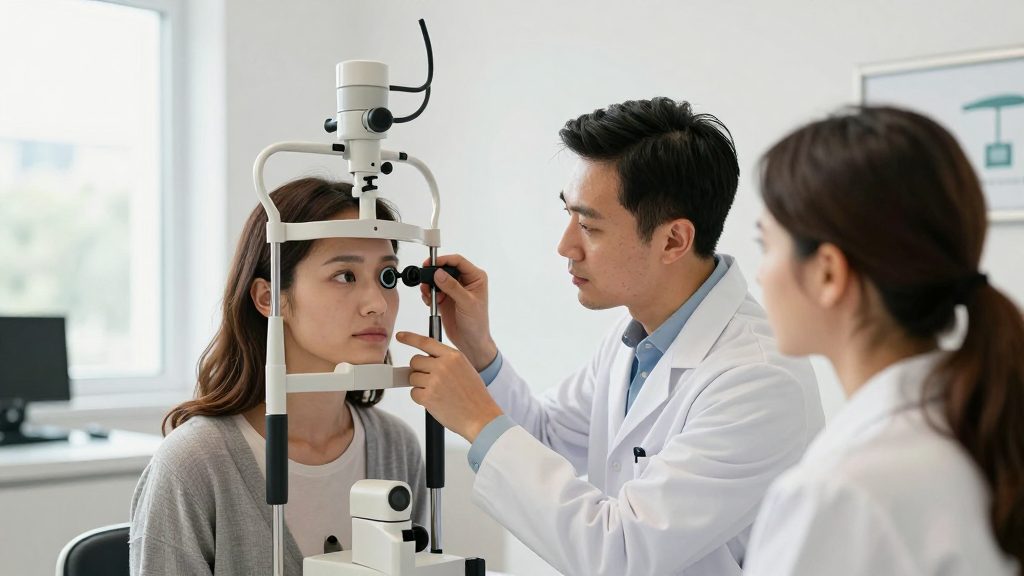
How Long Is the Wait for SMILE Eye Surgery in China? Real Timelines and What to Expect
If you have been told to wait six months for vision correction at home, the answer matters more than you think. SMILE eye surgery cost China averages between $2,500 and $4,500 per eye — roughly 60% to 70% less than in the United States or Western Europe. But cost is only half the equation. The real question: how long will you wait once you decide to move forward?
For most international patients, the timeline breaks down like this: one to three weeks from initial inquiry to surgery date. That includes remote pre-screening, scheduling, travel, and the mandatory in-person consultation. Some patients complete the entire process in under ten days. Others need longer if their corneal thickness or prescription requires additional testing.
Compare that to Canada, where public waitlists for refractive surgery consultations routinely stretch past eight months. Or the UK, where NHS-funded lens procedures can take over a year. Private clinics in London or New York move faster — but you will pay $5,000 to $7,000 per eye for the privilege.
China occupies a unique position. The country performs more refractive surgeries annually than any other nation — over 1.5 million procedures per year according to industry data from the Chinese Ophthalmological Society. Volume creates efficiency. Efficiency creates short wait times. That is the structural advantage, and it is worth understanding before you book a flight.
Key Takeaways
- Typical wait for SMILE surgery in China is 1-3 weeks from first contact to procedure day — far shorter than public systems in Canada, the UK, or Australia
- SMILE eye surgery cost China averages $2,500-$4,500 per eye, including surgeon fees and facility charges; most clinics quote all-inclusive packages
- You cannot book surgery remotely. Chinese law requires an in-person consultation and corneal examination before any refractive procedure
- Top-tier eye hospitals in Shanghai and Beijing perform 500-1,000 SMILE procedures annually per surgeon — volume that correlates with precision and low complication rates
- Language barriers are real. Most public hospital staff do not speak English; international departments and private clinics do, but cost 20-40% more
The Problem: Refractive Surgery Wait Times Are Brutal in Western Public Systems
In 2023, the Canadian Ophthalmological Society reported that median wait times for non-urgent refractive consultations exceeded 200 days in Ontario and British Columbia. Alberta fared marginally better at 150 days. Those figures do not include the additional wait between consultation and surgery date — often another two to four months.
The United Kingdom presents a similar picture. NHS-funded refractive surgery is severely restricted. Most patients are simply not eligible unless they have a medical indication such as keratoconus or post-cataract refractive error. Private treatment exists, but the average cost at Moorfields Private or Optegra runs £4,500 to £6,000 per eye. Wait times are shorter — typically four to six weeks — but the price tag stops many people cold.
Australia sits somewhere in the middle. Private clinics in Sydney and Melbourne quote AUD $3,500 to $5,500 per eye for SMILE. Wait times average three to eight weeks. The bottleneck is not demand — it is the limited number of surgeons certified on the Zeiss VisuMax platform, the only laser approved for SMILE globally.
What happens if you postpone? For most patients, nothing catastrophic. Your prescription stays stable. But for those with progressive myopia, high prescriptions, or career requirements — pilots, police officers, professional athletes — every month of waiting is a month of compromised performance. And for patients over 40, presbyopia begins to compound the problem. Delaying refractive surgery past 45 often means you need a different procedure altogether.
So the question is not whether you can wait. It is whether you should.
Why China Delivers Results: Volume, Technology, and Structural Efficiency
China does not have a refractive surgery “waitlist problem” because the system was built differently. Public hospitals operate at enormous scale. Private eye hospitals — chains like Aier Eye Hospital and Huaxia Eye Hospital — run dedicated refractive surgery floors with multiple VisuMax lasers running simultaneously. The economics reward throughput.
Clinical Volume Drives Surgical Precision
A single high-volume SMILE surgeon in Shanghai performs between 500 and 1,000 procedures per year. By comparison, the average refractive surgeon in the United States completes roughly 150 to 300 cases annually, according to data from the American Society of Cataract and Refractive Surgery. The difference is not just about practice. It is about pattern recognition.
When a surgeon has seen 5,000 corneas, they recognize subtle irregularities — borderline thickness, unusual topography, early ectasia — that a less experienced surgeon might miss. Volume also means the surgical team, the laser technicians, and the post-operative care staff have refined their workflows to eliminate delays. In a high-volume Chinese eye hospital, the interval between cases can be as short as 15 minutes.
That does not mean rushed care. It means optimized care. The laser calibration, patient positioning, and suction time are identical for every patient. What changes is the surrounding logistics — room turnover, documentation, patient flow.
Technology Adoption Without the Bureaucratic Lag
China approved the Zeiss VisuMax femtosecond laser for SMILE in 2011 — the same year it received CE marking in Europe. The US FDA did not approve SMILE until 2016. Today, China operates more VisuMax platforms than any other country: over 400 units installed across major cities, according to Zeiss market data.
That installed base matters for two reasons. First, it means multiple clinics in any major city offer the procedure — competition keeps prices reasonable and wait times short. Second, it means Chinese surgeons have accumulated the world’s largest SMILE case volume. The Chinese SMILE registry, maintained by the Chinese Ophthalmological Society, has tracked outcomes for over 1 million procedures since 2012.
What does that data show? Complication rates are low — under 0.5% for clinically significant events such as epithelial ingrowth or diffuse lamellar keratitis. Visual outcomes are comparable to international benchmarks: over 95% of patients achieve 20/40 or better uncorrected visual acuity within one week.
Cost Advantage Without Quality Compromise
Here is the uncomfortable truth most Western patients struggle with: SMILE eye surgery cost China is low because the underlying cost structure is different, not because the care is inferior.
A refractive surgeon in Shanghai earns a fraction of what a US surgeon earns. A hospital administrator in Beijing manages a facility where construction costs, nursing salaries, and equipment financing are all substantially lower than in Boston or London. The VisuMax laser costs the same to buy — roughly $500,000 per unit. But the cost per procedure is amortized over far more cases.
Consider the math. A US clinic performing 300 SMILE cases per year on one laser must recover $1,667 per case just to cover the equipment lease. A Chinese high-volume center performing 3,000 cases per year on the same machine recovers $167 per case. The difference is pure economics.
Clinical outcomes do not suffer. In fact, the peer-reviewed literature suggests the opposite. A 2022 meta-analysis published in the Journal of Refractive Surgery found no statistically significant difference in visual acuity outcomes between SMILE procedures performed in East Asian centers versus North American centers. The Chinese data actually showed slightly lower enhancement rates — the percentage of patients requiring a second procedure — at 1.2% versus 2.1% in Western cohorts.
How Long Is the Wait for SMILE Surgery in China? A Realistic Timeline
Let us walk through the actual process, day by day. This is not a theoretical timeline. It reflects what our team observes across partner hospitals in Shanghai, Beijing, and Guangzhou.
Days 1-3: Remote Pre-Screening and Scheduling
You send your existing eye exam records — prescription, corneal topography if available, and any prior surgical history. A Chinese ophthalmologist reviews them remotely. If your corneal thickness and prescription fall within safe parameters, you receive a tentative surgical indication. This is not a guarantee; it is a screening.
At this stage, you also choose your hospital and surgeon. High-volume public hospitals like Fudan University-affiliated Eye and ENT Hospital in Shanghai offer excellent outcomes at lower prices. Private international clinics like Jiahui Health or United Family provide English-speaking staff and Western-style service at a 20-40% premium.
Days 4-10: Travel and In-Person Consultation
You arrive in Shanghai or Beijing. The mandatory in-person consultation takes 2-3 hours. It includes:
- Uncorrected and best-corrected visual acuity testing
- Cycloplegic refraction (dilated eye exam)
- Corneal topography and tomography (Pentacam or equivalent)
- Pachymetry (corneal thickness measurement)
- Pupil size measurement in dim and bright light
- Slit-lamp examination and dilated fundus exam
If everything checks out, surgery is typically scheduled for the next day or within 48 hours. Some clinics offer same-day surgery if you arrive early and complete testing before noon. But most surgeons prefer a day between consultation and procedure — it gives you time to consider, ask questions, and sign consent without jet lag clouding your judgment.
Day of Surgery: 20 Minutes, Then Recovery
The SMILE procedure itself takes approximately 10-15 minutes per eye. You are awake, your eye is numbed with topical anesthetic drops, and the entire process is painless. Most patients describe a sensation of pressure, not pain.
After surgery, you rest in a recovery room for 1-2 hours. Your vision will be blurry initially — like looking through frosted glass. Within 4-6 hours, most patients notice significant improvement. By the next morning, 80% of patients see well enough to read a phone screen at arm’s length.
Post-Operative Follow-Up: Days 1, 7, and 30
Chinese hospitals follow a strict follow-up protocol. Day 1 post-op: visual acuity check and slit-lamp exam. Day 7: repeat exam plus corneal topography to confirm flap stability. Day 30: final assessment and refraction.
If you return home before Day 30, most hospitals provide a detailed discharge summary that any ophthalmologist in your home country can use to complete follow-up care. This is standard practice for international patients at major Chinese eye centers.
Best SMILE Eye Surgery Clinic Shanghai: How to Choose Without Getting Burned
The Eye and ENT Hospital of Fudan University performs more SMILE procedures than any single institution in China — over 20,000 per year across its Shanghai campuses. Surgeons here are among the most experienced in the world. The downside: limited English support, crowded waiting areas, and a clinical atmosphere that some Western patients find impersonal.
Expect to pay $2,500-$3,200 per eye. You will need a translator or bilingual companion. Appointments are efficient but not leisurely.
Private International Clinics: Comfort at a Premium
Jiahui International Hospital and Shanghai United Family Hospital offer English-speaking ophthalmologists, private consultation rooms, and direct insurance billing. Their SMILE surgeons trained at top Chinese institutions and often hold international fellowships. The experience feels closer to a Western private clinic.
Pricing runs $3,500-$4,500 per eye. Wait times are similar — one to two weeks from consultation to surgery. The premium buys you language support, shorter queues, and a more relaxed pace.
High-Volume Private Eye Hospital Chains: The Middle Path
Chains like Aier Eye Hospital and New Vision Eye Clinic operate dedicated refractive surgery centers in Shanghai with English-speaking coordinators. They bridge the gap between public hospital pricing and private clinic comfort. Prices range from $2,800-$3,800 per eye.
One caveat: these chains market aggressively. You will see advertisements in airports and hotels. That does not mean the care is bad — Aier’s SMILE outcomes are tracked in peer-reviewed registries and compare favorably to international benchmarks. But you should evaluate them with the same skepticism you would apply to any heavily marketed medical service.
| Clinic Type | Cost per Eye (USD) | Wait Time | English Support | Best For |
|---|---|---|---|---|
| Public Teaching Hospital (Fudan Eye & ENT) | $2,500-$3,200 | 1-2 weeks | Limited — bring interpreter | Budget-conscious patients, simple prescriptions |
| Private International Clinic (Jiahui, United Family) | $3,500-$4,500 | 1-2 weeks | Full English-speaking staff | First-time visitors to China, complex cases |
| High-Volume Private Chain (Aier, New Vision) | $2,800-$3,800 | 1-3 weeks | English coordinator available | Patients wanting balance of cost and service |
| US Average (for comparison) | $5,000-$7,000 | 2-4 weeks | Native English | Patients unwilling to travel |
Note: All prices are estimates in USD and vary by hospital, surgeon experience, and case complexity. Always confirm current pricing directly with the facility.
Is SMILE Eye Surgery Safe in China? What the Data Actually Shows
Short answer: yes, at accredited hospitals with experienced surgeons. Long answer: safety depends on three factors — the facility, the surgeon, and your own candidacy.
The Chinese Ophthalmological Society has published complication data from the national SMILE registry since 2014. The numbers are reassuring. Clinically significant complications — those requiring additional intervention — occur in fewer than 1 in 200 cases. Minor complications like transient dry eye affect roughly 20-30% of patients in the first month, resolving in most cases by three months.
But here is what the registry data does not tell you: complication rates vary enormously by surgeon experience. Surgeons in their first 100 cases have complication rates 3-4 times higher than surgeons with 500+ cases. This is not unique to China — the learning curve is documented globally. But it means you should ask a direct question: “How many SMILE procedures have you personally performed?”
The answer should be at least 300. At major Shanghai and Beijing centers, the answer will be in the thousands.
Another safety consideration: Chinese hospitals do not perform SMILE on patients who are not good candidates. If your corneal thickness is below 480 microns, or your prescription exceeds -10.00 diopters, or you have keratoconus, a responsible Chinese surgeon will decline surgery and recommend an alternative — typically ICL (implantable collamer lens) or PRK. This conservative approach is standard at accredited facilities.
What about infection risk? Post-operative infection rates in Chinese refractive surgery are extremely low — under 0.05% according to registry data. That is comparable to rates in the US and Europe. The key is following your post-op drop regimen exactly as prescribed. Skipping antibiotic drops because you feel fine is the most common cause of preventable complications.
Practical Considerations: Visa, Payment, and Follow-Up for SMILE Surgery in China
Traveling to China for elective eye surgery is legal and increasingly common. But it requires planning. Here is what you need to know before you book a flight.
Visa: S2 Is the Correct Category
Foreign nationals traveling to China for medical treatment apply for an S2 visa, which covers short-term private affairs including medical care. The S2 visa is typically issued for 30-90 days. You will need supporting documentation: a letter from the Chinese hospital confirming your surgical appointment, proof of accommodation, and evidence of sufficient funds.
Do not apply for an M visa. That category is for commercial and trade activities. Using the wrong visa category can result in denial at the border or complications with your hospital registration. Your accompanying family members also apply for S2 visas.
Visa processing times vary by country. Most Chinese embassies and consulates process S2 applications within 4-7 business days. Expedited processing is available in some locations for an additional fee.
Payment: Prepayment Is Standard
Chinese hospitals require full prepayment before surgery. This is standard practice for both domestic and international patients. Public hospitals accept cash, Chinese bank cards, and major international credit cards (Visa, Mastercard). Private international clinics also accept direct insurance billing if you have a policy that covers overseas elective surgery.
Most international insurance plans do not cover refractive surgery — it is classified as an elective cosmetic procedure. You will likely pay out of pocket. Budget accordingly: $5,000-$9,000 for both eyes including travel, accommodation, and surgery.
Language: You Will Need Help at Public Hospitals
This is the honest truth. At public teaching hospitals like Fudan Eye and ENT, most staff do not speak English. Registration forms are in Chinese. Signs are translated inconsistently. Without Chinese language ability or a bilingual companion, you will struggle.
Private international clinics handle this differently. English is spoken throughout. But you pay a premium for that convenience. A third option: hire a bilingual medical companion for $300-$400 per day. They handle registration, translation, and navigation. For a 3-day surgical trip, that adds roughly $900-$1,200 to your total cost — often less than the premium charged by private clinics.
Follow-Up After Returning Home
Your Chinese surgeon will provide a detailed discharge summary. Bring this to your local ophthalmologist. They can perform the Day 7 and Day 30 follow-up exams and send results back to China if needed. Most Chinese hospitals have international patient coordinators who handle this communication.
One practical note: your local ophthalmologist may be unfamiliar with SMILE. The procedure is FDA-approved in the US since 2016, but some older practitioners are not up to date. If you encounter resistance, seek out a refractive surgery specialist — they will know exactly what to look for.
Frequently Asked Questions
Can I book SMILE eye surgery in China entirely online?
No. Chinese law requires an in-person consultation and corneal examination before any refractive procedure. You can complete remote pre-screening and schedule your consultation online, but the final surgical decision happens only after you arrive and undergo testing. Any clinic that promises to book your surgery without seeing you first is not following standard protocol.
What happens if I am not a candidate for SMILE after traveling to China?
This happens in roughly 5-10% of pre-screened patients. If your corneal thickness, topography, or prescription rules out SMILE, a responsible surgeon will explain your alternatives — typically PRK, LASIK, or ICL. You can then decide whether to proceed with a different procedure or return home. Your consultation fee is generally not refundable, but you are under no obligation to undergo surgery.
How long should I stay in China after SMILE surgery?
Plan for a minimum of 5-7 days. This allows for the Day 1 and Day 7 post-operative exams. If your schedule permits, staying 10-14 days is even better — it gives your surgeon time to confirm stability before you fly. Flying after refractive surgery is safe once your surgeon clears you, typically at the Day 7 visit. Carry preservative-free artificial tears for the flight; cabin air is dry and your eyes will be more sensitive than usual.
Is SMILE eye surgery in China cheaper because the quality is lower?
No. The price difference reflects lower operating costs — salaries, facility expenses, and equipment amortization across higher patient volume — not lower quality. Peer-reviewed studies show visual outcomes in Chinese SMILE cohorts are comparable to those in North America and Europe. The key variable is surgeon experience. Choose a surgeon with at least 300 documented SMILE procedures, and the quality will match or exceed what you would receive at home.
Do I need a medical visa to have SMILE surgery in China?
You need an S2 visa, which covers short-term private affairs including medical treatment. It is not called a “medical visa” — that terminology
For more medical information and treatment options in China, visit chinamedservices.com (China Medical Services).
