Postpartum Checkup in China: A Complete Guide for New Mothers
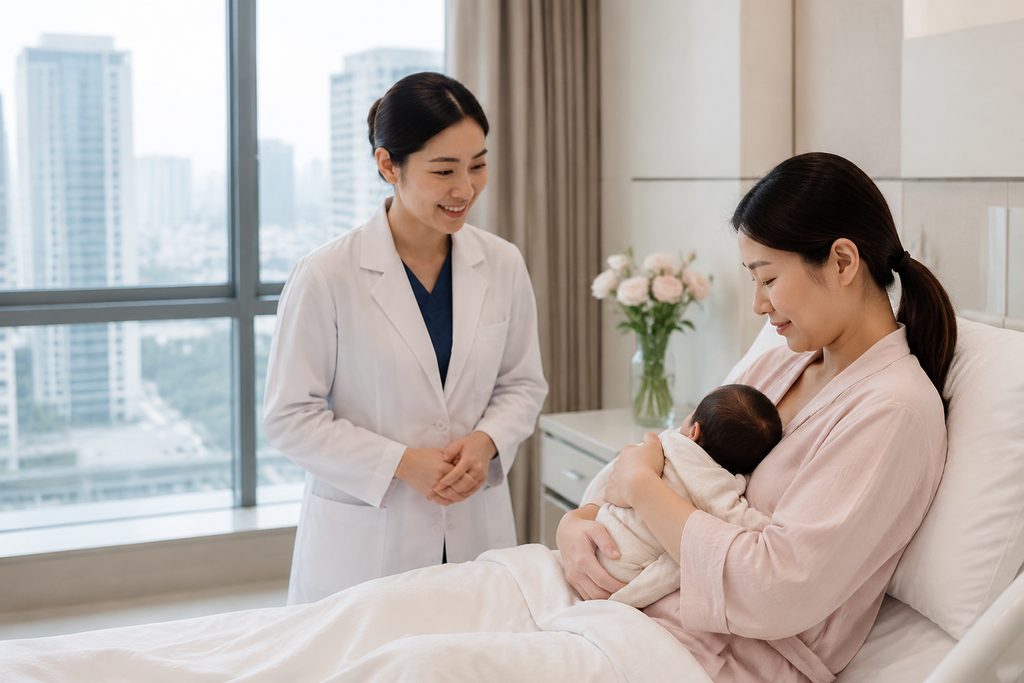
Postpartum Checkup in China: A Guide for New Mothers
Roughly 1 in 5 international mothers living in China delays her six-week postpartum visit — and the reason is rarely medical. It is confusion about where to go, what it costs, and whether anyone will speak her language. Understanding the postpartum checkup cost China hospitals charge, and how the system actually works, removes most of that friction. This guide walks through what the visit involves, who it suits, and how to arrange one without guesswork.
Here is the part nobody mentions upfront: China’s public hospital system is not built around appointment-based preventive care. It is built around volume. A major tertiary hospital may see 10,000 outpatients in a single day. That reality shapes everything about how you book, how long you wait, and why the private and international departments exist at all.
Postpartum Checkup in China: The Short Answer
A standard six-week postpartum checkup at a Chinese public hospital costs roughly $30 to $120 out of pocket, depending on the city and how many tests are included. At a private international clinic, expect $150 to $500. The visit itself takes 30 to 90 minutes with the doctor — but plan for two to four hours on site once registration, payment, and queuing are counted.
The complication is access. Public hospital obstetrics and gynecology clinics generally do not accept advance bookings from overseas. You register in person on the day, take a number, and wait. That single rule is why so many international families end up at private international hospitals or use a coordination service instead.
The core trade-off: public hospitals offer world-class clinical depth at a fraction of Western prices, but demand local-language navigation and same-day queuing. Private international hospitals offer English-speaking staff, scheduled appointments, and insurance billing — at roughly 3 to 6 times the public price.
Who This Is Right For — and Who It Isn’t
The postpartum checkup is not optional care. It screens for conditions that can quietly worsen for months: retained placental fragments, postpartum anemia, thyroid dysfunction, uterine infection, and postpartum depression. Skipping it is a genuine risk, not a convenience decision.
Typically a good fit for a China-based checkup:
- You delivered in China and are still in the country at the four-to-eight-week mark
- You delivered abroad and relocated to China within the first few months
- You want the visit bundled with newborn assessment, which many hospitals offer together
- You are comfortable with either a bilingual companion or a private international clinic
- You need documentation for an employer, insurer, or your home-country physician
Where it may not be the right path:
- You are experiencing heavy bleeding, fever above 38°C, chest pain, or severe headache — go to an emergency department immediately, not a scheduled checkup
- You have a complex surgical history from delivery that your delivering surgeon abroad needs to review first
- You are outside China and your home system already covers the visit at no cost — traveling for routine postpartum care rarely makes financial sense
- You delivered more than 12 weeks ago with no symptoms; the standard window has passed, though a visit is still reasonable
Being honest about that last group matters. Postpartum care is not a procedure worth flying for. It is a visit worth doing well wherever you already are.
The Options, Compared
Three realistic routes exist for a postpartum checkup in China. They differ less in clinical quality than in language, scheduling, and price.
| Factor | Public Tertiary Hospital (Standard) | Public Hospital International / VIP Department | Private International Hospital |
|---|---|---|---|
| Typical cost | $30–$120 | $150–$400 | $150–$500 |
| Advance booking | Generally not available | Usually possible | Yes, scheduled slots |
| English support | Limited or none | Usually available | Standard |
| On-site time | 2–4 hours | 1–2 hours | 45–90 minutes |
| Payment | Prepay, claim insurance later | Prepay, claim later | Often direct insurance billing |
| Best for | Cost-sensitive, Chinese-speaking, flexible on timing | Balanced cost and convenience | Non-Chinese speakers, tight schedules |
Which column fits you? If you speak Mandarin or have a Chinese-speaking partner and your schedule is flexible, the standard public route delivers excellent care for very little money. If language is the barrier, the international department is the pragmatic middle. And if you carry international insurance that settles directly, a private hospital like United Family or Jiahui removes nearly all friction — you can browse options on our private international hospitals page.
What the Visit Actually Involves
A Chinese postpartum checkup covers broadly the same ground as its Western equivalent, with a few local differences worth knowing before you walk in.
Expect a blood pressure and weight check, a blood panel looking at hemoglobin and sometimes thyroid function, a pelvic examination to assess uterine involution and perineal or cesarean incision healing, and a conversation about bleeding, feeding, mood, and contraception. Many hospitals add a pelvic ultrasound — this is more routine in China than in the US or UK, and it is genuinely useful for confirming the uterus has returned to normal size and that no retained tissue remains.
One cultural note: Traditional Chinese Medicine concepts shape some of the advice you may receive, particularly around the yuezi or “sitting the month” recovery period. Recommendations about avoiding cold foods or drafts may come up. You are free to follow or decline. If TCM recovery support interests you, our Traditional Chinese Medicine page explains what acupuncture, moxibustion, and herbal care typically involve for postpartum recovery.
Screening for postpartum depression is increasingly standard, though it is not universal. If you are struggling with mood, say so directly — you may need to raise it rather than wait to be asked.
How Long Does a Postpartum Checkup Take — and What Drives the Time
The clinical encounter is short. The surrounding logistics are not.
At a private international hospital, budget 45 to 90 minutes door to door. At a public hospital’s standard clinic, the same visit can consume half a day. Registration, payment windows, the ultrasound queue, and the pharmacy are all separate stops, often on different floors. A bilingual medical companion exists precisely to compress that — the service runs from $300 per day and handles registration, queuing, payment, wayfinding, and translation while you focus on the appointment.
Timing also depends on what you add. A checkup bundled with a newborn weight and jaundice check takes longer. A visit that includes a cervical smear or an IUD consultation adds a step. Ask when you book so you can plan childcare.
Practical Considerations for International Mothers
Documents first. Bring your passport, your delivery discharge summary, and any records from your delivering hospital. If those records are in a language other than Chinese, a translated summary helps enormously — the receiving doctor will otherwise be working blind on your obstetric history.
On payment, Chinese public hospitals require prepayment and issue receipts you submit to your insurer afterward. Private international hospitals frequently bill insurance directly, but confirm your specific policy is accepted before you go, not after.
Visa matters only if you are traveling in for care. Medical treatment falls under the S2 short-stay category, with S1 for stays beyond 180 days; accompanying family members apply under the same category. Requirements shift, so verify current rules with your nearest Chinese embassy or consulate and bring supporting hospital documentation. Note that the M visa is for commercial and trade activity and has nothing to do with medical treatment.
Finally, plan the handoff. Ask for a written summary in English before you leave the hospital. If you return home within a few months, that document is what your own physician will rely on.
Frequently Asked Questions
Yes. A routine six-week checkup is a low-risk outpatient visit at any accredited hospital, and China’s top tertiary facilities handle enormous obstetric volumes every year. The realistic risks are logistical, not clinical: language gaps, rushed consultations, and difficulty following up if you do not have a way to reach the doctor afterward. Choose a hospital with interpretation support and you remove most of that.
At private international hospitals, usually yes. At standard public hospital clinics, generally no — registration happens in person on the day. Public hospital international and VIP departments sit in between and often accept advance arrangements. If you need certainty about a date, the private or international-department route is the honest answer.
It depends entirely on your policy and the hospital. International health plans often reimburse public hospital care and may settle directly with private international hospitals. Travel insurance typically excludes routine postpartum care. Call your insurer with the specific hospital name before the visit — not after.
Most findings are minor and manageable: anemia, slow wound healing, mild thyroid changes. If something more significant appears, you will be referred onward within the same hospital system, and follow-up is arranged through that department. This is exactly why the checkup exists — early detection is the point.
Tip: Schedule your checkup for the six-week mark, but do not wait if you feel unwell. Persistent heavy bleeding, fever, or worsening pain warrants urgent care, not a scheduled appointment.
Your Next Step
A postpartum checkup in China is affordable, clinically solid, and easier to arrange than the system first suggests — provided you know which route matches your language needs and budget. The care is there. The navigation is the variable.
We are China Medical Services, a coordination service, not a hospital and not a provider of medical advice. We help international patients find the right facility, arrange appointments, and provide bilingual support on the day — including written second opinions and video consultations with specialists when a case needs review before you commit to travel. If you would like help figuring out which option fits your situation, you can start with a free consultation — no obligation, just a clear answer.
This article is for general information only and does not constitute medical advice. Always consult a qualified healthcare provider about your individual condition. Prices are indicative and vary by hospital, city, and case complexity.
For more medical information and treatment options in China, visit chinamedservices.com (China Medical Services).
