Private vs Public Hospital: Verify the Type Before You Fly
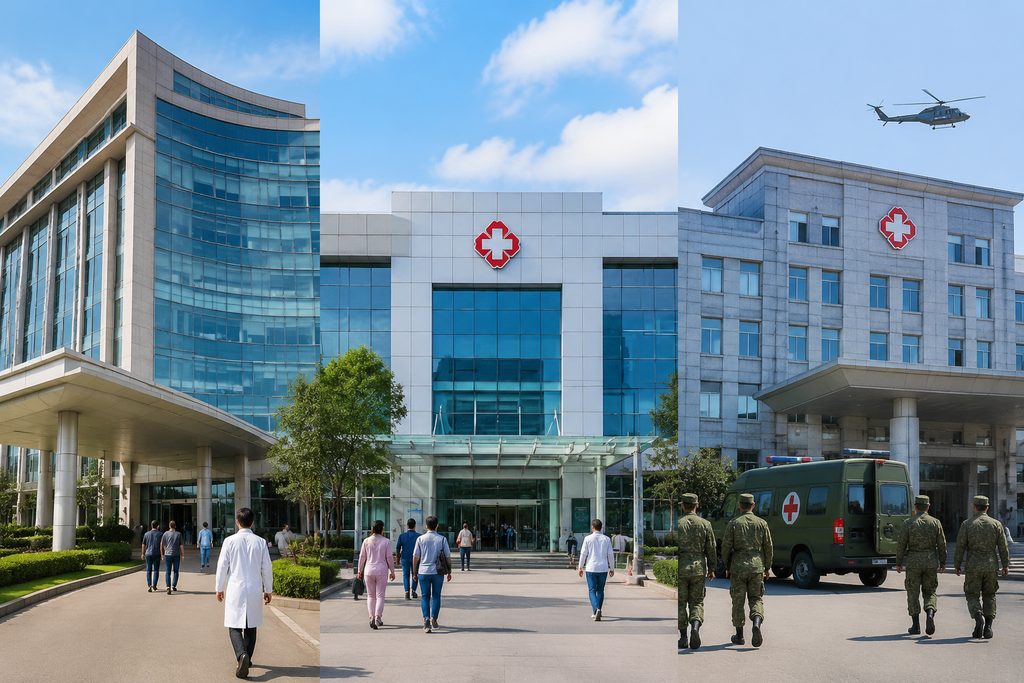
Private vs Public Hospital in China: The Short Answer
Have you ever booked a medical appointment abroad only to realize halfway through the phone call that you have no idea what kind of facility you’re actually dealing with? It happens more often than patients admit. The short answer: public hospitals in China are state-run, heavily regulated, and home to the country’s most experienced specialists. Private hospitals are independently owned, often JCI-accredited, and built around service speed and English-speaking staff. Private hospital cost China typically runs 1.5 to 3 times higher than public hospital rates for comparable procedures — but the gap narrows dramatically when you compare private facilities against the international departments of top public hospitals.
But that one-liner hides a lot. The real question is not which type is “better.” It’s which type matches your medical needs, your language constraints, your insurance setup, and your tolerance for waiting. And before any of that, you need to verify what you’re actually looking at. A clinic calling itself “international” might be a private facility, a public hospital’s VIP wing, or something in between.
Who This Is Right For — and Who It Isn’t
Understanding whether a public or private hospital fits your situation starts with an honest look at what you need. Here’s who typically does well with each option.
Public hospitals (including their international departments) tend to suit:
- Patients seeking the highest-volume specialists for complex procedures like cardiac surgery, oncology, or neurosurgery
- Those who need access to Fudan-ranked departments where surgeons perform thousands of specific procedures annually
- Cost-sensitive patients willing to trade some convenience for significantly lower fees
- Patients with conditions where clinical experience outweighs hotel-like amenities
Private international hospitals tend to suit:
- Patients who need same-week appointments and minimal waiting
- Those with international insurance policies that reimburse or directly settle with private facilities
- Families traveling with children who need a Western-style care environment
- Patients seeking routine care, checkups, or minor procedures without navigating a massive public campus
You should think twice about private facilities if your case demands a super-specialist whose entire career has been inside a single public hospital system. Some of China’s best surgeons see private patients only through their public hospital’s international department — not at standalone private clinics. And you should think twice about public facilities if you have no Chinese language support and cannot arrange a bilingual companion. A public hospital’s standard outpatient floor sees over 10,000 visits per day in major cities. Without language help, that environment is overwhelming.
The Options, Compared
Here’s a direct comparison of what you’re actually choosing between when you evaluate public hospital vs private hospital China options as a foreign patient.
| Factor | Public Hospital (Standard) | Public Hospital (International Dept) | Private International Hospital |
|---|---|---|---|
| Typical consultation fee | $15–$50 | $100–$300 | $150–$400 |
| Wait time for specialist | Same-day queue, hours of waiting | 1–7 days | Same day to 3 days |
| English-speaking staff | Rare | Standard | Standard |
| Insurance direct billing | No — pay upfront, claim later | Sometimes | Yes, with major international insurers |
| Surgery scheduling | After in-person consult, then queue | After consult, priority scheduling | After consult, usually fast |
| Specialist depth | Highest-volume, most experienced | Same specialists as standard | Good, but fewer super-specialists |
| Cost for cardiac bypass (example) | $12,000–$20,000 | $18,000–$30,000 | $25,000–$45,000 |
Which column fits you? If you need a top cardiac surgeon and can arrange language support, the public hospital standard track delivers unmatched clinical value. If you want the same surgeon with English support and shorter waits, the international department is the sweet spot. If your case is routine and your insurance covers it, a private international hospital removes nearly every logistical headache.
How to Verify Hospital Type in China — Without Getting Misled
This is the section that answers the search you actually typed. How to verify hospital type in China is not as simple as checking a website’s “About Us” page. Many private clinics use names that sound public, and some public hospitals market their international wings with branding that looks private. Here’s what our team checks before recommending any facility.
First, look at the hospital’s registration. Public hospitals in China are affiliated with a university or a government health authority. Names like “Peking Union Medical College Hospital” or “Zhongshan Hospital Fudan University” signal public, university-affiliated institutions. Private facilities have corporate names — “United Family Healthcare,” “Jiahui Health,” “ParkwayHealth.” If the name includes a university, it’s almost certainly public.
Second, check the Fudan Hospital Ranking. The Fudan-ranked Top 100 hospitals are overwhelmingly public. If a facility claims to be “top-ranked” but does not appear in the Fudan comprehensive or specialty reputation lists, verify what ranking they’re citing. Some private hospitals reference JCI accreditation (an international quality standard) rather than domestic rankings — that’s legitimate, but it’s a different measure.
Third, look at pricing structure. Public hospitals post standardized fee schedules set by provincial pricing bureaus. Private hospitals set their own rates. If you see a private hospital price list Shanghai or Beijing facility advertising package pricing for consultations, imaging, and procedures, that’s a private entity. Public hospitals rarely bundle services into packages.
Fourth, ask one direct question: “Is this facility a public hospital, a public hospital’s international department, or a private hospital?” A legitimate coordinator or hospital representative will answer without hesitation. Evasive answers are a red flag.
What Private Hospital Cost China Really Means for Your Budget
Private hospital cost China varies enormously by city, facility brand, and procedure. Shanghai and Beijing private international hospitals charge the highest rates in the country. Here’s what you can expect as rough ranges.
A specialist consultation at a private international hospital in Shanghai typically runs $150–$400. At United Family or Jiahui, a comprehensive health screening package ranges from $800 to $3,000 depending on scope. An MRI at a private facility costs $500–$1,200, while the same scan at a public hospital’s international department might cost $300–$800, and at a public hospital’s standard department, $100–$300.
Surgical costs show the widest gaps. A routine laparoscopic procedure that costs $5,000–$8,000 at a public hospital might run $12,000–$20,000 at a private international hospital. But the private facility often includes private recovery rooms, English nursing staff, and direct insurance billing. Whether that premium is worth it depends on your insurer and your comfort priorities.
What drives the variance? Three things: the facility’s overhead (private hospitals maintain lower patient volumes with higher service standards), the specialist’s reputation (top surgeons command premium rates even within public systems), and your insurance arrangement. Patients paying out of pocket can sometimes negotiate package rates at private facilities — something that never happens at public hospitals.
One more thing. Is private hospital better than public in China for your specific case? If “better” means faster, more comfortable, and English-friendly, then yes, often. If “better” means the highest-volume specialist for a rare or complex condition, then no. The right question is not which type is better — it’s which type is better for what you need this month.
Practical Considerations: Access, Visas, and Payment
Can foreigners go to public hospitals in China? Yes. Foreigners can access public hospitals, but with real constraints. Standard outpatient departments require on-site registration, same-day queueing, and Chinese language ability. You cannot book a standard public hospital appointment from overseas weeks in advance. The international departments of public hospitals do accept advance bookings, and that’s where most foreign patients land.
For any medical travel to China, you’ll need an S2 visa, which covers short-term private affairs including medical treatment. Family members accompanying you also apply for S2 visas. If your treatment requires a stay beyond 180 days, the S1 visa applies. The M visa is for commercial and trade activities — it is not a medical visa. Hospital invitation letters and treatment plans support your S2 application, but approval is never guaranteed.
Payment works differently by facility type. Public hospitals require upfront payment — you pay for each consultation, test, and procedure as you go, then claim reimbursement from your insurer afterward. Private international hospitals frequently offer direct billing with major insurers like Cigna, Aetna, Allianz, and Bupa. Before committing, confirm with your insurer whether the specific facility is in-network.
Language support matters more than most patients expect. Even in Shanghai and Beijing, standard public hospital staff rarely speak clinical English. Our bilingual medical companion service exists precisely because this gap is the single biggest friction point for foreign patients in public settings.
Frequently Asked Questions
Check the name for a university affiliation — that signals public. Check the Fudan ranking lists. Check whether they publish standardized government fee schedules or their own package pricing. And ask directly. Any legitimate facility will state its ownership structure plainly.
For routine and moderate-complexity surgery, private hospitals offer faster scheduling, private rooms, and English support. For high-complexity procedures — cardiac bypass, complex oncology resections, neurosurgery — public hospitals hold the advantage in specialist experience and case volume. Many top public surgeons only operate at their home institution.
At standard public hospital departments, no direct billing — you pay upfront and submit claims. At public hospital international departments, some insurers offer direct billing, but it varies by facility and policy. At private international hospitals, direct billing is standard with major insurers. Always confirm with your insurer before treatment.
This happens. Private hospitals in China typically have strong generalists and specialists in common fields, but they may not employ the top-ranked super-specialists for rare conditions. If your case escalates, you may need a referral to a public hospital’s specialist department. A good coordinator will flag this risk before you commit.
A specialist consultation at a private international hospital in Shanghai typically costs $150–$400. If you need imaging or lab work, add $300–$1,200 depending on scope. Package health screenings run $800–$3,000. These are ranges — final pricing varies by facility and case complexity.
Your Next Step
Choosing between a public and private hospital in China is not a one-time decision — it’s a sequence of judgment calls about your condition, your budget, your language needs, and your tolerance for waiting. Most international patients end up somewhere in between: a public hospital’s international department, where the country’s best specialists meet English-speaking coordination at a price below standalone private care.
We are China Medical Services, and we help international patients navigate this exact decision. We are not a hospital. We do not diagnose or treat. What we do is verify hospital types, match you with appropriate facilities, coordinate appointments, and provide bilingual support on the ground. If you’re weighing your options, start with a free consultation at our patient services page. Tell us what you need, and we’ll help you figure out which type of hospital actually fits.
For more medical information and treatment options in China, visit chinamedservices.com (China Medical Services).
