Proton Therapy in China: Which Hospitals Offer It and How We Match You
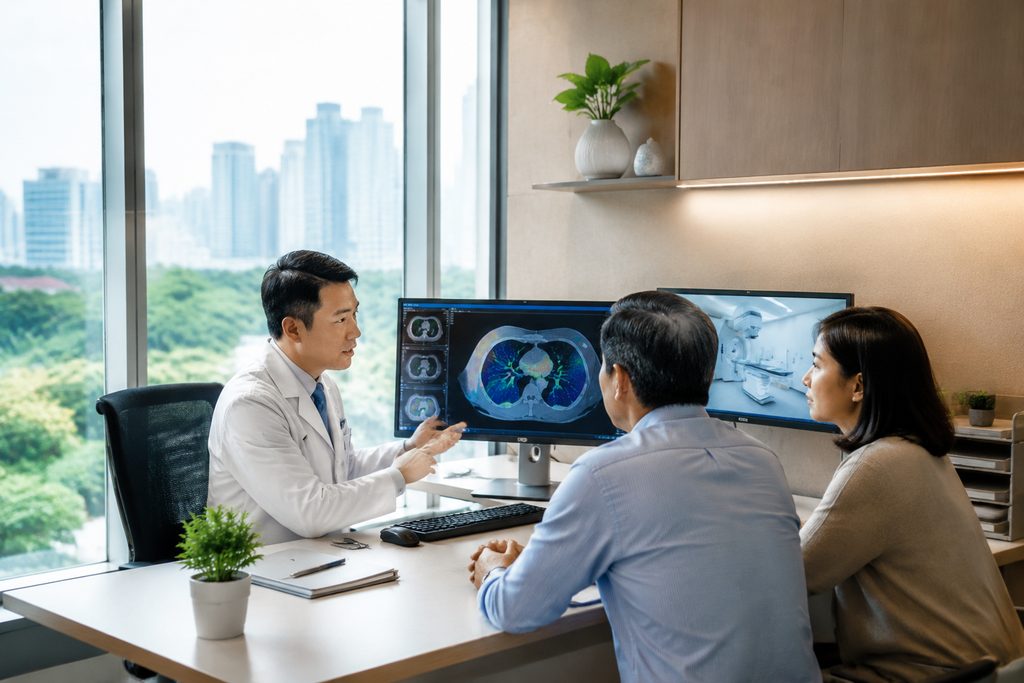
Proton therapy sounds like something from a science fiction novel. In plain terms, it is a form of radiation treatment that uses a beam of protons instead of standard X-rays. The advantage is precision. Protons stop at the tumor and deposit most of their energy there. Normal tissue behind the tumor gets almost nothing. That matters when a tumor sits next to the spinal cord, the brainstem, or a child’s developing organs.
So when a patient asks us, “Is proton therapy available in China?” the answer is yes. China has invested heavily in this technology over the past decade. Several centers now operate modern proton systems. But access is not simple. The machines are expensive, the indications are specific, and the process for international patients requires careful coordination. That is where we come in.
At China Medical Services, we connect patients from Europe, the Middle East, Southeast Asia, and North America with the right Chinese hospital for their specific diagnosis. We do not treat cancer. We do not promise cures. We handle the logistics, the language, the records, and the matching so you can make a clear decision.
What Is Proton Therapy for Cancer, Exactly?
Standard radiation therapy uses photons. Photons pass through the body, releasing energy along the entire path. The tumor gets a dose, but so does healthy tissue in front of and behind it. Proton therapy flips that model. Physicists can tune a proton beam to stop at a precise depth. The bulk of the radiation lands inside the tumor. Beyond that point, the dose drops to nearly zero.
That difference explains why proton therapy matters for certain cases. Pediatric cancers, especially brain and spinal tumors, benefit because children are more sensitive to radiation damage. Tumors near critical structures — the optic nerve, the brainstem, the base of the skull — benefit because the margin for error is tiny. Some prostate cancers, certain head and neck tumors, and selected liver cancers also fall into the category where protons offer a meaningful advantage.
But not every cancer needs proton therapy. For many patients, modern photon techniques like IMRT or stereotactic radiosurgery produce excellent results at lower cost. A radiation oncologist must review the imaging, the pathology, and the patient’s history before anyone can say whether protons are actually the right tool. We always recommend that written evaluation first.
Which Hospital in China Offers Proton Therapy?
Several centers across China now operate proton therapy systems. The most established facilities cluster in Shanghai, Beijing, and a few other major cities. Shanghai Proton and Heavy Ion Center stands out because it runs both proton and carbon-ion systems under one roof. It has treated thousands of patients since opening and maintains an international patient office with English-speaking staff. For many patients searching for the best proton therapy hospital Shanghai has to offer, that center is the natural starting point.
Other facilities include the proton center at Shanghai Jiao Tong University-affiliated hospitals and newer systems in cities like Hefei and Guangzhou. The technology is spreading. But the number of operational proton rooms in China remains small compared to the United States or Japan. That scarcity affects scheduling. It also affects cost.
Our team maintains a current database of 340+ top-ranked hospitals across 37 cities. That includes every operational proton center we have verified. When you contact us, we check which facilities actually accept international patients, which have open treatment slots, and which have experience with your specific tumor type. Not every center accepts every case.
How This Actually Works, Step by Step
Here is the real sequence, from first contact to treatment decision.
Step 1: You send us your records. That means the pathology report, recent imaging (CT, MRI, PET), clinical notes, and a summary of any prior treatment. If the documents are not in English or Chinese, we arrange translation.
Step 2: A radiation oncologist reviews the case. We route your file to a specialist at one of the proton centers or to an independent expert who can assess whether proton therapy is even appropriate. This is a written second opinion in most cases. It costs $300–500 and takes about one to two weeks.
Step 3: You get a written assessment. The report tells you whether protons are indicated, what the proposed treatment course would look like, how many fractions (sessions) are needed, and what the expected side effects might be. It is for reference only — not a prescription.
Step 4: If protons are appropriate, we coordinate a video consultation. You speak directly with the treating team. You ask about the plan, the machine, the immobilization devices, the follow-up schedule. This costs $500–800 for a top-specialist video consultation.
Step 5: You decide. If you proceed, we handle the hospital registration, the visa support letter, the appointment scheduling, and the on-the-ground logistics. If you do not proceed, you have a clear written opinion that you can take to any other center in the world.
A Realistic Timeline
People underestimate how long this takes. Here is an honest breakdown.
| Stage | What Happens | Typical Duration |
|---|---|---|
| Day 1–3 | You submit records; we confirm completeness and arrange translation if needed | 2–3 days |
| Week 1–2 | Radiation oncologist reviews the case and writes the second opinion | 7–14 days |
| Week 3 | Video consultation with the proton center team (if indicated) | 3–5 days to schedule |
| Week 4–6 | Visa application (S2 visa for medical treatment, supporting documents from the hospital) | 2–4 weeks depending on embassy |
| Week 6–8 | Arrival in China, simulation appointment, treatment planning scans | 3–5 days |
| Week 8 onward | Treatment delivery (daily fractions, typically 5 days per week) | 2–7 weeks depending on protocol |
Document translation is the step people forget. If your records are in German, Arabic, or Russian, factor in extra days. The visa step also varies by country. Some embassies process S2 applications in a week. Others take a month. We provide the hospital invitation letter and guidance, but we cannot control the embassy.
And here is a fact that surprises many patients: you cannot simply book a proton therapy slot from overseas. Public hospitals in China require an in-person consultation before treatment. The international department or VIP channel can streamline this, but the evaluation always comes first. That is why the written second opinion matters so much. It tells you whether traveling to China makes sense at all.
What Can Go Wrong — and What Happens Then
Let us be direct about the failure modes.
The tumor is not suitable for protons. This happens more often than patients expect. Maybe the tumor is too diffuse. Maybe prior radiation makes re-irradiation too risky. Maybe photon therapy would work just as well. If the second opinion says protons are not indicated, we will tell you. We will not push you toward a treatment you do not need. The second opinion fee is not refundable in that case — the work was done — but you will have a clear answer.
The wait time is longer than expected. Proton centers have limited treatment rooms. A machine can only treat so many patients per day. If the center is at capacity, you may wait weeks or months for a slot. We check availability before you commit to travel. But availability can shift. If a slot opens later than planned, we rework the schedule.
Insurance refuses to cover it. Proton therapy is expensive anywhere. Some international insurers cover it for specific indications. Many do not. We provide itemized cost estimates and treatment plans that you can submit for pre-authorization. We do not handle insurance billing directly, but we help you prepare the paperwork.
The visa is delayed. We cannot guarantee visa approval. No one can. We provide the hospital documentation and a clear explanation of the S2 visa purpose. If the visa is denied, we cancel or reschedule the hospital appointments. Any coordination fee for appointments we could not secure is refunded in full.
You arrive and the plan changes. Sometimes the simulation scan reveals something the original imaging missed. The tumor may have grown. The anatomy may have shifted. The treating team adjusts the plan. That is normal. It is also why we stay involved throughout the treatment course, not just at the beginning.
Proton Therapy Cost China: What You Actually Pay
Let us talk numbers. The proton therapy cost China patients pay depends on the number of fractions, the complexity of the plan, and the hospital tier. A full course of proton therapy in China typically ranges from $30,000 to $80,000. Some cases fall outside that range. Pediatric protocols with anesthesia support cost more. Complex re-irradiation cases cost more.
Compare that to the United States, where a full proton course commonly runs $100,000 to $200,000. In Western Europe, prices sit somewhere between $60,000 and $120,000. Proton therapy centers abroad prices vary widely, but China consistently lands at the lower end of the spectrum. The savings are real. They are not 90% savings — anyone promising that is misleading you — but they are substantial.
| Region | Typical Full Course Cost (USD) | Notes |
|---|---|---|
| China (top public proton center) | $30,000 – $80,000 | Varies by fractions and complexity |
| United States | $100,000 – $200,000 | Higher for pediatric or complex cases |
| Western Europe | $60,000 – $120,000 | Depends on country and insurance |
| Japan | $50,000 – $90,000 | Often requires domestic referral |
These are estimates. The final quote depends on the hospital, the number of fractions, whether imaging and anesthesia are included, and whether you go through the international department or the standard public channel. The international department costs more — typically 1.5 to 2 times the standard rate — but it comes with English-speaking staff and smoother coordination.
Our coordination services are separate from hospital charges. A written second opinion costs $300–500. A top-specialist video consultation costs $500–800. Hospital appointment coordination starts at $300. And here is the key point: any consultation fee you pay to us is credited in full toward on-the-ground coordination if you proceed with treatment in China within 90 days. That credit applies to our coordination fee only, never to hospital treatment charges.
How We Match You to the Right Proton Center
Matching is not about picking the most famous hospital. It is about picking the right one for your specific situation.
We start with your diagnosis. A pediatric brain tumor and a prostate cancer case go to different centers. Some proton facilities specialize in pediatric cases and have dedicated anesthesia teams. Others focus on adult solid tumors. Some have more experience with re-irradiation. We map your case against the actual treatment volumes and published outcomes at each center.
Then we look at logistics. Which city is easiest for you to reach? Shanghai has direct flights from most major international hubs. Beijing does too, but the visa processing and local navigation can be more complex. If you are coming from the Middle East, Guangzhou might be more convenient. If you are coming from Europe, Shanghai is often the shortest flight.
Language matters too. Not every proton center has a fully bilingual international office. The ones that do make a huge difference when you are trying to understand treatment plans, side effect management, and follow-up instructions. We only recommend centers where we know the international pathway works.
Finally, we look at timing. If you need treatment within six weeks, we check which centers have open slots. If you can wait three months, more options open up. We will tell you the truth about availability rather than promising a slot that does not exist.
You can browse our hospital database by city — Shanghai, Beijing, and Guangzhou all host proton-capable centers — or review specialty rankings on our oncology department pages. But the actual matching happens through a conversation, not a search bar.
Practical Considerations: Records, Visa, Payment, Follow-Up
Let us cover the practical pieces that determine whether this works.
Records. You need complete, recent imaging. Most centers want scans no older than four to six weeks. You need the pathology report. You need a summary of prior treatments — surgery, chemotherapy, radiation. If any of this is missing, the evaluation stalls. We help you assemble it before you pay for a second opinion.
Visa. Medical treatment in China falls under the S2 visa category. The hospital provides an invitation letter confirming your treatment plan. Family members accompanying you also apply for S2 visas. The M visa is for commercial and trade activities — it is not the right category for medical travel. We guide you through the documentation, but approval rests with the embassy.
Payment. Chinese public hospitals generally require prepayment. You deposit funds, and treatment charges draw down from that balance. International departments often accept international bank transfers and major credit cards. Private international hospitals may bill your insurer directly. We clarify the payment structure before you commit.
Language. Even at top proton centers, the day-to-day workflow runs in Chinese. Nurses, technicians, and administrative staff may not speak English. Our bilingual medical companion service — from $300 per day — handles registration, queueing, payment, translation, and navigation. It is not a luxury. It is the difference between a smooth treatment course and a stressful one.
Follow-up at home. Proton therapy does not end when you leave China. You need follow-up imaging at three months, six months, and beyond. Your home oncologist needs the treatment summary and dosimetry data. We make sure you leave with complete records in English so your local team can manage the long-term care.
Frequently Asked Questions
Yes. Several centers accept international patients through their international departments or VIP channels. Availability depends on the specific center, the tumor type, and current scheduling. We verify acceptance and slots before you travel.
You cannot book treatment directly from overseas. The process starts with a written second opinion, followed by a video consultation, then an in-person evaluation at the hospital. We coordinate each step. Hospital appointment coordination starts at $300, and if we cannot secure the appointment we promised, that fee is refunded in full.
A full course in China typically ranges from $30,000 to $80,000, depending on fractions and complexity. In the United States, the same course commonly costs $100,000 to $200,000. The savings are significant but not absolute — and the final quote always varies by hospital and case complexity.
Then the second opinion will say so. We do not push patients toward unnecessary treatment. If protons are not indicated, the oncologist will explain why and suggest alternatives. You will have a clear written assessment that you can take to any other center.
Yes. Family members accompanying you apply for S2 visas with supporting documentation from the hospital. We help prepare the paperwork. The visa category is the same for patients and accompanying family.
Your Next Step
Proton therapy in China is real, accessible, and significantly less expensive than in most Western countries. But it is not for every patient, and the path from overseas to treatment requires careful coordination. We handle the records, the matching, the scheduling, the visa guidance, and the on-the-ground support.
We are China Medical Services. We do not treat cancer, and we do not promise outcomes. We connect you with the right specialists and make the process navigable. If you are considering proton therapy, start with a conversation. Send us your records. Get a written opinion. Decide with clear information, not guesswork.
That first step is simple: request a free consultation and tell us about your diagnosis. We will tell you honestly whether proton therapy in China makes sense for your case.
For more medical information and treatment options in China, visit chinamedservices.com (China Medical Services).
