Proton Therapy China vs Germany: Shorter Wait Times, Lower Cost
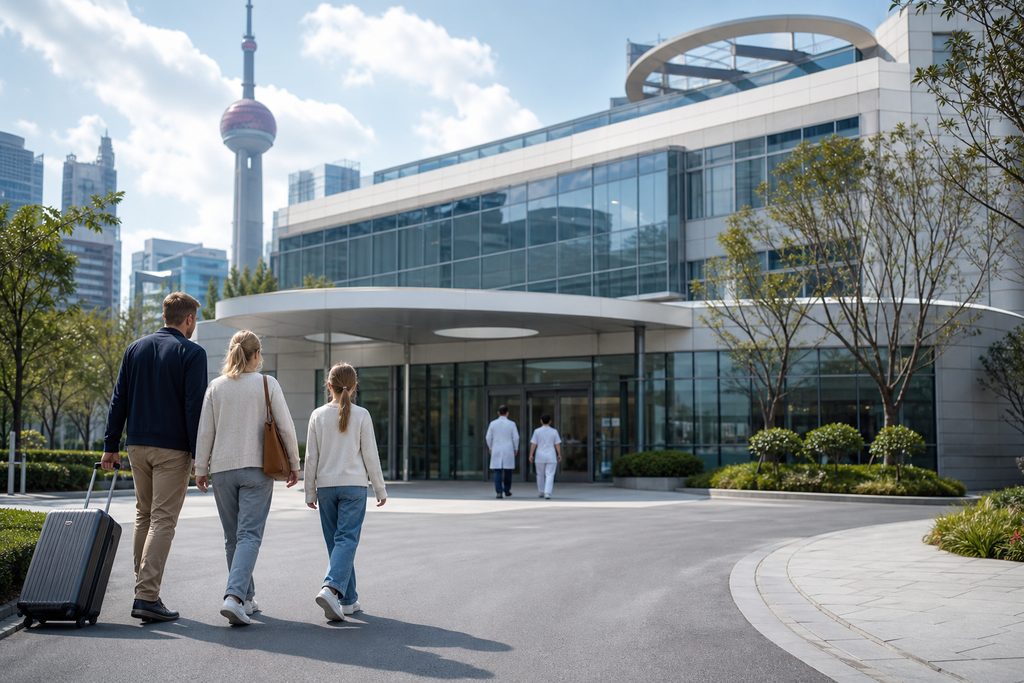
When 52-year-old Andreas from Munich received his prostate cancer diagnosis, his oncologist recommended proton therapy. The news should have brought hope. Instead, it brought a spreadsheet of waiting lists. The nearest German center quoted 6 to 8 weeks before treatment could start. For a man watching a tumor that would not wait, every day felt like a gamble he had not agreed to take.
That timeline is not unusual. Across Western Europe, proton therapy wait times stretch from 4 to 12 weeks depending on the country, the center, and the urgency classification assigned to the case. In the UK, the NHS has historically sent select patients abroad due to capacity constraints at its own facilities. Germany, with its handful of operating centers, faces similar pressure. The math is simple: too many patients, too few gantries. So patients wait. And while they wait, they search for alternatives.
The search that brings many families to our desk is straightforward: is there a way to access the same technology, at the same clinical standard, without the bottleneck? The answer increasingly leads to China.
Key Takeaways
- Proton therapy in China can begin within 7–14 days of confirmed eligibility, compared to 4–12 weeks at many German and Western European centers.
- Treatment costs in Shanghai and other Chinese cities range from $40,000 to $80,000 USD — roughly 40–60% less than comparable German packages — without sacrificing technology or clinical protocols.
- Language barriers, medical record preparation, and visa logistics are real hurdles. A coordinator fluent in both systems can compress a process that otherwise takes months of self-navigation.
- Choosing a center requires looking beyond the machine brand to patient volume, published outcomes, and the team’s experience with your specific tumor type.
The Problem: When a Proven Treatment Stays Out of Reach
Proton therapy is not experimental. It has been used clinically for decades, with clear advantages for tumors near critical structures — the brain, the spinal cord, the optic nerves, pediatric cancers where minimizing radiation scatter matters enormously. The physics makes sense: protons deposit most of their energy at a precise depth, sparing healthy tissue downstream. For certain indications, that means fewer side effects and a lower risk of secondary cancers later in life.
But access remains stubbornly uneven. According to the Particle Therapy Co-Operative Group (PTCOG), as of late 2024 there were approximately 130 operational proton therapy facilities worldwide. Germany operates around 6 to 7 centers depending on how you count satellite sites. The United States has over 40. China, in a remarkable buildout over the past decade, now has more than 10 operational or commissioning proton and heavy ion centers, with additional facilities under construction. The capacity gap between what Europe can offer and what patients need creates the wait. It also creates the price. Scarcity drives cost. In Germany, a full course of proton therapy typically ranges from €60,000 to €100,000 or more, depending on the complexity and number of fractions. For self-paying international patients, the figure can climb higher.
That is the reality Andreas faced. His tumor was localized. Proton therapy was indicated. The technology existed 200 kilometers from his home. And yet the system could not deliver it on a timeline that matched the biology of his disease.
Why China’s Proton Centers Deliver Comparable Care Faster
Clinical Volume Drives Proficiency
A proton center that treats 500 patients a year is not the same as one that treats 100. Volume matters. It sharpens the treatment planning team, refines quality assurance workflows, and builds institutional muscle memory around rare and complex cases. Several Chinese proton centers now treat patient volumes that rival or exceed many Western European facilities. The Shanghai Proton and Heavy Ion Center (SPHIC), which opened in 2015 as China’s first dedicated particle therapy facility, has treated over 6,000 patients. That is not a small series. Their published data on local control rates for head and neck tumors, prostate cancer, and certain pediatric indications align with outcomes reported by established centers in Europe and Japan.
Also relevant: Chinese centers see tumor types and stages that are sometimes diagnosed later than in Western populations. That means their clinical teams develop deep experience with complex presentations — the kind of case that a lower-volume center might refer elsewhere. For an international patient, that breadth of experience translates to a team that has likely managed a case similar to yours, many times over.
Technology Parity, Not a Downgrade
One of the quiet concerns patients voice is whether the machines in China are somehow inferior. The question behind the question: is proton therapy in China as good as Europe? The short answer, based on equipment and published protocols, is yes.
The major Chinese proton centers use the same core technology platforms found in Germany: IBA Proteus systems, Varian ProBeam, Mevion, and in some facilities, domestically developed systems that have undergone rigorous clinical commissioning. SPHIC uses a synchrotron-based system with both proton and carbon ion capability — a combination still rare globally. The treatment planning software, the immobilization devices, the image-guidance systems — these are the same tools your radiation oncologist in Heidelberg or Munich would recognize.
What differs is not the hardware. It is the operational tempo. Chinese centers typically run extended hours and six-day treatment weeks. A gantry that treats patients from 7 a.m. to 9 p.m. simply processes more cases than one running a standard five-day schedule. That operational decision — not a clinical shortcut — is what collapses the wait time from months to days.
Cost Advantage Without Quality Compromise
Let us address the question directly: proton therapy cost China vs Germany reveals a gap that is structural, not promotional. A full course of proton therapy at a top-tier Chinese center typically ranges from $40,000 to $80,000 USD. The same treatment in Germany can cost $100,000 to $150,000 or more for international self-pay patients. That is a 40–60% difference.
Why? Not because corners are cut. Chinese hospital labor costs are lower across every category — radiation oncologists, medical physicists, therapists, nurses. Facility construction costs, while still enormous for a proton center, are moderated by domestic supply chains and government co-investment models. Malpractice insurance burdens are lighter. The result is a price point that reflects local economics, not a discount on safety or outcomes.
For a family liquidating savings or taking out a loan to pay for treatment, that differential is not abstract. It is the difference between treatment and no treatment.
Proton Beam Therapy Shanghai Price: What the Numbers Actually Include
When a patient asks about proton beam therapy Shanghai price, they are usually trying to understand one thing: what is the all-in number I need to budget for? The answer requires unpacking what a quoted price covers — and what it does not.
A typical treatment package at a Chinese proton center includes the initial consultation, treatment planning (including CT simulation and MRI fusion), the full course of proton fractions (often 20–39 sessions depending on the tumor), weekly on-treatment visits with the radiation oncologist, and a post-treatment summary report. Some centers bundle in basic accommodation near the facility or offer negotiated rates at partner hotels. What is almost never included: international airfare, long-stay visa fees, interpreter services, meals, and any management of pre-existing conditions unrelated to the cancer diagnosis.
| Cost Component | China (Shanghai, Approximate Range USD) | Germany (Approximate Range USD) |
|---|---|---|
| Full proton therapy course (treatment planning + fractions) | $40,000 – $80,000 | $100,000 – $150,000+ |
| Pre-treatment workup (imaging, labs, pathology review) | $2,000 – $5,000 | $5,000 – $10,000 |
| 8-week accommodation near center | $3,000 – $6,000 | $6,000 – $12,000 |
| Interpreter / coordination services (8 weeks) | $4,000 – $8,000 | $8,000 – $15,000 |
| International airfare (round-trip, economy) | $1,500 – $3,000 | N/A (domestic or regional) |
| Estimated total (self-pay international patient) | $50,500 – $102,000 | $119,000 – $187,000+ |
These figures are estimates based on publicly available price information and patient-reported data. Actual costs vary by hospital, case complexity, fraction count, and exchange rates. A center may adjust pricing for pediatric cases or offer package rates for specific protocols. Always request a written treatment plan with a detailed cost breakdown before committing.
One more thing about the proton therapy packages China no waiting list concept: it is not that Chinese centers literally have no queue. It is that their capacity currently exceeds domestic demand for certain indications, and international patients can often be scheduled into open slots within days or weeks of confirmed eligibility. That is a function of capacity investment, not a marketing gimmick.
How Long Is the Wait for Proton Therapy Abroad — And What “Fast Track” Actually Means
The question how long is the wait for proton therapy abroad has no single answer. It depends on the country, the center, the tumor type, and the urgency designation. In Germany, a patient with a standard-risk prostate cancer might wait 6–8 weeks. A pediatric brain tumor case might be accelerated to 2–3 weeks. In the Netherlands or France, public system queues can extend to 10–12 weeks for non-urgent indications. In the UK, the NHS proton service at The Christie and UCLH manages demand through centralized referral, and international self-pay access is limited.
China’s timeline is different. The process typically moves like this:
Week 1: Patient submits medical records (pathology report, imaging on CD/DICOM format, clinical summary in English). The center’s international desk reviews the case and confirms whether proton therapy is indicated. If records are incomplete, additional tests may be requested.
Week 2: A video consultation with the treating radiation oncologist. The doctor reviews the case, explains the proposed treatment plan, and answers questions. If the patient decides to proceed, a treatment slot is reserved and a cost estimate is issued.
Week 3–4: Visa processing. The patient applies for an S2 short-stay visa with supporting documents from the hospital — an invitation letter, treatment confirmation, and accommodation details. Processing times vary by embassy, but 5–10 business days is typical. During this window, the patient arranges flights and accommodation.
Week 4–5: Arrival in China. Within the first few days, the patient completes any remaining pre-treatment workup — repeat imaging, fiducial marker placement if needed, immobilization device fabrication. Treatment planning finalization takes a few more days.
Week 5 onward: Treatment begins. Daily proton fractions proceed on schedule, typically Monday through Saturday.
Total elapsed time from initial inquiry to first treatment fraction: 3 to 5 weeks. That is what book proton therapy China fast track looks like in practice. It is not a special queue. It is a system with available capacity and a dedicated international patient pathway.
Important: No legitimate medical facility can guarantee a specific start date before reviewing your full records. Any promise of treatment within “48 hours” or without a thorough clinical review should be treated as a red flag. Fast is good. Rash is dangerous.
Evaluating a Proton Center: What to Look For Beyond the Brochure
Choosing a proton therapy center from 8,000 kilometers away is not like booking a hotel. You cannot rely on a website gallery or a polished video tour. You need to evaluate the things that actually predict a good outcome.
Start with volume. Ask the center directly: how many patients with my specific diagnosis have you treated in the past three years? A center that has treated 20 prostate cancer patients with protons is not the same as one that has treated 500. Volume correlates with outcome across nearly every surgical and radiation oncology domain. This is well-documented in the medical literature — the volume-outcome relationship is real, and it applies to proton therapy as much as to any complex procedure.
Next, ask about published outcomes. Reputable centers track their data. They know their local control rates, their toxicity profiles, their patient satisfaction scores. They should be willing to share summary statistics, even if individual predictions are impossible. If a center cannot or will not share any outcome data, that is information in itself.
Look at the team, not just the machine. A proton center is only as good as the people who plan and deliver the treatment. Who is the chief medical physicist? Where were the radiation oncologists trained? Do they have experience with international patients, or will you be the first non-Mandarin speaker they have treated? These questions matter.
Finally, understand the practical support structure. A center that offers integrated interpreter services, international patient coordinators, and clear billing processes is signaling that they take foreign patients seriously. A center that treats your case as an afterthought to their domestic workload will show it in the administrative friction.
Practical Considerations: Records, Visas, and What to Expect on the Ground
Getting to a proton center in Shanghai or another Chinese city requires paperwork, patience, and a clear understanding of what you are walking into. None of it is impossible. But none of it should be underestimated either.
Medical records. Chinese hospitals require a complete clinical summary in English, original pathology slides or high-resolution digital scans, and diagnostic imaging in DICOM format on CD or via secure upload. If your records are in German, French, or another language, plan for certified translation. Incomplete records are the single most common reason for treatment delays — more than visa issues, more than scheduling conflicts.
Visa. Medical treatment in China falls under the S2 short-stay visa category, not the M business visa. Your application needs a formal invitation letter from the treating hospital, proof of treatment booking, accommodation details, and evidence of sufficient funds. Processing is handled by the Chinese embassy or consulate in your home country. Most patients receive a 60- to 90-day stay permit, which covers a standard proton therapy course. If your treatment extends beyond that, the hospital can assist with an extension application. Do not enter China on a tourist (L) visa and then seek medical treatment — that creates legal complications for both you and the hospital.
Language. Most Chinese proton centers have some English-speaking staff, particularly in their international departments. But the depth of English proficiency varies. Your radiation therapist may speak functional English. The nurse on the evening shift may not. For daily logistics — pharmacy visits, food ordering, transportation — Mandarin is the default. Many international patients arrange a bilingual medical companion for the duration of their stay. This is not a luxury. It is a practical tool that prevents misunderstandings about medication instructions, appointment times, and symptom reporting.
Payment. Chinese hospitals operate on a pre-payment model. You pay for each phase of treatment before it begins — the workup, the treatment planning, the fractions. Major centers accept international credit cards and wire transfers. Some accept WeChat Pay or Alipay linked to foreign cards, though transaction limits apply. Private international health insurance may reimburse Chinese proton therapy, but you must confirm this with your insurer before travel. Most Chinese centers will provide the detailed invoices and medical reports needed for a reimbursement claim, but they will not bill your insurer directly.
After returning home. Plan for follow-up before you leave. Your Chinese radiation oncologist will provide a treatment summary and recommendations for surveillance imaging. You need a doctor in your home country who will receive that handoff and manage your long-term follow-up. Ideally, identify that doctor before you travel and send them the treatment plan for awareness. Continuity of care does not happen by accident.
Frequently Asked Questions
Based on published clinical data from major centers like the Shanghai Proton and Heavy Ion Center, outcomes for common indications — prostate cancer, base-of-skull tumors, pediatric cancers — are comparable to those reported by European and Japanese facilities. The technology platforms are the same. The treatment protocols follow international standards. The variable that matters most is team experience with your specific diagnosis, which is why asking about case volume is more informative than asking about the machine brand.
What if I need urgent medical attention for a complication during treatment?
Chinese proton centers are typically located within or adjacent to full-service hospitals with emergency departments, intensive care units, and on-call specialists. A severe complication during proton therapy is rare — the treatment is non-invasive and delivered on an outpatient basis — but if one occurs, you are not in a standalone facility. The center’s radiation oncologist coordinates with the hospital’s broader medical staff. That said, for patients with significant co-morbidities or a history of unstable medical conditions
For more medical information and treatment options in China, visit chinamedservices.com (China Medical Services).
