Proton Therapy Safety in China: Costs, Centers, and What to Know
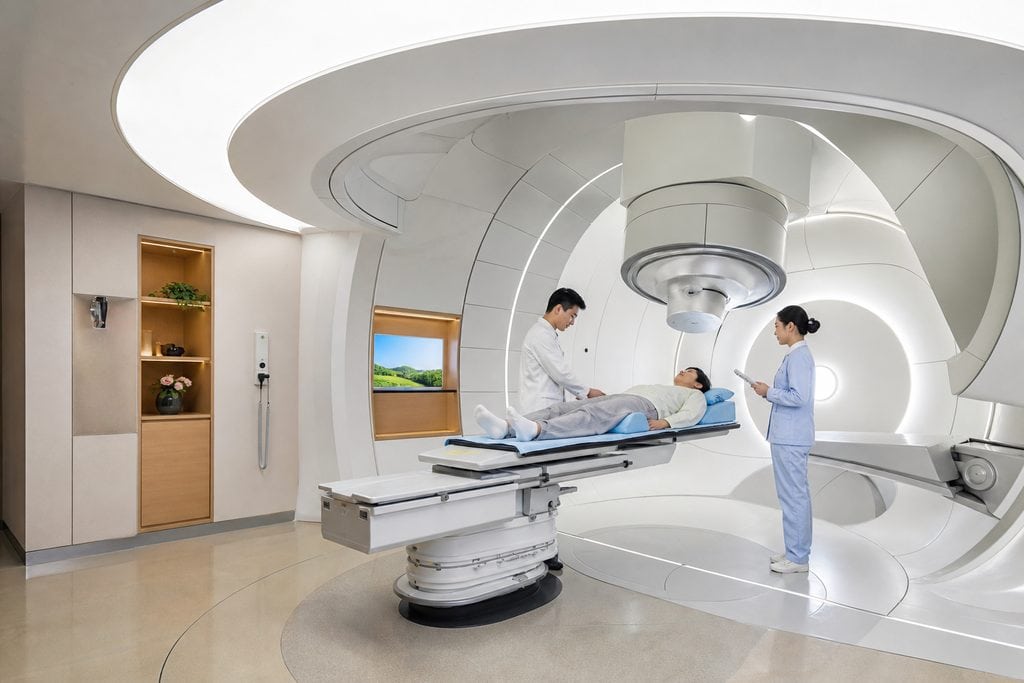
When 42-year-old Michael first heard the diagnosis, he had no idea where to start looking for treatment. A father of two in Manchester, he had a localized tumor near his spinal cord. Surgery carried real risk. Conventional radiation would bathe healthy tissue. His oncologist mentioned proton therapy. Then came the next question: where do we go, and can we afford it? Michael spent three weeks comparing options across the UK, Germany, and Asia. The numbers shocked him. The same treatment that would cost over $150,000 in the United States was priced at a fraction of that in China — but he needed to know one thing before booking a flight. Is proton therapy safe in China?
The short answer: yes, at accredited centers. China now operates more proton and heavy ion facilities than any other country except the United States and Japan. The technology is identical to what you would find at MD Anderson or the Paul Scherrer Institute. The machines come from the same manufacturers — IBA, Varian, Hitachi. The safety protocols follow international standards. But the experience depends heavily on which center you choose, how the treatment plan is designed, and whether you have proper language support.
Is Proton Therapy Safe in China: The Short Answer
Proton therapy uses a beam of protons that stops at a precise depth in the body, delivering its maximum energy directly to the tumor while sparing surrounding healthy tissue. This is not experimental medicine. The FDA cleared proton therapy for clinical use in 1988. Since then, over 300,000 patients worldwide have received proton treatment. China’s first proton center opened in 2015, and the country has since invested billions of dollars in particle therapy infrastructure.
Safety depends on three factors: the equipment, the physics team, and the radiation oncologists who design the treatment plan. Top Chinese centers employ physicists trained in the United States, Germany, and Japan. They perform daily quality assurance checks. They follow the same dose constraints used in Western protocols. The machines are maintained by the original manufacturers under long-term service contracts.
But not all centers are equal. A handful of facilities in Shanghai, Beijing, and Guangzhou meet rigorous international benchmarks. Others are newer, with less clinical experience. The key is knowing which is which.
Who This Is Right For — and Who It Isn’t
Proton therapy is not for every cancer patient. It offers the greatest benefit when the tumor sits close to critical structures — the brain, spinal cord, optic nerves, heart, or growing bones in children.
Good candidates typically include:
- Pediatric patients with brain tumors, sarcomas, or other solid tumors where radiation to developing tissue causes lifelong damage
- Adults with skull-base tumors like chordomas and chondrosarcomas
- Patients with localized prostate cancer who want to minimize rectal and bladder toxicity
- Head and neck cancers near the salivary glands or optic pathways
- Re-irradiation cases where prior radiation limits further conventional treatment
- Left-sided breast cancer where even small heart doses increase long-term cardiac risk
Who should not pursue proton therapy? Patients with metastatic disease that requires systemic treatment first. Those with tumors that move significantly with breathing, unless the center has motion-management capabilities. And anyone whose tumor could be treated just as effectively with standard IMRT at a fraction of the cost. Proton therapy is a tool, not a miracle. An honest radiation oncologist will tell you when it adds no benefit.
The Options, Compared
The decision is rarely proton therapy versus nothing. It is proton therapy versus other forms of radiation, in different countries, at different price points. Here is how the genuine alternatives stack up:
| Option | Typical Cost (USD) | Wait Time | Technology | Key Consideration |
|---|---|---|---|---|
| Proton therapy in the USA | $120,000 – $200,000 | 2-4 weeks | Pencil-beam scanning | Highest cost; insurance dependent |
| Proton therapy in Germany | $65,000 – $95,000 | 3-6 weeks | Pencil-beam scanning | Strong physics culture; long intake |
| Proton therapy in Japan | $30,000 – $50,000 | 4-8 weeks | Pencil-beam and broad beam | Excellent outcomes; language barrier |
| Proton therapy in China | $25,000 – $60,000 | 1-3 weeks | Pencil-beam scanning | Lowest cost; center selection critical |
| IMRT/VMAT (any country) | $10,000 – $40,000 | 1-2 weeks | Photon-based | More collateral dose; lower cost |
The cost gap is real. Proton therapy price abroad often ranks China as the most affordable destination for patients paying out of pocket. But price should never be the only filter. A poorly planned proton treatment can cause serious harm. The question is not whether China is cheap — it is whether you can access a center with experienced physicists and rigorous quality control.
Safety Infrastructure at Chinese Proton Centers
China’s particle therapy build-out has been deliberate. The Shanghai Proton and Heavy Ion Center opened in 2015 as the country’s first dedicated facility. It treats approximately 1,000 patients per year. The center uses both proton and carbon-ion beams, giving oncologists flexibility for resistant tumors. Its five-year survival data for certain head and neck cancers has been published in peer-reviewed journals.
Other major facilities include the Hebei Yizhou Cancer Hospital Proton Center near Beijing, which operates a Varian ProBeam system — the same machine used at Scripps Proton Therapy Center in San Diego. The Guangzhou Concord Cancer Center opened more recently with IBA equipment. Each of these centers employs international medical physicists and follows commissioning protocols aligned with the American Association of Physicists in Medicine (AAPM) guidelines.
What does that mean for a patient? Daily machine calibration. Independent dose verification. Peer review of every treatment plan. Tumor boards that include surgeons, medical oncologists, and radiation oncologists. These are the safety mechanisms that matter — not the country flag on the building.
Proton Therapy Cost China: What You Actually Pay For
The proton therapy cost China patients encounter typically falls between $25,000 and $60,000 for a full course. That range reflects several variables. A simple prostate protocol with 28 fractions costs less than a complex skull-base tumor requiring 35 fractions with daily imaging. Pediatric cases requiring anesthesia add cost. Carbon-ion therapy, available at the Shanghai center, runs higher than proton-only treatment.
What is included? Most Chinese centers quote a package price covering treatment planning, all fractions, weekly physician reviews, and basic imaging. What is not included? Diagnostic scans before arrival, anesthesia if needed, inpatient stays if complications arise, and any concurrent chemotherapy.
Compare that to the United States, where the same course runs $120,000 to $200,000 before insurance. Even with excellent coverage, an American patient’s out-of-pocket maximum could exceed the entire Chinese package price. That is why international patients increasingly look to Asia.
Payment works differently in Chinese public hospitals. You prepay for treatment blocks. Insurance reimbursement happens after the fact, if at all. Private international hospitals in China — like United Family or Jiahui — offer direct billing with some Western insurers, but they do not operate proton centers. You will likely pay the proton facility directly and seek reimbursement from your insurer.
How Effective Is Proton Therapy for Cancer
The evidence base is strongest for specific indications. For pediatric medulloblastoma, proton therapy reduces radiation dose to the cochlea, hypothalamus, and temporal lobes compared with photon therapy, preserving hearing and cognitive function. A 2016 study in The Lancet Oncology followed 59 children with medulloblastoma treated with protons. Three-year progression-free survival was 83%, comparable to photon outcomes, with measurably better neurocognitive scores.
For chordoma, a rare bone cancer at the skull base, proton therapy achieves local control rates above 70% at five years — better than historical photon series. For prostate cancer, the PARTIQoL trial is still maturing, but early data suggests lower rectal toxicity with protons compared with IMRT, with equivalent cancer control.
The honest summary: proton therapy is not more effective at killing cancer than modern photon techniques for most tumors. Its advantage is reducing collateral damage. That matters most for children, for tumors near critical structures, and for patients with long life expectancies who will live with radiation side effects for decades.
Practical Considerations: Records, Visas, and Language
International patients need a complete medical record before any Chinese proton center will accept a case. That means pathology reports, imaging in DICOM format, surgical notes, prior radiation records if any, and a referral letter from your treating oncologist. The center’s tumor board will review these before issuing a treatment proposal and cost estimate.
Visa category matters. For medical treatment in China, the applicable short-stay visa is S2, endorsed for private affairs or medical treatment. Your accompanying family members apply for the same S2 category. The hospital provides an invitation letter and treatment confirmation to support the application. Processing typically takes one to two weeks. For stays beyond 180 days, an S1 visa applies. Do not apply for an M visa — that is for commercial and trade activities, not medical care.
Language is the practical challenge most patients underestimate. Top Chinese proton centers employ English-speaking physicians, but the administrative layer — registration, payment, scheduling, imaging departments — often runs in Mandarin. A bilingual medical companion who handles queuing, translates during consultations, and navigates the hospital campus can be the difference between a smooth treatment course and daily frustration. We have seen patients spend hours lost in corridors that a local guide could cross in minutes.
Follow-up after returning home is straightforward. The Chinese center provides a complete treatment summary, including dose-volume histograms, which your home oncologist can review. Most centers schedule virtual follow-up consultations at 3, 6, and 12 months.
Frequently Asked Questions
At accredited centers, yes. The equipment, physics protocols, and clinical workflows mirror Western standards. The Shanghai Proton and Heavy Ion Center, Hebei Yizhou, and Guangzhou Concord all publish outcomes data and employ internationally trained physicists. The risk is choosing a lesser-known facility without verifying its track record for your specific diagnosis.
Most international patients pay between $25,000 and $60,000 for a full course, depending on tumor complexity, number of fractions, and whether carbon-ion therapy is used. This is roughly one-third to one-fifth of the U.S. price. The quote typically covers treatment planning, all fractions, and weekly physician reviews. Diagnostic imaging and anesthesia are extra.
You can contact centers directly, but the intake process is demanding. You must submit complete records in DICOM format, wait for tumor board review, and then navigate scheduling and payment from abroad. A coordinator who translates records, communicates with the hospital’s international department, and arranges logistics can compress the timeline from months to weeks.
This happens. A repeat MRI or CT in China may reveal changes that alter the plan. The center will re-present your case to the tumor board and adjust the treatment approach. The quoted price may change if the number of fractions increases. This is standard practice at any proton center worldwide, not a sign of poor planning.
Some international insurers reimburse treatment at accredited overseas centers, but you must obtain pre-authorization before starting. Chinese public proton centers do not bill insurers directly. You pay upfront and submit claims. Private international hospitals in China offer direct billing, but none currently operate proton therapy. Check your policy’s out-of-network and international treatment clauses carefully.
Your Next Step
Proton therapy in China is safe, effective for the right indications, and dramatically less expensive than Western alternatives. The catch is execution: choosing the right center, preparing proper documentation, and navigating a healthcare system where language and administrative friction are real.
Our team at China Medical Services helps international patients evaluate proton therapy options at verified Chinese centers. We are not a hospital and we do not provide diagnoses. What we do is handle the logistics — records translation, center matching, appointment coordination, visa guidance, and on-the-ground bilingual support. If you are weighing proton therapy abroad, start with a conversation. We will help you understand whether China is the right fit for your specific case, before you spend a dollar on a flight.
You have enough on your mind. Let us handle the logistics.
For more medical information and treatment options in China, visit chinamedservices.com (China Medical Services).
