PUMCH Hospital Beijing: Solving Complex Disease Diagnosis for International Patients
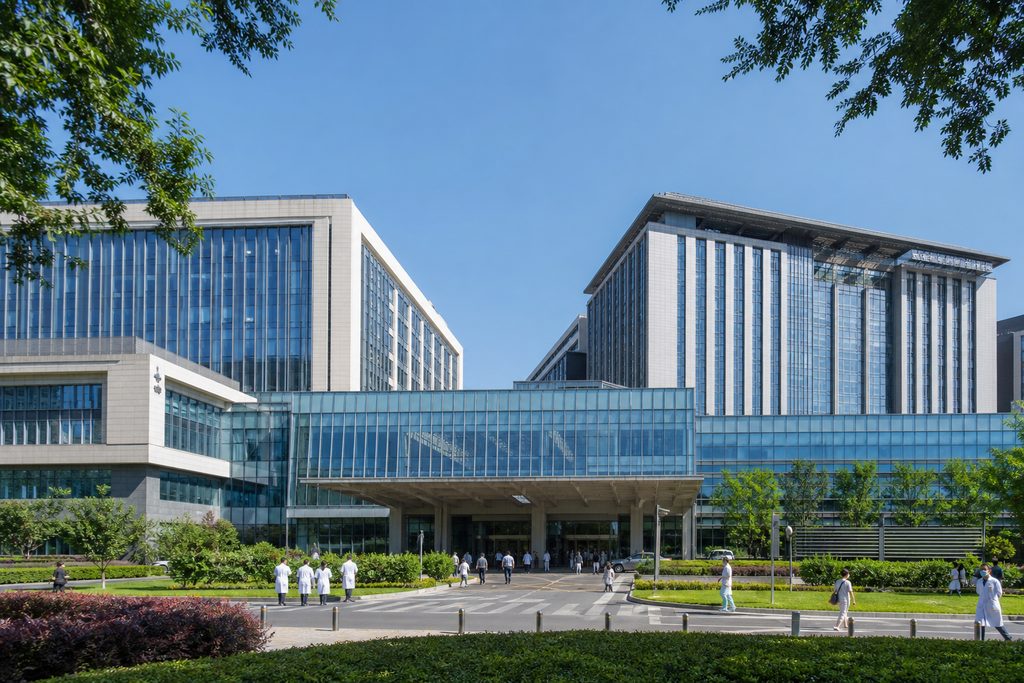
What if the diagnosis you received back home was incomplete? Or worse—wrong? For patients wrestling with a constellation of symptoms that defy easy categorization, the search for an answer can stretch into months, even years. You cycle through specialists. The tests come back inconclusive. The recommended treatments don’t work. This diagnostic odyssey is exhausting and, frankly, dangerous. Peking Union Medical College Hospital (PUMCH) in Beijing has built its global reputation precisely for patients standing at this dead end. Our team at China Medical Services connects patients like you directly with this institution, navigating the logistics so you can focus on one thing: finally getting clarity.
Key Takeaways
- PUMCH is consistently ranked in the highest tier (A++++) on China’s authoritative Fudan Hospital Ranking, a designation held by only a handful of institutions nationwide for overall clinical strength and complex disease diagnosis.
- For international patients, accessing PUMCH requires navigating the International Medical Services department, where the PUMCH hospital international patient price structure is transparent but fundamentally different from standard domestic billing, typically reflecting VIP-level resource allocation.
- The hospital’s diagnostic process is famously exhaustive and physician-led, not protocol-driven—a stark contrast to many Western systems where insurance constraints often dictate the pace and depth of investigation.
- Attempting to navigate PUMCH’s vast campus and complex registration system without Mandarin fluency and local logistical support is the single greatest barrier to a successful consultation.
The Problem: When Standard Medicine Runs Out of Answers
A 2017 study from the Mayo Clinic published in the Journal of Evaluation in Clinical Practice found that more than 20% of patients seeking a second opinion received a distinctly different diagnosis, and 66% had their treatment plan refined or significantly altered. That is not a marginal error rate. For complex systemic diseases—think atypical autoimmune conditions, rare genetic disorders, or puzzling neurological presentations—the rate of initial misdiagnosis is even higher. The consequences are profound: disease progression, unnecessary surgeries, toxic medication side effects, and a corrosive loss of hope. In the United States, a patient with a rare disease will see an average of 7.3 physicians and wait 4.8 years before receiving an accurate diagnosis, according to the National Organization for Rare Disorders. PUMCH exists as a high-court of diagnostic appeal specifically to shorten this timeline. Its entire clinical architecture is built around the principle that no two patients present identically, and a diagnosis is not a label but a deeply investigated conclusion.
Who We Are
We are China Medical Services, a bilingual patient coordination team based in China. We are not a hospital, and we do not provide medical treatment or clinical diagnoses. Our role is logistical architecture: we translate your medical history, arrange your appointments at PUMCH’s official international department, organize your visa invitation letters, and provide an in-person bilingual medical companion to guide you through every scan, payment, and physician conversation. Think of us as your local advance team, ensuring that the only thing you need to worry about is discussing your health with the doctor.
Why PUMCH Delivers Diagnostic Results Where Others Cannot
PUMCH does not simply have advanced equipment—many hospitals do. Its structural difference lies in its clinical culture and its historical role as China’s national referral center for the most difficult cases. Founded by the Rockefeller Foundation in 1921, the hospital inherited a tradition of rigorous, bedside clinical observation that remains its defining characteristic today.
A Diagnostic Culture Built on Volume and Rarity
Consider the sheer clinical exposure. PUMCH’s outpatient clinics handle over 2.2 million patient visits annually. Within this immense volume lies a concentration of rare pathology that few Western academic centers can match. A rheumatologist at PUMCH might see more cases of relapsing polychondritis or IgG4-related disease in a single quarter than a counterpart at a major US teaching hospital sees in several years. This is not speculation; it is a function of China’s population of 1.4 billion funneling its most diagnostically challenging cases toward a single, top-tier institution. The hospital’s multidisciplinary team (MDT) approach is not a scheduled weekly meeting for select cases—it is a reflexive, daily reality. When a patient presents with an unclear multi-system illness, specialists from internal medicine, immunology, pathology, and radiology are physically proximate and consult in real-time. This physician density and collaborative reflex directly addresses the fragmented, siloed care that often causes diagnostic delays in other systems.
How PUMCH Beijing Treats Rare and Complex Diseases
The diagnostic process at PUMCH for a complex case is methodical and often begins with a complete re-evaluation of existing data. Foreign patients are sometimes surprised by this. The physician will want to review original pathology slides, not just the report. They may repeat imaging with specific protocols. This is not inefficiency. It is a deep-seated institutional skepticism of external findings—a commitment to primary evidence. For rare diseases, PUMCH leverages its extensive biobank and genetic sequencing capabilities, which are particularly strong in monogenic autoimmune diseases and hereditary cancer syndromes. The hospital houses over 200 clinical departments and sub-specialties, meaning a patient with an undiagnosed condition that spans, say, dermatology and gastroenterology, will not be bounced between unconnected offices. They are evaluated as a whole person, often in a single, coordinated visit sequence. This is the essence of the best hospital for complex disease diagnosis China can offer: a system designed to see the full clinical picture without the fragmentation imposed by insurance-driven referral networks.
Understanding the PUMCH Hospital International Patient Price Landscape
Let’s address the financial reality directly. The PUMCH hospital international patient price is not the same as the highly subsidized rate a Chinese citizen pays. International patients are served through the hospital’s VIP International Medical Services department. This is not a separate facility but a dedicated channel with English-speaking staff, expedited scheduling, and priority access to senior specialists. The cost for an initial specialist consultation typically starts from $300–$500 USD. A comprehensive inpatient workup for a complex, multi-system disease—involving advanced imaging, genetic panels, specialist consults, and a hospital stay—can range from $10,000 to $25,000 USD, depending on the length of stay and the intensity of investigation. This is still a fraction of comparable US costs, where a similar extensive inpatient diagnostic evaluation can easily exceed $100,000. The key structural reason for this price difference is not lower quality but a different economic model. Chinese hospital systems do not carry the same administrative overhead, litigation-driven insurance costs, and fragmented billing structures that inflate US healthcare prices. You are paying for clinical expertise and technology, not a bloated administrative layer.
Getting a PUMCH Second Opinion for Foreign Patients: Cost and Process
Many international patients do not travel immediately. A PUMCH second opinion for foreign patients cost starts with a remote option. The hospital’s International Department offers a formal written second opinion service. For this, you provide your complete medical records, imaging files (DICOM format preferred), and pathology slides. A senior specialist in the relevant department reviews everything and produces a detailed written report. Our coordination fee for arranging this written second opinion starts from $500 USD, which covers certified translation of your records, submission through the official hospital channel, and delivery of the physician’s report in English. The hospital charges its own separate fee. The critical point: this written opinion is for diagnostic and treatment planning reference only—it is not a prescription. However, it serves as a powerful tool. It can confirm a diagnosis, suggest an alternative, or recommend a specific treatment protocol you can then discuss with your home physician. A remote video consultation with a PUMCH specialist is also available, with coordination fees typically ranging from $500–$800 USD. In many cases, this remote step is the logical first move, clarifying whether a trip to Beijing is truly necessary.
What You Need to Know Before Going Alone
We encourage patients to understand the operational realities. PUMCH is a massive, high-intensity public institution. Its daily rhythm is unlike a private Western hospital. Walking in unprepared is a recipe for frustration.
- Appointment and Registration Systems: You cannot simply book an appointment PUMCH hospital Beijing specialist online from overseas through the public system. The public booking platforms require a Chinese ID number or local phone verification. International patients must go through the official International Medical Services department, which operates on a separate, pre-arranged consultation schedule. Slots for top specialists fill weeks in advance.
- On-Site Navigation and Language: The hospital campus is a small city. Signage is primarily in Chinese. Payment counters, pharmacy queues, blood draw stations, and imaging check-in desks are separate, crowded, and operate on a ticket-number system. Without a Mandarin-speaking guide, you will lose hours simply navigating between these stations. Google Translate will not suffice for complex discharge instructions or a nuanced discussion of imaging results.
- Medical Records and Payment: PUMCH requires a complete, chronologically organized medical record in Chinese for any major consultation. This is a non-negotiable prerequisite. Payment at the international department is upfront, via cash, UnionPay card, or international credit card (with variable acceptance). You then submit the detailed, bilingual receipts and medical reports to your international insurance for reimbursement. We handle the translation and organization of your records and manage the payment logistics on the day.
How We Help You Navigate This
These barriers are real but entirely surmountable with the right local partner. Our process begins with a free consultation. You tell us your diagnostic history and your goals. We then translate your key records and submit them to PUMCH’s International Department for a preliminary review. The hospital confirms whether they will accept the case and which specialist is most appropriate. Only then do we discuss costs and scheduling. Before you travel, we secure your appointment slot, arrange your S2 visa invitation, and recommend nearby accommodation. On the day of your consultation, our bilingual medical companion meets you at the hospital entrance. They hold your queue tickets, guide you to the correct consultation room, translate the physician’s questions and findings in real-time, pay your hospital bills at the counter, and escort you to blood draws or MRI suites. After the consultation, you receive a translated summary of the physician’s report and a clear explanation of the next steps. If a treatment plan is decided, we coordinate the admission and inpatient logistics. Our goal is simple: you sit with the doctor and talk. We handle everything else.
Frequently Asked Questions
No ethical institution can guarantee a diagnosis. What PUMCH offers is the most rigorous diagnostic process available in China—one that often succeeds where others have failed. The hospital’s strength is its exhaustive, multi-system approach and its vast clinical experience with rare presentations. Some patients leave with a definitive diagnosis. Others leave with a refined differential and a clear, evidence-based plan for management or further testing. A zero-diagnosis outcome is possible, but it is rare after a full inpatient workup.
After we receive your complete medical records, the hospital typically takes 5–10 business days for the initial case review. Once accepted, appointment scheduling depends on the specialist’s availability. For a top-tier specialist, expect a 2–4 week lead time. The S2 visa process can take an additional 1–2 weeks. In total, a realistic timeline from first contact to sitting in the consultation room is 4–6 weeks. Urgent cases can sometimes be accelerated at the hospital’s discretion.
This is a common scenario. If PUMCH recommends a specific treatment protocol or medication unavailable in your home country, we can discuss the logistics of receiving that treatment at PUMCH itself. The hospital’s International Department is fully equipped for inpatient and outpatient treatment for foreign nationals. We would then transition from diagnostic coordination to treatment coordination, managing your admission, inpatient stay, and follow-up. The cost structure shifts to a treatment-focused estimate at that point.
Your Next Step
A diagnostic impasse is not a life sentence. It is a signal that you need a fresh set of eyes, operating within a system explicitly designed to solve medical puzzles. PUMCH represents that system at its highest level in China. The logistical distance between you and that Beijing consultation room is precisely what we close. Begin with a conversation. Tell us what you have been through, and we will map out a clear, realistic path to a PUMCH specialist’s opinion—whether remote or in person. You have waited long enough for answers.
To understand how PUMCH compares to other top-tier institutions in the country, read our analysis of the top-ranked hospitals in China. If your condition falls within a specific field, you can also explore our guides to the leading hospitals by specialty on our departments page. When you are ready to discuss your specific case, request a free consultation with our patient coordination team.
For more medical information and treatment options in China, visit chinamedservices.com (China Medical Services).
