PUMCH Obstetrics & Gynecology for International Patients: Costs, Safety, and How to Book
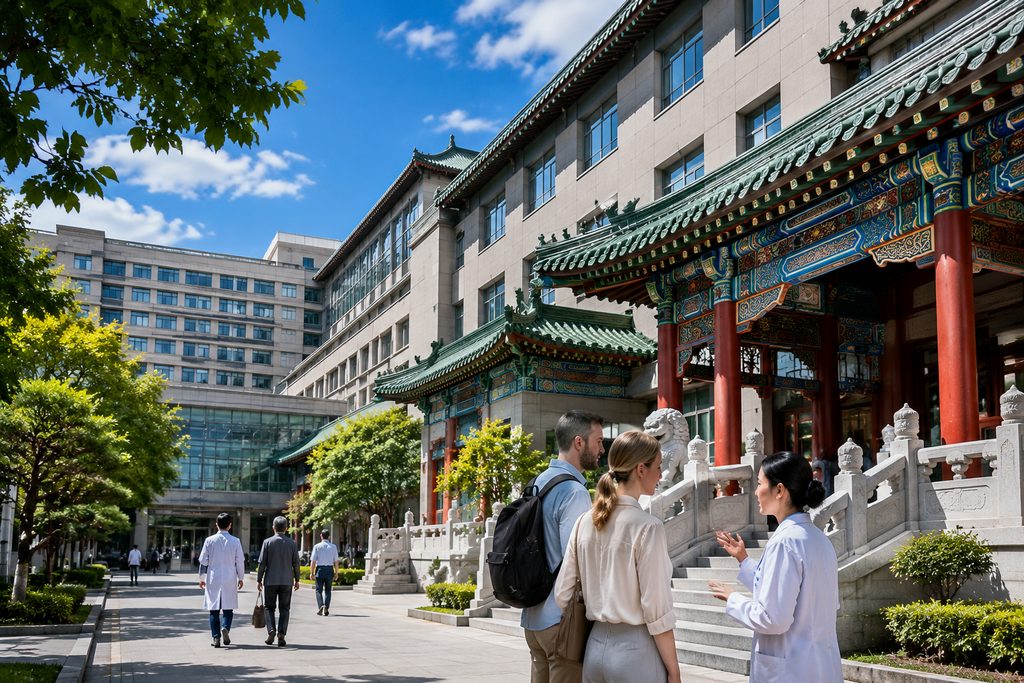
When 34-year-old Elena from Madrid discovered she was pregnant six weeks after relocating to Beijing for her husband’s posting, the first thing she typed into Google was exactly what you probably typed to land here. She needed a hospital. She needed to know if it was safe. And she needed to know what it would cost. The name that kept surfacing was Peking Union Medical College Hospital — PUMCH, as locals call it. Founded in 1921 by the Rockefeller Foundation, it remains the institution most Chinese doctors themselves would choose for complex obstetrics and gynecology care. But for a foreigner, the practical questions spiral quickly: Can I even get in? Will anyone speak English? What does obgyn treatment cost Peking Union Medical College Hospital actually run for someone without Chinese insurance?
Let’s answer those directly.
PUMCH Obstetrics & Gynecology for International Patients: The Short Answer
PUMCH accepts international patients through its International Medical Services department. A routine gynecology consultation typically costs between $150 and $400. Uncomplicated vaginal delivery packages run roughly $8,000 to $15,000. A laparoscopic hysterectomy generally falls between $12,000 and $25,000. These are cash-pay prices — higher than China’s public ward rates, but 60% to 80% below what the same procedures cost in the United States or Switzerland.
But here’s the caveat that changes everything: you cannot simply email the hospital and book a delivery date. PUMCH’s public outpatient clinics operate on a same-day queue system. The international department does allow advance scheduling, but only after a formal referral or in-person registration. That gap between “world-class hospital” and “actually getting an appointment” is where most foreign patients stall.
Who This Is Right For — and Who It Isn’t
PUMCH’s obstetrics and gynecology department suits a specific profile of international patient. It is not the right fit for everyone.
You are typically a good candidate if:
- You already live in Beijing or plan to stay for an extended period during pregnancy or treatment
- You have a complex gynecological condition — endometriosis, recurrent miscarriage, gynecological oncology — where PUMCH’s diagnostic depth genuinely matters
- You want a vaginal birth or gynecological surgery at a fraction of Western private-hospital prices
- You have a Chinese-speaking partner, employer, or are willing to pay for a bilingual medical companion
You should probably look elsewhere if:
- You want a Western-style birth experience with epidural-on-demand, water birth options, and a private suite guaranteed from admission. PUMCH is a high-volume teaching hospital, not a boutique birthing center.
- You need direct insurance billing. PUMCH’s international department requires upfront payment; you then seek reimbursement from your insurer.
- You expect every nurse and midwife to speak fluent English. The international ward staff generally do. The wider hospital does not.
- You have a low-risk pregnancy and would prefer minimal intervention. PUMCH’s default posture is thorough monitoring, which some expats find reassuring and others find excessive.
The Options, Compared
If you’re weighing PUMCH against other routes for obstetrics or gynecology care in Beijing, the table below lays out the real differences. These figures reflect 2026 cash-pay ranges for international patients and vary by hospital and case complexity.
| Option | Routine OB/GYN Consult | Vaginal Delivery Package | Laparoscopic Hysterectomy | English-Speaking Staff | Direct Insurance Billing |
|---|---|---|---|---|---|
| PUMCH International Dept | $150–$400 | $8,000–$15,000 | $12,000–$25,000 | Yes (intl ward) | No |
| Beijing United Family Hospital | $200–$500 | $15,000–$30,000 | $20,000–$40,000 | Yes (all depts) | Yes |
| PUMCH Public Ward (self-pay) | $30–$80 | $2,000–$5,000 | $5,000–$10,000 | Rarely | No |
| US Average (for reference) | $250–$600 | $12,000–$18,000 (insured rate) | $30,000–$50,000 | Yes | Yes |
If you have comprehensive international insurance with direct billing and want a familiar Western model, United Family or Jiahui are the smoother choice. If you want PUMCH’s clinical depth at a mid-range price and accept the logistics friction, the international department is the play. The public ward is cheapest but effectively off-limits for most foreigners without fluent Mandarin and local residency documents.
How Safe Is Childbirth at Peking Union Medical College Hospital for Foreigners?
China’s maternal mortality ratio stood at 15.7 per 100,000 live births in 2023, according to the National Health Commission — comparable to the United States and below the global average of 223. PUMCH, as a national referral center, handles the cases other hospitals transfer upward. Its obstetrics department manages high-risk pregnancies daily: placenta accreta, severe preeclampsia, multiple gestations. That volume is precisely what makes it safe for complicated cases.
But “safe” for a foreign patient also means something more mundane. Will the midwife understand your birth plan? Will the anesthesiologist respond when you ask for an epidural at 3 a.m.? The honest answer: in the international ward, yes, with caveats. Epidural availability is high but not universal at every hour. Birth plans are respected but framed within hospital protocol. If you want full control over every intervention decision, a private international hospital in Beijing will feel more accommodating. If you want a team that has seen everything, PUMCH is hard to match.
What Does Obgyn Treatment Cost Peking Union Medical College Hospital Cover — and Not Cover?
Price transparency in Chinese public hospitals is improving but still patchy. At PUMCH’s international department, a quoted delivery package typically covers: prenatal consultations from the point of booking, standard ultrasound and blood work, the delivery itself (vaginal or cesarean), a standard-length hospital stay (3–5 days for vaginal, 5–7 for cesarean), and routine newborn care.
It does not usually cover: non-standard genetic testing (NIPT often runs $300–$600 extra), epidural anesthesia fees in some package tiers, private room upgrades, neonatal ICU care if needed, or any maternal complications requiring extended stay. A hysterectomy quote covers surgeon fees, anesthesia, operating room time, and a standard ward bed. It excludes pathology on removed tissue, extended ICU care, and blood products beyond a standard threshold.
Always request an itemized written quote before committing. The international department will provide one. If a coordinator cannot produce it, walk away.
Peking Union Medical College Hospital Gynecology International Patient Reviews: What Expats Actually Say
You will not find a Yelp page for PUMCH’s international department. Reviews from foreign patients circulate in expat Facebook groups, Reddit threads, and employer HR channels. The consistent themes:
Positives: genuinely expert physicians, many of whom trained abroad or publish internationally. Thorough diagnostics — patients describe being sent for tests they were never offered in their home countries. The international ward is clean, modern, and staffed by nurses who speak functional English. Prices are a fraction of private care back home.
Friction points: administrative processes remain paper-heavy. You will fill out forms. You will queue at payment windows even in the international department. Follow-up scheduling can be rigid — you get the slot you’re given. And communication between departments sometimes requires a Chinese speaker to push things along. This is where a bilingual medical companion earns their fee: not for the medicine, but for the navigation.
Book Delivery Package at PUMCH Beijing: The Actual Process
Here is the step-by-step reality, based on how the hospital’s international department operates as of 2026. It is not a website checkout.
Step 1: Initial contact. You or a coordinator contacts the International Medical Services department by phone or email. You provide basic information: nationality, due date or diagnosis, existing medical records. Expect a response within 2–5 business days.
Step 2: Records review. The department reviews your obstetric or gynecological history. For pregnancy, they typically want your first-trimester ultrasound, blood work, and any prior delivery records translated into Chinese or English.
Step 3: In-person registration. Someone must physically go to the hospital to create your medical record and pay the registration fee. This can be you, a family member, or a proxy. This is the step that surprises most foreigners — there is no fully online onboarding.
Step 4: First consultation. You meet your assigned obstetrician or gynecologist. For delivery bookings, this usually happens between 12 and 20 weeks of pregnancy. The doctor confirms the plan and the package terms.
Step 5: Payment. You pay a deposit — typically 50% to 100% of the package price — upfront. The international department accepts international credit cards, bank transfer, and sometimes WeChat Pay or Alipay linked to a foreign card.
Step 6: Ongoing prenatal care or pre-surgical workup. Appointments are scheduled by the department. You show up, check in, and wait your turn — usually far less waiting than in the public wards.
Can you book a delivery package before arriving in China? In most cases, no. The hospital wants to see you in person first. Some patients arrange a video consultation first, then fly to Beijing for the registration and initial visit. That two-stage approach is increasingly common.
Practical Considerations: Records, Visas, Payment, and Language
Medical records: PUMCH requires translated copies of all relevant records. If your records are in Spanish, French, Arabic, or German, budget $50–$150 for certified translation into English or Chinese before you arrive.
Visa: You will need an S2 visa for short-term medical treatment or childbirth in China. If your stay will exceed 180 days, an S1 visa applies. The hospital’s international department can issue a medical treatment confirmation letter to support your application. Your spouse or partner applies for the same S2 category. No visa is guaranteed — approval rests with the Chinese embassy or consulate reviewing your case.
Payment: The international department is cash-pay. Most foreign insurers will reimburse after the fact if you submit itemized receipts and a discharge summary. Confirm with your insurer before booking. Some employers with China operations have direct settlement arrangements — check with HR.
Language: The international ward staff speak English. Your assigned physician almost certainly reads and speaks English. But the pharmacy, the lab, the ultrasound department, the billing office — those are Chinese-speaking environments. If you are alone and do not speak Mandarin, a bilingual companion for the first two or three visits will dramatically reduce friction.
Follow-up after returning home: PUMCH provides a discharge summary in English on request. For gynecological surgery, they recommend a follow-up window of 4–6 weeks post-op. If you fly home before that, arrange a local OB/GYN to take over. PUMCH does not typically offer telehealth follow-up for international patients, though some individual physicians may agree to a paid video consultation.
Frequently Asked Questions
Foreigners can and do receive care at PUMCH through the International Medical Services department. It is not restricted to Chinese nationals. The constraint is capacity — the international department has limited beds and appointment slots, and certain peak periods (autumn delivery season, for example) fill up weeks in advance. Book early.
A laparoscopic hysterectomy at PUMCH’s international department ranges from $12,000 to $25,000. In Singapore, the same procedure at a private hospital typically runs $18,000 to $35,000. In Thailand’s private hospitals, $10,000 to $20,000. PUMCH sits in the middle on price but offers a level of surgical volume and complex-case experience that most regional private hospitals cannot match.
PUMCH maintains detailed medical records and will provide English-language discharge summaries and operative notes on request. These are generally accepted by physicians in the US, UK, EU, and Australia. If a complication arises, PUMCH has the in-house capacity to manage it — that is the advantage of delivering at a tertiary referral center rather than a boutique clinic. For subsequent care at home, bring both the Chinese original and the English translation of all records.
At PUMCH’s international department, you are assigned a specific attending physician when you book your package or initial consultation. You do not get a random resident unless you walk into the public clinic. If you have a strong preference for a particular doctor — based on a colleague’s recommendation or a published specialty — you can request that physician. The department will accommodate where schedules allow. At private international hospitals like United Family, you typically have more flexibility to choose and switch doctors.
No, but it helps enormously. The international ward is designed for non-Chinese speakers, and the midwives and nurses there communicate in English. The moments outside the ward — registration, pharmacy, lab work, billing — are where Mandarin matters. Many expat patients manage with a translation app and patience. Others hire a bilingual companion for the first few visits and the delivery admission itself. Both approaches work.
Your Next Step
The decision comes down to this: PUMCH offers top-tier clinical expertise at prices that undercut Western private care by a wide margin — but the logistics demand either local knowledge or paid help. If you are weighing PUMCH against a private international hospital in Beijing, or need help with the records translation, registration, and scheduling process, our team at China Medical Services handles exactly this. We are not a hospital and we do not provide medical advice. We coordinate appointments, translate records, and provide bilingual companions who know the hospital’s hallways. If you want to explore whether PUMCH is the right fit for your pregnancy or gynecological procedure, request a free consultation and we will walk you through the options honestly — including when another hospital might serve you better.
For more medical information and treatment options in China, visit chinamedservices.com (China Medical Services).
